Kirjojen hintavertailu – 12 859 818 kirjaa ja 27 kauppaa

Kirjailija

Fred Halliday

Kirjat ja teokset yhdessä paikassa: 17 kirjaa, julkaisuja vuosilta 1986–2024, suosituimpiin kuuluu Political Journeys. Vertaile teosten hintoja ja tarkista saatavuus suomalaisista kirjakaupoista.

17 kirjaa

Kirjojen julkaisuvuodet: 1986–2024.

Iran

Iran

Fred Halliday

Oneworld Publications
2024
nidottu
Originally completed mere months before the Iranian Revolution of 1979, Fred Halliday’s study of twentieth-century Iran was not only incredibly timely but a deeply researched, thought-provoking work. It masterfully surveys the country’s uneven capitalist development, state-building and class structure, security and military apparatus, dissent and opposition movements, and foreign relations. Even decades later it remains among the most sophisticated and compelling analyses of this period of Iranian history. Halliday persuasively argues against crude interpretations of the Pahlavi regime as an enlightened and modernising monarchy or merely a dependent client state. Instead, he contends that to make sense of the Pahlavi regime and its vulnerabilities, it is crucial to understand the dialectic of dictatorship, development and the imperial geopolitics of the global Cold War. This new edition also includes six of Halliday’s essays on the Islamic Republic, demonstrating how his thinking on Iran and the revolution evolved over time.
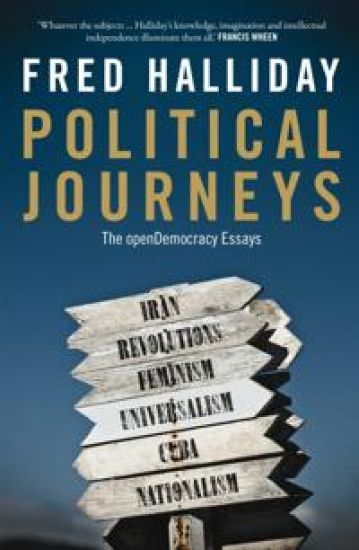
Political Journeys

Political Journeys

Fred Halliday

Saqi Books
2011
nidottu
Fred Halliday always combined the broad sweep of modern history, its currents and ideas with a profound knowledge of modern revolutions, the Middle East and national movements. This collection of columns written for openDemocracy between 2004 and 2009 is proof of a subtle worldview that continues to generate questions: what is the relation between religion, nationalism and progress? Is a new international order possible? When is intervention a force for progress? From the big headlines topics like the Iraq war or the Danish cartoons, to the unexpected comparisons, of Tibet and Palestine or Afghanistan and the Falklands, Halliday is a perennially surprising and enlightening guide to the major issues of international politics.
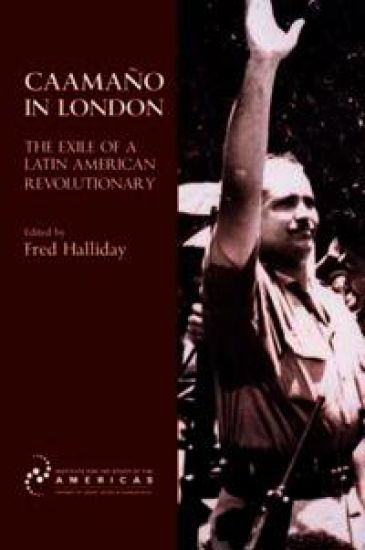
Caamano in London

Caamano in London

Fred Halliday

University of London Institute of Latin American Studies
2011
pokkari
In January 1966, Colonel Francisco Caamano Deno, president of the Dominican Republic during the "Constitutionalist" uprising of 1965 and the subsequent U. S. invasion, was exiled to London. Spending twenty months in the British capital as military attache at the Dominican Embassy, Caamano remained intensely involved in the affairs of his home country. He rallied opposition to the U. S. presence and prepared for his own return before secretly flying, in October 1967, to Cuba. Six years later he lost his life while attempting to launch a guerrilla war in the mountains west of Santo Domingo. Until now, little has been known about Caamano's London sojourn, the most important by any Latin American radical leader in the British capital since the visits of Bolivar and San Martin in 1809. This book includes material from people who met Caamano in Britain and a chapter on the London period by his Dominican biographer, Hamlet Herman. It also presents, for the first time, documents from official archives on Caamano's conversations with British and American diplomats. The result is a complex and informative study on a missing chapter in the history of the Dominican Republic and, more broadly, a contribution to the often forgotten history of the cold war in the Caribbean.
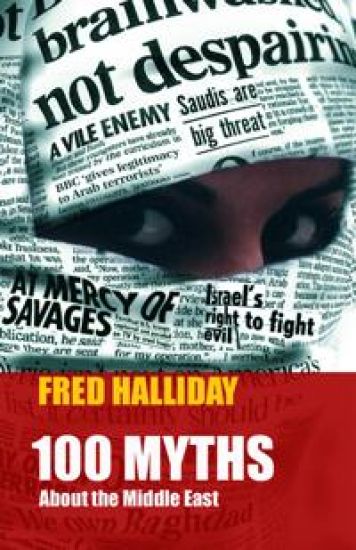
100 Myths About the Middle East

100 Myths About the Middle East

Fred Halliday

Saqi Books
2005
nidottu
In this much-needed and enlightening book Halliday debunks one hundred of the most commonly misconstrued 'facts' concerning the Middle East - in the political, cultural, social and historical spheres. He gets to the heart of each matter in a straightforward and simple manner that illuminates the issues without compromising their underlying complexities. The Israel-Palestine crisis, the Iran-Iraq war, the US-led Gulf invasions, the Afghan-Soviet conflict and other significant milestones in modern Middle East history come under scrutiny here, with conclusions that will surprise and enlighten many for going so seemingly and persuasively against the grain of commonly held (mis)perceptions.
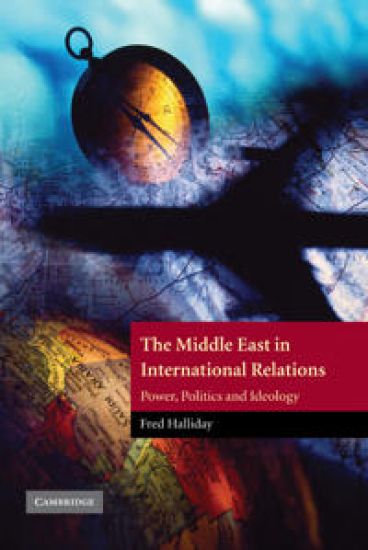
The Middle East in International Relations

The Middle East in International Relations

Fred Halliday

Cambridge University Press
2005
sidottu
The international relations of the Middle East have long been dominated by uncertainty and conflict. External intervention, interstate war, political upheaval and interethnic violence are compounded by the vagaries of oil prices and the claims of military nationalist and religious movements. The purpose of this book is to set this region and its conflicts in context, providing on the one hand a historical introduction to its character and problems, and on the other a reasoned analysis of its politics. In an engagement with both the study of the Middle East and the theoretical analysis of international relations, the author, who is one of the best known and most authoritative scholars writing on the region today, offers a compelling and original interpretation. Written in a clear, accessible and interactive style, the book is designed for students, policymakers, and the general reader.
Revolution and Foreign Policy

Revolution and Foreign Policy

Fred Halliday

Cambridge University Press
2002
pokkari
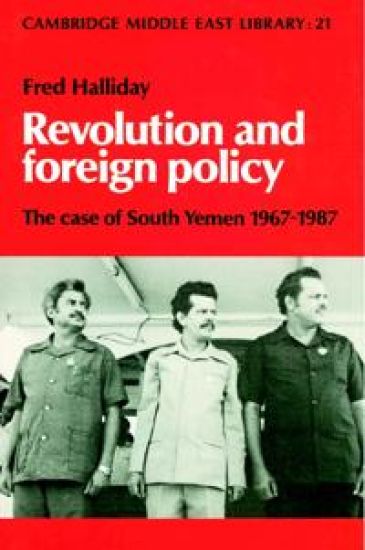
This book is a study of the foreign policy of South Yemen, the most radical of Arab states, from the time of its independence from Britain in 1967 until 1987. It covers relations with the west, including the USA, and with the USSR and China, and also highlights South Yemen’s conflicts with its neighbours, North Yemen, Saudi Arabia and Oman. The author provides a detailed analysis of the foreign relations of one of the USSR’s closest allies in the Third World and shows how conflicts within the country relate to changes in foreign policy. South Yemen has traditionally not been an easy country to study, both because it is so secretive and because the revolutionary regime still arouses such strong passions. Professor Halliday was able to visit the country and to make an outstandingly thorough study of the foreign policy of an Arab state.
Two Hours That Shook the World

Two Hours That Shook the World

Fred Halliday

Saqi Books
2001
nidottu
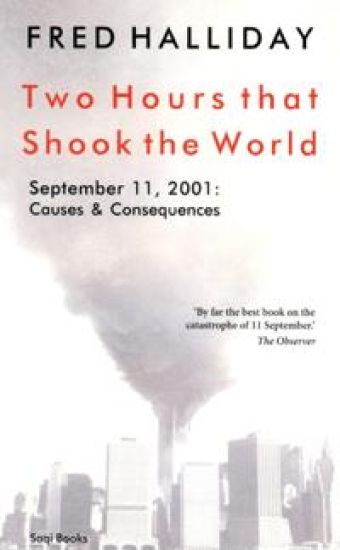
Examines the causes of the September 11, 2001 attacks, and also provides a reasoned approach as to what the future may hold. As the dust settled around the devastation of the World Trade Centre and the Pentagon on 11 September 2001, a host of questions emerged surrounding the attacks, the motives behind them and their future implications. In Two Hours that Shook the World Fred Halliday expands on the many socio-cultural, religious and political problems that have plagued the Middle East and Central Asia in the last half-century. Much has been written about 'global terrorism' and the need to eliminate it but also about the divide between East and West, the 'clash of civilisations'. Halliday dispels the idea that the Muslim and non-Muslim worlds are poised for conflict. He explains the causes and rise of Islamic fundamentalism, how terror became an instrument of political and military conflict, and why seemingly well-educated and sane individuals are taking drastic actions to voice their desperation. The burden of history is also invoked, as with the Palestinian-Israeli situation, the festering malaise at the heart of Middle Eastern consciousness and identity. While Halliday's book examines the causes of what has happened, it also provides a reasoned approach as to what the future may hold.
Arabia without Sultans

Arabia without Sultans

Fred Halliday

Saqi Books
2001
nidottu
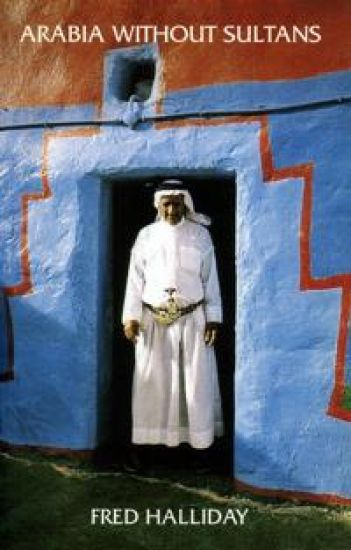
Fred Halliday writes: 'The Arab Middle East is the one with the longest history of contact with the west; yet it is probably the one least understood. Part of the misunderstanding is due to the romantic mythology that has long appeared to shroud the deserts of the peninsula. Where old myths have broken down, new ones have absorbed them or taken their place. Now the Sheikh of Arabia has stepped down from his camel. Instead, through the delusive lens of the "energy crisis" he is seen to be riding a Cadillac and squeezing the powerless Western consumer of oil.' First published in the 1970s, "Arabia Without Sultans" retains its validity for the present as it analyses the Arabian peninsula and Iran within the global context of western post-colonial strategy and the political economy of oil. Halliday offers a thorough study of the history, the politics and the economics of this region in an ambitious, encompassing and entertaining manner.
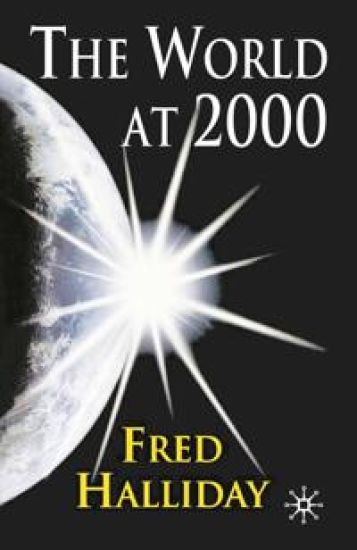
The World at 2000

The World at 2000

Fred Halliday

Red Globe Press
2000
nidottu
Beneath the millennial shine of political optimism and technological advance lurk a set of deep uncertainties: global inequality is growing; weapons of mass destruction are spreading; strident assertions of identity divide peoples and states; overall, there is a marked lack of effective co-ordination and reduced confidence in the power of people, ideas and democratic processes to achieve change. This important book by a leading observer of International Relations provides a critical but cautiously optimistic assessment of the state and prospects of the world at 2000.
The World at 2000

The World at 2000

Fred Halliday

Red Globe Press
2000
sidottu
Beneath the millennial shine of political optimism and technological advance lurk a set of deep uncertainties: global inequality is growing; weapons of mass destruction are spreading; strident assertions of identity divide peoples and states; overall, there is a marked lack of effective co-ordination and reduced confidence in the power of people, ideas and democratic processes to achieve change. This important book by a leading observer of International Relations provides a critical but cautiously optimistic assessment of the state and prospects of the world at 2000.
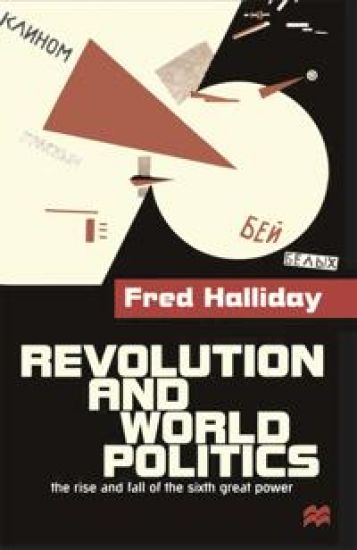
Revolution and World Politics

Revolution and World Politics

Fred Halliday

Red Globe Press
1999
nidottu
The relation of revolutions to international relations is central to modern history. Revolutions have, as much as war or nationalism, shaped the development of world politics. Equally, revolutions have been, in cause, ideology and consequence, international events. By putting the international politics of revolution centre stage, Fred Halliday's book makes a major contribution to the understanding of both revolution and world politics.
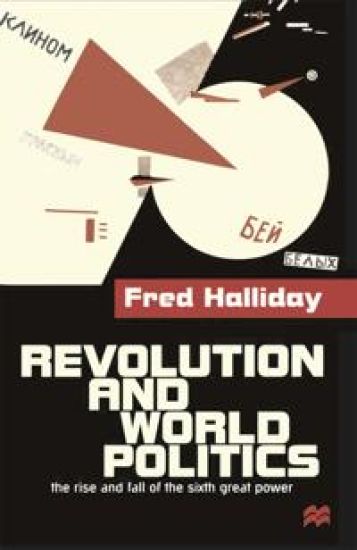
Revolution and World Politics

Revolution and World Politics

Fred Halliday

Red Globe Press
1999
sidottu
The relation of revolutions to international relations is central to modern history. Revolutions have, as much as war or nationalism, shaped the development of world politics. Equally, revolutions have been, in cause, ideology and consequence, international events. By putting the international politics of revolution centre stage, Fred Halliday's book makes a major contribution to the understanding of both revolution and world politics.
Rethinking International Relations

Rethinking International Relations

Fred Halliday

Red Globe Press
1994
nidottu
International Relations as an academic discipline is faced with three major convergent challenges: a historical challenge from the end of the Cold War and from new forms of internationalism and fragmentation; an institutional challenge from the growing preoccupation of other social sciences with the international; and a theoretical challenge both from these cognate disciplines and from within. Ranging widely over the discipline, Fred Halliday's book powerfully reaffirms the specificity of International Relations and lays the basis for a long-overdue reformulation.
The Making of the Second Cold War

The Making of the Second Cold War

Fred Halliday

Verso Books
1986
nidottu
We are living through the Second Cold War, yet what is it? Millions in East and West now fear a nuclear conflict, yet confrontation and panic continue to obscure understanding of the processes that might trigger a "hot" war. Fred Halliday presents a clearly written anatomy of these international tensions. He identifies the chief cause of cold war as the globalized contest between the USA and USSR and the arms race in which these states are engaged. He then explains the five main elements of the conflict: the relative decline in US nuclear strategic superiority since the 1960s; the new wave of Third World revolutions; the political stalemate of the post-capitalist states; the rise of the New Right in the USA; and the sharpened contradictions between the Western countries themselves. The Making of the Second Cold War provides a careful, integrated political history of international developments since the 1960s. No other book on the subject has the same range, or attempts to knit together all the factors that have produced the contemporary world situation.