Kirjojen hintavertailu – 12 903 725 kirjaa ja 27 kauppaa

Kirjailija

Fred Rush

Kirjat ja teokset yhdessä paikassa: 6 kirjaa, julkaisuja vuosilta 2008–2025, suosituimpiin kuuluu The Routledge Guidebook to Horkheimer and Adorno’s Dialectic of Enlightenment. Vertaile teosten hintoja ja tarkista saatavuus suomalaisista kirjakaupoista.

6 kirjaa

Kirjojen julkaisuvuodet: 2008–2025.

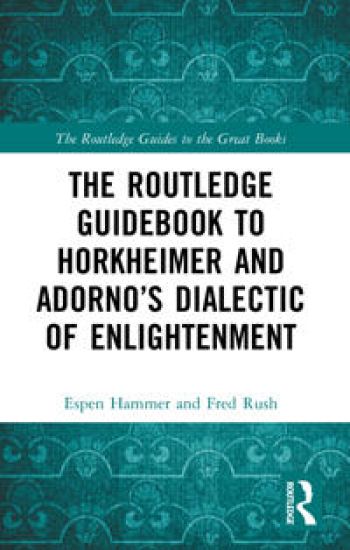
The Routledge Guidebook to Horkheimer and Adorno’s Dialectic of Enlightenment

The Routledge Guidebook to Horkheimer and Adorno’s Dialectic of Enlightenment

Espen Hammer; Fred Rush

TAYLOR FRANCIS LTD
2025
nidottu

Halvin toimitettuna 39,50 €

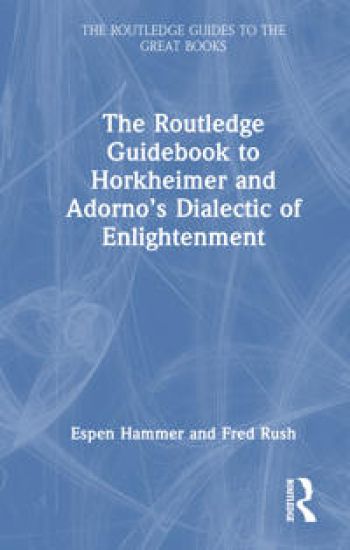
Composed whilst in exile in the United States during the Second World War, Max Horkheimer and Theodor W. Adorno’s Dialectic of Enlightenment is the most famous and influential text of the Frankfurt School. A theoretical exploration of history, modernity, and culture, its core warning of crisis and regression remains highly relevant today. However, it is also a notoriously complex work of philosophy. The Routledge Guidebook to Horkheimer and Adorno’s Dialectic of Enlightenment is the first fully contextualized introduction to this foundational text in philosophy and social theory, addressing its central themes, reception, and influence. The Guidebook examines:The conceptual and intellectual background to Dialectic of Enlightenment The ideas, themes, and arguments of the textThe reception and legacy of Dialectic of Enlightenment. A comprehensive and clearly written guide to this important text, The Routledge Guidebook to Horkheimer and Adorno’s Dialectic of Enlightenment will be invaluable to students coming to the work for the first time, as well as more advanced students and researchers in philosophy, politics, sociology, and the history of ideas.
The Routledge Guidebook to Horkheimer and Adorno’s Dialectic of Enlightenment
Composed whilst in exile in the United States during the Second World War, Max Horkheimer and Theodor W. Adorno’s Dialectic of Enlightenment is the most famous and influential text of the Frankfurt School. A theoretical exploration of history, modernity, and culture, its core warning of crisis and regression remains highly relevant today. However, it is also a notoriously complex work of philosophy. The Routledge Guidebook to Horkheimer and Adorno’s Dialectic of Enlightenment is the first fully contextualized introduction to this foundational text in philosophy and social theory, addressing its central themes, reception, and influence. The Guidebook examines:The conceptual and intellectual background to Dialectic of Enlightenment The ideas, themes, and arguments of the textThe reception and legacy of Dialectic of Enlightenment. A comprehensive and clearly written guide to this important text, The Routledge Guidebook to Horkheimer and Adorno’s Dialectic of Enlightenment will be invaluable to students coming to the work for the first time, as well as more advanced students and researchers in philosophy, politics, sociology, and the history of ideas.
Irony and Idealism

Irony and Idealism

Fred Rush

Oxford University Press
2016
sidottu
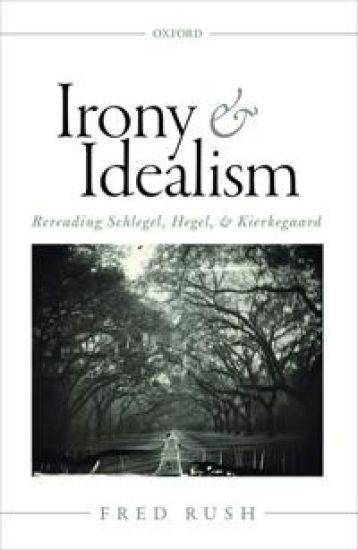
Irony and Idealism investigates the historical and conceptual structure of the development of a philosophically distinctive conception of irony in early- to mid-nineteenth century European philosophy. The principal figures treated are the romantic thinkers Friedrich Schlegel and Novalis, Hegel, and Kierkegaard. Fred Rush argues that the development of philosophical irony in this historical period is best understood as providing a way forward in philosophy in the wake of Kant and Jacobi that is discrete from, and many times opposed to, German idealism. Irony and Idealism argues, against the grain of received opinion, that among the German romantics Schlegel's conception of irony is superior to similar ideas found in Novalis. It also presents a sustained argument showing that historical reconsideration of Schlegel has been hampered by contestable Hegelian assumptions concerning the conceptual viability of romantic irony and by the misinterpretation of what the romantics mean by 'the absolute.' Rush argues that this is primarily a social-ontological term and not, as is often supposed, a metaphysical concept. Kierkegaard, although critical of the romantic conception, deploys his own adaptation of it in his criticism of Hegel, continuing, and in a way completing, the arc of irony through nineteenth-century philosophy. The book concludes by offering suggestions meant to guide contemporary reconsideration of Schlegel's and Kierkegaard's views on the philosophical significance of irony.
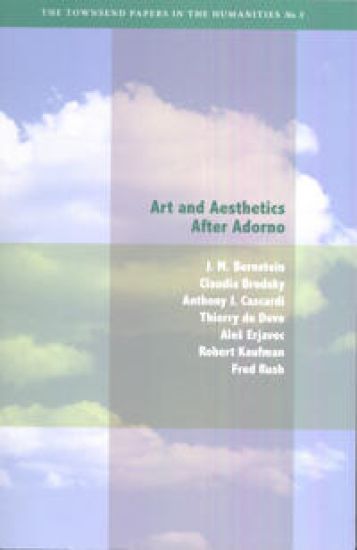
Art and Aesthetics After Adorno

Art and Aesthetics After Adorno

J. M. Bernstein; Claudia Brodsky; Anthony J. Cascardi; Thierry de Duve; Ales Erjavec; Robert Kaufman; Fred Rush

Fordham University Press
2013
pokkari
Theodor Adorno's Aesthetic Theory (1970) offers one of the most powerful and comprehensive critiques of art and of the discipline of aesthetics ever written. The work offers a deeply critical engagement with the history and philosophy of aesthetics and with the traditions of European art through the middle of the 20th century. It is coupled with ambitious claims about what aesthetic theory ought to be. But the cultural horizon of Adorno's Aesthetic Theory was the world of high modernism, and much has happened since then both in theory and in practice. Adorno's powerful vision of aesthetics calls for reconsideration in this light. Must his work be defended, updated, resisted, or simply left behind? This volume gathers new essays by leading philosophers, critics, and theorists writing in the wake of Adorno in order to address these questions. They hold in common a deep respect for the power of Adorno's aesthetic critique and a concern for the future of aesthetic theory in response to recent developments in aesthetics and its contexts.
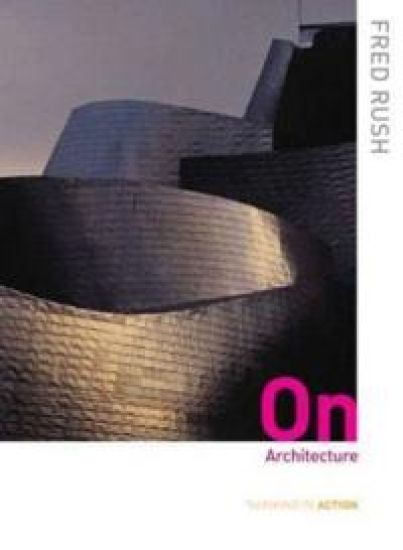
On Architecture

On Architecture

Fred Rush

Routledge
2008
nidottu
Architecture is a philosophical puzzle. Although we spend most of our time in buildings, we rarely reflect on what they mean or how we experience them. With some notable exceptions, they have generally struggled to be taken seriously as works of art compared to painting or music and have been rather overlooked by philosophers. In On Architecture, Fred Rush argues this is a consequence of neglecting the role of the body in architecture. Our encounter with a building is first and foremost a bodily one; buildings are lived-in, communal spaces and their construction reveals a lot about our relation to the environment as a whole. Drawing on examples from architects classic and contemporary such as Le Corbusier and Frank Lloyd Wright, and exploring the significance of buildings in relation to film and music and philosophers such as Heidegger and Merleau-Ponty, Fred Rush argues that philosophical reflection on building can tell us something important about the human condition.
On Architecture

On Architecture

Fred Rush

Routledge
2008
sidottu
Architecture is a philosophical puzzle. Although we spend most of our time in buildings, we rarely reflect on what they mean or how we experience them. With some notable exceptions, they have generally struggled to be taken seriously as works of art compared to painting or music and have been rather overlooked by philosophers. In On Architecture, Fred Rush argues this is a consequence of neglecting the role of the body in architecture. Our encounter with a building is first and foremost a bodily one; buildings are lived-in, communal spaces and their construction reveals a lot about our relation to the environment as a whole. Drawing on examples from architects classic and contemporary such as Le Corbusier and Frank Lloyd Wright, and exploring the significance of buildings in relation to film and music and philosophers such as Heidegger and Merleau-Ponty, Fred Rush argues that philosophical reflection on building can tell us something important about the human condition.