Kirjojen hintavertailu – 12 859 819 kirjaa ja 27 kauppaa

Kirjailija

Fred Wah

Kirjat ja teokset yhdessä paikassa: 12 kirjaa, julkaisuja vuosilta 1985–2021, suosituimpiin kuuluu Louis Riel Organ & Piano Co.. Vertaile teosten hintoja ja tarkista saatavuus suomalaisista kirjakaupoista.

12 kirjaa

Kirjojen julkaisuvuodet: 1985–2021.

Laurier Poetry Pack #5

Laurier Poetry Pack #5

Dionne Brand; Paul Dutton; Gary Barwin; Al Purdy; Fred Wah; Louise Bernice Halfe

WILFRID LAURIER UNIVERSITY PRESS
2021
muu
A bundle of Laurier Poetry books for course use that includes Fierce Departures (Dionne Brand); Sonosyntactics (Paul Dutton); The More Easily Kept Illusions (Al Purdy); False Laws of Narrative (Fred Wah0; and Sohkeyihta (Louise Bernice Halfe).
Laurier Poetry Pack #4

Laurier Poetry Pack #4

Al Purdy; Dionne Brand; Paul Dutton; Fred Wah; Rachel Zolf

Wilfrid Laurier University Press
2020
muu
Laurier Poetry Pack #4 consists of 5 volumes from the Laurier Poetry series. Volumes contained in Laurier Poetry Pack #4: 9780889204904 The More Easily Kept Illusions; 9781554580385 Fierce Departures; 9781771121323 Sonosyntactics; 9781554580460 The False Laws of Narrative; 9781771124119 Social Poesis.
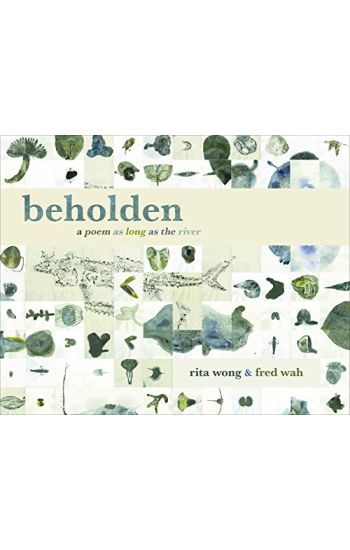
beholden

beholden

Fred Wah; Rita Wong

Talon Books,Canada
2019
pokkari
Comprised of two lines of poetic text flowing along a 114-foot-long map of the Columbia River, this powerful image-poem by acclaimed poets Fred Wah and Rita Wong presents language yearning to understand the consequences of our hydroelectric manipulation of one of North America's largest river systems. beholden: a poem as long as the river stems from the interdisciplinary artistic research project "River Relations: A Beholder's Share of the Columbia River," undertaken as a response to the damming and development of the Columbia River in British Columbia, Washington, and Oregon, as well as to the upcoming renegotiation of the Columbia River Treaty. Authors Fred Wah and Rita Wong spent time exploring various stretches of the river, all the way to its mouth near Astoria, Oregon. They then spent several months creating long poems along the Columbia, each searching for a language that evoked the complexities of our colonial appropriation of it. beholden was then assembled as a page-turning book that reproduces the two long poems as they respond to the meanderings of the river flowing two thousand kilometres through Canada, the United States, and the territories and reserves of Indigenous Peoples. Visual artist Nick Conbere then transferred this winding footprint into a monumental, 114-foot horizontal banner. beholden: a poem as long as the river "reads" the geographic, historical, political, and social dimensions of the Columbia River, literally and figuratively, proposing two contrasting kinds of attention. As both a stand-alone poem and an accompanying piece to the visual installation exhibited at various galleries, beholden represents a vital contribution to a larger dialogue around the river through visual art, writing, and public engagement.
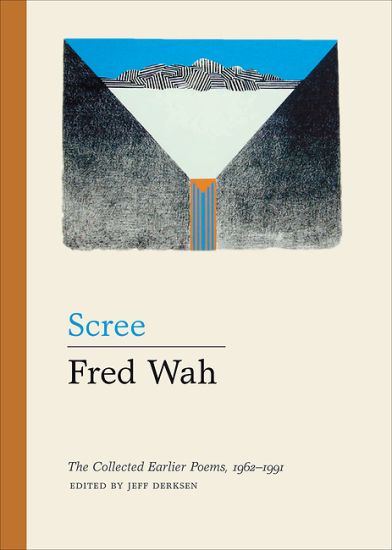
Scree

Scree

Fred Wah

Talonbooks
2016
sidottu
Fred Wah's career has spanned six decades and a range of formal styles and preoccupations. Scree collects Wah's concrete and sound poetry of the 1960s, his landscape-centric work of the 1970s, and his ethnicity-oriented poems of the 1980s. Fred was a founding member of the avant-garde TISH group, which helped turn Canadian poetry, in the West in particular, to a focus on language. He has said that his "writing has been sustained, primarily, by two interests: racial hybridity and the local." Most of Wah's early work is out of print. This collection allows readers to (re)discover this groundbreaking work. The volume contains: Lardeau (1965) Mountain (1967) Among (1972) Tree (1972) Earth (1974) Pictograms from the Interior of B. C.(1975) Loki Is Buried at Smoky Creek (1980) Owner's Manual (1981) Breathin' My Name with a Sigh (1981) Grasp the Sparrow's Tail (1982) Waiting for Saskatchewan (1985) Rooftops (1988) So Far (1991) The collection has been organized according to a chronology of composition (rather than a chronology of original publication): this reveals new connections and thematic trajectories in the body of work as a whole, and makes the book an eminently "teachable" volume. The book includes full-colour facsimiles of two early books, Earth and Tree, reproduced to show the "hands-on" object-based aspect of chapbook publishing.
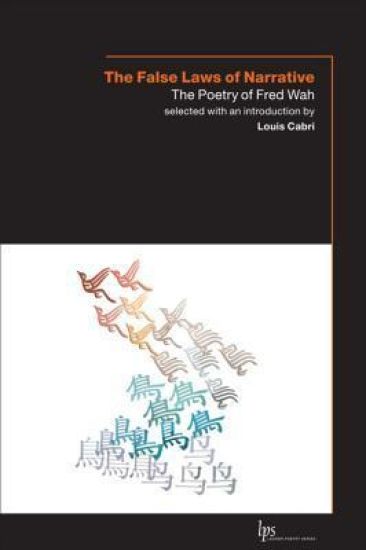
The False Laws of Narrative

The False Laws of Narrative

Fred Wah

Wilfrid Laurier University Press
2009
nidottu
The False Laws of Narrative is a selection of Fred Wah's poems covering the poets entire poetic trajectory to date. A founding editor of Tish magazine, Wah was influenced by leading progressive and innovative poets of the 1960s and was at the forefront of the exploration of racial hybridity, multiculturalism, and transnational family roots in poetry. The selection emphasizes his innovative poetic range. Wah is renowned as one of Canada's finest and most complex lyric poets and has been lauded for the musicality of his verse. Louis Cabri's introduction offers a paradigm for thinking about how sound is actually structured in Wah's improvisatory poetry and offers fresh insights into Wah's context and writing. In an afterword by the poet himself, Wah presents a dialogue between editor and poet on the key themes of the selected poems and reveals his abiding concerns as poet and thinker.
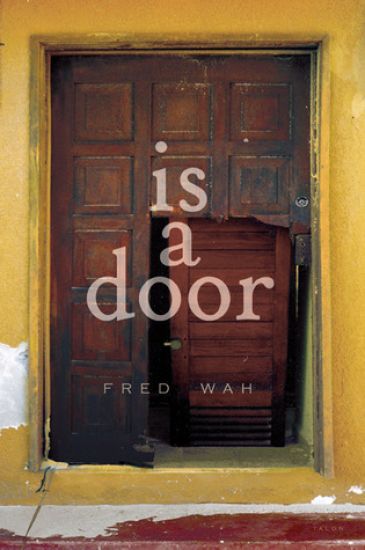
is a door

is a door

Fred Wah

Talonbooks
2009
pokkari
Including poetry projects, a chapbook and incidental poems previously published in magazines and by small presses, is a door makes use of the poem's ability for "suddenness" to subvert closure: the sudden question, the sudden turn, the sudden opening--writing that is generated from linguistic mindfulness, improvisation, compositional problem-solving, collaborative events, travel, investigation and documentary--in short, poetry as practice. Part one, "Isadora Blue," is grounded in the author's encounter with the smashed and broken doors along the hurricane-devastated waterfront of Telchac Puerto, a small village on the north coast of the Yucatan Peninsula. It resonates throughout the other three sections of the book, with its attention to hybridity and "between-ness"--a poetic investigation of racialized otherness--and the composition of "citizen" and "foreigner" through history and language. Part two of this series of poems, "Ethnogy Journal," written during a trip to Thailand and Laos in 1999, hinges around aspects of "tourist" and "native." Here the poems play in the interstices of spectacle, food and social sightseeing. Much of this poetry is framed by Wah's acute sense of the marginalized non-urban local "place" and coloured by his attempt to articulate senses of otherness and resistance, or writing the "public self," particularly in the book's third section, "Discount Me In"--a series of sixteen poems from his discursive poetic essay "Count Me In." The fourth section, "Hinges," is tinted with portraits of the social subject mired in a diasporic mix, a metanarrative trope in Fred Wah's work that began with Breathin' My Name With a Sigh. Characteristically playful and compositionally musical, this is poetry that watches both sides of the doorway: unsettled, unpredictable, closed and open. Sometimes the door swings and can be kicked. Sometimes it's simply missing. Sometimes it's a sliding door.

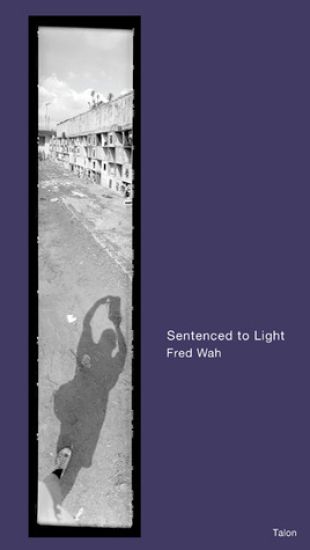
Sentenced to Light

Sentenced to Light

Fred Wah

Talonbooks
2008
pokkari
An astonishing series of unique collaborative image-text projects, Sentenced to Light privileges its poetic and formal textual space outside most of the images that are its original twins and offers the reader a glimpse of the dialectic of larger conversations, the unpredictable, improvisatory bavardage that whispers between words and pictures in a space we call culture. "Anecdotal Waters" is an invited response to a mixed-media installation by Mireille Perron and Paul Woodrow. "Articulations" was printed on a series of fifty paintings by Calgary artist Bev Tosh and incorporated in both an installation and a performance of the work. "All Americans" was serialized for an installation on the Minnesota Massacre of 1862. A biotext of landscape and memory, "Twain" consists of textual improvisations provoked by and situated alongside six poems that artist Marian Penner Bancroft applied directly to the walls among the photographs in her exhibition "By Land and Sea (Prospect and Refuge)." The alphabet of "jingo cards" was written for a collaborative performance piece with Vancouver multi-media artist Haruko Okano called "High Bridi Tea" that gestated years later into her jargon art project "Homing Pidgin." "Pop Goes the Hood," was written for a video-text performance commissioned from video artist Henry Tsang and poet Fred Wah. "Me Too" pays ghostly homage to the visual and textual work of Roy Kiyooka. The two "transcreations" are part of photographer Ernie Kroeger's "Wild Writing" project that uses his photographically treated rubbings of the glyphs left by the Mountain Pine Beetle. The series of ppretenses (prose-poem sentences) was written for "Pays Maya," a show of photographer Richard Baillergeon's Yucatan images. In the title section, the prose-poem sentences stretch to comprehend the vanishing edges of lens, eye and syntax within Mexican photographer Eric Jervaise's black-and-white photos, made with his hand-built panoramic view camera.
Diamond Grill

Diamond Grill

Fred Wah

NeWest Press
2006
pokkari
This story of family and identity&#44 migration and integration&#44 culture and self&#45discovery is told through family history&#44 memory&#44 and the occasional recipe&#46 Diamond Grill is a rich banquet where Salisbury Steak shares a menu with chicken fried rice&#44 bird&#146s nest soup sets the stage for Christmas plum pudding&#59 where racism simmers behind the shiny clean surface of the action in the cafe&#46 An exciting new edition of Fred Wah&#146s best&#45selling bio&#45fiction&#44 on the 10th anniversary of its original publication&#44 with added text and an all new afterword by the author&#46
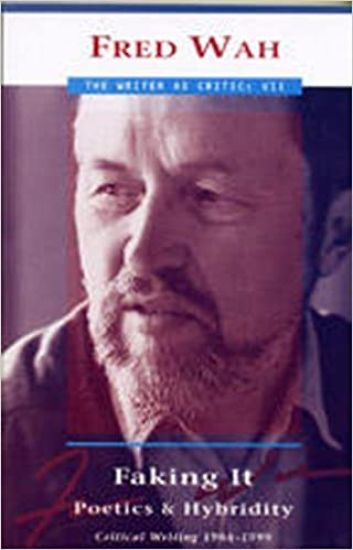
Faking It

Faking It

Fred Wah

NeWest Press
2000
pokkari
According to Fred Wah, the act of thinking critically is one of exploration and discovery. In this book, Wah demonstrates how writing poetry is writing critically. This scrapbook of Wah's work -- collected from fifteen years of his writing -- contains essays, reviews, journals, notes and, most importantly, poetic improvisations on contemporary poetry and identity. Faking It was written between 1984 and 1999 -- during major shifts in critical thinking and cultural production -- and the hybrid style of the book is an apt reflection of these changing times, as well as a reflection and study of Wah's own hybrid identity.