Kirjojen hintavertailu – 12 903 725 kirjaa ja 27 kauppaa

Kirjailija

Frederic Block

Kirjat ja teokset yhdessä paikassa: 5 kirjaa, julkaisuja vuosilta 2011–2024, suosituimpiin kuuluu Crimes and Punishments: Entering the Mind of a Sentencing Judge. Vertaile teosten hintoja ja tarkista saatavuus suomalaisista kirjakaupoista.

5 kirjaa

Kirjojen julkaisuvuodet: 2011–2024.

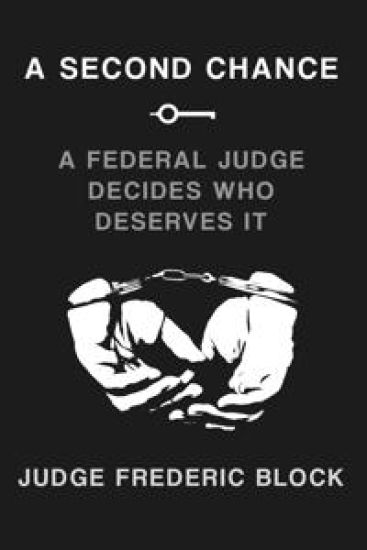
A Second Chance

A Second Chance

Frederic Block

THE NEW PRESS
2024
sidottu
A sitting federal judge’s lively and provocative recounting of six cases, to make the argument for revisiting overly punitive sentences Murderous mafia capos. The police officer who brutalized Abner Louima. A purveyor of child pornography. These are some of the defendants to have come before U. S. District Court Judge Frederic Block to ask for reductions in their prison sentences. All of them have been found guilty and have already served decades in prison, but under the 2018 First Step Act they are entitled to petition for reconsideration and release. In a rare glimpse behind the bench, Judge Block recounts the cases of six incarcerated people who have done heinous things but have nevertheless petitioned him for their release. He then explains the criteria the First Step Act has spelled out for his consideration. And, in a novel twist, he asks the reader, “What would you do?” Judge Block puts us out of our suspense in a third section of the book where he tells us what he did do in each case and why, as he weighs each compassionate release request, evaluating issues ranging from “the trial tax,” to sentencing disparities, to judicial incompetence. Finally, Judge Block makes the compelling case that the First Step Act should be extended to state court judges, since state prisons house about 90 percent of those incarcerated. In a book that could be the basis for a new season of Law & Order, Judge Block challenges our ideas about punishment and justice.
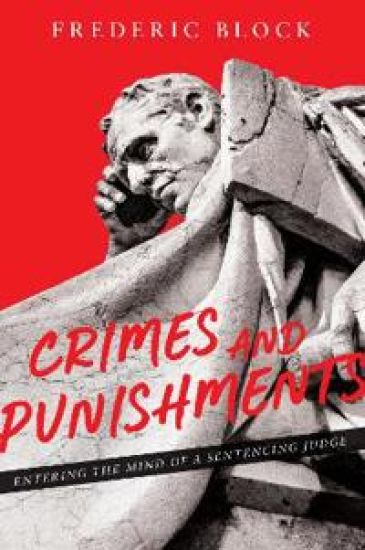
Crimes and Punishments: Entering the Mind of a Sentencing Judge
The government has no power greater than to take away a person’s freedom or even life. We trust our judges to balance justice and mercy to arrive at an appropriate sentence when a person has been convicted of a crime. Yet to a large extent, how a judge goes about this process is invisible to the lawyers in a case, the public, and even to the criminal defendant being sentenced. To be sure, judges often give reasons for their sentences, such as explaining when their sentence is dictated by a statute requiring a mandatory minimum sentence or how the punish-ment fits under the sentencing guidelines. But the human dimension of this - how a judge actually balances justice and mercy, what a judge feels in putting a person in prison for a long time or condemning a person to death - is rarely publicly explored. Judge Frederic Block, a long-time federal district court judge, has written a book which describes the experience of a human being punishing other human beings. Judge Block does this by telling the stories of some of the cases that he has handled since coming on the bench in 1994. Each of the cases is compelling and Judge Block is a great storyteller. Each evokes important issues concerning our criminal justice system. Judge Block is candid in sharing his thinking and his feelings as he approached imposing punishments in these instances. He is remarkably self-reflective, often describing his concerns that his religion or the unfounded accusations against him or his recent reading might be unduly influencing the sentences he is imposing. Along the way, he tells us a lot about the workings of the federal courts and also about his life. This is a book that can be enjoyed simply for its stories and its humanity. It is about the crimes people commit and what a judge considers in punishing them. It is accessible to lawyers and non-lawyers alike.
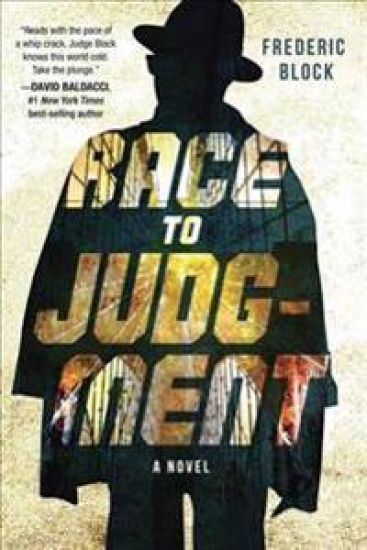
Race to Judgment

Race to Judgment

Frederic Block

Select Books Inc
2017
sidottu
Fast paced legal thriller and powerful urban drama from Frederic Block, the Brooklyn based federal judge who sentenced Peter Gotti of the Gambino crime family. Based partly on fact and seething racial tensions and political corruption, it doesn't get any more "New York" than Race to Judgment! Race to Judgment is a "reality-fiction" debut novel loosely based on a number of high-profile cases handled by its author, a federal trial court judge, over his 23 years on the federal bench in Brooklyn-such as the Crown Heights riots and the Peter Gotti trial. It tracks the rise of the fictional African-American civil rights protagonist Ken Williams (in real life, the recently deceased Brooklyn DA Ken Thompson) from his days as an Assistant United States Attorney through his meteoric rise to unseat the long-term, corrupt Brooklyn DA because of a spate of phony convictions against black defendants, including another one of the judge's real cases (JoJo Jones in the book) for the murder of a Hasidic rabbi. Williams' dramatic courtroom antics (with the aid of his colorful private eye) results in JoJo's exoneration after 16 years behind bars. In addition, Williams defends a young black guidance counselor accused of killing the rabbi's son many years ago, and champions the cause of a young Hasidic woman raped by her father. As a hobby, Williams plays jazz piano and writes country songs written by the author-which are reproduced in the book and can be heard on e-books and the Internet.