Kirjailija
Frédéric Gros
Kirjat ja teokset yhdessä paikassa: 20 kirjaa, julkaisuja vuosilta 2001–2026, suosituimpiin kuuluu El Libro de Los Días / A Philosophy of Shame: A Revolutionary Emotion. Vertaile teosten hintoja ja tarkista saatavuus suomalaisista kirjakaupoista.
Nimi esiintyy myös muodoissa: Frederic Gros
20 kirjaa
Kirjojen julkaisuvuodet: 2001–2026.
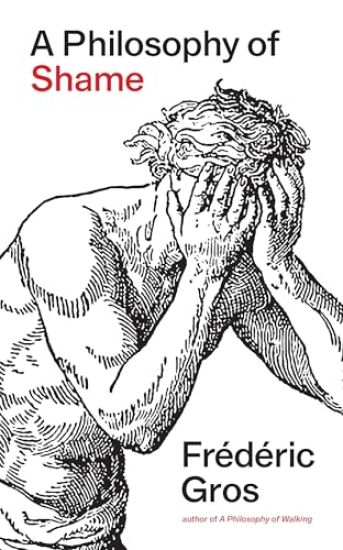
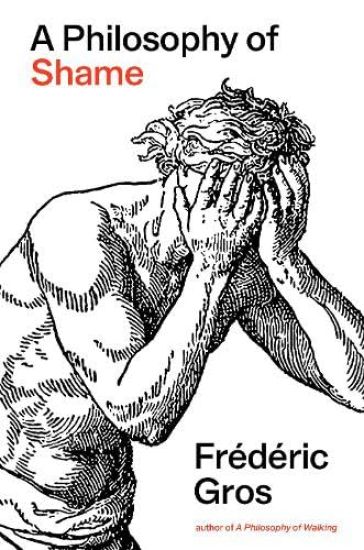
Can shame become a source of political strength? Faced with injustice, growing inequality and systemic violence, we cry out in shame. We feel ashamed of obscene wealth amid wider deprivation. We feel ashamed of humanity for its ruthless and relentless exploitation of the earth. We feel ashamed of the racism and sexism that permeate society and our everyday lives. This difficult emotion is not just sadness or a withdrawal into oneself, nor is it a paralysing sense of inadequacy. As Frédéric Gros argues in A Philosophy of Shame, it arises when our perception of reality rejects passivity and resignation and instead embraces imagination. Shame thus becomes the expression of an anger that is a powerful, transformative force -one that assumes a radical character. In dialogue with authors such as Primo Levi, Annie Ernaux, Virginie Despentes and James Baldwin, Gros explores a concept that is still little understood in its anthropological, moral, psychological and political depths. Shame is a revolutionary sentiment because it lies at the foundation of any path of subjective recognition, transformation and struggle.
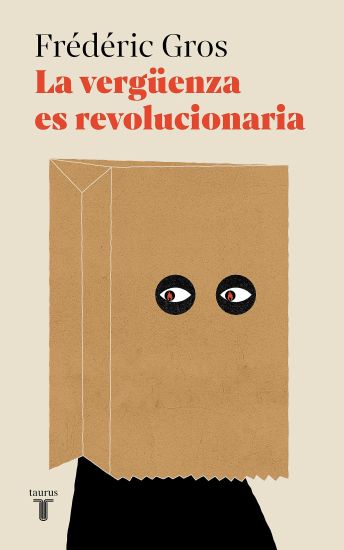
El Libro de Los Días / A Philosophy of Shame: A Revolutionary Emotion
Frédéric Gros
Taurus
2026
nidottu
Y si aprovech ramos el poder de la verg enza como un motor vital y pol tico? El nuevo ensayo del autor de Andar, una filosof a. La verg enza es un sentimiento omnipresente en el mundo contempor neo, un signo de nuestra responsabilidad. Podemos avergonzarnos del estado del mundo, de las propias pertenencias frente a los que no tienen nada, de la indecente riqueza de los poderosos, del modo en que asfixiamos el planeta, de las actitudes sexistas o racistas... La verg enza no es solo tristeza y retraimiento; tambi n es portadora de ira, de una energ a transformadora. Por eso Marx proclam que la verg enza es revolucionaria. En este ensayo, Fr d ric Gros recurre a autores como Primo Levi, a Annie Ernaux, a Virginie Despentes y a James Baldwin, para explorar las profundidades de un sentimiento demasiado olvidado en la filosof a moral y pol tica. ENGLISH DESCRIPTION An original reflection on shame as the central feeling of our age - the expression of an anger that is the necessary condition for new struggles. Can shame become a source of political strength? Faced with injustice, growing inequality and systemic violence, we cry out in shame. We feel ashamed of obscene wealth amid wider deprivation. We feel ashamed of humanity for its ruthless and relentless exploitation of the earth. We feel ashamed of the racism and sexism that permeate society and our everyday lives. This difficult emotion is not just sadness or a withdrawal into oneself, nor is it a paralysing sense of inadequacy. As Fr d ric Gros argues in A Philosophy of Shame, it arises when our perception of reality rejects passivity and resignation and instead embraces imagination. Shame thus becomes the expression of an anger that is a powerful, transformative force -one that assumes a radical character. In dialogue with authors such as Primo Levi, Annie Ernaux, Virginie Despentes and James Baldwin, Gros explores a concept that is still little understood in its anthropological, moral, psychological and political depths. Shame is a revolutionary sentiment because it lies at the foundation of any path of subjective recognition, transformation and struggle.
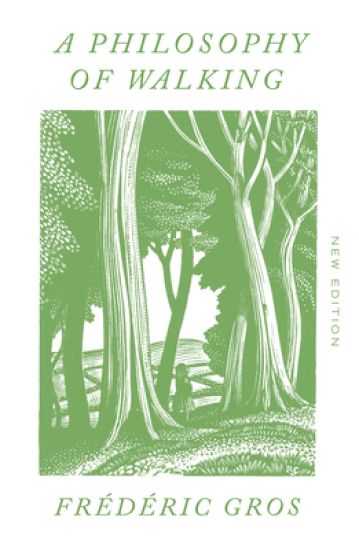
Caminar es mucho m s que poner un pie delante del otro. Y si solo se pudiera pensar bien a trav s de los pies? «Un admirable libro que entusiasmar incluso a los sedentarios empedernidos. -Le Monde des Livres Andar no exige ni aprendizaje, ni t cnica, ni material ni dinero. S lo requiere de un cuerpo, de espacio y de tiempo. Cada d a son m s los aficionados a caminar, y todos ellos obtienen los beneficios de esa propensi n: sosiego, comuni n con la naturaleza, plenitud... Andar. Una filosof a es un recorrido (a pie), filos fico y literario, en compa a de ilustres autores como Rimbaud, Thoreau o Kant cuyo hilo conductor es el simple hecho de caminar. Andar como experiencia de libertad, como acto solitario y propicio para la enso aci n, como motor de creatividad... Este libro es una celebraci n del paseo y una reivindicaci n de virtudes elementales que parecemos haber olvidado en esta poca de prisas y de monoton a. Desde un enfoque cultural, Fr d ric Gros se adhiere a la corriente de lo slow y nos invita a valorar las ventajas de la lentitud. «Para ir m s despacio no se ha encontrado nada mejor que andar. Para andar hacen falta ante todo dos piernas. Todo lo dem s es superfluo. Quieren ir m s r pido? Entonces no caminen, hagan otra cosa: rueden, desl cense, vuelen . ENGLISH DESCRIPTION This "passionate affirmation of the simple life, and joy in simple things" explores how walking influenced history's greatest thinkers--from Henry David Thoreau and Jack Kerouac to Gandhi and Nietzsche (Observer). In this French bestseller, leading thinker and philosopher Fr d ric Gros charts the many different ways we get from A to B--the pilgrimage, the promenade, the protest march, the nature ramble--and reveals what they say about us. Gros draws attention to other thinkers who also saw walking as something central to their practice. On his travels he ponders Thoreau's eager seclusion in Walden Woods; the reason Rimbaud walked in a fury, while Nerval rambled to cure his melancholy. He shows us how Rousseau walked in order to think, while Nietzsche wandered the mountainside to write. In contrast, Kant marched through his hometown every day, exactly at the same hour, to escape the compulsion of thought. Brilliant and erudite, A Philosophy of Walking is an entertaining and insightful manifesto for putting one foot in front of the other.

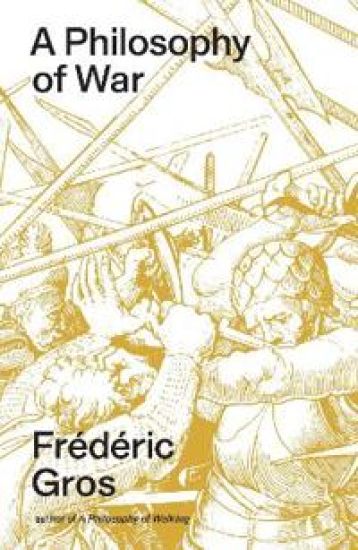
According to one wag, war 'died in Hiroshima' more than half a century ago. And yet it has never gone away. Terrorist acts, Israeli-Palestinian and Middle Eastern conflicts, the implosion of Yugoslavia, countries torn apart by factions, not to mention other wars: economic, psychological, computer, gender or generational... Russia's invasion of Ukraine has reshuffled the cards. This time, they say, it's the return of real war, with its atrocities, its horrors, its violence. But what is a real war? By calling on the great political philosophers, from Plato to Marx, via Machiavelli and Hobbes, this book attempts to answer this question, along with a series of others: what is a just war? What moral forces are involved in a conflict? Does the state make war, or does war make the state? Finally, after exploring the meanings and stakes of the spectre of 'total' war, he tackles the ultimate question: why war?
Can shame become a source of political strength? Faced with injustice, growing inequality and systemic violence, we cry out in shame. We feel ashamed of obscene wealth amid wider deprivation. We feel ashamed of humanity for its ruthless and relentless exploitation of the earth. We feel ashamed of the racism and sexism that permeate society and our everyday lives. This difficult emotion is not just sadness or a withdrawal into oneself, nor is it a paralysing sense of inadequacy. As Frédéric Gros argues in A Philosophy of Shame, it arises when our perception of reality rejects passivity and resignation and instead embraces imagination. Shame thus becomes the expression of an anger that is a powerful, transformative force -one that assumes a radical character. In dialogue with authors such as Primo Levi, Annie Ernaux, Virginie Despentes and James Baldwin, Gros explores a concept that is still little understood in its anthropological, moral, psychological and political depths. Shame is a revolutionary sentiment because it lies at the foundation of any path of subjective recognition, transformation and struggle.
By walking, you escape from the very idea of identity, the temptation to be someone, to have a name and a history ... The freedom in walking lies in not being anyone; for the walking body has no history, it is just an eddy in the stream of immemorial life. In A Philosophy of Walking, a bestseller in France, leading thinker Frédéric Gros charts the many different ways we get from A to B-the pilgrimage, the promenade, the protest march, the nature ramble-and reveals what they say about us. Gros draws attention to other thinkers who also saw walking as something central to their practice. On his travels he ponders Thoreau's eager seclusion in Walden Woods; the reason Rimbaud walked in a fury, while Nerval rambled to cure his melancholy. He shows us how Rousseau walked in order to think, while Nietzsche wandered the mountainside to write. In contrast, Kant marched through his hometown every day, exactly at the same hour, to escape the compulsion of thought. Brilliant and erudite, A Philosophy of Walking is an entertaining and insightful manifesto for putting one foot in front of the other.
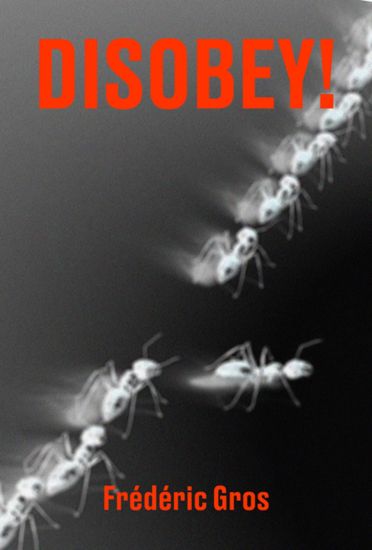
The world is out of joint, so much so that disobeying should be an urgent act for everyone. In this provocative essay, Frédéric Gros explores the roots of political obedience, social conformity, economic subjection, respect for authorities, constitutional consensus. Examining the various styles of obedience provides tools to study, invent and induce new forms of civic disobedience and lyrical protest. Nothing can be taken for granted: neither supposed certainties nor social conventions, economic injustice or moral conviction. Thinking philosophically requires us to never accept truths and generalities that seem obvious-it restores a sense of political responsibility. At a time when the decisions of experts are presented as the result of icy statistics and anonymous calculations, disobeying becomes an assertion of humanity. To philosophise is to disobey. This book is a call for critical democracy and ethical resistance.
Å vandre krever ingen øvelse, ingen teknikk, intet utstyr, ingen penger. Alt en trenger er sin kropp, plass og tid. Men det å gå oppreist kan også være en filosofisk handling og en åndelig erfaring. Forfatteren går på lystvandring i filosofiens og litteraturens historie, og viser hvordan det å tenke med føttene har vært en praksis fra antikkens greske filosofer over Rousseau, Kant og Nietzsche til Thoreau og Gandhi. Fra pilgrimsreise til promenade og protestmarsj. De daglige gåturer setter spor i teksten i form av rasende, ydmyke eller systematiske erkjennelser.
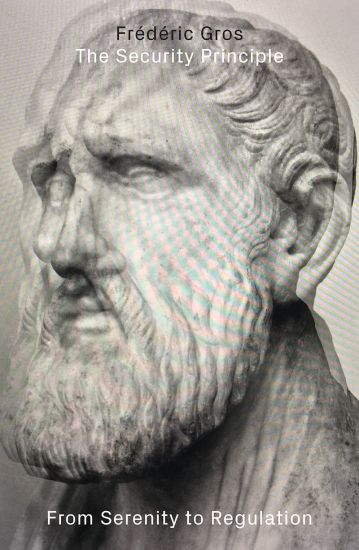
In The Security Principle, French philosopher Frédéric Gros takes a historical approach to the concept of "security", looking at its evolution from the Stoics to the social network. With lucidity and rigour, Gros's approach is fourfold, looking at security as a mental state, as developed by the Greeks; as an objective situation and absence of all danger, as prevailed in the Middle Ages; as guaranteed by the nation state and its trio of judiciary, police and military; and finally "biosecurity", control, regulation and protection in the flux of contemporary society. In this deeply thought-provoking account, Gros's exploration of security shines a light both on its past meanings as well as its present uses, exposing the contemporary abuses of security and the pervasiveness of it in everyday life in the Global North.
At gå er ikke en sport. Det kræver kun en smule øvelse, men intet udstyr eller penge. Man skal blot have en krop, tid og plads. At gå er også en filosofisk handling og en åndelig erfaring. Hvad hvis man tænker bedst med fødderne? "Gå!" inviterer på lystvandring i filosofi- og kulturhistorien. Kant, Kierkegaard og Nietzsche havde de daglige vandringer tilfælles. Deres tænkning bugter og slynger sig efter meget særlige mønstre, der minder om den måde, de hver især bevægede sig på. Den amerikanske forfatter Thoreau flygtede fra civilisationen ud i skovene, mens Gandhis våben blev den politiske fredsmarch. I vores dage søger det plagede og stressede menneske tilbage til pilgrimsvandringen i håb om at forsvinde ind i landskabet: at krop, sjæl og ånd smelter sammen og bliver et med universet. "Gå!" tager en af kroppens vigtigste funktioner på ordet. Forfatteren viser med poesi og livsindsigt de mange aspekter og betydninger af noget så simpelt som at bevæge sig gennem verden. “En lidenskabelig hyldest til det enkle liv og glæden ved de små ting. Så smukt skrevet: klart, skarpt, præcist.” The ObserverFrédéric Gros er professor i filosofi ved Universitetet i Paris. "Gå! En filosofisk fodrejse" er oversat til adskillige sprog.
"Kun ihminen on kerran noussut pystyyn, hän ei pysy paikallaan." Ranskalaisen kirjailijan ja filosofin Frederic Grosn Kävelyn filosofiaa tarjoaa monta näkökulmaa kävelemiseen. Ei ole samantekevää, taivaltaako pyhiinvaelluksella vai marssiiko mielenosoituksessa, sillä kävelemisen tapa vaikuttaa sekä ruumiiseen että sieluun. Oivaltava ja viihdyttävä teos pohdiskelee myös kuuluisien ajattelijoiden ja taiteilijoiden kävelytapoja, näiden elämään vahvasti eläytyen. Rimbaud käveli raivon vallassa, kun taas Rousseau ja Nietzsche hakeutuivat kävelylle haaveilemaan ja ajattelemaan. Kant puolestaan käveli kotikaupunkinsa läpi joka päivä - aina tismalleen samalla kellonlyömällä. Frederic Gros on Pariisin yliopiston filosofian professori. Kävelyn filosofiaa on ollut myyntimenestys Ranskassa, ja se on julkaistu myös englanniksi.
According to political philosopher Frederic Gros, traditional notions of war and peace are currently being replaced by ideas of intervention and security. But while we may be able to speak of an end to war, this does not imply an end to violence. On the contrary, Gros argues, we are witnessing a reconfiguration of our ideas of war, resulting in new forms of violence - terrorist attacks, armed groups jockeying for territory, the use of precision missiles, and the dangerous belief that conflict can be undertaken without casualties. In "States of Violence", Gros explains how war was once conducted to defend or increase the power of a city, an empire, or a state, but today conflict is directed at the very fragility of the individual and based upon a logic of unilateral destruction inflicted upon deprived civilian populations. While war was once rationalized as justified bloodshed, these new states of violence are instead centered on the spectacle of stark, publicized civilian suffering. By charting the history of the philosophy of conflict in Western discourse, Gros offers a stimulating and timely critique of contemporary notions of war and terror.
Projektentwicklungsfonds. Eine kritische Analyse aus Sicht der Projektentwickler, der Fondsinitiatoren und der Investoren
Frederic Gros
Grin Publishing
2008
pokkari
And this is Justice: Punishment in a Democracy / Et ce sera justice: Punir en démocratie
Antoine Garapon; Frédéric Gros
Odile Jacob
2001
nidottu
After long years of silence, the painful subject of prison sentencing is finally being discussed in the public arena. In most cases, the point of view adopted is one of humanitarian iedignation coupled with a denunciation of prison violence. The present French government is committed to a significant review of sentencing laws, requiring the justification of prison sentences, at a time when public opinion seems much more interested in improving prison conditions and in guaranteeing prisoners the most formal of rights. But once the angles of denunciation and technical improvements have been exhausted, the problem that remains is less one of deciding what should not be done, than of what should be done. In other words, we will finally have to fied an answer to that most difficult of questions: What is the meaning of a sentence? This is the issue that the present book faces squarely and directly, from the philosophical, ethical and political angles. The authors? goal is less to confront different viewpoints than to defend a shared belief: a just sentence is one that restores bonds. Antoine Garapon, a former juvenile judge, is the founder of the Institut des hautes tudes sur la justice. He is an editor for the French magazine Esprit and the author of Gardien des promesses and Bien juger. He co-edited La Justice et le Mal with Denis Salas. Fr d ric Gros, a philosopher, is a lecturer at the University of Paris-XII. He is the author of Michel Foucault, Foucault et la folie and Cr ation et g nie, published by Presses Universitaires de France (PUF). He is the editor of the latest volume of posthumous lectures by Michel Foucault, L? Herm neutique du sujet, recently published by Gallimard. Thierry Pech is a researcher at the Institut des hautes tudes sur la justice.