Kirjojen hintavertailu – 12 903 735 kirjaa ja 27 kauppaa

Kirjailija

Frédéric Keck

Kirjat ja teokset yhdessä paikassa: 7 kirjaa, julkaisuja vuosilta 2008–2026, suosituimpiin kuuluu How French Moderns Think. Vertaile teosten hintoja ja tarkista saatavuus suomalaisista kirjakaupoista.

Nimi esiintyy myös muodoissa: Frederic Keck

7 kirjaa

Kirjojen julkaisuvuodet: 2008–2026.

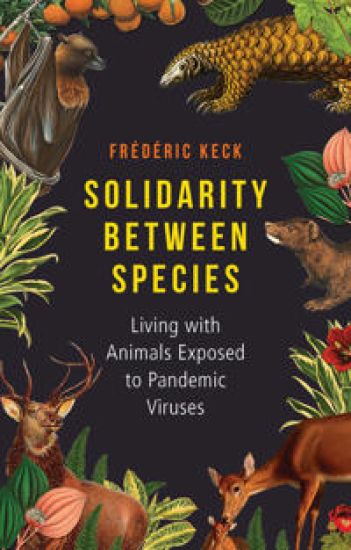
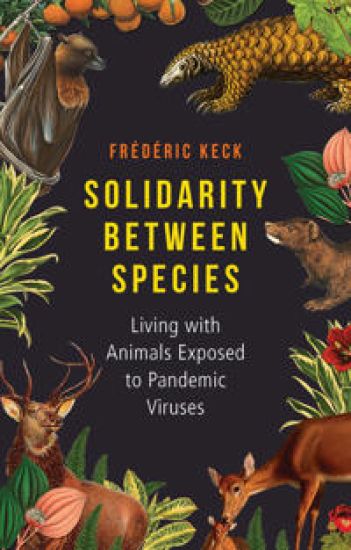
Solidarity Between Species

Solidarity Between Species

Frederic Keck

JOHN WILEY AND SONS LTD
2025
sidottu
This book examines how the Covid-19 pandemic can be described as a biopolitical crisis, taking into account a fact often overlooked by commentators: Covid-19 is a zoonosis, a disease transmissible between animal species. The Sars-Cov2 virus causing this respiratory disease circulated in bats before passing to humans under as-yet mysterious conditions, and it was transmitted from humans to other species, notably mink and deer. Building on Michel Foucault’s revival of the term “biopolitics” and related notions (disciplinary power, pastoral power, cynegetic power), this book traces a set of public health measures taken over the last two centuries to control epidemics. It underlines how the need to conserve virus strains in order to identify and anticipate their mutations has given rise to cryopolitics, a set of techniques aimed at suspending the living in order to defer death. The book then questions the emancipatory scope of this cryopolitics by examining interspecies solidarity built by the warning signals sent by animals to humans about coming threats, be they pandemics, natural disasters, or climate change. By blurring the boundaries between the wild and the domestic resulting from the process of domestication, the politics of zoonoses relies on sentinels who preserve the memory of signs from the past to prepare living beings for future threats by involving them in a common ideal.
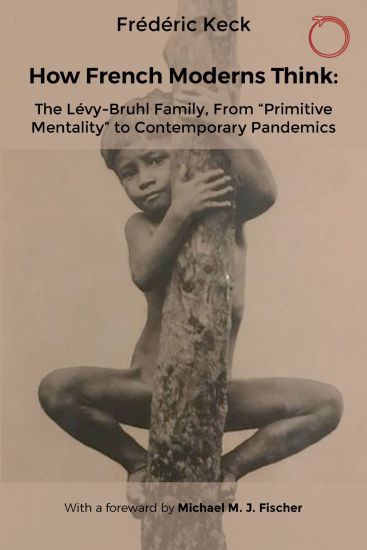
How French Moderns Think

How French Moderns Think

Frédéric Keck; Michael M. J. Fischer

HAU Society Of Ethnographic Theory
2024
nidottu
This book traces the contributions of the Lévy-Bruhl family to social and political thought and expertise in 20th-century France, shaping the anticipation of economic and health crises. How French Moderns Think tells the story of the French sociological tradition through four generations of the Lévy-Bruhl family: Lucien, who founded the Institute of Ethnology at the University of Paris; his son Henri, who founded the Institute of Roman Law; his grandson Raymond, who took part in the creation of the National Institute of Statistics and Economic Studies; and his great-grandson Daniel, a vaccine specialist at the Institute of Public Health. This family history casts a new light on the philosophical debates about “primitive mentality” and the “savage mind.” By drawing on the expert knowledge inherent in this family genealogy, the articulation between the logical and the “pre-logical” is not a cognitive question but rather a problem of anticipating unpredictable events. By relating Lévy-Bruhl’s engagements from the Dreyfus Affair to the Minister of Armaments during the First World War, Keck narrates the confrontation of the socialist ideal of justice and truth with the French colonial experience and its transformations in global technologies preparing for pandemics.
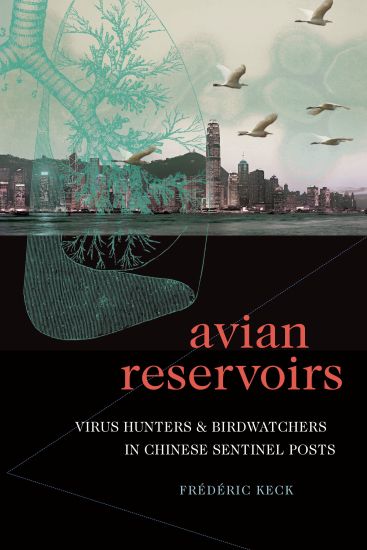
Avian Reservoirs

Avian Reservoirs

Frédéric Keck

Duke University Press
2020
sidottu
After experiencing the SARS outbreak in 2003, Hong Kong, Singapore, and Taiwan all invested in various techniques to mitigate future pandemics involving myriad cross-species interactions between humans and birds. In some locations microbiologists allied with veterinarians and birdwatchers to follow the mutations of flu viruses in birds and humans and create preparedness strategies, while in others, public health officials worked toward preventing pandemics by killing thousands of birds. In Avian Reservoirs FrÉdÉric Keck offers a comparative analysis of these responses, tracing how the anticipation of bird flu pandemics has changed relations between birds and humans in China. Drawing on anthropological theory and ethnographic fieldwork, Keck demonstrates that varied strategies dealing with the threat of pandemics-stockpiling vaccines and samples in Taiwan, simulating pandemics in Singapore, and monitoring viruses and disease vectors in Hong Kong-reflect local geopolitical relations to mainland China. In outlining how interactions among pathogens, birds, and humans shape the way people imagine future pandemics, Keck illuminates how interspecies relations are crucial for protecting against such threats.
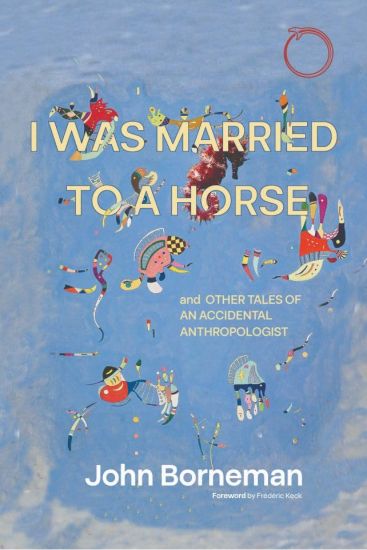
I Was Married to a Horse, and Other Tales of an Accidental Anthropologist
A personal odyssey and a portrait of a distinguished anthropologist in practice—a life shaped by accident, transformation, and the enduring power of connection. How does the youngest of eight children, raised on a family farm in northern Wisconsin by parents with only half a grammar school education, become an Ivy League professor and a witness to some of the most transformative events of the late twentieth and early twenty-first centuries? In this remarkable memoir, John Borneman tells the story of his life as an “accidental anthropologist” with searing honesty, humor, and emotional depth. Tracing a path from his upbringing as a queer farm boy to a career in anthropology, Borneman’s memoir reflects on social mobility, the decline of the American family farm, and shifting understandings of queerness and masculinity. Meanwhile, as a fourth-generation German American, his journey carried him to divided Berlin, where he captures the moods of East and West, and back again during the arrival of Syrian refugees—culminating in a long-standing friendship and a poignant reunion with a refugee he had first met years earlier. Through these encounters, Borneman shows how empathy and attention can reveal the hidden textures of history, identity, and belonging. Rich in insight and humanity, this is a story of personal discovery, intercultural encounter, and the search for meaning in a rapidly changing world—one that speaks to scholars and general readers alike.
Solidarity Between Species

Solidarity Between Species

Frederic Keck

JOHN WILEY AND SONS LTD
2025
nidottu
This book examines how the Covid-19 pandemic can be described as a biopolitical crisis, taking into account a fact often overlooked by commentators: Covid-19 is a zoonosis, a disease transmissible between animal species. The Sars-Cov2 virus causing this respiratory disease circulated in bats before passing to humans under as-yet mysterious conditions, and it was transmitted from humans to other species, notably mink and deer. Building on Michel Foucault’s revival of the term “biopolitics” and related notions (disciplinary power, pastoral power, cynegetic power), this book traces a set of public health measures taken over the last two centuries to control epidemics. It underlines how the need to conserve virus strains in order to identify and anticipate their mutations has given rise to cryopolitics, a set of techniques aimed at suspending the living in order to defer death. The book then questions the emancipatory scope of this cryopolitics by examining interspecies solidarity built by the warning signals sent by animals to humans about coming threats, be they pandemics, natural disasters, or climate change. By blurring the boundaries between the wild and the domestic resulting from the process of domestication, the politics of zoonoses relies on sentinels who preserve the memory of signs from the past to prepare living beings for future threats by involving them in a common ideal.
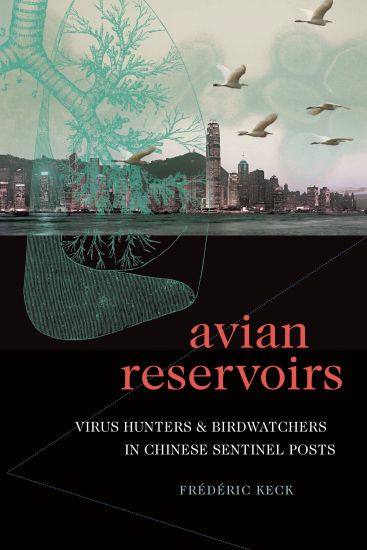
Avian Reservoirs

Avian Reservoirs

Frédéric Keck

Duke University Press
2020
pokkari
After experiencing the SARS outbreak in 2003, Hong Kong, Singapore, and Taiwan all invested in various techniques to mitigate future pandemics involving myriad cross-species interactions between humans and birds. In some locations microbiologists allied with veterinarians and birdwatchers to follow the mutations of flu viruses in birds and humans and create preparedness strategies, while in others, public health officials worked toward preventing pandemics by killing thousands of birds. In Avian Reservoirs FrÉdÉric Keck offers a comparative analysis of these responses, tracing how the anticipation of bird flu pandemics has changed relations between birds and humans in China. Drawing on anthropological theory and ethnographic fieldwork, Keck demonstrates that varied strategies dealing with the threat of pandemics-stockpiling vaccines and samples in Taiwan, simulating pandemics in Singapore, and monitoring viruses and disease vectors in Hong Kong-reflect local geopolitical relations to mainland China. In outlining how interactions among pathogens, birds, and humans shape the way people imagine future pandemics, Keck illuminates how interspecies relations are crucial for protecting against such threats.