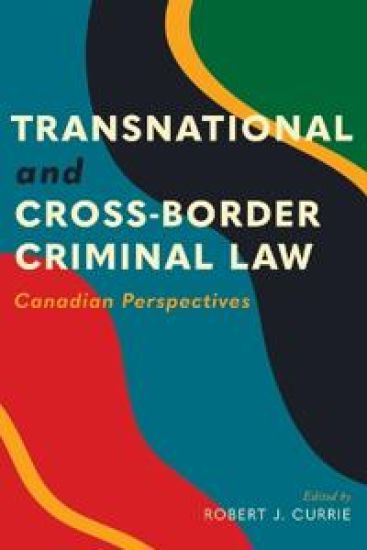
Transnational and Cross-Border Criminal Law
Robert J. Currie; Donald K. Piragoff; Gillian MacNeil; Joseph Rikhof; Michael Nesbitt; Christopher Ram; Leah West; Robin Parker; Peter M. German; James Cohen; Sanaa Ahmed; Michelle Gallant; Joanna Harrington; W. Michael G. Osborne; Kathryn Zedde; Stephen Schneider; Frédéric Mégret; Jeffrey G. Johnston; Amélie Aubut; Adelina Iftene; Olivia Genge; Fraser M. Kelly; Elizabeth Bennett
Irwin Law
2023
pokkari
The time of globalization has seen an onslaught of criminal activity that crosses borders. The legal suppression and prosecution of transnational and cross-border crime raise unique and complex legal issues, and law enforcement, lawyers, and judges have struggled to keep up. Transnational & Cross-Border Criminal Law: Canadian Perspectives fills a pronounced gap in Canadian legal literature. Written by subject matter experts, each chapter exposes and analyzes a current and pressing issue in this realm and is designed both to serve as a resource for researchers and to provide cutting-edge insight on front-burner issues. The group of authors -- made up of prosecutors, defence lawyers, government counsel, academics, and civil society advocates -- take on a variety of subjects, including terrorism, financial crime and corruption, jurisdiction, extradition, money laundering, trafficking, maritime enforcement, cross-border evidence-gathering, and the international transfer of prisoners. This unique collection will help to advance general understanding of one of the most pressing public policy issues of our time.