Kirjojen hintavertailu – 12 859 828 kirjaa ja 27 kauppaa
Kirjailija
Frederick Douglass
Kirjat ja teokset yhdessä paikassa: 442 kirjaa, julkaisuja vuosilta 1845–2026, suosituimpiin kuuluu Narrative of the Life of Frederick Douglass. Vertaile teosten hintoja ja tarkista saatavuus suomalaisista kirjakaupoista.
LARGE PRINT EDITION: THE State of Virginia is famous in American annals for the multitudinous array of her statesmen and heroes. She has been dignified by some the mother of statesmen. History has not been sparing in recording their names, or in blazoning their deeds. Her high position in this respect, has given her an enviable distinction among her sister States. With Virginia for his birth-place, even a man of ordinary parts, on account of the general partiality for her sons, easily rises to eminent stations. Men, not great enough to attract special attention in their native States, have, like a certain distinguished citizen in the State of New York, sighed and repined that they were not born in Virginia. Yet not all the great ones of the Old Dominion have, by the fact of their birthplace, escaped undeserved obscurity. By some strange neglect, one of the truest, manliest, and bravest of her children, --one who, in after years, will, I think, command the pen of genius to set his merits forth, holds now no higher place in the records of that grand old Commonwealth than is held by a horse or an o
Texte int gral. En 1845, vingt-sept ans, Frederick Douglass, ancien esclave am ricain, publie l'un des r cits les plus puissants contre l'esclavage. Il y relate son enfance sur la plantation, la s paration des familles, la violence omnipr sente, son d part pour la ville et la r v lation qui le met sur la voie de la libert . Celui que l'on voulait transformer en brute apprend tout seul lire et crire. D'une plume acerbe, il raconte l'inhumanit du syst me esclavagiste et la barbarie des ma tres. L'accompagnement p dagogique situe le r cit dans le contexte de l'esclavage et des luttes abolitionnistes. Il claire l'originalit de cette voix autobiographique, sa force, son ironie, ses strat gies rh toriques de d nonciation. En dition bilingue anglais/fran ais, avec lecture audio int gr e: Non seulement vous pouvez lireMa Vie d'esclave am ricain en fran ais et en anglais, mais vous pouvez aussi couter la lecture de cet ouvrage dans sa version originale anglophone, gr ce votre t l phone ou tablette. L'id al pour am liorer votre ma trise de la langue anglaise
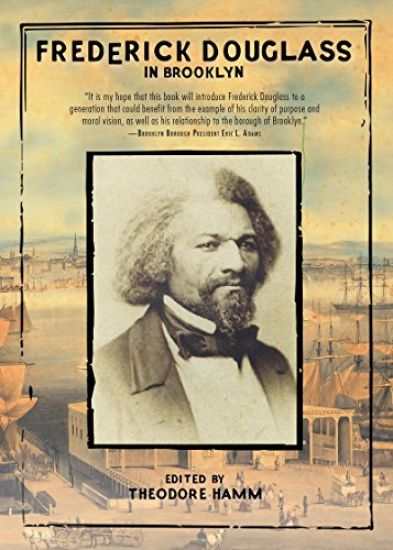
"In Frederick Douglass in Brooklyn, Theodore Hamm persuasively and passionately makes the case that the borough (and former city) became a powerful forum for Douglass's abolitionist agenda in the mid-19th century after he escaped slavery in 1838." --New York TimesThis volume compiles original source material that illustrates the complex relationship between Frederick Douglass and the city of Brooklyn. Most prominent are the speeches the abolitionist gave at the Brooklyn Academy of Music, Plymouth Church, and other leading Brooklyn institutions. Whether discussing the politics of the Civil War or recounting his relationships with Abraham Lincoln and John Brown, Douglass's towering voice sounds anything but dated. An introductory essay examines the intricate ties between Douglass and Brooklyn abolitionists, while brief chapter introductions and annotations fill in the historical context. Frederick Douglass (1818-1895) was an abolitionist leader, spokesman for racial equality, and defender of women's rights. He was born into slavery in Maryland and learned to read and write around age twelve, and it was through this that his ideological opposition to slavery began to take shape. He successfully escaped bondage in 1838. In 1845, he published his first autobiography, Narrative of the Life of Frederick Douglass, an American Slave, which became a best seller in the US and was translated into several languages. He went on to advise President Abraham Lincoln on the treatment of black soldiers during the Civil War and continued to work for equality until his death.
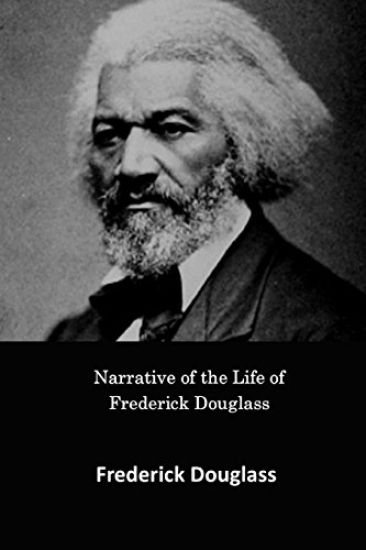
Of the many captivity stories or 'slave narratives' that emerged in the first half of the nineteenth century, the Narrative of the Life of Frederick Douglass is widely considered to be the most important. The author, known for his eloquence, brings the same mastery of the English language to his memoir. His book describes the events of his life and is considered to be one of the most influential pieces of literature to fuel the abolitionist movement of the early 19th century in the United States.
Of the many captivity stories or 'slave narratives' that emerged in the first half of the nineteenth century, the Narrative of the Life of Frederick Douglass is widely considered to be the most important. The author, known for his eloquence, brings the same mastery of the English language to his memoir. His book describes the events of his life and is considered to be one of the most influential pieces of literature to fuel the abolitionist movement of the early 19th century in the United States.
Of the many captivity stories or 'slave narratives' that emerged in the first half of the nineteenth century, the Narrative of the Life of Frederick Douglass is widely considered to be the most important. The author, known for his eloquence, brings the same mastery of the English language to his memoir. His book describes the events of his life and is considered to be one of the most influential pieces of literature to fuel the abolitionist movement of the early 19th century in the United States.
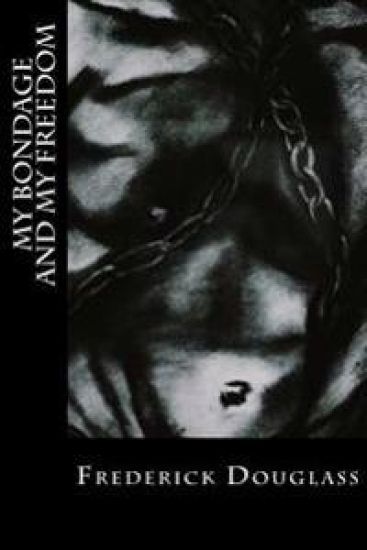
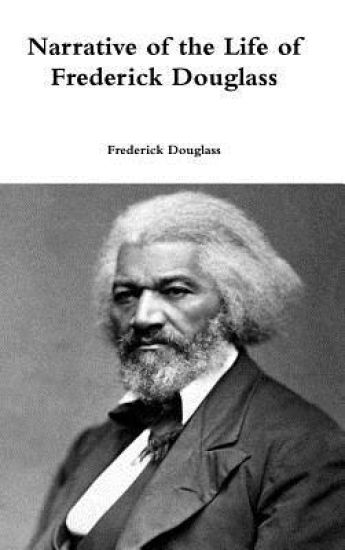
THE BOOKOriginally published in 1845, Narrative of the Life of Frederick Douglass: An American Slave is a memoir and treatise on abolition written by famous orator and former slave Frederick Douglass. It was influential in promoting the cause of abolition. THE AUTHOR "The most influential African American of the nineteenth century, Douglass made a career of agitating the American conscience. He spoke and wrote on behalf of a variety of reform causes: women's rights, temperance, peace, land reform, free public education, and the abolition of capital punishment. But he devoted the bulk of his time, immense talent, and boundless energy to ending slavery and gaining equal rights for African Americans. These were the central concerns of his long reform career. Douglass understood that the struggle for emancipation and equality demanded forceful, persistent, and unyielding agitation. And he recognized that African Americans must play a conspicuous role in that struggle. Less than a month before his death, when a young black man solicited his advice to an African American just starting out in the world, Douglass replied without hesitation: "Agitate Agitate Agitate " -- Roy Finkenbine Frederick Douglass (born Frederick Augustus Washington Bailey; c. February 1818 - February 20, 1895) was an American social reformer, abolitionist, orator, writer, and statesman. After escaping from slavery in Maryland, he became a national leader of the abolitionist movement (or anti-slavement movement) in Massachusetts and New York, gaining note for his oratory and incisive antislavery writings. In his time, he was described by abolitionists as a living counter-example to slaveholders' arguments that slaves lacked the intellectual capacity to function as independent American citizens. Northerners at the time found it hard to believe that such a great orator had once been a slave. Douglass wrote several autobiographies. He described his experiences as a slave in his 1845 autobiography, Narrative of the Life of Frederick Douglass, an American Slave, which became a bestseller, and was influential in promoting the cause of abolition, as was his second book, My Bondage and My Freedom (1855). After the Civil War, Douglass remained an active campaigner against slavery and wrote his last autobiography, Life and Times of Frederick Douglass. First published in 1881 and revised in 1892, three years before his death, it covered events during and after the Civil War. Douglass also actively supported women's suffrage, and held several public offices. Without his approval, Douglass became the first African American nominated for Vice President of the United States as the running mate and Vice Presidential nominee of Victoria Woodhull, on the Equal Rights Party ticket. Douglass was a firm believer in the equality of all peoples, whether white, black, female, Native American, or Chinese immigrants. He was also a believer in dialogue and in making alliances across racial and ideological divides, and in the liberal values of the U. S. Constitution. When radical abolitionists, under the motto "No Union with Slaveholders", criticized Douglass' willingness to engage in dialogue with slave owners, he replied: "I would unite with anybody to do right and with nobody to do wrong."