Kirjailija
Frederick Luis Aldama
Kirjat ja teokset yhdessä paikassa: 44 kirjaa, julkaisuja vuosilta 2003–2026, suosituimpiin kuuluu Touchdown!. Vertaile teosten hintoja ja tarkista saatavuus suomalaisista kirjakaupoista.
44 kirjaa
Kirjojen julkaisuvuodet: 2003–2026.
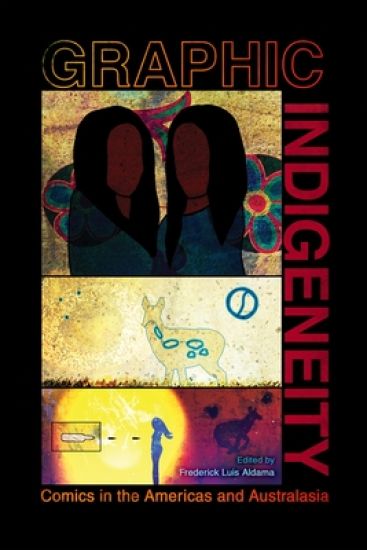
Contributions by Joshua T. Anderson, Chad A. Barbour, Susan Bernardin, Mike Borkent, Jeremy M. Carnes, Philip Cass, Jordan Clapper, James J. Donahue, Dennin Ellis, Jessica Fontaine, Jonathan Ford, Lee Francis IV, Enrique García, Javier García Liendo, Brenna Clarke Gray, Brian Montes, Arij Ouweneel, Kevin Patrick, Candida Rifkind, Jessica Rutherford, and Jorge Santos Cultural works by and about Indigenous identities, histories, and experiences circulate far and wide. However, not all films, animation, television shows, and comic books lead to a nuanced understanding of Indigenous realities. Acclaimed comics scholar Frederick Luis Aldama shines light on how mainstream comics have clumsily distilled and reconstructed Indigenous identities and experiences. He and contributors emphasize how Indigenous comic artists are themselves clearing new visual-verbal narrative spaces for articulating more complex histories, cultures, experiences, and narratives of self. To that end, Aldama brings together scholarship that explores both the representation and misrepresentation of Indigenous subjects and experiences as well as research that analyzes and highlights the extraordinary work of Indigenous comic artists. Among others, the book examines Daniel Parada's Zotz, Puerto Rican comics Turey el Taíno and La Borinqueña, and Moonshot: The Indigenous Comics Collection. This volume's wide-armed embrace of comics by and about Indigenous peoples of the Americas and Australasia is a first step to understanding how the histories of colonial and imperial domination connect the violent wounds that still haunt across continents. Aldama and contributors resound this message: Indigeneity in comics is an important, powerful force within our visual-verbal narrative arts writ large.
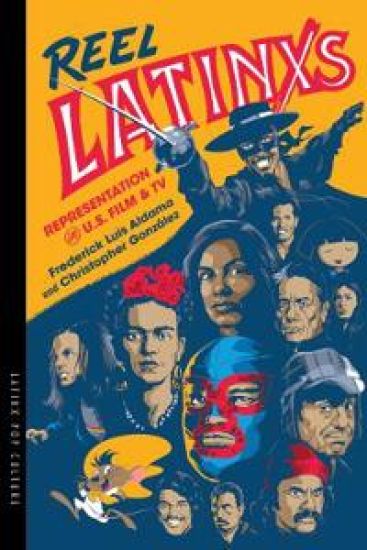
Latinx representation in the popular imagination has infuriated and befuddled the Latinx community for decades. These misrepresentations and stereotypes soon became as American as apple pie. But these cardboard cutouts and examples of lazy storytelling could never embody the rich traditions and histories of Latinx peoples. Not seeing real Latinxs on TV and film reels as kids inspired the authors to dive deep into the world of mainstream television and film to uncover examples of representation, good and bad. The result: a riveting ride through televisual and celluloid reels that make up mainstream culture. As pop culture experts Frederick Luis Aldama and Christopher González show, the way Latinx peoples have appeared and are still represented in mainstream TV and film narratives is as frustrating as it is illuminating. Stereotypes such as drug lords, petty criminals, buffoons, and sexed-up lovers have filled both small and silver screens-and the minds of the public. Aldama and González blaze new paths through Latinx cultural phenomena that disrupt stereotypes, breathing complexity into reel Latinx subjectivities and experiences. In this grand sleuthing sweep of Latinx representation in mainstream TV and film that continues to shape the imagination of U. S. society, these two Latinx pop culture authorities call us all to scholarly action.
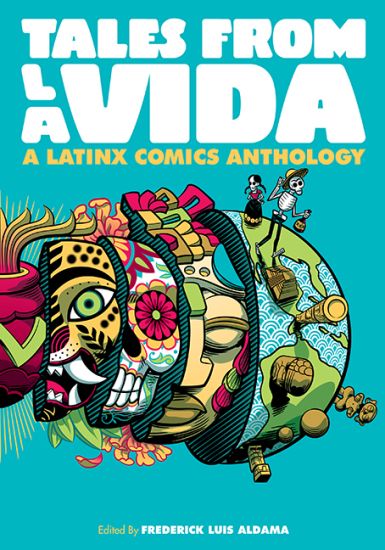
In the Latinx comics community, there is much to celebrate today, with more Latinx comic book artists than ever before. The resplendent visual-verbal storyworlds of these artists reach into and radically transform so many visual and storytelling genres. Tales from la Vida celebrates this space by bringing together more than eighty contributions by extraordinary Latinx creators. Their short visual-verbal narratives spring from autobiographical experience as situated within the language, culture, and history that inform Latinx identity and life. Tales from la Vida showcases the huge variety of styles and worldviews of today's Latinx comic book and visual creators. Whether it's detailing the complexities of growing up--mono- or multilingual, bicultural, straight, queer, or feminist Latinx--or focusing on aspects of pop culture, these graphic vignettes demonstrate the expansive complexity of Latinx identities. Taken individually and together, these creators--including such legendary artists as Jaime and Gilbert Hernandez, Roberta Gregory, and Kat Fajardo, to name a few--and their works show the world that when it comes to Latinx comics, there are no limits to matters of content and form. As we travel from one story to the next and experience the unique ways that each creator chooses to craft his or her story, our hearts and minds wake to the complex ways that Latinxs live within and actively transform the world.
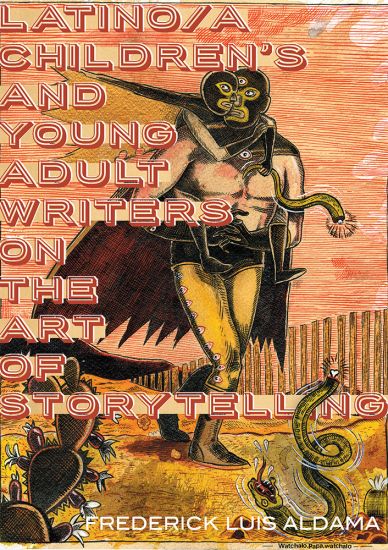
Latino/a Children's and Young Adult Writers on the Art of Storytelling
Frederick Luis Aldama
University of Pittsburgh Press
2018
nidottu
Children's and young adult literature has become an essential medium for identity formation in contemporary Latino/a culture in the United States. This book is an original collection of more than thirty interviews led by Frederick Luis Aldama with Latino/a authors working in the genre. The conversations revolve around the conveyance of young Latino/a experience, and what that means for the authors as they overcome societal obstacles and aesthetic complexity. The authors also speak extensively about their experiences within the publishing industry and with their audiences. As such, Aldama's collection presents an open forum to contemporary Latino/a writers working in a vital literary category and sheds new light on the myriad formats, distinctive nature, and cultural impact it offers.
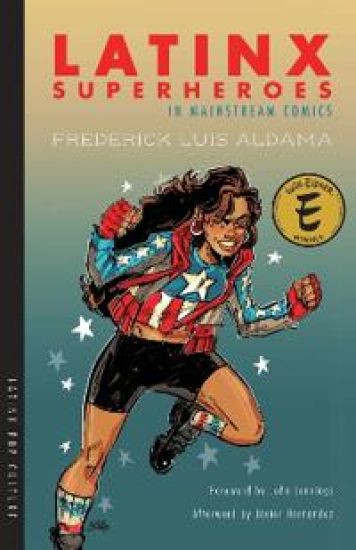
Latinx Superheroes in Mainstream Comics
Frederick Luis Aldama; John Jennings; Javier Hernandez
University of Arizona Press
2017
nidottu
Whether good or evil, beautiful or ugly, smart or downright silly, able-bodied or differently abled, gay or straight, male or female, young or old, Latinx superheroes in mainstream comic book stories are few and far between. It is as if finding the Latinx presence in the DC and Marvel worlds requires activation of superheroic powers. Latinx Superheroes in Mainstream Comics blasts open barriers with a swift kick. It explores deeply and systematically the storyworld spaces inhabited by brown superheroes in mainstream comic book storyworlds: print comic books, animation, TV, and film. It makes visible and lets loose the otherwise occluded and shackled. Leaving nothing to chance, it sheds light on how creators (authors, artists, animators, and directors) make storyworlds that feature Latinos/as, distinguishing between those that we can and should evaluate as well done and those we can and should evaluate as not well done. The foremost expert on Latinx comics, Frederick Luis Aldama guides us through the full archive of all the Latinx superheros in comics since the 1940s. Aldama takes us where the superheroes live—the barrios, the hospitals, the school rooms, the farm fields—and he not only shows us a view to the Latinx content, sometimes deeply embedded, but also provokes critical inquiry into the way storytelling formats distill and reconstruct real Latinos/as. Thoroughly entertaining but seriously undertaken, Latinx Superheroes in Mainstream Comics allows us to truly see how superhero comic book storyworlds are willfully created in ways that make new our perception, thoughts, and feelings.
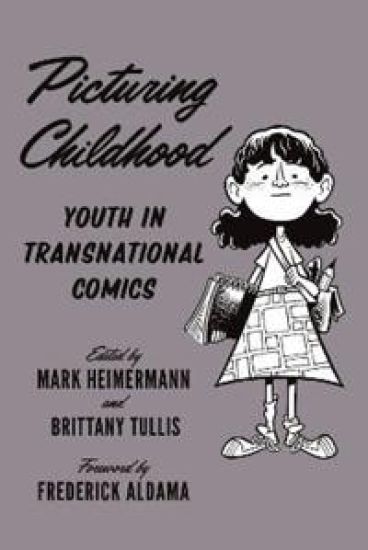
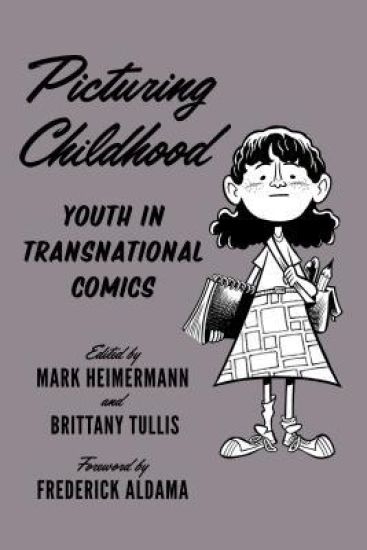
Comics and childhood have had a richly intertwined history for nearly a century. From Richard Outcault’s Yellow Kid, Winsor McCay’s Little Nemo, and Harold Gray’s Little Orphan Annie to Hergé’s Tintin (Belgium), José Escobar’s Zipi and Zape (Spain), and Wilhelm Busch’s Max and Moritz (Germany), iconic child characters have given both kids and adults not only hours of entertainment but also an important vehicle for exploring children’s lives and the sometimes challenging realities that surround them. Bringing together comic studies and childhood studies, this pioneering collection of essays provides the first wide-ranging account of how children and childhood, as well as the larger cultural forces behind their representations, have been depicted in comics from the 1930s to the present. The authors address issues such as how comics reflect a spectrum of cultural values concerning children, sometimes even resisting dominant cultural constructions of childhood; how sensitive social issues, such as racial discrimination or the construction and enforcement of gender roles, can be explored in comics through the use of child characters; and the ways in which comics use children as metaphors for other issues or concerns. Specific topics discussed in the book include diversity and inclusiveness in Little Audrey comics of the 1950s and 1960s, the fetishization of adolescent girls in Japanese manga, the use of children to build national unity in Finnish wartime comics, and how the animal/child hybrids in Sweet Tooth act as a metaphor for commodification.
Long Stories Cut Short
Frederick Luis Aldama; Ana María Shua
University of Arizona Press
2017
nidottu
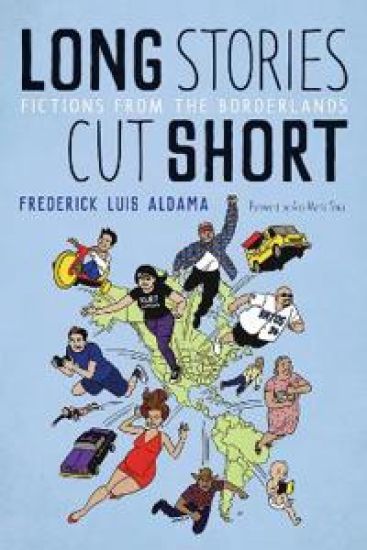
Xbox videogamer cholo cyberpunks. Infants who read before they talk. Vatos locos, romancing abuelos, border crossers and border smugglers, transvestites, drug kingpins, Latina motorbike riders, philosophically musing tweens, and so much more. The stories in this dynamic bilingual prose-art collection touch on the universals of romance, family, migration and expulsion, and everyday life in all its zany configurations. Each glimpse into lives at every stage—from newborns and children to teens, young adults, and the elderly—further submerges readers in psychological ups and downs. In a world filled with racism, police brutality, poverty, and tensions between haves and have-nots, these flashes of fictional insight bring gleaming clarity to life lived where all sorts of borders meet and shift. Frederick Luis Aldama and graphic artists from Mapache Studios and illustrator Jaime Hernandez give shape to ugly truths in the most honest way, creating new perceptions, thoughts, and feelings about life in the borderlands of the Américas. Each bilingual prose-art fictional snapshot offers an unsentimentally complex glimpse into what it means to exist at the margins of society today. These unflinching and often brutal fictions crisscross spiritual, emotional, and physical borders as they give voice to all those whom society chooses not to see.
Conversations on Cognitive Cultural Studies
Frederick Luis Aldama; Patrick Colm Hogan
Ohio State University Press
2016
pokkari
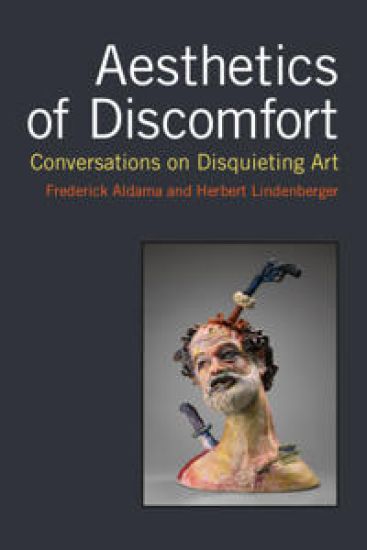
Aesthetics of Discomfort
Frederick Luis Aldama; Herbert S. Lindenberger
The University of Michigan Press
2016
nidottu
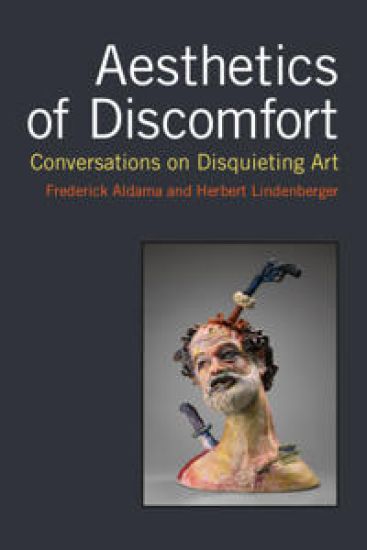
Through a series of provocative conversations, Frederick Luis Aldama and Herbert Lindenberger, who have written widely on literature, film, music, and art, locate a place for the discomforting and the often painfully unpleasant within aesthetics. The conversational format allows them to travel informally across many centuries and many art forms. They have much to tell one another about the arts since the advent of modernism soon after 1900—the nontonal music, for example, of the Second Vienna School, the chance-directed music and dance of John Cage and Merce Cunningham, the in-your-faceness of such diverse visual artists as Francis Bacon, Pablo Picasso, Willem de Kooning, Egon Schiele, Otto Dix, and Damien Hirst. They demonstrate as well a long tradition of discomforting art stretching back many centuries, for example, in the Last Judgments of innumerable Renaissance painters, in Goya’s so-called “black” paintings, in Wagner’s Tristan chord, and in the subtexts of Shakespearean works such as King Lear and Othello. This book is addressed at once to scholars of literature, art history, musicology, and cinema. Although its conversational format eschews the standard conventions of scholarly argument, it provides original insights both into particular art forms and into individual works within these forms. Among other matters, it demonstrates how recent work in neuroscience may provide insights in the ways that consumers process difficult and discomforting works of art. The book also contributes to current aesthetic theory by charting the dialogue that goes on—especially in aesthetically challenging works—between creator, artifact, and consumer.
Aesthetics of Discomfort
Frederick Luis Aldama; Herbert S. Lindenberger
The University of Michigan Press
2016
sidottu
Through a series of provocative conversations, Frederick Luis Aldama and Herbert Lindenberger, who have written widely on literature, film, music, and art, locate a place for the discomforting and the often painfully unpleasant within aesthetics. The conversational format allows them to travel informally across many centuries and many art forms. They have much to tell one another about the arts since the advent of modernism soon after 1900—the nontonal music, for example, of the Second Vienna School, the chance-directed music and dance of John Cage and Merce Cunningham, the in-your-faceness of such diverse visual artists as Francis Bacon, Pablo Picasso, Willem de Kooning, Egon Schiele, Otto Dix, and Damien Hirst. They demonstrate as well a long tradition of discomforting art stretching back many centuries, for example, in the Last Judgments of innumerable Renaissance painters, in Goya’s so-called “black” paintings, in Wagner’s Tristan chord, and in the subtexts of Shakespearean works such as King Lear and Othello. This book is addressed at once to scholars of literature, art history, musicology, and cinema. Although its conversational format eschews the standard conventions of scholarly argument, it provides original insights both into particular art forms and into individual works within these forms. Among other matters, it demonstrates how recent work in neuroscience may provide insights in the ways that consumers process difficult and discomforting works of art. The book also contributes to current aesthetic theory by charting the dialogue that goes on—especially in aesthetically challenging works—between creator, artifact, and consumer.
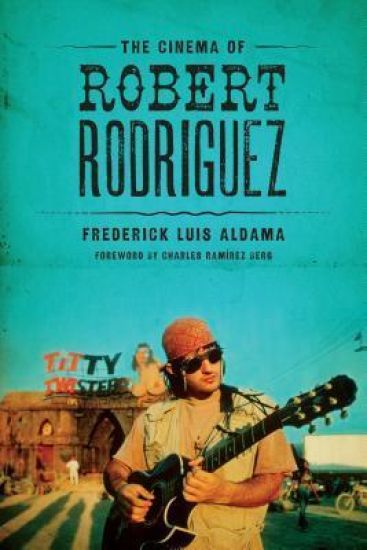
Robert Rodriguez stands alone as the most successful U. S. Latino filmmaker today, whose work has single-handedly brought U. S. Latino filmmaking into the mainstream of twenty-first-century global cinema. Rodriguez is a prolific (eighteen films in twenty-one years) and all-encompassing filmmaker who has scripted, directed, shot, edited, and scored nearly all his films since his first breakout success, El Mariachi, in 1992. With new films constantly coming out and the launch of his El Rey Network television channel, he receives unceasing coverage in the entertainment media, but systematic scholarly study of Rodriguez’s films is only just beginning. The Cinema of Robert Rodriguez offers the first extended investigation of this important filmmaker’s art. Accessibly written for fans as well as scholars, it addresses all of Rodriguez’s feature films through Spy Kids 4 and Machete Kills, and his filmmaking process from initial inspiration, to script, to film (with its myriad visual and auditory elements and choices), to final product, to (usually) critical and commercial success. In addition to his close analysis of Rodriguez’s work, Frederick Luis Aldama presents an original interview with the filmmaker, in which they discuss his career and his relationship to the film industry. This entertaining and much-needed scholarly overview of Rodriguez’s work shines new light on several key topics, including the filmmaker’s creative, low-cost, efficient approach to filmmaking; the acceptance of Latino films and filmmakers in mainstream cinema; and the consumption and reception of film in the twenty-first century.
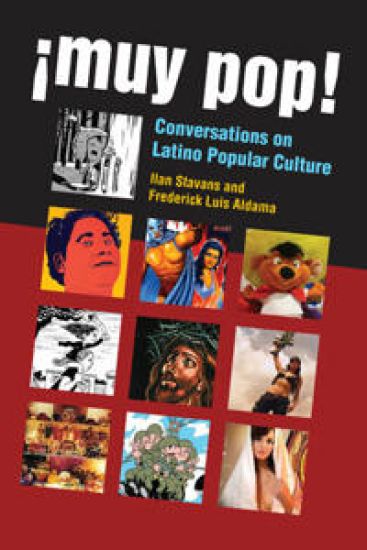
Although investigations of Hispanic popular culture were approached for decades as part of folklore studies, in recent years scholarly explorations—of lucha libre, telenovelas, comic strips, comedy, baseball, the novela rosa and the detective novel, sci-fi, even advertising—have multiplied. What has been lacking is an overarching canvas that offers context for these studies, focusing on the crucial, framing questions: What is Hispanic pop culture? How does it change over time and from region to region? What is the relationship between highbrow and popular culture in the Hispanic world? Does it make sense to approach the whole Hispanic world as homogenized when understanding Hispanic popular culture? What are the differences between nations, classes, ethnic groups, religious communities, and so on? And what distinguishes Hispanic popular culture in the United States? In ¡Muy Pop!, Ilan Stavans and Frederick Luis Aldama carry on a sustained, free-flowing, book-length conversation about these questions and more, concentrating on a wide range of pop manifestations and analyzing them at length. In addition to making Hispanic popular culture visible to the first-time reader, ¡Muy Pop! sheds new light on the making and consuming of Hispanic pop culture for academics, specialists, and mainstream critics.
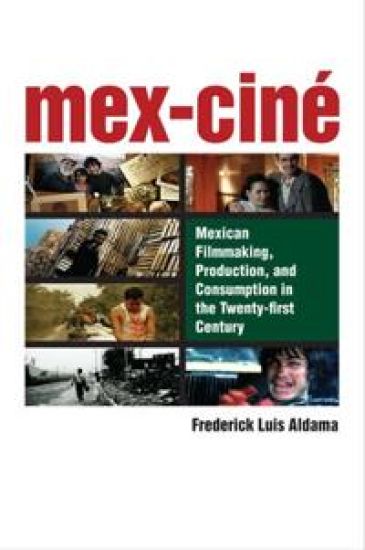
Mex-Ciné offers an accessibly written, multidisciplinary investigation of contemporary Mexican cinema that combines industrial, technical, and sociopolitical analysis with analyses of modes of reception through cognitive theory. Mex-Ciné aims to make visible the twenty-first century Mexican film industry, its blueprints, and the cognitive and emotive faculties involved in making and consuming its corpus. A sustained, free-flowing book-length meditation, Mex-Ciné enriches our understanding of the way contemporary Mexican directors use specific technical devices, structures, and characterizations in making films in ways that guide the perceptual, emotive, and cognitive faculties of their ideal audiences, while providing the historical contexts in which these films are made and consumed.
The Routledge Concise History of Latino/a Literature presents the first comprehensive overview of these popular, experimental and diverse literary cultures. Frederick Luis Aldama traces a historical path through Latino/a literature, examining both the historical and political contexts of the works, as well as their authors and the readership. He also provides an enlightening analysis of: the differing sub-groups of Latino/a literature, including Mexican American, Cuban American, Puerto Rican American, Dominican American, and Central and South American émigré authors established and emerging literary trends such as the postmodern, historical, chica-lit storytelling formats and the graphic novel key literary themes, including gender and sexuality, feminist and queer voices, and migration and borderlands. The author’s methodology and interpretation of a wealth of information will put this rich and diverse area of literary culture into a new light for scholars. The book’s student-friendly features such as a glossary, guide to further reading, explanatory text boxes and chapter summaries, make this the ideal text for anyone approaching the area for the first time.
A User's Guide to Postcolonial and Latino Borderland Fiction
Frederick Luis Aldama
University of Texas Press
2009
pokkari
Why are so many people attracted to narrative fiction? How do authors in this genre reframe experiences, people, and environments anchored to the real world without duplicating "real life"? In which ways does fiction differ from reality? What might fictional narrative and reality have in common-if anything? By analyzing novels such as Arundhati Roy's The God of Small Things, Amitav Ghosh's The Glass Palace, Zadie Smith's White Teeth, and Hari Kunzru's The Impressionist, along with selected Latino comic books and short fiction, this book explores the peculiarities of the production and reception of postcolonial and Latino borderland fiction. Frederick Luis Aldama uses tools from disciplines such as film studies and cognitive science that allow the reader to establish how a fictional narrative is built, how it functions, and how it defines the boundaries of concepts that appear susceptible to limitless interpretations. Aldama emphasizes how postcolonial and Latino borderland narrative fiction authors and artists use narrative devices to create their aesthetic blueprints in ways that loosely guide their readers' imagination and emotion. In A User's Guide to Postcolonial and Latino Borderland Fiction, he argues that the study of ethnic-identified narrative fiction must acknowledge its active engagement with world narrative fictional genres, storytelling modes, and techniques, as well as the way such fictions work to move their audiences.
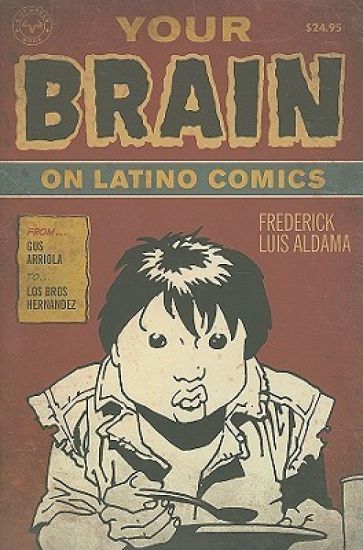
Though the field of comic book studies has burgeoned in recent years, Latino characters and creators have received little attention. Putting the spotlight on this vibrant segment, Your Brain on Latino Comics illuminates the world of superheroes Firebird, Vibe, and the new Blue Beetle while also examining the effects on readers who are challenged to envision such worlds. Exploring mainstream companies such as Marvel and DC as well as rising stars from other segments of the industry, Frederick Aldama provides a new reading of race, ethnicity, and the relatively new storytelling medium of comics themselves. Overview chapters cover the evolution of Latino influences in comics, innovations, and representations of women, demonstrating Latino transcendence of many mainstream techniques. The author then probes the rich and complex ways in which such artists affect the cognitive and emotional responses of readers as they imagine past, present, and future worlds. Twenty-one interviews with Latino comic book and comic strip authors and artists, including Laura Molina, Frank Espinosa, and Rafael Navarro, complete the study, yielding captivating commentary on the current state of the trade, cultural perceptions, and the intentions of creative individuals who shape their readers in powerful ways.