Kirjojen hintavertailu – 12 859 819 kirjaa ja 27 kauppaa

Kirjailija

Frederick Marryat

Kirjat ja teokset yhdessä paikassa: 615 kirjaa, julkaisuja vuosilta 1993–2026, suosituimpiin kuuluu Newton Forster, or, The merchant service. By: Frederick Marryat. Vertaile teosten hintoja ja tarkista saatavuus suomalaisista kirjakaupoista.

615 kirjaa

Kirjojen julkaisuvuodet: 1993–2026.

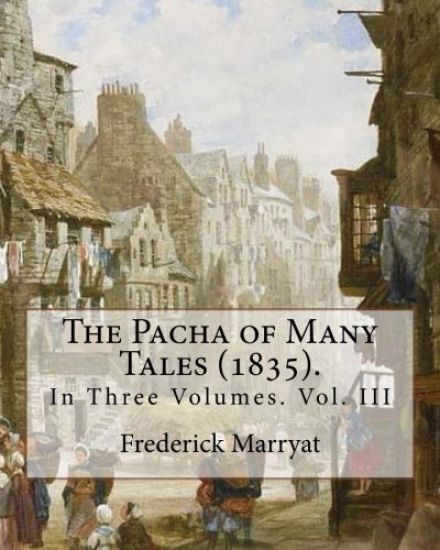
The Pacha of Many Tales (1835).By: Frederick Marryat and By: Thomas Hardy (3 March 1752 - 11 October 1832): In Three Volumes. Vol. III
Thomas Hardy (3 March 1752 - 11 October 1832) was an early Radical, and the founder, first Secretary, and Treasurer of the London Corresponding Society. Hardy was born on 3 March 1752 in Larbert, Stirlingshire, Scotland, the son of a merchant seaman. His father died in 1760 at sea while Thomas was still a boy. He was sent to school by his maternal grandfather and later apprenticed to a shoemaker in Stirlingshire. He later worked in the Carron Iron Works. As a young man, he came to London just before the American Revolutionary War. On 21 May 1781 he married at St-Martin-in-the-Fields church Lydia Priest, the youngest daughter of a carpenter and builder from Chesham, Buckinghamshire. The couple had six children, all of whom died in infancy. Lydia died in childbirth on 27 August 1794, her child (the sixth) being stillborn: the cause may have been the injuries she had sustained when a loyalist "Church and King" mob attacked the Hardy home some weeks earlier. In 1791, Hardy opened his own boot and shoe shop at 9 Piccadilly, London....... Captain Frederick Marryat (10 July 1792 - 9 August 1848) was a British Royal Navy officer, a novelist, and an acquaintance of Charles Dickens. He is noted today as an early pioneer of the sea story, particularly for his semi-autobiographical novel Mr Midshipman Easy (1836), for his children's novel The Children of the New Forest (1847), and for a widely used system of maritime flag signalling, known as Marryat's Code. Early life and naval career: Marryat was born in Great George Street, Westminster, London, the son of Joseph Marryat (1757-1824), a "merchant prince" and member of Parliament, and his American wife Charlotte, n e von Geyer. After trying to run away to sea several times, Marryat was permitted to enter the Royal Navy in 1806 as a midshipman on board HMS Imperieuse, a frigate commanded by Lord Cochrane (who later served as inspiration for Marryat as well as other authors). Marryat's time aboard the Imperieuse included action off the Gironde, the rescue of a fellow midshipman who had fallen overboard, captures of many ships off the Mediterranean coast of Spain, and the capture of the castle of Montgat. The Imperieuse shifted to operations in the Scheldt in 1809, where Marryat contracted malaria; he returned to England on the 74-gun HMS Victorious. After recuperating, Marryat returned to the Mediterranean in the 74-gun HMS Centaur and again saved a shipmate by leaping into the sea after him. He then sailed as a passenger to Bermuda in the 64-gun HMS Atlas, and from there to Halifax, Nova Scotia on the schooner HMS Chubb, where he joined the 32-gun frigate HMS Aeolus on 27 April 1811. A few months later, Marryat again earned distinction by leading the effort to cut away the Aeolus's mainyard to save the ship during a storm and, continuing a pattern, he also saved one of the men from the sea. Shortly thereafter, he moved to the frigate HMS Spartan, participating in the capture of a number of American ships (the War of 1812 having begun). On 26 December 1812, he was promoted to lieutenant, and as such served in the sloop HMS Espiegle and in HMS Newcastle. Marryat led four barges from the latter ship on a punishing raid to Orleans, Massachusetts on December 19, 1814, the last combat in New England during the war. The affair had mixed results. Initially, Marryat cut out an American schooner and three sloops, but managed to escape with just one sloop. The local militia avoided casualties while killing one Royal marine. He was promoted to commander on 13 June 1815, just as peace broke out...............
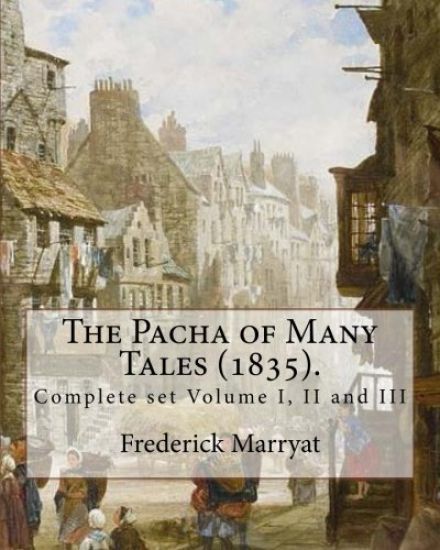
The Pacha of Many Tales (1835).By: Frederick Marryat and By: Thomas Hardy (3 March 1752 - 11 October 1832): Complete set Volume I, II and III
Thomas Hardy (3 March 1752 - 11 October 1832) was an early Radical, and the founder, first Secretary, and Treasurer of the London Corresponding Society. Hardy was born on 3 March 1752 in Larbert, Stirlingshire, Scotland, the son of a merchant seaman. His father died in 1760 at sea while Thomas was still a boy. He was sent to school by his maternal grandfather and later apprenticed to a shoemaker in Stirlingshire. He later worked in the Carron Iron Works. As a young man, he came to London just before the American Revolutionary War. On 21 May 1781 he married at St-Martin-in-the-Fields church Lydia Priest, the youngest daughter of a carpenter and builder from Chesham, Buckinghamshire. The couple had six children, all of whom died in infancy. Lydia died in childbirth on 27 August 1794, her child (the sixth) being stillborn: the cause may have been the injuries she had sustained when a loyalist "Church and King" mob attacked the Hardy home some weeks earlier. In 1791, Hardy opened his own boot and shoe shop at 9 Piccadilly, London....... Captain Frederick Marryat (10 July 1792 - 9 August 1848) was a British Royal Navy officer, a novelist, and an acquaintance of Charles Dickens. He is noted today as an early pioneer of the sea story, particularly for his semi-autobiographical novel Mr Midshipman Easy (1836), for his children's novel The Children of the New Forest (1847), and for a widely used system of maritime flag signalling, known as Marryat's Code. Early life and naval career: Marryat was born in Great George Street, Westminster, London, the son of Joseph Marryat (1757-1824), a "merchant prince" and member of Parliament, and his American wife Charlotte, n e von Geyer. After trying to run away to sea several times, Marryat was permitted to enter the Royal Navy in 1806 as a midshipman on board HMS Imperieuse, a frigate commanded by Lord Cochrane (who later served as inspiration for Marryat as well as other authors). Marryat's time aboard the Imperieuse included action off the Gironde, the rescue of a fellow midshipman who had fallen overboard, captures of many ships off the Mediterranean coast of Spain, and the capture of the castle of Montgat. The Imperieuse shifted to operations in the Scheldt in 1809, where Marryat contracted malaria; he returned to England on the 74-gun HMS Victorious. After recuperating, Marryat returned to the Mediterranean in the 74-gun HMS Centaur and again saved a shipmate by leaping into the sea after him. He then sailed as a passenger to Bermuda in the 64-gun HMS Atlas, and from there to Halifax, Nova Scotia on the schooner HMS Chubb, where he joined the 32-gun frigate HMS Aeolus on 27 April 1811. A few months later, Marryat again earned distinction by leading the effort to cut away the Aeolus's mainyard to save the ship during a storm and, continuing a pattern, he also saved one of the men from the sea. Shortly thereafter, he moved to the frigate HMS Spartan, participating in the capture of a number of American ships (the War of 1812 having begun). On 26 December 1812, he was promoted to lieutenant, and as such served in the sloop HMS Espiegle and in HMS Newcastle. Marryat led four barges from the latter ship on a punishing raid to Orleans, Massachusetts on December 19, 1814, the last combat in New England during the war. The affair had mixed results. Initially, Marryat cut out an American schooner and three sloops, but managed to escape with just one sloop. The local militia avoided casualties while killing one Royal marine. He was promoted to commander on 13 June 1815, just as peace broke out...............
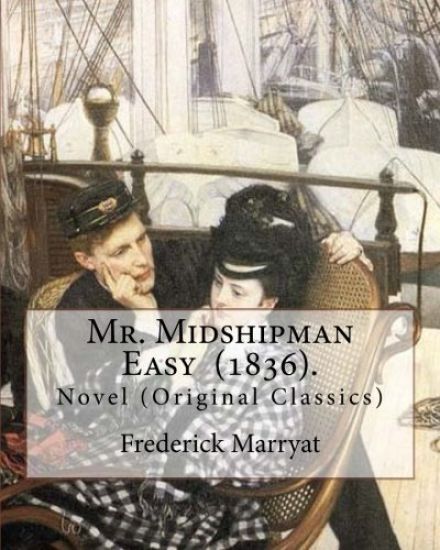
Mr. Midshipman Easy (1836). By: Frederick Marryat: Novel (Original Classics)

Mr. Midshipman Easy (1836). By: Frederick Marryat: Novel (Original Classics)

Frederick Marryat

Createspace Independent Publishing Platform
2017
nidottu
Mr. Midshipman Easy is an 1836 novel by Frederick Marryat, a retired captain in the Royal Navy. The novel is set during the Napoleonic Wars, in which Marryat himself served with distinction. Plot summary: Easy is the son of foolish parents, who spoiled him. His father, in particular, regards himself as a philosopher, with a firm belief in the "rights of man, equality, and all that; how every person was born to inherit his share of the earth, a right at present only admitted to a certain length that is, about six feet, for we all inherit our graves, and are allowed to take possession without dispute. But no one would listen to Mr Easy's philosophy. The women would not acknowledge the rights of men, whom they declared always to be in the wrong; and, as the gentlemen who visited Mr Easy were all men of property, they could not perceive the advantages of sharing with those who had none. However, they allowed him to discuss the question, while they discussed his port wine. The wine was good, if the arguments were not, and we must take things as we find them in this world." By the time he is a teenager Easy has adopted his father's point of view, to the point where he no longer believes in private property. Easy joins the navy, which his father believes to be the best example of an equal society, and Easy becomes friendly with a lower deck seaman named Mesty (Mephistopheles Faust), an escaped slave, who had been a prince in Africa. Mesty is sympathetic to Easy's philosophizing, which seems to offer him a way up from his lowly job of "boiling kettle for de young gentlemen"; but once Mesty is promoted to ship's corporal and put in charge of discipline, he changes his mind: "...now I tink a good deal lately, and by all de power, I tink equality all stuff." "All stuff, Mesty, why? you used to think otherwise." "Yes, Massa Easy, but den I boil de kettle for all young gentleman. Now dat I ship's corporal and hab cane, I tink so no longer." In some way Mesty is the real hero of the novel, as he pulls Easy out of several scrapes the impulsive 17-year-old gets himself into as he cruises the Mediterranean on several British ships. Easy becomes a competent officer, in spite of his notions. Easy's mother dies, and he returns home to find his father is completely mad. Easy senior has developed an apparatus for reducing or enlarging phrenological bumps on the skull, but as he attempts to reduce his own benevolence bump, the machine kills him. Easy throws out the criminal servants his father has employed and puts the estate to rights, demanding back rents from the tenants, and evicting those who will not pay. Using his new-found wealth, he formally quits the navy, rigs out his own privateering vessel, and returns to Sicily to claim his bride Agnes. As he is a wealthy gentleman now, no longer a junior midshipman, her family cannot refuse him, and he and Agnes live happily ever after...... Captain Frederick Marryat (10 July 1792 - 9 August 1848) was a British Royal Navy officer, a novelist, and an acquaintance of Charles Dickens. He is noted today as an early pioneer of the sea story, particularly for his semi-autobiographical novel Mr Midshipman Easy (1836), for his children's novel The Children of the New Forest (1847), and for a widely used system of maritime flag signalling, known as Marryat's Code. Early life and naval career: Marryat was born in Great George Street, Westminster, London, the son of Joseph Marryat (1757-1824), a "merchant prince" and member of Parliament, and his American wife Charlotte, n e von Geyer. After trying to run away to sea several times, Marryat was permitted to enter the Royal Navy in 1806 as a midshipman on board HMS Imperieuse, a frigate commanded by Lord Cochrane (who later served as inspiration for Marryat as well as other authors)....
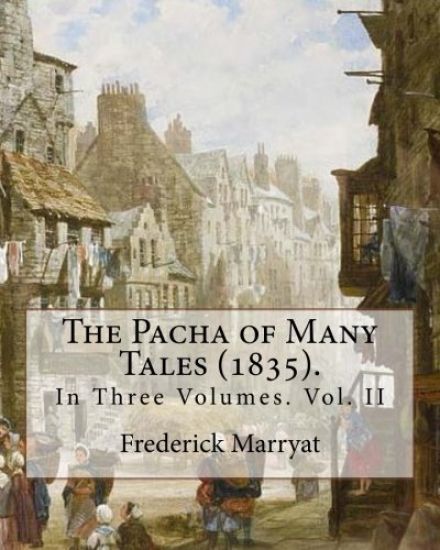
The Pacha of Many Tales (1835).By: Frederick Marryat and By: Thomas Hardy (3 March 1752 - 11 October 1832): In Three Volumes. Vol. II
Thomas Hardy (3 March 1752 - 11 October 1832) was an early Radical, and the founder, first Secretary, and Treasurer of the London Corresponding Society. Hardy was born on 3 March 1752 in Larbert, Stirlingshire, Scotland, the son of a merchant seaman. His father died in 1760 at sea while Thomas was still a boy. He was sent to school by his maternal grandfather and later apprenticed to a shoemaker in Stirlingshire. He later worked in the Carron Iron Works. As a young man, he came to London just before the American Revolutionary War. On 21 May 1781 he married at St-Martin-in-the-Fields church Lydia Priest, the youngest daughter of a carpenter and builder from Chesham, Buckinghamshire. The couple had six children, all of whom died in infancy. Lydia died in childbirth on 27 August 1794, her child (the sixth) being stillborn: the cause may have been the injuries she had sustained when a loyalist "Church and King" mob attacked the Hardy home some weeks earlier. In 1791, Hardy opened his own boot and shoe shop at 9 Piccadilly, London....... Captain Frederick Marryat (10 July 1792 - 9 August 1848) was a British Royal Navy officer, a novelist, and an acquaintance of Charles Dickens. He is noted today as an early pioneer of the sea story, particularly for his semi-autobiographical novel Mr Midshipman Easy (1836), for his children's novel The Children of the New Forest (1847), and for a widely used system of maritime flag signalling, known as Marryat's Code. Early life and naval career: Marryat was born in Great George Street, Westminster, London, the son of Joseph Marryat (1757-1824), a "merchant prince" and member of Parliament, and his American wife Charlotte, n e von Geyer. After trying to run away to sea several times, Marryat was permitted to enter the Royal Navy in 1806 as a midshipman on board HMS Imperieuse, a frigate commanded by Lord Cochrane (who later served as inspiration for Marryat as well as other authors). Marryat's time aboard the Imperieuse included action off the Gironde, the rescue of a fellow midshipman who had fallen overboard, captures of many ships off the Mediterranean coast of Spain, and the capture of the castle of Montgat. The Imperieuse shifted to operations in the Scheldt in 1809, where Marryat contracted malaria; he returned to England on the 74-gun HMS Victorious. After recuperating, Marryat returned to the Mediterranean in the 74-gun HMS Centaur and again saved a shipmate by leaping into the sea after him. He then sailed as a passenger to Bermuda in the 64-gun HMS Atlas, and from there to Halifax, Nova Scotia on the schooner HMS Chubb, where he joined the 32-gun frigate HMS Aeolus on 27 April 1811. A few months later, Marryat again earned distinction by leading the effort to cut away the Aeolus's mainyard to save the ship during a storm and, continuing a pattern, he also saved one of the men from the sea. Shortly thereafter, he moved to the frigate HMS Spartan, participating in the capture of a number of American ships (the War of 1812 having begun). On 26 December 1812, he was promoted to lieutenant, and as such served in the sloop HMS Espiegle and in HMS Newcastle. Marryat led four barges from the latter ship on a punishing raid to Orleans, Massachusetts on December 19, 1814, the last combat in New England during the war. The affair had mixed results. Initially, Marryat cut out an American schooner and three sloops, but managed to escape with just one sloop. The local militia avoided casualties while killing one Royal marine. He was promoted to commander on 13 June 1815, just as peace broke out.............
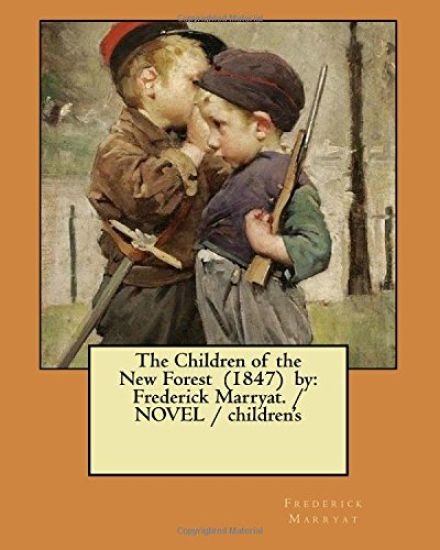
The Children of the New Forest (1847) by: Frederick Marryat. / NOVEL / children's

The Children of the New Forest (1847) by: Frederick Marryat. / NOVEL / children's

Frederick Marryat

Createspace Independent Publishing Platform
2017
nidottu
The Children of the New Forest is a children's novel published in 1847 by Frederick Marryat. It is set in the time of the English Civil War and the Commonwealth. The story follows the fortunes of the four Beverley children who are orphaned during the war, and hide from their Roundhead oppressors in the shelter of the New Forest where they learn to live off the land.
Mr. Midshipman Easy

Mr. Midshipman Easy

Frederick Marryat

Createspace Independent Publishing Platform
2017
nidottu
One of the first novel-length pieces of nautical fiction, MR. MIDSHIPMAN EASY (1836) is a funny and easygoing account of the adventures of Jack Easy, a son of privilege who joins the Royal Navy. The work begins as a satire on Jack's attachment to "the rights of man" that may try the listener's patience. But despair not, for the story soon settles down as the philosophical midshipman begins his many triumphs over bullies, foul weather, and various damned foreigners of murderous intent.
Masterman Ready

Masterman Ready

Frederick Marryat

Createspace Independent Publishing Platform
2017
nidottu
It was in the month of October, 18-, that the Pacific, a large ship, was running before a heavy gale of wind in the middle of the vast Atlantic Ocean. She had but little sail, for the wind was so strong, that the canvas would have been split into pieces by the furious blasts before which she was driven through the waves, which were very high, and following her almost as fast as she darted through their boiling waters; sometimes heaving up her stern and sinking her bows down so deep into the hollow of the sea, that it appeared as if she would have dived down underneath the waves; but she was a fine vessel, and the captain was a good seaman, who did what he considered best for the safety of his vessel, and then put his trust in that Providence who is ever watchful over us. The captain stood before the wheel, watching the men who were steering the ship; for when you are running before a heavy gale, it requires great attention to the helm: and as he looked around him and up at the heavens, he sang in a low voice the words of a sea song: -One wide water all around us, All above us one black sky.-
Valerie

Valerie

Frederick Marryat

Hansebooks
2017
pokkari
Valerie - An autobiography is an unchanged, high-quality reprint of the original edition of 1898. Hansebooks is editor of the literature on different topic areas such as research and science, travel and expeditions, cooking and nutrition, medicine, and other genres. As a publisher we focus on the preservation of historical literature. Many works of historical writers and scientists are available today as antiques only. Hansebooks newly publishes these books and contributes to the preservation of literature which has become rare and historical knowledge for the future.