
Kirjailija
Frieda Ekotto
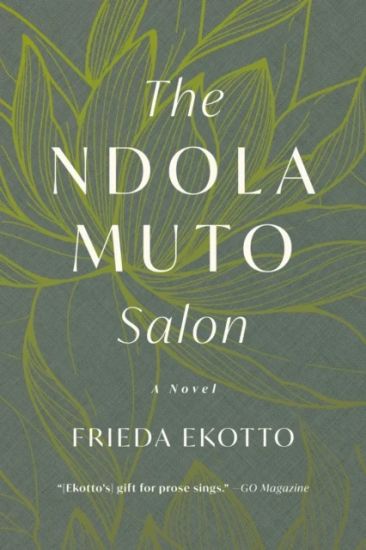
Kirjat ja teokset yhdessä paikassa: 10 kirjaa, julkaisuja vuosilta 2010–2027, suosituimpiin kuuluu Ndola Muto Salon. Vertaile teosten hintoja ja tarkista saatavuus suomalaisista kirjakaupoista.
10 kirjaa
Kirjojen julkaisuvuodet: 2010–2027.
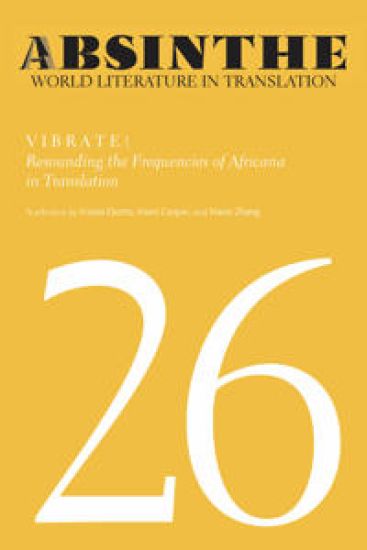
Absinthe: World Literature in Translation
Frieda Ekotto; Xiaoxi Zhang; Imani Cooper
Michigan Publishing Services
2020
nidottu
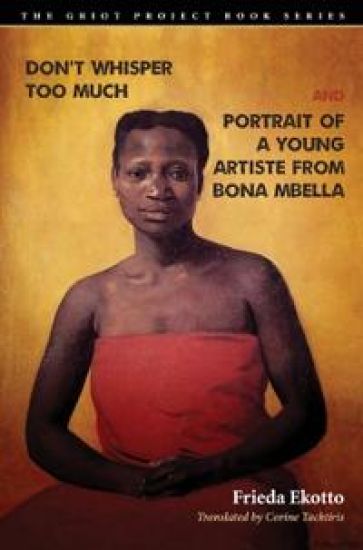
Don't Whisper Too Much and Portrait of a Young Artiste from Bona Mbella
Frieda Ekotto
Rutgers University Press
2019
sidottu
Don’t Whisper Too Much was the first work of fiction by an African writer to present love stories between African women in a positive light. Bona Mbella is the second. In presenting the emotional and romantic lives of gay, African women, Ekotto comments upon larger issues that affect these women, including Africa as a post-colonial space, the circulation of knowledge, and the question of who writes history. In recounting the beauty and complexity of relationships between women who love women, Ekotto inscribes these stories within African history, both past and present. Don’t Whisper Too Much follows young village girl Ada’s quest to write her story on her own terms, outside of heteronormative history. Bona Mbella focuses upon the life of a young woman from a poor neighborhood in an African megalopolis. And “Panè,” a love story, brings the many themes from Don’t Whisper Much and Bona Mbella together as it explores how emotional and sexual connections between women have the power to transform, even in the face of great humiliation and suffering. Each story in the collection addresses how female sexuality is often marked by violence, and yet is also a place for emotional connection, pleasure and agency. Published by Bucknell University Press. Distributed worldwide by Rutgers University Press.
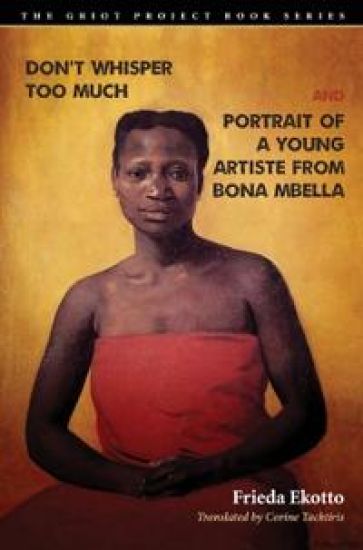
Don't Whisper Too Much and Portrait of a Young Artiste from Bona Mbella
Frieda Ekotto
Rutgers University Press
2019
nidottu
Don’t Whisper Too Much was the first work of fiction by an African writer to present love stories between African women in a positive light. Bona Mbella is the second. In presenting the emotional and romantic lives of gay, African women, Ekotto comments upon larger issues that affect these women, including Africa as a post-colonial space, the circulation of knowledge, and the question of who writes history. In recounting the beauty and complexity of relationships between women who love women, Ekotto inscribes these stories within African history, both past and present. Don’t Whisper Too Much follows young village girl Ada’s quest to write her story on her own terms, outside of heteronormative history. Bona Mbella focuses upon the life of a young woman from a poor neighborhood in an African megalopolis. And “Panè,” a love story, brings the many themes from Don’t Whisper Much and Bona Mbella together as it explores how emotional and sexual connections between women have the power to transform, even in the face of great humiliation and suffering. Each story in the collection addresses how female sexuality is often marked by violence, and yet is also a place for emotional connection, pleasure and agency. Published by Bucknell University Press. Distributed worldwide by Rutgers University Press.
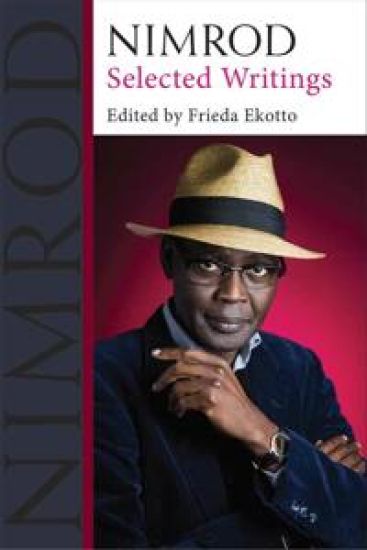
The Chadian writer Nimrod—philosopher, poet, novelist, and essayist—is one of the most dynamic and vital voices in contemporary African literature and thought. Yet little of Nimrod’s writing has been translated into English until now. Introductory material by Frieda Ekotto provides context for Nimrod’s work and demonstrates the urgency of making it available beyond Francophone Africa to a broader global audience. At the heart of this volume are Nimrod’s essays on Léopold Sédar Senghor, a key figure in the literary and aesthetic Négritude movement of the 1930s and president of Senegal from 1945 through 1980. Widely dismissed in recent decades as problematically essentialist, Senghorian Negritude articulated notions of “blackness” as a way of transcending deep divisions across a Black Diaspora under French colonial rule. Nimrod offers a nuanced reading of Senghor, drawing out the full complexities of Senghor’s philosophy and reevaluating how race and colonialism function in a French-speaking space. Also included in this volume are Nimrod’s essays on literature from the 2008 collection, The New French Matter (La nouvelle chose française). Representing his prose fiction is his 2010 work, Rivers’ Gold (L’or des rivières). Also featured are some of Nimrod’s best-loved poems, in both English translation and the original French. The works selected and translated for this volume showcase Nimrod’s versatility, his intellectual liveliness, and his exploration of questions of aesthetics in African literature, philosophy, and linguistics. Nimrod: Selected Writings marks a significant contribution toward engaging a broader audience with one of the vital voices of our time. This book will be essential reading for Anglophone students and scholars of African philosophy, literature, poetry, and critical theory, and will offer a welcome introduction to Nimrod for general readers of contemporary international writing.
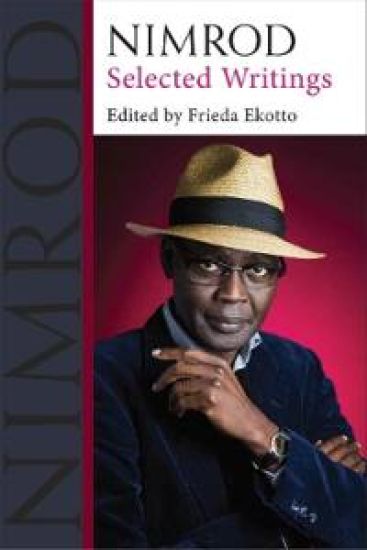
The Chadian writer Nimrod—philosopher, poet, novelist, and essayist—is one of the most dynamic and vital voices in contemporary African literature and thought. Yet little of Nimrod’s writing has been translated into English until now. Introductory material by Frieda Ekotto provides context for Nimrod’s work and demonstrates the urgency of making it available beyond Francophone Africa to a broader global audience. At the heart of this volume are Nimrod’s essays on Léopold Sédar Senghor, a key figure in the literary and aesthetic Négritude movement of the 1930s and president of Senegal from 1945 through 1980. Widely dismissed in recent decades as problematically essentialist, Senghorian Negritude articulated notions of “blackness” as a way of transcending deep divisions across a Black Diaspora under French colonial rule. Nimrod offers a nuanced reading of Senghor, drawing out the full complexities of Senghor’s philosophy and reevaluating how race and colonialism function in a French-speaking space. Also included in this volume are Nimrod’s essays on literature from the 2008 collection, The New French Matter (La nouvelle chose française). Representing his prose fiction is his 2010 work, Rivers’ Gold (L’or des rivières). Also featured are some of Nimrod’s best-loved poems, in both English translation and the original French. The works selected and translated for this volume showcase Nimrod’s versatility, his intellectual liveliness, and his exploration of questions of aesthetics in African literature, philosophy, and linguistics. Nimrod: Selected Writings marks a significant contribution toward engaging a broader audience with one of the vital voices of our time. This book will be essential reading for Anglophone students and scholars of African philosophy, literature, poetry, and critical theory, and will offer a welcome introduction to Nimrod for general readers of contemporary international writing.
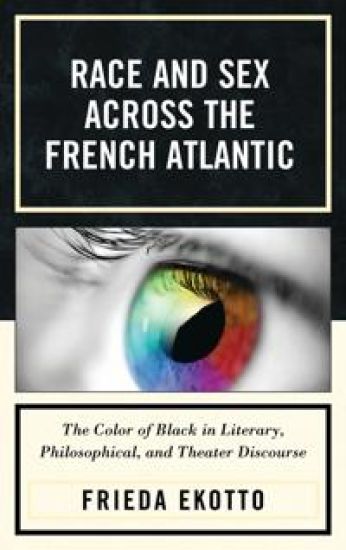
Jean Genet's masterpiece Les Nègres was first published in 1958, in the midst of the Algerian war, and first performed at the Théâtre de Lutèce in Paris in October 1959. Yet even though the play is more than 50 years old, it remains a fundamental contribution to critical race theory, as Genet unequivocally posits that no matter what a black person does or doesn't do, simply to be black in our times is itself a tragedy. Placing Genet in the context of Negritude movement, Race and Sex across the French Atlantic equally reveals and examines blackness within the African-American dialogue with a white French author's provocative questions about race: "Is a black man always black?" and even more fundamentally, "What is blackness?" Within this framework, to question "blackness," therefore, is to set out on an ontological quest, as "blackness" has become a real, living thing in its own right within European ideology, social theory, and historical consciousness, even as Les Nègres has taken its place as a major text in the francophone and philosophical tradition of writing on race. In essence, this book concentrates on the way in which language-particularly the French language-has shaped ideas about race within transatlantic discourses, and, with its companion, continental philosophy, has also shaped the historical understanding of discourse on race. It navigates between multiple readings of race within the French Atlantic using Lorraine Hansberry's play Les Blancs; Dany Laferrière's Comment faire l'amour avec un Nègre sans se fatiguer; Genet's dialogue with the Black Panthers; and different conceptions of the so-called N word. Race and Sex across the French Atlantic thus explores how Les Nègres offered a groundbreaking reading of how race functioned-and continues to function-as an all-pervasive discourse that provides a central principle around which society in general is organized. The play stages a deeply self-reflexive and critical examination of the very essence of