
Kirjailija
Friedrich Wilhelm Nietzsche
Kirjat ja teokset yhdessä paikassa: 783 kirjaa, julkaisuja vuosilta 1886–2026, suosituimpiin kuuluu The Antichrist. Vertaile teosten hintoja ja tarkista saatavuus suomalaisista kirjakaupoista.
783 kirjaa
Kirjojen julkaisuvuodet: 1886–2026.
Thoughts Out Of Season Parts I & II
Friedrich Wilhelm Nietzsche
Createspace Independent Publishing Platform
2016
nidottu

On the Future of our Educational Institutions: Homer and Classical Philology
Friedrich Wilhelm Nietzsche
Createspace Independent Publishing Platform
2016
nidottu
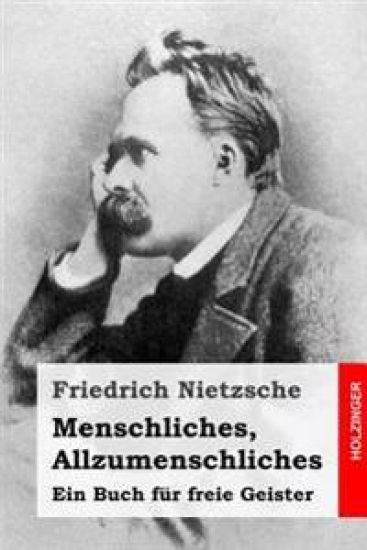
Menschliches, Allzumenschliches: Ein Buch für freie Geister
Friedrich Wilhelm Nietzsche
Createspace Independent Publishing Platform
2016
nidottu
Friedrich Nietzsche: Menschliches, Allzumenschliches. Ein Buch f r freie Geister Edition Holzinger. Taschenbuch Berliner Ausgabe, 2016 Vollst ndiger, durchgesehener Neusatz mit einer Biographie des Autors bearbeitet und eingerichtet von Michael Holzinger Erstdrucke: Chemnitz (E. Schmeitzner) 1878 (1. Band); Chemnitz (E. Schmeitzner) 1879 (Anhang: Vermischte Meinungen und Spr che);; Chemnitz (E. Schmeitzner) 1880 (Der Wanderer und sein Schatten). Textgrundlage ist die Ausgabe: Friedrich Nietzsche: Werke in drei B nden. Band 1, Herausgegeben von Karl Schlechta. M nchen: Hanser, 1954. Herausgeber der Reihe: Michael Holzinger Reihengestaltung: Viktor Harvion Gesetzt aus der Minion Pro, 11 pt.
Menschliches, Allzumenschliches (Großdruck): Ein Buch für freie Geister
Friedrich Wilhelm Nietzsche
Createspace Independent Publishing Platform
2016
nidottu
Friedrich Nietzsche: Menschliches, Allzumenschliches. Ein Buch f r freie Geister Lesefreundlicher Gro druck in 16-pt-Schrift Edition Holzinger. Gro format, 216 x 279 mm Berliner Ausgabe, 2016 Vollst ndiger, durchgesehener Neusatz mit einer Biographie des Autors bearbeitet und eingerichtet von Michael Holzinger Erstdrucke: Chemnitz (E. Schmeitzner) 1878 (1. Band); Chemnitz (E. Schmeitzner) 1879 (Anhang: Vermischte Meinungen und Spr che);; Chemnitz (E. Schmeitzner) 1880 (Der Wanderer und sein Schatten). Textgrundlage ist die Ausgabe: Friedrich Nietzsche: Werke in drei B nden. Band 1, Herausgegeben von Karl Schlechta. M nchen: Hanser, 1954. Herausgeber der Reihe: Michael Holzinger Reihengestaltung: Viktor Harvion Gesetzt aus der Minion Pro, 16 pt.

Thoughts Out of Season Part One: David Strauss, the Confessor and the Writer, Richard Wagner in Bayreuth
Friedrich Wilhelm Nietzsche
Createspace Independent Publishing Platform
2016
nidottu
Beyond Good and Evil
Friedrich Wilhelm Nietzsche
Createspace Independent Publishing Platform
2016
nidottu
"Madness is something rare in individuals --- but in groups, parties, peoples, and ages, it is the rule." --- Friedrich Nietzsche, Beyond Good and Evil Beyond Good and Evil: Prelude to a Philosophy of the Future (Jenseits von Gut und B se) is a major 19th century philosophical work by Friedrich Nietzsche. First published in 1886 at Nietzsche's own expense, the book was not initially considered important. In it, Nietzsche denounced what he considered to be the moral vacuity of 19th century thinkers. He attacked philosophers for what he considered to be their lack of critical sense and their blind acceptance of Christian premises in their considerations of morality and values. Beyond Good and Evil is a comprehensive overview of Nietzsche's mature philosophy, written partly with the motive of giving further explanation to ideas presented in his previous work, Also Sprach Zarathustra (or Thus Spoke Zarathustra).
Thoughts out Of Season Part II
Friedrich Wilhelm Nietzsche
Createspace Independent Publishing Platform
2016
nidottu

Thus Spoke Zarathustra: A Book for Everyone and Nobody (Oxford World's Classics)
Friedrich Wilhelm Nietzsche
Createspace Independent Publishing Platform
2016
nidottu


I: The Case of Wagner II: Nietzsche Contra Wagner III: Selected Aphorisms
Friedrich Wilhelm Nietzsche
Createspace Independent Publishing Platform
2016
nidottu
The Birth of Tragedy or Hellenism and Pessimism
Friedrich Wilhelm Nietzsche
Createspace Independent Publishing Platform
2016
nidottu
Nietzsche comienza su obra hablando de algo que siempre ha estado presente para los hombres a lo largo de la historia: la felicidad. La b squeda para encontrarla, pero, qu es realmente lo que nosotros conocemos como felicidad? F rmula de nuestra felicidad: un s , un no, una l nea recta, una meta.... La creencia sobre la felicidad para uno no es la misma para todos, simplemente lo que es bueno para alguien puede no serlo para otro. El hombre obtiene la felicidad en el fin que l se ha marcado que, casi siempre, tiene que ver con el poder. Qu es bueno? Todo lo que produce poder al hombre.
Beyond Good and Evil
Friedrich Wilhelm Nietzsche
Createspace Independent Publishing Platform
2016
nidottu
"One must shed the bad taste of wanting to agree with many. "Good" is no longer good when one's neighbor mouths it. And how should there be a "common good" The term contradicts itself: whatever can be common always has little value. In the end it must be as it is and always has been: great things remain for the great, abysses for the profound, nuances and shudders for the refined, and, in brief, all that is rare for the rare." --- Friedrich Nietzsche, Beyond Good and Evil Beyond Good and Evil: Prelude to a Philosophy of the Future is a book by philosopher Friedrich Nietzsche, first published in 1886. It draws on and expands the ideas of his previous work, Thus Spoke Zarathustra, but with a more critical and polemical approach. In Beyond Good and Evil, Nietzsche accuses past philosophers of lacking critical sense and blindly accepting dogmatic premises in their consideration of morality. Specifically, he accuses them of founding grand metaphysical systems upon the faith that the good man is the opposite of the evil man, rather than just a different expression of the same basic impulses that find more direct expression in the evil man. The work moves into the realm "beyond good and evil" in the sense of leaving behind the traditional morality which Nietzsche subjects to a destructive critique in favour of what he regards as an affirmative approach that fearlessly confronts the perspectival nature of knowledge and the perilous condition of the modern individual.
Beyond Good and Evil
Friedrich Wilhelm Nietzsche
Createspace Independent Publishing Platform
2016
nidottu
Jenseits von Gut und Böse
Friedrich Wilhelm Nietzsche
Createspace Independent Publishing Platform
2016
nidottu
The Anti-Christ
Friedrich Wilhelm Nietzsche
Createspace Independent Publishing Platform
2016
nidottu
Halvin toimitettuna 13,60 €
The Anti-Christ Friedrich NIETZSCHE (1844 - 1900) The Antichrist (German: Der Antichrist) is a book by the philosopher Friedrich Nietzsche, originally published in 1895. Although it was written in 1888, its controversial content made Franz Overbeck and Heinrich K selitz delay its publication, along with Ecce Homo. The German title can be translated into English as both "The Anti-Christ" and "The Anti-Christian". Save for his raucous, rhapsodical autobiography, Ecce Homo, The Antichrist is the last thing that Nietzsche ever wrote, and so it may be accepted as a statement of some of his most salient ideas in their final form. Of all Nietzsche's books, The Antichrist comes nearest to conventionality in form. It presents a connected argument with very few interludes, and has a beginning, a middle and an end. The reason to listen to this version is that H. L. Mencken, the famous journalist, turned Nietzsche's German into such direct, plain-spoken American English that it puts the haranguing philosopher right up in your face.
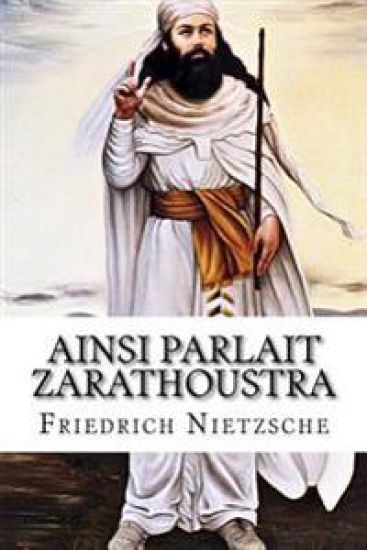
Ainsi Parlait Zarathoustra
Friedrich Wilhelm Nietzsche
Createspace Independent Publishing Platform
2016
nidottu
Friedrich Wilhelm Nietzsche (est un philologue, philosophe et po te allemand n le 15 octobre 1844 R cken, en Prusse, et mort le 25 ao t 1900 Weimar, en Allemagne. L'oeuvre de Nietzsche est essentiellement une critique de la culture occidentale moderne et de l'ensemble de ses valeurs morales (issues de la d valuation chr tienne du monde), politiques (la d mocratie, l' galitarisme), philosophiques (le platonisme, mais surtout le socratisme, et toutes les formes de dualisme m taphysique) et religieuses (le christianisme et le bouddhisme). Cette critique proc de d'un projet de d valuer ces valeurs et d'en instituer de nouvelles d passant le ressentiment et la volont de n ant qui ont domin l'histoire de l'Europe sous l'influence du christianisme; ceci notamment par l'affirmation d'un ternel Retour du m me et par le d passement de l'humanit et l'av nement du surhomme. L'expos de ses id es prend dans l'ensemble une forme aphoristique ou po tique.
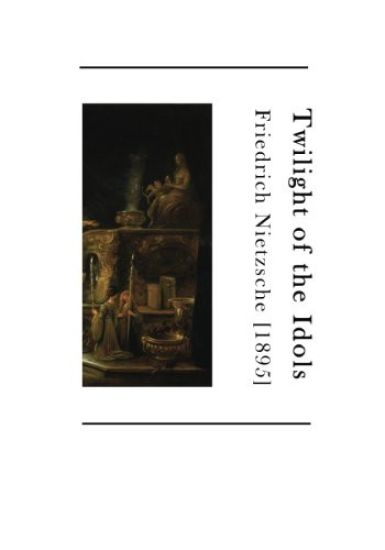
Twilight of the Idols: How to Philosophize with a Hammer
Friedrich Wilhelm Nietzsche
Createspace Independent Publishing Platform
2016
nidottu
Twilight of the Idols Friedrich Nietzsche 1895]d104 prepared from the original German and the translations by Walter Kaufmann and R. J. HollingdaleTwilight of the Idols, or, How to Philosophize with a Hammer (German: G tzen-D mmerung, oder, Wie man mit dem Hammer philosophirt) is a book by Friedrich Nietzsche, written in 1888, and published in 1889. CONTENTSPrefaceMaxims and ArrowsThe Problem of Socrates"Reason" in PhilosophyHow the "True World" Finally Became a FableMorality as Anti-NatureThe FourGreat ErrorsThe "Improvers" of MankindWhat the Germans LackSkirmishes of an Untimely ManWhat I Owe to the AncientsThe Hammer SpeaksMaintaining cheerfulness in the midst of a gloomy task, fraught with immeasurable responsibility, is no small feat; and yet what is needed more than cheerfulness? Nothing succeeds if prankishness has no part in it. Excess strength alone is the proof of strength. A revaluation of all values: this question mark, so black, so huge that it casts a shadow over the man who puts it down -- such a destiny of a task compels one to run into the sunlight at every opportunity to shake off a heavy, all-too-heavy seriousness. Every means is proper to do this; every "case" is a case of luck. Especially, war. War has always been the great wisdom of all spirits who have become too introspective, too profound; even in a wound there is the power to heal. A maxim, the origin of which I withhold from scholarly curiosity, has long been my motto: Increscunt animi, virescit volnere virtus. "The spirits increase, vigor grows through a wound."]Another mode of convalescence (in certain situations even more to my liking) is sounding out idols. There are more idols than realities in the world: that is my "evil eye" upon this world; that is also my "evil ear." Finally to pose questions with a hammer, and sometimes to hear as a reply that famous hollow sound that can only come from bloated entrails -- what a delight for one who has ears even behind his ears, for me, an old psychologist and pied piper before whom just that which would remain silent must finally speak out. This essay -- the title betrays it -- is above all a recreation, a spot of sunshine, a leap sideways into the idleness of a psychologist. Perhaps a new war, too? And are new idols sounded out? This little essay is a great declaration of war; and regarding the sounding out of idols, this time they are not just idols of the age, but eternal idols, which are here touched with a hammer as with a tuning fork: there are no idols that are older, more assured, more puffed-up -- and none more hollow. That does not prevent them from being those in which people have the most faith; nor does one ever say "idol," especially not in the most distinguished instance. Turin, September 30, 1888, on the day when the first book of the Revaluation of All Values was completed. FRIEDRICH NIETZSCHE

Die Geburt der Tragödie und Unzeitgemäße Betrachtungen
Friedrich Wilhelm Nietzsche
Salzwasser-Verlag Gmbh
2015
sidottu