Kirjojen hintavertailu – 12 903 725 kirjaa ja 27 kauppaa
Kirjailija
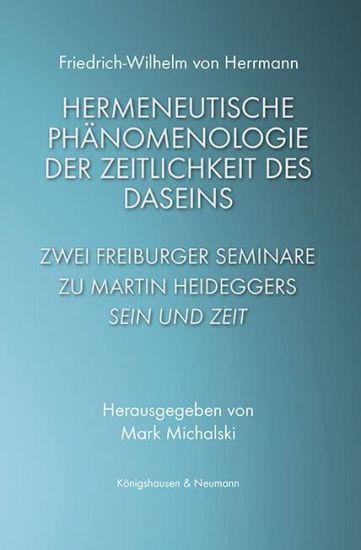
Friedrich-Wilhelm Von Herrmann
Kirjat ja teokset yhdessä paikassa: 7 kirjaa, julkaisuja vuosilta 2010–2023, suosituimpiin kuuluu Kants »Kritik der reinen Vernunft« als transzendentale Metaphysik. Vertaile teosten hintoja ja tarkista saatavuus suomalaisista kirjakaupoista.
Toward the beginning of 2013, I received reports of passages in the Black Notebooks that offered observations on Jewry, or as the case may be, world Jewry. It immediately became clear to me that the publication of the Black Notebooks would call forth a wide-spread international debate. Already in the Spring of 2013, I had asked Professor Friedrich-Wilhelm von Herrmann, last private assistant – and in the words of my grandfather, the “chief co-worker of the complete edition”, – if he might review the Notebooks as a whole, based on his profound insight into the thought of Martin Heidegger, and in particular, review those Jewish-related passages that were the focus of the public eye. Publications about the Black Notebooks quickly came to propagate catchy expressions such as “being-historical anti-Semitism” and “metaphysical anti-Semitism”. The first question that obviously arises is: Does the thought of Martin Heidegger exhibit any kind of anti-Semitism at all? In this book Professor von Herrmann now advances his hermeneutic explication. With Professor Francesco Alfieri of the Pontificia Università Lateranense he has found a colleague who has drawn up a comprehensive philological analysis of volumes GA 94 through GA 97 of the Complete Edition. The fact that Heidegger designated the hitherto published “black notebooks” as Ponderings (Überlegungen) and as Observations (Anmerkungen) has been given little consideration. He intentionally placed them at the conclusion of the Complete Edition because without acquaintance with the lectures, and above all, with the being-historical treatises that would come to be published in the framework of the Complete Edition, they would not be comprehensible. (Arnulf Heidegger)
Friedrich-Wilhelm von Herrmann is known as a major figure in phenomenological and hermeneutics research: he was Martin Heidegger’s personal assistant for the last ten years of Heidegger’s life, and assistant to Eugen Fink, who in turn was primary assistant to Edmund Husserl. However, his own philosophical commentaries and readings of Heidegger’s work are not familiar to many in the English-speaking world. Von Herrmann’s Hermeneutics and Reflection, translated here from the original German, represents the most fundamental and critical reflection in any language of the concept of phenomenology as it was used by Heidegger and by Husserl. It provides a careful rendition of Husserl’s essential contribution to phenomenology, then draws a clear demarcation between Husserl’s reflective phenomenology and Heidegger’s hermeneutic phenomenology. While showing the fullest respect for Husserl’s phenomenology, Hermeneutics and Reflection offers a full-fledged critique of Husserl from the perspective of Heidegger’s hermeneutic phenomenology.
Toward the beginning of 2013, I received reports of passages in the Black Notebooks that offered observations on Jewry, or as the case may be, world Jewry. It immediately became clear to me that the publication of the Black Notebooks would call forth a wide-spread international debate. Already in the Spring of 2013, I had asked Professor Friedrich-Wilhelm von Herrmann, last private assistant – and in the words of my grandfather, the “chief co-worker of the complete edition”, – if he might review the Notebooks as a whole, based on his profound insight into the thought of Martin Heidegger, and in particular, review those Jewish-related passages that were the focus of the public eye. Publications about the Black Notebooks quickly came to propagate catchy expressions such as “being-historical anti-Semitism” and “metaphysical anti-Semitism”. The first question that obviously arises is: Does the thought of Martin Heidegger exhibit any kind of anti-Semitism at all? In this book Professor von Herrmann now advances his hermeneutic explication. With Professor Francesco Alfieri of the Pontificia Università Lateranense he has found a colleague who has drawn up a comprehensive philological analysis of volumes GA 94 through GA 97 of the Complete Edition. The fact that Heidegger designated the hitherto published “black notebooks” as Ponderings (Überlegungen) and as Observations (Anmerkungen) has been given little consideration. He intentionally placed them at the conclusion of the Complete Edition because without acquaintance with the lectures, and above all, with the being-historical treatises that would come to be published in the framework of the Complete Edition, they would not be comprehensible. (Arnulf Heidegger)