

Kirjailija
Frigga Haug
Kirjat ja teokset yhdessä paikassa: 6 kirjaa, julkaisuja vuosilta 1980–2015, suosituimpiin kuuluu Rosa Luxemburg und die Kunst der Politik. Vertaile teosten hintoja ja tarkista saatavuus suomalaisista kirjakaupoista.
6 kirjaa
Kirjojen julkaisuvuodet: 1980–2015.

Es ist an der Zeit, aus den falschen Alternativen, die Politik lähmen und langweilig machen, auszubrechen: Wollen wir ein Erziehungsgeld für Mütter erstreiten oder bessere Kindergärten? Wollen wir eine Frauenquote in der Politik oder uns außerparlamentarisch engagieren? Wollen wir den gewerkschaftlichen Kampf um Löhne und Tarifabkommen stärken oder soll die Forderung nach Grundeinkommen ins Zentrum? Und wie steht es mit Lernen, Entwicklung, Kultur?- oder haben wir jetzt keine Zeit dafür, weil es Dringlicheres gibt wie Krieg, Hunger, Umweltkatastrophen? Im Fokus von Frigga Haugs "Vier-in-einem-Perspektive" steht die Utopie einer gerechten Verteilung von Erwerbsarbeit, Familienarbeit, Gemeinwesensarbeit und Entwicklungschancen. Sie entwickelt einen Kompass, der die vier Bereiche auf einen Zusammenhang orientiert und in dieser Bündelung zugleich ?realpolitisch? und emanzipatorisch-gesellschaftsverändernd ist.

Die meisten Menschen kennen den Namen Rosa Luxemburg. Wissen vielleicht noch, dass sie ermordet wurde, im Landwehrkanal ertränkt. Einige erinnern ihr berühmtes Wort von der Freiheit, die stets die Freiheit der Andersdenkenden sei. Schon weniger wissen, dass sie in der Geschichte der Arbeiterbewegung eigentlich nie wirklich zum Zuge kam und vor allem, dass in ihren politischen Vorschlägen, ihren zahlreichen Texten Unabgegoltenes steckt für gegenwärtige Politik. Das Buch will einiges ins Licht der Diskussion rücken, will Gegenwart im Spiegel von Rosa Luxemburg vermessen. Es wird unter dem Vergangenen und Unwiederholbaren ihre Aktualität herausarbeiten.

Foregrounding the body, this remarkable collective work explores the sexualization of women's bodies, charting the complex interplay of social, political and cultural forces which produce a normative "femininity." A series of projects which focus on concrete instances of sexualization (hair, legs, the slavegirl stereotype, women's gymnastics) lead to a broader examination of the relationship between power and sexuality, the social and the psychological. Placing themselves at the crossroad where feminism and socialism meet, the contributors move seamlessly between the autobiographical and the analytical, questioning the diversion between personal and political, mapping the knot of memory and desire at the heart of the gendered body. Vitally, these accounts do not present sexualization as a passive inculcation of social norms: the individual is presented as taking an active role in the construction of gendered identities.
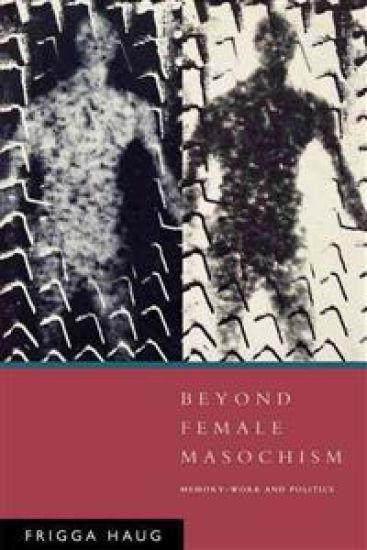
Frigga Haug, one of Germany's best-known feminist and Marxist critics, develops here a profound challenge both to women's oppression and to what she sees as women's 'collusion' in that oppression. Rejecting the essentialism of much feminist writing today, along with the denial of subjectivity that still permeates Marxism, Haug explores the connections between Marxist theory and the emancipation of women, a project which necessarily involves, as she explains, "diverting a powerful and long-standing anger into detective work." Under the headings of Socialization, Work and Politics, she combines the fruits of these investigations with the influential "memory-work" she has pioneered with women's collectives, to throw startling new light on a wide range of themes and issues: personal ethics and public morality; daydreams, domesticity and consumerism; privatization, new technologies and the restructuring of the workplace; the evolution of women's politics in Germany; the future of socialist feminism in the wake of Communism's collapse. Above all, this is a book which strives to find new links between the micro-politics of daily life and the evolving structures of capitalism. "If we could find out why and when our hopes for life were buried," Haug argues, "then we could try to take our history in our own hands." Beyond Female Masochism provides the materials, and inspiration, to do just that.

Wissenschaft und Arbeitnehmerinteressen
Ute Stoltenberg; Lars Lambrecht; Karl-Jürgen Beiback; Helga Milz; Gerhard Brosius; Wilfried Laatz; Frigga Haug; Norbert Aust; Heinrich Epskamp; Manfred Wetzel; Wulf D. Hund
Vs Verlag Fur Sozialwissenschaften
1980
nidottu