

Kirjojen hintavertailu – 12 859 818 kirjaa ja 27 kauppaa

Kirjailija

Friso Bostoen

Kirjat ja teokset yhdessä paikassa: 2 kirjaa, julkaisuja vuosilta 2019–2023, suosituimpiin kuuluu The Platform Economy. Vertaile teosten hintoja ja tarkista saatavuus suomalaisista kirjakaupoista.

2 kirjaa

Kirjojen julkaisuvuodet: 2019–2023.

Abuse of Platform Power

Abuse of Platform Power

Friso Bostoen

Institute of Competition Law
2023
pokkari

Halvin toimitettuna 90,10 €

Online platforms play a crucial role in today's economy by serving as intermediaries between consumers and suppliers. The economics governing their business model pushes them to first pursue growth over profits and later integrate vertically-a dynamic that has resulted in expansive digital ecosystems. The platforms orchestrating these ecosystems can have an incentive and ability to exclude suppliers ('intra-platform exclusion'). Article 102 TFEU targets such conduct, in particular through the figure of 'leveraging', but the economic and technological complexity of platforms has befuddled traditional legal analysis. This book presents an in-depth study of the abuse of dominance in the platform economy. It starts by studying platform business strategy and then systematically analyzes how different forms of leveraging abuse (tying, refusal to supply, margin squeeze, discrimination) should be reinterpreted in the platform economy. The book also recognizes the procompetitive role of platforms and suggests safeguarding it by duly considering justifications. Finally, the book surveys ex ante measures targeted at platforms such as non-discrimination rules, portability and interoperability measures, forced access, and break-up. The book was awarded the 2022 Concurrences Ph. D. Award in Law.
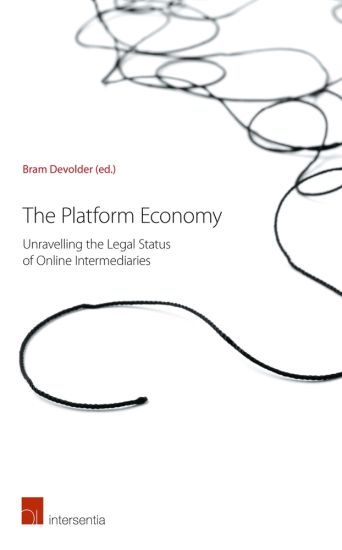
The Platform Economy

The Platform Economy

Alain Strowel; Wouter Vergote; Nicolas Van Damme; Friso Bostoen; Marie Jull Sorensen; Liyang Hou; Valerio De Stefano; Mathias Wouters; Paul Schoukens; Alberto Barrio; Saskia Montebovi; Yves Stevens; Wouter Verheyen; Fiona Unz; Dina Scornos; Niels Bammens; Edoardo Traversa; Marie Lamensch; Kenneth Vyncke

Intersentia Ltd
2019
sidottu
On 20 December 2017 and 10 April 2018 respectively, the Court of Justice of the European Union passed two landmark cases on the legal status of internet platform Uber. The Court established that Uber does not merely provide an app, but rather offers a full transport service. Without Uber there would be no market for non-professional drivers using their own vehicles. Moreover, the platform exercises a decisive influence over the conditions under which drivers provide their service. These rulings address the very core of several highly debated questions on the legal status of online intermediaries such as Uber, Airbnb and TaskRabbit. Is regulatory intervention needed to reap the potential benefits of the platform economy or to mitigate the potentially negative consequences of regulatory disruption? Can platforms be held liable for the proper execution of services provided by others? Does existing national regulation impose disproportionate market restrictions on innovators? Should we rethink labour protection aand social security to address the potential loss of social protection of non-standard workers? How can revenue law be improved to tackle elaborate (international) schemes to avoid direct and indirect taxation? Emerging platforms claim to create new market opportunities and to provide innovative solutions to improve social welfare. Conversely, the platform economy blurs established lines between traditional legal categories, such as business and consumer, personal and professional, and worker and contractor. Traditional regulation, which often focuses on balancing the interests of two contracting parties, is now confronted with the three-sided contractual relationship between a platform, a supplier and a user. In this book, a panel of international legal experts unravel the legal status of online intermediaries a thorny knot that legislators, judges and lawyers across the globe are facing.