Kirjojen hintavertailu – 12 903 737 kirjaa ja 27 kauppaa

Kirjailija

Fulong Wu

Kirjat ja teokset yhdessä paikassa: 10 kirjaa, julkaisuja vuosilta 2004–2024, suosituimpiin kuuluu Urban Poverty in China. Vertaile teosten hintoja ja tarkista saatavuus suomalaisista kirjakaupoista.

10 kirjaa

Kirjojen julkaisuvuodet: 2004–2024.

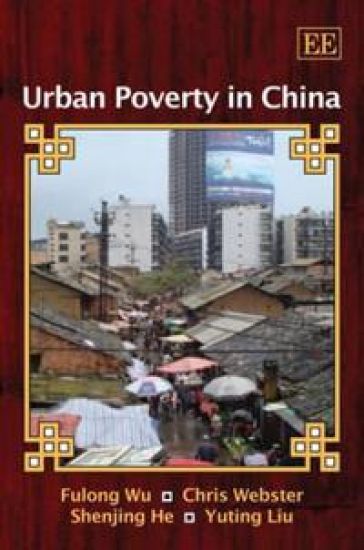
Urban Poverty in China

Urban Poverty in China

Fulong Wu; Chris Webster; Shenijing He; Yuting Liu

Edward Elgar Publishing Ltd
2010
sidottu
Urban poverty is an emerging problem. This book explores the household and neighbourhood factors that lead to both the generation and continuance of urban poverty in China. It is argued that the urban Chinese are not a homogenous social group, but combine laid-off workers and rural migrants, resulting in stark contrasts between migrant and workers' neighbourhoods and villages. The expert authors examine the new urban poor in China and the dynamics of their poor neighbourhoods, highlighting both household experience and neighbourhood changes affecting the urban poor. Urban Poverty in China is based upon a comprehensive household survey in six Chinese cities and provides insights into microscopic and neighbourhood-level poverty dynamics. The comprehensive study explores the spatial implications such as concentration of poverty as well as the differentiation within poor neighbourhoods. This informative book tells an insightful story about evolving urban poverty in Chinese cities that will be invaluable to researchers and postgraduate students within urban studies, geography, social policy and development studies as well as Chinese and Asian studies. It will also prove to be an invaluable read for researchers in urban and social development and international development agencies.
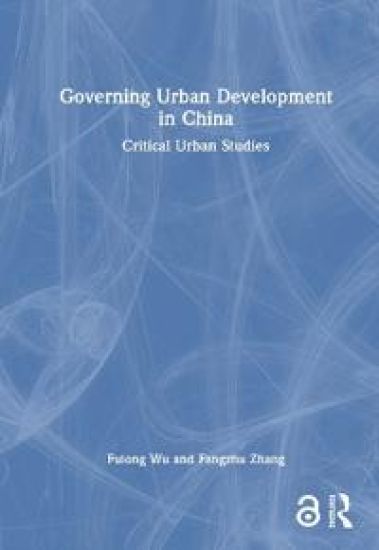
Governing Urban Development in China

Governing Urban Development in China

Fulong Wu; Fangzhu Zhang

TAYLOR FRANCIS LTD
2024
nidottu
The book investigates urban development and governance in China and introduces China perspectives to the understanding of governing urban development in the 21st century. Building upon a rich and burgeoning literature on China, the book explains major changes in governance, offers a well-synthesized account of state-centered governance, and provides in-depth discussions on urban governance, city and regional planning, financing and financialization, urban redevelopment, local economic development and innovation, and environmental governance. The book bridges theoretical concepts in critical urban studies and empirical research on China and thus depicts a fuller picture of changing and variegated urban governance in the contemporary world. The book theorizes Chinese urban governance from the ground up and derives a concept of state entrepreneurialism as a framework for narrating urban governance in China. Following this framework, each chapter begins with a brief introduction to key concepts in urban geography and then depicts the urban development process on the ground in China. Then, the chapters discuss these concepts and explanations because many are derived from a different context, often in Western economies. At the end of each chapter, the phenomenal urban changes are evaluated with their theoretical implications. This book offers contextualized insights into critical geographical studies of urban governance and is the first essential complementary reading for both urban scholars and those exploring the geography of China. It will be of interest to students and researchers in Urban Geography, Urban Studies, Urban Planning, Sociology, Political Science, and China Studies. The book can also be complementary reading in China Studies, especially in governance and politics.
Governing Urban Development in China

Governing Urban Development in China

Fulong Wu; Fangzhu Zhang

TAYLOR FRANCIS LTD
2024
sidottu
The book investigates urban development and governance in China and introduces China perspectives to the understanding of governing urban development in the 21st century. Building upon a rich and burgeoning literature on China, the book explains major changes in governance, offers a well-synthesized account of state-centered governance, and provides in-depth discussions on urban governance, city and regional planning, financing and financialization, urban redevelopment, local economic development and innovation, and environmental governance. The book bridges theoretical concepts in critical urban studies and empirical research on China and thus depicts a fuller picture of changing and variegated urban governance in the contemporary world. The book theorizes Chinese urban governance from the ground up and derives a concept of state entrepreneurialism as a framework for narrating urban governance in China. Following this framework, each chapter begins with a brief introduction to key concepts in urban geography and then depicts the urban development process on the ground in China. Then, the chapters discuss these concepts and explanations because many are derived from a different context, often in Western economies. At the end of each chapter, the phenomenal urban changes are evaluated with their theoretical implications. This book offers contextualized insights into critical geographical studies of urban governance and is the first essential complementary reading for both urban scholars and those exploring the geography of China. It will be of interest to students and researchers in Urban Geography, Urban Studies, Urban Planning, Sociology, Political Science, and China Studies. The book can also be complementary reading in China Studies, especially in governance and politics.
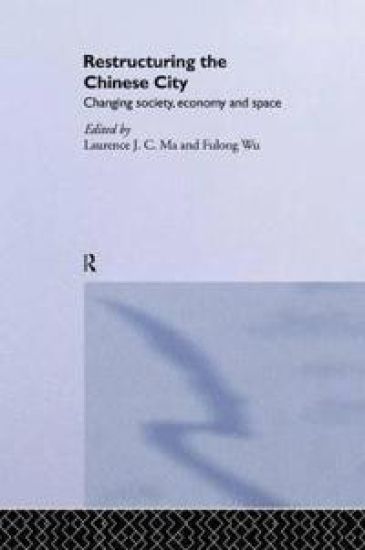
Restructuring the Chinese City

Restructuring the Chinese City

Laurence J.C. Ma; Fulong Wu

Routledge
2015
nidottu
A sea of change has occurred in China since the 1978 economic reforms. Bringing together the work of leading scholars specializing in urban China, this book examines what has happened to the Chinese city undergoing multiple transformations during the reform era, with an emphasis on new processes of urban formation and the consequent reconstituted urban spaces. With arguments against the convergence thesis that sees cities everywhere becoming more Western in form and suggestions that the Chinese city is best seen as a multiplex city, Restructuring the Chinese City is an indispensable text for Chinese specialists, urban scholars and advanced students in urban geography, urban planning and China studies.
Planning for Growth

Planning for Growth

Fulong Wu

Routledge
2015
nidottu
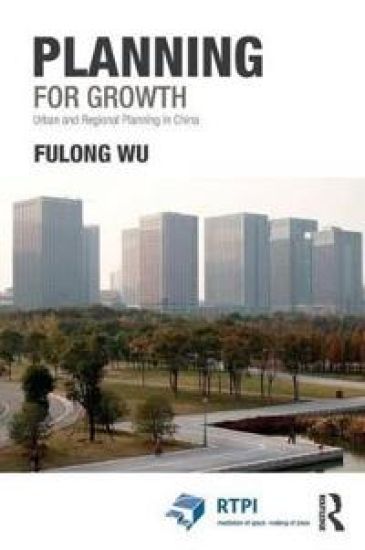
Planning for Growth: Urban and Regional Planning in China provides an overview of the changes in China’s planning system, policy, and practices using concrete examples and informative details in language that is accessible enough for the undergraduate but thoroughly grounded in a wealth of research and academic experience to support academics. It is the first accessible text on changing urban and regional planning in China under the process of transition from a centrally planned socialist economy to an emerging market in the world. Fulong Wu, a leading authority on Chinese cities and urban and regional planning, sets up the historical framework of planning in China including its foundation based on the proactive approach to economic growth, the new forms of planning, such as the ‘strategic spatial plan’ and ‘urban cluster plans’, that have emerged and stimulated rapid urban expansion and transformed compact Chinese cities into dispersed metropolises. And goes on to explain the new planning practices that began to pay attention to eco-cities, new towns and new development areas. Planning for Growth: Urban and Regional Planning in China demonstrates that planning is not necessarily an ‘enemy of growth’ and plays an important role in Chinese urbanization and economic growth. On the other hand, it also shows planning’s limitations in achieving a more sustainable and just urban future.
Planning for Growth

Planning for Growth

Fulong Wu

Routledge
2015
sidottu
Planning for Growth: Urban and Regional Planning in China provides an overview of the changes in China’s planning system, policy, and practices using concrete examples and informative details in language that is accessible enough for the undergraduate but thoroughly grounded in a wealth of research and academic experience to support academics. It is the first accessible text on changing urban and regional planning in China under the process of transition from a centrally planned socialist economy to an emerging market in the world. Fulong Wu, a leading authority on Chinese cities and urban and regional planning, sets up the historical framework of planning in China including its foundation based on the proactive approach to economic growth, the new forms of planning, such as the ‘strategic spatial plan’ and ‘urban cluster plans’, that have emerged and stimulated rapid urban expansion and transformed compact Chinese cities into dispersed metropolises. And goes on to explain the new planning practices that began to pay attention to eco-cities, new towns and new development areas. Planning for Growth: Urban and Regional Planning in China demonstrates that planning is not necessarily an ‘enemy of growth’ and plays an important role in Chinese urbanization and economic growth. On the other hand, it also shows planning’s limitations in achieving a more sustainable and just urban future.
Urban Development in Post-Reform China

Urban Development in Post-Reform China

Fulong Wu; Jiang Xu; Anthony Gar-On Yeh

Routledge
2006
sidottu
Radically reoriented under market reform, Chinese cities present both the landscapes of the First and Third World, and are increasingly playing a critical role in the country’s economic development. Yet, radical marketization co-exists with the ever-presence of state control. Exploring the interaction of China’s market development, state regulation and the resulting transformation and creation of new urban spaces, this innovative, key book provides the first integrated treatment of China’s urban development in the dynamic market transition. Focusing on land and housing development, the authors, all renowned authorities in this field, show how the market has been ‘created’ under post-reform urban conditions, and examine ‘the state in action’, highlighting how changing urban governance towards local entrepreneurial state facilitates market formation. A significant, original contribution, they highlight the key actors and their institutional contexts. China has been very successful in using urban land development as an economic growth engine, and here the authors investigate complex interactions between the market and state in creating this new urbanism. Taking a unique perspective, they marshal original ideas and empirical work based on field studies and collaborative work with colleagues in China.
Restructuring the Chinese City

Restructuring the Chinese City

Laurence J.C. Ma; Fulong Wu

Routledge
2004
sidottu
A sea of change has occurred in China since the 1978 economic reforms. Bringing together the work of leading scholars specializing in urban China, this book examines what has happened to the Chinese city undergoing multiple transformations during the reform era, with an emphasis on new processes of urban formation and the consequent reconstituted urban spaces. With arguments against the convergence thesis that sees cities everywhere becoming more Western in form and suggestions that the Chinese city is best seen as a multiplex city, Restructuring the Chinese City is an indispensable text for Chinese specialists, urban scholars and advanced students in urban geography, urban planning and China studies.