Kirjailija
Fulton J Sheen
Kirjat ja teokset yhdessä paikassa: 207 kirjaa, julkaisuja vuosilta 1943–2026, suosituimpiin kuuluu Advent and Christmas with Archbishop Fulton Sheen. Vertaile teosten hintoja ja tarkista saatavuus suomalaisista kirjakaupoista.
Nimi esiintyy myös muodoissa: Fulton J. Sheen
207 kirjaa
Kirjojen julkaisuvuodet: 1943–2026.





GOD AND WARThe wisdom of Archbishop Sheen is still winning the day. The things he wrote and said on the radio are all coming true. The reflections contained in this work are a collection of Sheen's Catholic Hour radio addresses from 1942 that were heard by millions of listeners each week. These reflections are a series of short essays that addressed the many concerns of the listeners of his day during the war. Sheen answers questions about the following topics: THE THINGS OF GOD IN WAR TIMESPECTATORS AND ACTORS IN THE DRAMA OF THE CROSSTHE DIVINE COST OF STOPPING THIS WARTRUST IN GOD'S PLANFAITH IN WAR TIMEPRAYER IN WAR TIMETHE CRUCIFIXIONTHE DIVINE PATH TO VICTORYSheen answers questions about the things of God in war time, trusting in God's plan, prayer in war, and the Divine path to victory. His were some of the most clearly delineated investigations into the underlying causes of the war combined with an entirely sound and hopeful program for winning both the war and the even more important peace are found in them. These powerful reflections can be most heartily recommended for their wise counsel, sane and penetrating analysis, and logical conclusions. Like a master surgeon, Sheen applied the sharp scalpel of his crystal-clear logic to lay open the sources of the world's infection. Sheen writes, "There are two ways of looking at the war: one as a journalist, the other as a theologian. The journalist tells you what happens; the theologian not only why it happens, but also what matters. Our approach is from the divine point of view, first of all, because it is the only explanation which fits the facts; secondly, because the American people who have been confused by catchwords and slogans are seeking an inspiration for a total surrender of their great potentialities for sacrifice, both for God and country." Sheen is firm in his conviction that real peace cannot be declared, it must be made. It is with peace-making and the fundamental conditions on which peace must be based that this book is concerned. In its seven forceful and readable chapters, it challenges the theory of many planners today who posture that military allies are necessarily political allies; it affirms that a common hatred can make nations allies, but only a common love can make them neighbors; it denies the primacy of action over reason, in the sense that the will of the state is that which makes a state right; and it contends that utility does not establish justice, but it is justice which makes utility. With the same lucid and persuasive reasoning that has made him outstanding both as a writer and as a lecturer, Sheen continues to challenge people of goodwill to unite for the preservation of personal rights, freedom of conscience, human justice, and civilization itself - all of which are in danger in the present conflict.
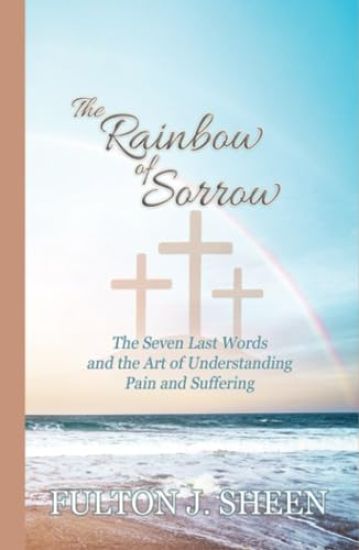
World-renowned evangelist and New York Times best-selling author Archbishop Fulton J. Sheen presents a collection of engaging sermons, encouraging the reader to understand the mystery of suffering and sorrow in the world today. Throughout this series of sermons, Archbishop Sheen will provide some valuable insights as to why sometimes, the innocent have to suffer. Using the Seven Last Words spoken by Jesus from the Cross on Calvary as a backdrop, Sheen will address the topics of pain and suffering using his inimitable writing style, with immediacy, yet conveying joy and comfort in the subject matter. These meditations on the Seven Last Words correlated to the mystery of pain and suffering make no pretence to absoluteness. The Words are not necessarily related to the struggles we face but they do make convenient points of illustrations. TABLE OF CONTENTSUNJUST SUFFERING - "Father, forgive them, for they know not what they do." PAIN - "This day thou shalt be with Me in Paradise." SUFFERING OF THE INNOCENT - "Woman, behold thy son (Son) Behold thy mother "GOD AND THE SOUL - "My God My God Why hast Thou hast abandoned Me?" THE NEED OF ZEAL - "I thirst." A PLANNED UNIVERSE - "It is finished." ETERNAL FREEDOM - "Father, into Thy Hands, I commend My Spirit." This book has one main aim and that is to awaken an appreciation of the Passion of Our Lord and to hopefully incite in the reader a better understanding of pain and suffering. If it does that in but one soul its publication has been justified. Archbishop Fulton J. Sheen was a man for all seasons. Over his lifetime, he spent himself for souls, transforming lives with the clear teaching of the truths of Christ and His Church through his books, his radio addresses, his lectures, his television series, and his many newspaper columns. The topics of this much-sought-after lecturer ranged from the social concerns of the day to matters of faith and morals. With an easy and personable manner, Sheen could strike up a conversation on just about any subject, making numerous friends as well as converts. During the 1930s and '40s, Fulton Sheen was the featured speaker on The Catholic Hour radio broadcast, and millions of listeners heard his radio addresses each week. His topics ranged from politics and the economy to philosophy and man's eternal pursuit of happiness. Along with his weekly radio program, Sheen wrote dozens of books and pamphlets. One can safely say that through his writings, thousands of people changed their perspective about God and the Church. Sheen was quoted as saying, "There are not one hundred people in the United States who hate the Catholic Church, but there are millions who hate what they wrongly perceive the Catholic Church to be." Possessing a burning zeal to dispel the myths about Our Lord and His Church, Sheen gave a series of powerful presentations on Christ's Passion and His seven last words from the Cross. As a Scripture scholar, Archbishop Sheen knew full well the power contained in preaching Christ crucified. With St. Paul, he could say, "For I decided to know nothing among you except Jesus Christ and him crucified" (1 Cor. 2:2). Given their importance and the impact they had on society, it seemed appropriate to reintroduce these reflections once again on the rainbow of sorrow.
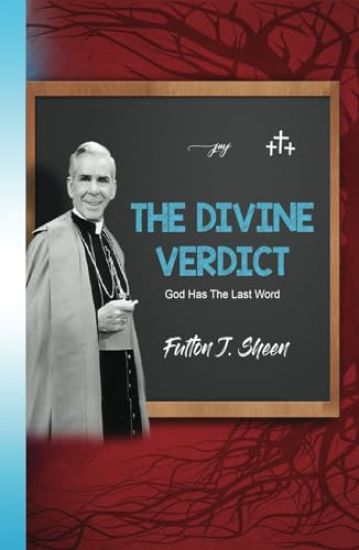
The Divine Verdict Numerous articles, radio reflections, and books would continue to be produced by Sheen throughout the war. Given their importance and the impact they had on society in his day, it seemed appropriate to bring together once again some of Archbishop Sheen's reflections on war and peace taken from his book The Divine Verdict (New York: P. J. Kenedy and Sons, 1943)Here you will a collection of Sheen's Catholic Hour radio addresses that were heard by millions of listeners each week. These reflections are a series of short essays that addressed the many concerns of the listeners of his day during the war. Sheen answers questions about the moral basis of peace, the power of God, war being a judgement of God and the judgement of nations. Sheen also explains how evil Has Its Hour and how our freedoms are in danger. His were some of the most clearly delineated investigations into the underlying causes of the war combined with an entirely sound and hopeful program for winning both the war and the even more important peace are found in them. These powerful reflections can be most heartily recommended for their wise counsel, sane and penetrating analysis, and logical conclusions. Sheen writes, "There are two ways of looking at the war: one as a journalist, the other as a theologian. The journalist tells you what happens; the theologian not only why it happens, but also what matters. Our approach is from the divine point of view, first of all, because it is the only explanation which fits the facts; secondly, because the American people who have been confused by catchwords and slogans are seeking an inspiration for a total surrender of their great potentialities for sacrifice, both for God and country." Sheen is firm in his conviction that real peace cannot be declared, it must be made. It is with peace-making and the fundamental conditions on which peace must be based that this book is concerned. In its seven forceful and readable chapters, it challenges the theory of many planners today who posture that military allies are necessarily political allies; it affirms that a common hatred can make nations allies, but only a common love can make them neighbors; it denies the primacy of action over reason, in the sense that the will of the state is that which makes a state right; and it contends that utility does not establish justice, but it is justice which makes utility. With the same lucid and persuasive reasoning that has made him outstanding both as a writer and as a lecturer, Sheen continues to challenge people of goodwill to unite for the preservation of personal rights, freedom of conscience, human justice, and civilization itself - all of which are in danger in the present conflict. Here, one will recognize the urgency of Sheen's subject matter, and will find pillars of peace and promise in his far-sighted principles. Table of ContentsINTRODUCTIONEVIL HAS ITS HOURWAR AS A JUDGMENT OF GODJUDGMENT OF NATIONSFREEDOM IN DANGERMORAL BASIS OF PEACEJEW AND CHRISTIANTHE POWER OF GOD
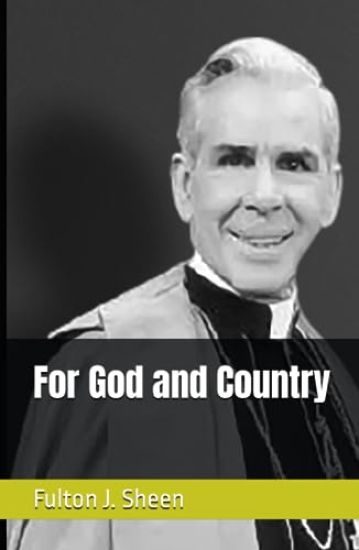
FOR GOD AND COUNTRYThe wisdom of Archbishop Sheen is still winning the day. The things he wrote and said on the radio in 1941 are coming true. The reflections contained in this work are a collection of Sheen's Catholic Hour radio addresses from 1941 that were heard by millions of listeners each week. These reflections are a series of short essays that addressed the many concerns of the listeners of his day during the war. Sheen answers questions about the following topics: ANTI-CHRISTTHE REALITY OF SINTHE MASSES AND GODLIBERAL AND REACTIONARYTHE FOUR COLUMNSTHE CROSS AND THE DOUBLE CROSSHOPE In this book were some of the most clearly delineated investigations into the underlying causes of the war combined with an entirely sound and hopeful program for winning both the war and the even more important peace are found in them. These powerful reflections can be most heartily recommended for their wise counsel, sane and penetrating analysis, and logical conclusions. Sheen writes, "There are two ways of looking at the war: one as a journalist, the other as a theologian. The journalist tells you what happens; the theologian not only why it happens, but also what matters. Our approach is from the divine point of view, first of all, because it is the only explanation which fits the facts; secondly, because the American people who have been confused by catchwords and slogans are seeking an inspiration for a total surrender of their great potentialities for sacrifice, both for God and country." Sheen is firm in his conviction that real peace cannot be declared, it must be made. It is with peace-making and the fundamental conditions on which peace must be based that this book is concerned. In its seven forceful and readable chapters, it challenges the theory of many planners today who posture that military allies are necessarily political allies; it affirms that a common hatred can make nations allies, but only a common love can make them neighbors; it denies the primacy of action over reason, in the sense that the will of the state is that which makes a state right; and it contends that utility does not establish justice, but it is justice which makes utility. With the same lucid and persuasive reasoning that has made him outstanding both as a writer and as a lecturer, Sheen continues to challenge people of goodwill to unite for the preservation of personal rights, freedom of conscience, human justice, and civilization itself - all of which are in danger in the present conflict. Here, one will recognize the urgency of Sheen's subject matter, and will find pillars of peace and promise in his far-sighted principles.