Kirjojen hintavertailu – 12 859 828 kirjaa ja 27 kauppaa

Kirjailija

Furong Gao

Kirjat ja teokset yhdessä paikassa: 6 kirjaa, julkaisuja vuosilta 2011–2019, suosituimpiin kuuluu Injection Molding Process Control, Monitoring, and Optimization. Vertaile teosten hintoja ja tarkista saatavuus suomalaisista kirjakaupoista.

6 kirjaa

Kirjojen julkaisuvuodet: 2011–2019.

Iterative Learning Stabilization and Fault-Tolerant Control for Batch Processes

Iterative Learning Stabilization and Fault-Tolerant Control for Batch Processes

Limin Wang; Ridong Zhang; Furong Gao

Springer Verlag, Singapore
2019
sidottu
This book is based on the authors’ research on the stabilization and fault-tolerant control of batch processes, which are flourishing topics in the field of control system engineering. It introduces iterative learning control for linear/nonlinear single/multi-phase batch processes; iterative learning optimal guaranteed cost control; delay-dependent iterative learning control; and iterative learning fault-tolerant control for linear/nonlinear single/multi-phase batch processes. Providing important insights and useful methods and practical algorithms that can potentially be applied in batch process control and optimization, it is a valuable resource for researchers, scientists, and engineers in the field of process system engineering and control engineering.
Injection Molding Process Control, Monitoring, and Optimization

Injection Molding Process Control, Monitoring, and Optimization

Yi Yang; Xi Chen; Ningyun Lu; Furong Gao

Hanser Publications
2016
sidottu
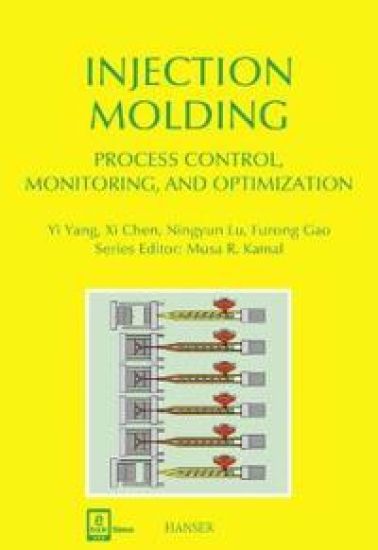
Improvement of injection molding processes remains a topic of great interest in both industry and research institutions. This book introduces the analysis of the molding process from a systems technology point of view. It is divided into four parts: the first part provides general background to introduce the injection molding process, the second covers the control of the process, the third is on the monitoring technology, and the fourth is concerned with the optimization of the process. Most the results within are from real engineering implementations and experimental tests. With the purchase of this book, you also receive a free personal access code to download the eBook.
Model Predictive Control

Model Predictive Control

Ridong Zhang; Anke Xue; Furong Gao

Springer Verlag, Singapore
2018
nidottu
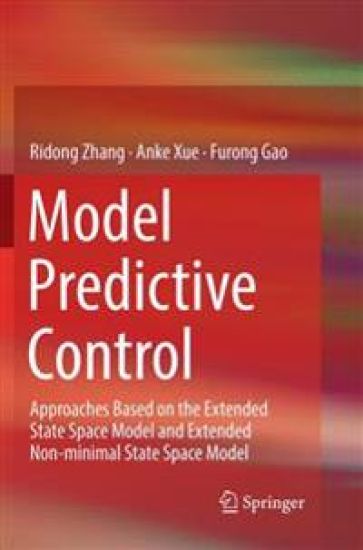
This monograph introduces the authors’ work on model predictive control system design using extended state space and extended non-minimal state space approaches. It systematically describes model predictive control design for chemical processes, including the basic control algorithms, the extension to predictive functional control, constrained control, closed-loop system analysis, model predictive control optimization-based PID control, genetic algorithm optimization-based model predictive control, and industrial applications. Providing important insights, useful methods and practical algorithms that can be used in chemical process control and optimization, it offers a valuable resource for researchers, scientists and engineers in the field of process system engineering and control engineering.
Model Predictive Control

Model Predictive Control

Ridong Zhang; Anke Xue; Furong Gao

Springer Verlag, Singapore
2018
sidottu
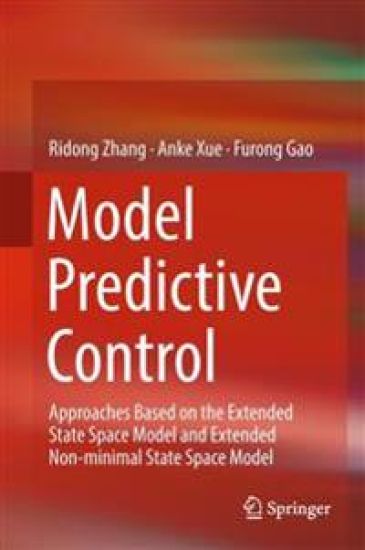
This monograph introduces the authors’ work on model predictive control system design using extended state space and extended non-minimal state space approaches. It systematically describes model predictive control design for chemical processes, including the basic control algorithms, the extension to predictive functional control, constrained control, closed-loop system analysis, model predictive control optimization-based PID control, genetic algorithm optimization-based model predictive control, and industrial applications. Providing important insights, useful methods and practical algorithms that can be used in chemical process control and optimization, it offers a valuable resource for researchers, scientists and engineers in the field of process system engineering and control engineering.
Industrial Process Identification and Control Design

Industrial Process Identification and Control Design

Tao Liu; Furong Gao

Springer London Ltd
2014
nidottu
Industrial Process Identification and Control Design is devoted to advanced identification and control methods for the operation of continuous-time processes both with and without time delay, in industrial and chemical engineering practice. The simple and practical step- or relay-feedback test is employed when applying the proposed identification techniques, which are classified in terms of common industrial process type: open-loop stable; integrating; and unstable, respectively. Correspondingly, control system design and tuning models that follow are presented for single-input-single-output processes. Furthermore, new two-degree-of-freedom control strategies and cascade control system design methods are explored with reference to independently-improving, set-point tracking and load disturbance rejection. Decoupling, multi-loop, and decentralized control techniques for the operation of multiple-input-multiple-output processes are also detailed. Perfect tracking of a desire output trajectory is realized using iterative learning control in uncertain industrial batch processes. All the proposed methods are presented in an easy-to-follow style, illustrated by examples and practical applications. This book will be valuable for researchers in system identification and control theory, and will also be of interest to graduate control students from process, chemical, and electrical engineering backgrounds and to practising control engineers in the process industry.
Industrial Process Identification and Control Design

Industrial Process Identification and Control Design

Tao Liu; Furong Gao

Springer London Ltd
2011
sidottu
Industrial Process Identification and Control Design is devoted to advanced identification and control methods for the operation of continuous-time processes both with and without time delay, in industrial and chemical engineering practice. The simple and practical step- or relay-feedback test is employed when applying the proposed identification techniques, which are classified in terms of common industrial process type: open-loop stable; integrating; and unstable, respectively. Correspondingly, control system design and tuning models that follow are presented for single-input-single-output processes. Furthermore, new two-degree-of-freedom control strategies and cascade control system design methods are explored with reference to independently-improving, set-point tracking and load disturbance rejection. Decoupling, multi-loop, and decentralized control techniques for the operation of multiple-input-multiple-output processes are also detailed. Perfect tracking of a desire output trajectory is realized using iterative learning control in uncertain industrial batch processes. All the proposed methods are presented in an easy-to-follow style, illustrated by examples and practical applications. This book will be valuable for researchers in system identification and control theory, and will also be of interest to graduate control students from process, chemical, and electrical engineering backgrounds and to practising control engineers in the process industry.