Kirjojen hintavertailu – 12 859 818 kirjaa ja 27 kauppaa

Kirjailija

Fyodor Dostoyevsky

Kirjat ja teokset yhdessä paikassa: 690 kirjaa, julkaisuja vuosilta 1864–2027, suosituimpiin kuuluu Called to Community. Vertaile teosten hintoja ja tarkista saatavuus suomalaisista kirjakaupoista.

690 kirjaa

Kirjojen julkaisuvuodet: 1864–2027.

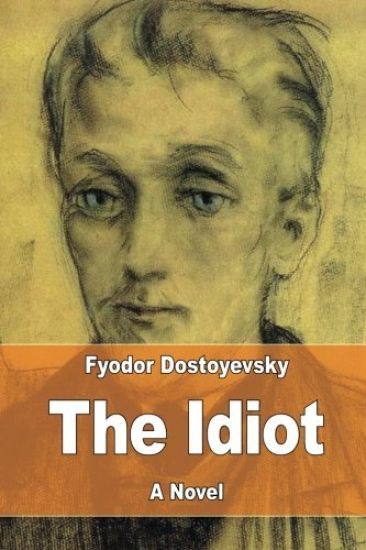
The Idiot

The Idiot

Fyodor Dostoyevsky

Createspace Independent Publishing Platform
2017
nidottu
The title of this novel is an ironic reference to the central character of the novel, Prince (Knyaz) Lev Nikolaevich Myshkin, a young man whose goodness and open-hearted simplicity lead many of the more worldly characters he encounters to mistakenly assume that he lacks intelligence and insight. In the character of Prince Myshkin, Dostoevsky set himself the task of depicting "the positively good and beautiful man". The novel examines the consequences of placing such a unique individual at the centre of the conflicts, desires, passions and egoism of worldly society, both for the man himself and for those with whom he becomes involved. The result, according to philosopher A. C. Grayling, is "one of the most excoriating, compelling and remarkable books ever written; and without question one of the greatest."
Uncle's Dream; And The Permanent Husband

Uncle's Dream; And The Permanent Husband

Fyodor Dostoyevsky

Prabhat Prakashan
2017
pokkari
Uncle's Dream by Fyodor Dostoyevsky was written following his five year exile to Siberia where he was sent to serve in a hard labor camp. Following what could only have been a harrowing and harsh existence in Russia's infamous prison for political and social prisoners, one would expect Dostoyevsky's work to have been dark and bitter. Rather, Uncle's Dream is a humorous and yet scathing commentary on Russian provincial high-society. Fyodor Mikhaylovich sometimes transliterated Dostoevsky, was a Russian novelist, journalist, and short-story writer whose psychological penetration into the human soul had a profound influence on the 20th century novel. Dostoevsky was the second son of a former army doctor. He was educated at home and at a private school. Shortly after the death of his mother in 1837 he was sent to St. Petersburg, where he entered the Army Engineering College. Dostoevsky's father died in 1839, most likely of apoplexy, but it was rumored that he was murdered by his own serfs. Dostoevsky graduated as a military engineer, but resigned in 1844 to devote himself to writing. His first novel, Poor Folk appeared in 1846. That year he joined a group of utopian socialists. He was arrested in 1849 and sentenced to death, commuted to imprisonment in Siberia. Dostoevsky spent four years in hard labor and four years as a soldier in Semipalatinsk, a city in what it is today Kazakhstan. Dostoevsky returned to St. Petersburg in 1854 as a writer with a religious mission and published three works that derive in different ways from his Siberia experiences: The House of the Dead, (1860) a fictional account of prison life, The Insulted and Injured, which reflects the author's refutation of naive Utopianism in the face of evil, and Winter Notes on Summer Impressions, his account of a trip to Western Europe. The Eternal Husband is a novella by the Russian author Fyodor Dostoevsky that was first published in 1870 in Zarya magazine The novella's plot revolves around the complicated relationship between Velchaninov and Trusotsky, the husband of his deceased former lover." The Grand Inquisitor" is a poem (a story within a story) inside Fyodor Dostoevsky's novel The Brothers Karamazov (1879-1880). It is recited by Ivan Karamazov, who questions the possibility of a personal and benevolent God, to his brother Alexei (Alyosha), a novice monk. "The Grand Inquisitor" is an important part of the novel and one of the best-known passages in modern literature because of its ideas about human nature and freedom, and its fundamental ambiguity. Scholars cite Friedrich Schiller's play Don Carlos (1787) as a major inspiration for Dostoevsky's Grand Inquisitor, while also noting that "The sources of the legend are extraordinarily varied and complex." The House of the Dead is a semi-autobiographical novel published in 1860-2 in the journal Vremya by Russian author Fyodor Dostoevsky, which portrays the life of convicts in a Siberian prison camp. The novel has also been published under the titles Memoirs from the House of The Dead, Notes from the Dead House (or Notes from a Dead House), and Notes from the House of the Dead. The book is a loosely-knit collection of facts, events and philosophical discussion organised by "theme" rather than as a continuous story. Dostoevsky himself spent four years in exile in such a camp following his conviction for involvement in the Petrashevsky Circle. This experience allowed him to describe with great authenticity the conditions of prison life and the characters of the convicts.

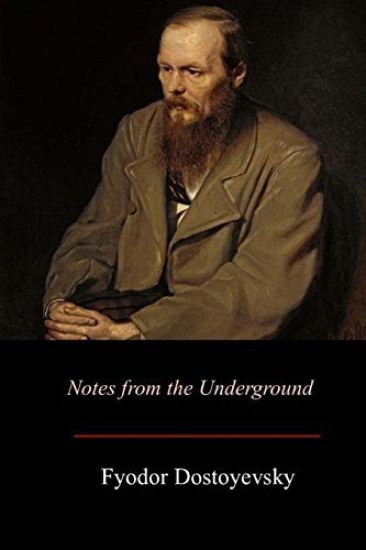
Notes from the Underground

Notes from the Underground

Fyodor Dostoyevsky

Prabhat Prakashan
2017
nidottu
Notes from Underground is a fictional collection of memoirs written by a civil servant living alone in St. Petersburg. The man is never named and is generally referred to as the Underground Man. The "underground" in the book refers to the narrator's isolation, which he described in chapter 11 as "listening through a crack under the floor." It is considered to be one of the first existentialist novels. With this book, Dostoevsky challenged the ideologies of his time, like nihilism and utopianism. The Underground Man shows how idealized rationality in utopias is inherently flawed, because it doesn't account for the irrational side of humanity. This novel has had a big impact on many different works of literature and philosophy. It has influenced writers like Franz Kafka and Friedrich Nietzsche. A similar character is also found in Martin Scorsese's Taxi Driver. Notes from Underground was published in 1864 as the first four issues of Epoch, a Russian magazine by Fyodor and Mikhail Dostoevsky. Presented here is Constance Garnett's translation from 1918.
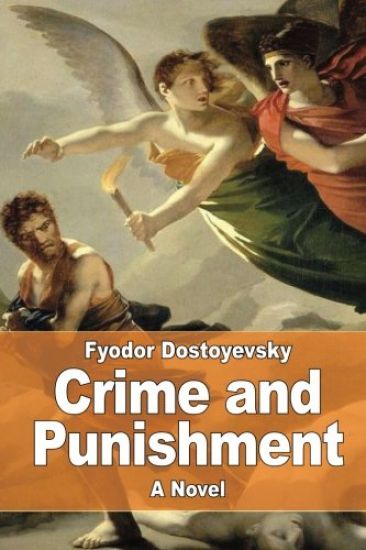
Crimen y Castigo (Spanish) Edition

Crimen y Castigo (Spanish) Edition

Fyodor Dostoyevsky

Createspace Independent Publishing Platform
2017
nidottu
La historia narra la vida de Rodi n Rask lnikov, un estudiante en la capital de la Rusia Imperial, San Petersburgo. Este joven se ve obligado a suspender sus estudios por la miseria en la cual se ve envuelto, a pesar de los esfuerzos realizados por su madre Pulqueria y su hermana Dunia para enviarle dinero. Necesitado de financiaci n para pagar sus gastos, hab a recurrido a una anciana prestamista vil y ego sta, en cuya casa empe a algunos objetos de valor.
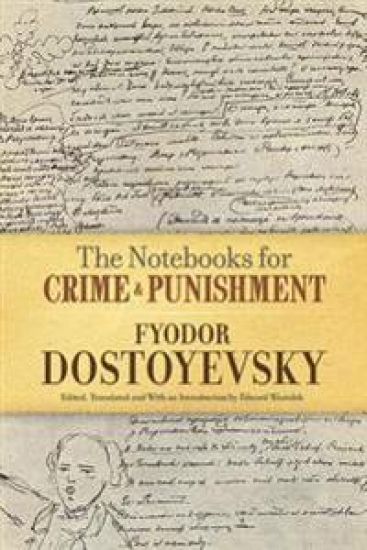
Notebooks for Crime and Punishment

Notebooks for Crime and Punishment

Fyodor Dostoyevsky; Marlys Frey

Dover Publications Inc.
2017
nidottu
"In studying the notebooks one feels like an eavesdropper on Dostoyevsky's artistic self-communings. . . . We may plainly observe Dostoyevsky's creative logic at work in selection and emphasis, his concern for technique and his struggle to make crystal-clear what is ambiguous in his characters. . . . a veritable storehouse of source material on nearly every aspect of the conception, planning, and writing of Crime and Punishment." ― The New York TimesThis key to understanding Dostoyevsky's masterpiece and the author's creative intentions offers a remarkable behind-the-scenes look at the composition of Crime and Punishment, from its first inception to its conclusion. Dostoyevsky's notebooks chronicle the trials, mistakes, and uncertainties that hindered his progress. They also reveal insights into the workings of his imagination and significant details about the novel's ultimate content. Professor Edward Wasiolek has supplemented Dostoyevsky's text with an introduction and a commentary summarizing the material in each section. In addition to facsimile pages from the notebooks, this volume offers interpretations of Dostoyevsky's schematic plans for major portions of the novel as well as his alternate versions of scenes and characters, his unused material, and his reflections on philosophical and religious ideas.
White Nights

White Nights

Fyodor Dostoyevsky

Createspace Independent Publishing Platform
2017
nidottu
Film adaptations have been made by Italian director Luchino Visconti (Le notti bianche), by French director Robert Bresson (as Four Nights of a Dreamer), by Iranian director Farzad Motamen (as Shabhaye Roshan) by Indian film directors Manmohan Desai (Chhalia (1960)), Shivam Nair (Ahista Ahista), Sanjay Leela Bhansali (Saawariya), and Jananadhan (Iyarkai) and into the American film Two Lovers.
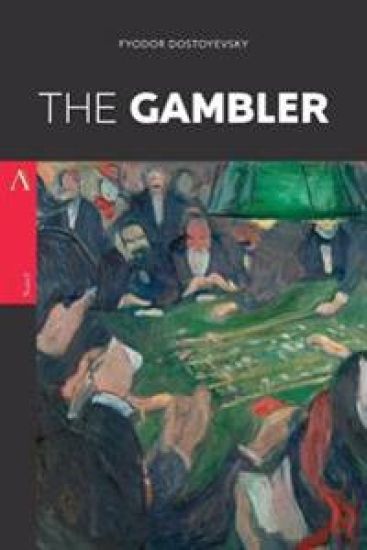
The Gambler

The Gambler

Fyodor Dostoyevsky

Createspace Independent Publishing Platform
2017
nidottu

Halvin toimitettuna 16,40 €

Full text. In this short novel, the hero Alexei Ivanovich, in his devotion to the roulette table, believes in the truth of chance. And, through that belief, he is revealed to believe in nothing. He is a lost soul who loses all: love, status, wealth, self. His unrequited love of something becomes, instead, a requited love of nothingness. As often, art mirroring life: Fyodor Dostoevsky was also a gambler. And like most gamblers, he found himself in serious debt. Hence The Gambler, which he wrote (actually dictated) within twenty-six days in 1866 in order to meet his publisher's deadline, which failure would have occasioned crippling financial penalties.