
Kirjailija
Fyodor Dostoyevsky
Kirjat ja teokset yhdessä paikassa: 690 kirjaa, julkaisuja vuosilta 1864–2027, suosituimpiin kuuluu Called to Community. Vertaile teosten hintoja ja tarkista saatavuus suomalaisista kirjakaupoista.
690 kirjaa
Kirjojen julkaisuvuodet: 1864–2027.
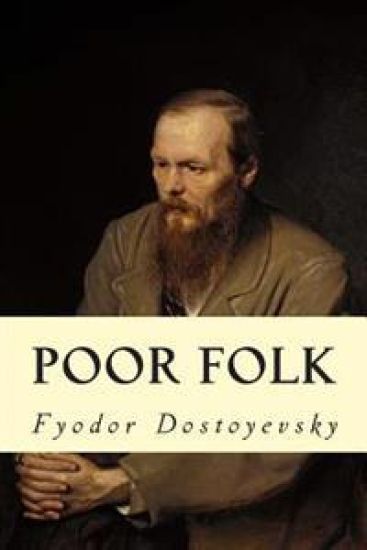
Poor Folk
Fyodor Dostoyevsky
Createspace Independent Publishing Platform
2014
nidottu
Halvin toimitettuna 13,40 €
Poor Folk is sometimes translated as Poor People, is the first novella by Fyodor Dostoyevsky, written over the span of nine months between 1844 and 1845. Dostoyevsky was in financial difficulty because of his extravagant living and his developing gambling addiction; although he had produced some translations of foreign novels, they had little success, and he decided to write a novel of his own to try to raise funds. Inspired by the works of Gogol, Pushkin, and Karamzin, as well as English and French authors, Poor Folk is written in the form of letters between the two main characters, Makar Devushkin and Varvara Dobroselova, who are poor second cousins. The novel showcases the life of poor people, their relationship with rich people, and poverty in general, all common themes of literary naturalism. A deep but odd friendship develops between them until Dobroselova loses her interest in literature, and later in communicating with Devushkin after a rich widower Mr. Bykov proposes to her. Devushkin, a prototype of the clerk found in many works of naturalistic literature at that time, retains his sentimental characteristics; Dobroselova abandons art, while Devushkin cannot live without literature. Contemporary critics lauded Poor Folk for its humanitarian themes. While Vissarion Belinsky dubbed the novel Russia's first "social novel" and Alexander Herzen called it a major socialist work, other critics detected parody and satire. The novel uses a complicated polyphony of voices from different perspectives and narrators. Initially offered by Dostoyevsky to the liberal-leaning magazine Fatherland Notes, the novel was published in the almanac, St. Petersburg Collection, on January 15, 1846. It became a huge success nationwide. Parts of it were translated into German by Wilhelm Wolfsohn and published in an 1846/1847 magazine. The first English translation was provided by Lena Milman in 1894, with an introduction by George Moore, cover art design by Aubrey Beardsley and publication by London's Mathews and Lane. Varvara Dobroselova and Makar Devushkin are second cousins twice-removed and live across from each other on the same street in terrible apartments. Devushkin's, for example, is merely a portioned-off section of the kitchen, and he lives with several other tenants, such as the Gorshkovs, whose son groans in agonizing hunger almost the entire story and eventually dies. Devushkin and Dobroselova exchange letters attesting to their terrible living conditions and the former frequently squanders his money on gifts for her. The reader progressively learns their history. Dobroselova originally lived in the country, but moved to St. Petersburg (which she hates) when her father lost his job. Her father becomes very violent and her mother severely depressed. Her father dies and they move in with Anna Fyodorovna, a landlady who was previously cruel to them but at least pretends to feel sympathy for their situation. Dobroselova is tutored by a poor student named Pokrovsky, whose drunken father occasionally visits. She eventually falls in love with Pokrovsky. She struggles to save a measly amount of money to purchase the complete works of Pushkin at the market for his birthday present, then allows his father to give the books to him instead, claiming that just knowing he received the books will be enough for her happiness. Pokrovsky falls ill soon after, and his dying wish is to see the sun and the world outside. Dobroselova obliges by opening the blinds to reveal grey clouds and dirty rain. In response Pokrovsky only shakes his head and then passes away. Dobroselova's mother dies shortly afterwards, and Dobroselova is left in the care of Anna for a time, but the abuse becomes too much and she goes to live with Fedora across the street.
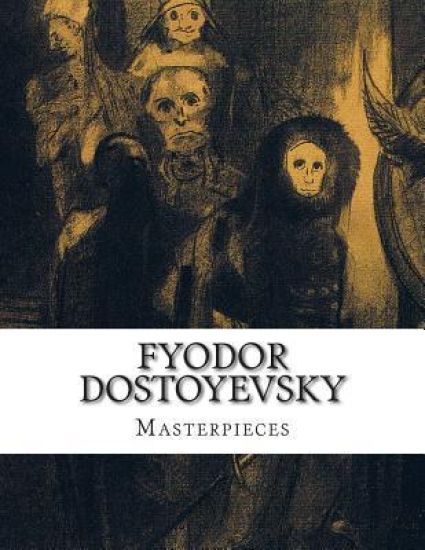
Fyodor Dostoyevsky, Masterpieces
Fyodor Dostoyevsky
Createspace Independent Publishing Platform
2014
nidottu
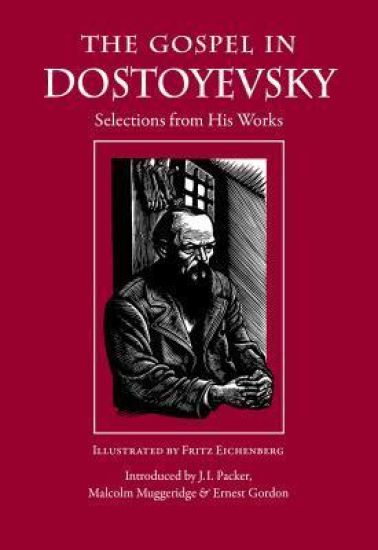
The Gospel in Dostoyevsky
Fyodor Dostoyevsky; J. I. Packer; Malcolm Muggeridge
Plough Publishing House
2014
pokkari
Dostoyevsky's deepest, most compelling passages in one volume The Gospel in Dostoyevsky vividly reveals – as none of his novels can on their own – the common thread of the great God-haunted Russian’s questioning faith. Drawn from The Brothers Karamazov, The Idiot, Crime and Punishment, and The Adolescent, the seventeen selections are each prefaced by an explanatory note. Newcomers will find in these pages a rich, accessible sampling. Dostoyevsky devotees will be pleased to find some of the writer’s deepest, most compelling passages in one volume. Full-page woodcuts by master engraver Fritz Eichenberg enhance the book.
Esta es una novela autobiogr fica en la que podemos asistir a dos sensaciones extremas: el juego y la apuesta como iluminaci n, como poes a por una parte; como un infierno insufrible y doloroso, por otra. Asimismo, el amor considerado como un mundo donde solo hay entrega y pasi n; pero tambi n como un espacio de recriminaciones, reproches y enemistad. Este descenso a la personalidad del mismo Dostoyevski es enfatizado con una narraci n en primera persona y al estilo de la forma en que se redacta un diario personal. El subtitulo que en su momento le puso el autor, De los apuntes de un joven, indica el ritmo de la novela: m s cercano al esbozo y al cuaderno de notas o un primer borrador, que a una trama altamente elaborada y retocada. Ese estilo es acentuado por la circunstancia de que El jugador fue dictada y realizada en menos de un mes. En s ntesis: su prosa gira tan r pido como la ruleta.
The Possessed: Or, the Devils
Fyodor Dostoyevsky
Createspace Independent Publishing Platform
2014
nidottu
Halvin toimitettuna 19,40 €
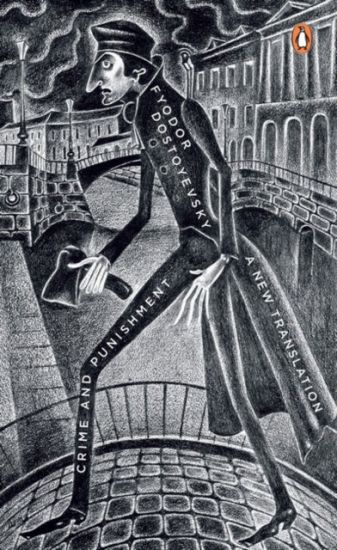
'A truly great translation . . . This English version really is better' - A. N. Wilson, The SpectatorTIMES LITERARY SUPPLEMENT BOOKS OF THE YEAR 2014This acclaimed new translation of Dostoyevsky's 'psychological record of a crime' gives his dark masterpiece of murder and pursuit a renewed vitality, expressing its jagged, staccato urgency and fevered atmosphere as never before. Raskolnikov, a destitute and desperate former student, wanders alone through the slums of St. Petersburg, deliriously imagining himself above society's laws. But when he commits a random murder, only suffering ensues. Embarking on a dangerous game of cat and mouse with a suspicious police investigator, Raskolnikov finds the noose of his own guilt tightening around his neck. Only Sonya, a downtrodden prostitute, can offer the chance of redemption. Fyodor Dostoevsky (1821-1881) was born in Moscow and made his name in 1846 with the novella Poor Folk. He spent several years in prison in Siberia as a result of his political activities, an experience which formed the basis of The House of the Dead. In later life, he fell in love with a much younger woman and developed a ruinous passion for roulette. His subsequent great novels include Notes from Underground, Crime and Punishment, The Idiot, Demons and The Brothers Karamazov. Oliver Ready is Research Fellow in Russian Society and Culture at St Antony's College, Oxford. He is general editor of the anthology, The Ties of Blood: Russian Literature from the 21st Century (2008), and Consultant Editor for Russia, Central and Eastern Europe at the Times Literary Supplement.
Notes From The Underground
Fyodor Dostoyevsky
Createspace Independent Publishing Platform
2014
nidottu
Originally published in 1951, this book contains the stressed Russian text of Dostoyevsky's masterpiece Crime and Punishment. The Russian Edition of the Y. M. C. A. Press, Paris, is used as a basis for this edition. This book will be of use to students of the Russian Classics.
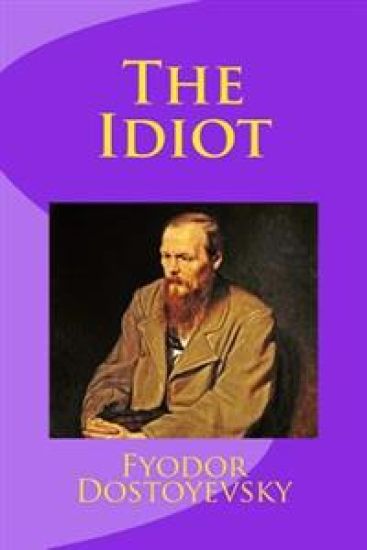
The Idiot is a novel written by the 19th-century Russian author Fyodor Dostoyevsky. It was first published serially in The Russian Messenger between 1868 and 1869. The Idiot, alongside some of Dostoyevsky's other works, is often considered one of the most brilliant literary achievements of the "Golden Age" of Russian literature. The 26-year-old Prince Lev Nikolayevich Myshkin returns to Russia after spending several years at a Swiss sanatorium. Scorned by the society of St. Petersburg for his trusting nature and naivet , he finds himself at the center of a struggle between a beautiful kept woman and a virtuous and pretty young girl, both of whom win his affection. Unfortunately, Myshkin's very goodness precipitates disaster, leaving the impression that, in a world obsessed with money, power, and sexual conquest, a sanatorium may be the only place for a saint ...
The Letters of Dostoyevsky to His Wife
Fyodor Dostoyevsky; Elizabeth Hill
Literary Licensing, LLC
2013
sidottu
The Letters of Dostoyevsky to His Wife is a collection of personal correspondence written by the renowned Russian author Fyodor Dostoyevsky to his wife Anna Grigoryevna Dostoyevskaya. The letters cover a period of over 30 years, from their courtship in the 1860s to Dostoyevsky's death in 1881. The letters provide a unique insight into the personal life of one of the greatest writers of the 19th century, revealing his thoughts, feelings, and struggles as a husband, father, and writer. The book includes over 200 letters, many of which have never been translated into English before, and provides a fascinating glimpse into the private life of one of the most celebrated literary figures in history. This is a new release of the original 1930 edition. This scarce antiquarian book is a facsimile reprint of the old original and may contain some imperfections such as library marks and notations. Because we believe this work is culturally important, we have made it available as part of our commitment for protecting, preserving, and promoting the world's literature in affordable, high quality, modern editions, that are true to their original work.