Kirjojen hintavertailu – 12 859 818 kirjaa ja 27 kauppaa

Kirjailija

Fyodor Dostoyevsky

Kirjat ja teokset yhdessä paikassa: 690 kirjaa, julkaisuja vuosilta 1864–2027, suosituimpiin kuuluu Called to Community. Vertaile teosten hintoja ja tarkista saatavuus suomalaisista kirjakaupoista.

690 kirjaa

Kirjojen julkaisuvuodet: 1864–2027.

The Idiot

The Idiot

Fyodor Dostoyevsky

VINTAGE
2003
nidottu

Halvin toimitettuna 20,90 €

Prince Myshkin, a good yet simple man, is out of place in the corrupt world obsessed by wealth, power, and sexual conquest created by Russia's elite ruling class, as he becomes caught in the middle of a violent love triangle with two women who become rivals for his attention. Reprint. 12,500 first printing.
Crime and Punishment

Crime and Punishment

Fyodor Dostoyevsky

Dover Publications Inc.
2003
nidottu

Halvin toimitettuna 14,90 €

Supreme masterpiece recounts in feverish, compelling tones the story of Raskolnikov, an impoverished student tormented by his own thoughts after he brutally murders an old woman. Overwhelmed afterwards by guilt and terror, Raskolnikov confesses and goes to prison. There he realizes that happiness and redemption can only be achieved through suffering.
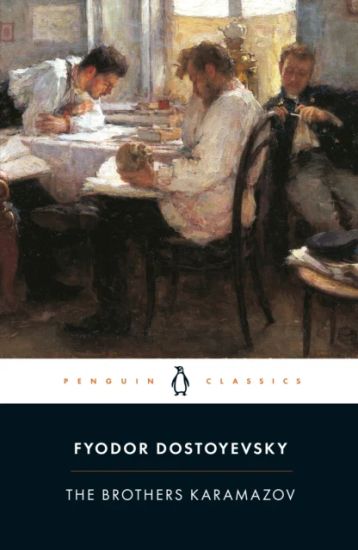
The Brothers Karamazov

The Brothers Karamazov

Fyodor Dostoyevsky

Penguin Classics
2003
pokkari

Halvin toimitettuna 17,00 €

'The most magnificent novel ever written' Sigmund FreudThe murder of brutal landowner Fyodor Karamazov changes the lives of his sons irrevocably: Mitya, the sensualist, whose bitter rivalry with his father immediately places him under suspicion for parricide; Ivan, the intellectual, driven to breakdown; the spiritual Alyosha, who tries to heal the family's rifts; and the shadowy figure of their bastard half-brother, Smerdyakov. Dostoyevsky's dark masterwork evokes a world where the lines between innocence and corruption, good and evil, blur, and everyone's faith in humanity is tested. Translated with an Introduction and notes by DAVID McDUFF
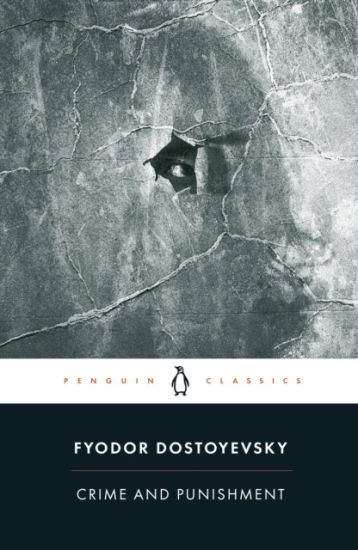
Crime and Punishment

Crime and Punishment

Fyodor Dostoyevsky

Penguin Classics
2003
pokkari

Halvin toimitettuna 17,00 €

'Dostoyevsky's finest masterpiece' John BayleyDostoyevsky's great novel of damnation and redemption evokes a world where the lines between innocence and corruption, good and evil, blur. It tells the story of Raskolnikov, a destitute and desperate former student, who wanders through the slums of St Petersburg and commits a random murder without remorse or regret. He imagines himself to be beyond conventional moral laws. But as he embarks on a dangerous game of cat and mouse with a police investigator, Raskolnikov is pursued by the growing voice of his conscience and finds the noose of his own guilt tightening around his neck. Translated with an Introduction and notes by DAVID McDUFF
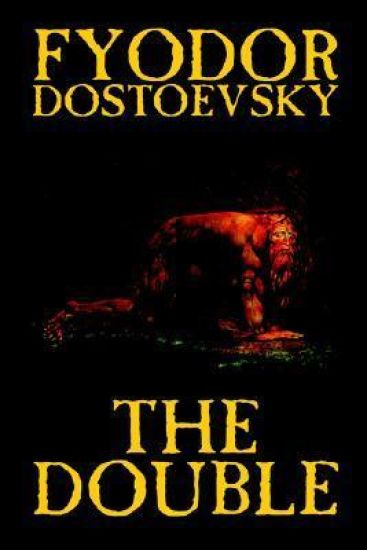
The Double by Fyodor Mikhailovich Dostoevsky, Fiction, Classics

The Double by Fyodor Mikhailovich Dostoevsky, Fiction, Classics

Fyodor Mikhailovich Dostoevsky; Fyodor Dostoyevsky

Borgo Press
2002
pokkari
Most significant of the Russian novelist's early stories (1846) offers a straight-faced treatment of a hallucinatory theme. Golyadkin senior is a powerless target of persecution by Golyadkin junior, his double in almost every respect. Familiar Dostoyevskan themes of helplessness, victimization, scandal—beautifully handled in small masterpiece.
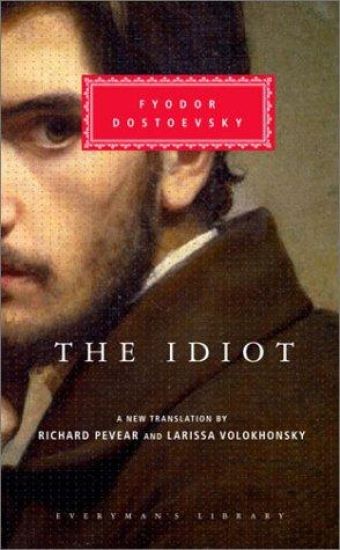
The Idiot: Introduction by Richard Pevear [With Ribbon Book Mark]
Richard Pevear and Larissa Volokhonsky's masterful translation of The Idiot is destined to stand with their versions of Crime and Punishment, The Brothers Karamazov, and Demons as the definitive Dostoevsky in English. After his great portrayal of a guilty man in Crime and Punishment, Dostoevsky set out in The Idiot to portray a man of pure innocence. The twenty-six-year-old Prince Myshkin, following a stay of several years in a Swiss sanatorium, returns to Russia to collect an inheritance and "be among people." Even before he reaches home he meets the dark Rogozhin, a rich merchant's son whose obsession with the beautiful Nastasya Filippovna eventually draws all three of them into a tragic denouement. In Petersburg, the prince finds himself a stranger in a society obsessed with money, power, and manipulation. Scandal escalates to murder as Dostoevsky traces the surprising effect of this "positively beautiful man" on the people around him, leading to a final scene that is one of the most powerful in all of world literature. Everyman's Library pursues the highest production standards, printing on acid-free cream-colored paper, with full-cloth cases with two-color foil stamping, decorative endpapers, silk ribbon markers, European-style half-round spines, and a full-color illustrated jacket. Everyman's Library Classics include an introduction, a select bibliography, and a chronology of the author's life and times.
Crime and Punishment Paperback

Crime and Punishment Paperback

Fyodor Dostoyevsky

Lushena Books
2001
pokkari
The two years before he wrote Crime and Punishment (1866) had been bad ones for Dostoyevsky. His wife and brother had died; the magazine he and his brother had started, Epoch, collapsed under its load of debt; and he was threatened with debtor's prison. With an advance that he managed to wangle for an unwritten novel, he fled to Wiesbaden, hoping to win enough at the roulette table to get himself out of debt. Instead, he lost all his money; he had to pawn his clothes and beg friends for loans to pay his hotel bill and get back to Russia. One of his begging letters went to a magazine editor, asking for an advance on yet another unwritten novel - which he described as Crime and Punishment. One of the supreme masterpieces of world literature, Crime and Punishment catapulted Dostoyevsky to the forefront of Russian writers and into the ranks of the world's greatest novelists. Drawing upon experiences from his own prison days, the author recounts in feverish, compelling tones the story of Raskolnikov, an impoverished student tormented by his own nihilism, and the struggle between good and evil. Believing that he is above the law, and convinced that humanitarian ends justify vile means, he brutally murders an old woman - a pawnbroker whom he regards as "stupid, ailing, greedy...good for nothing." Overwhelmed afterwards by feelings of guilt and terror, Raskolnikov confesses to the crime and goes to prison. There he realizes that happiness and redemption can only be achieved through suffering. Infused with forceful religious, social, and philosophical elements, the novel was an immediate success. This extraordinary, unforgettable work is reprinted here in the authoritative Constance Garnett translation. A selection of the Common Core State Standards Initiative.
Crime and Punishment Hardcover

Crime and Punishment Hardcover

Fyodor Dostoyevsky

LUSHENA BOOKS INC
2001
sidottu
The two years before he wrote Crime and Punishment (1866) had been bad ones for Dostoyevsky. His wife and brother had died; the magazine he and his brother had started, Epoch, collapsed under its load of debt; and he was threatened with debtor's prison. With an advance that he managed to wangle for an unwritten novel, he fled to Wiesbaden, hoping to win enough at the roulette table to get himself out of debt. Instead, he lost all his money; he had to pawn his clothes and beg friends for loans to pay his hotel bill and get back to Russia. One of his begging letters went to a magazine editor, asking for an advance on yet another unwritten novel - which he described as Crime and Punishment. One of the supreme masterpieces of world literature, Crime and Punishment catapulted Dostoyevsky to the forefront of Russian writers and into the ranks of the world's greatest novelists. Drawing upon experiences from his own prison days, the author recounts in feverish, compelling tones the story of Raskolnikov, an impoverished student tormented by his own nihilism, and the struggle between good and evil. Believing that he is above the law, and convinced that humanitarian ends justify vile means, he brutally murders an old woman - a pawnbroker whom he regards as "stupid, ailing, greedy...good for nothing." Overwhelmed afterwards by feelings of guilt and terror, Raskolnikov confesses to the crime and goes to prison. There he realizes that happiness and redemption can only be achieved through suffering. Infused with forceful religious, social, and philosophical elements, the novel was an immediate success. This extraordinary, unforgettable work is reprinted here in the authoritative Constance Garnett translation. A selection of the Common Core State Standards Initiative.
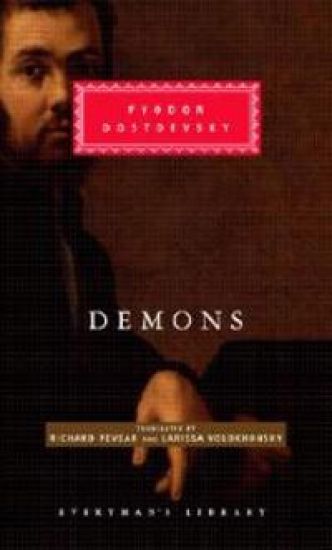
Demons: Introduction by Joseph Frank

Demons: Introduction by Joseph Frank

Fyodor Dostoyevsky

Everyman's Library
2000
sidottu

Halvin toimitettuna 32,30 €

Presented here in stunning hardcover, Demons examines the effect of a charismatic but unscrupulous self-styled revolutionary leader on a group of credulous followers. Inspired by the true story of a political murder that horrified Russians in 1869, Fyodor Dostoevsky conceived of Demons as a "novel-pamphlet" in which he would say everything about the plague of materialist ideology that he saw infecting his native land. What emerged was a prophetic and ferociously funny masterpiece of ideology and murder in pre-revolutionary Russia--a novel that is rivaled only by The Brothers Karamazov as Dostoevsky's greatest. The award-winning translators Richard Pevear and Larissa Volokhonsky continue their acclaimed series of Dostoevsky translations with this novel, which is also known as The Possessed. With an introduction by Joseph Frank. Everyman's Library pursues the highest production standards, printing on acid-free cream-colored paper, with full-cloth cases with two-color foil stamping, decorative endpapers, silk ribbon markers, European-style half-round spines, and a full-color illustrated jacket. Everyman's Library Classics include an introduction, a select bibliography, and a chronology of the author's life and times.
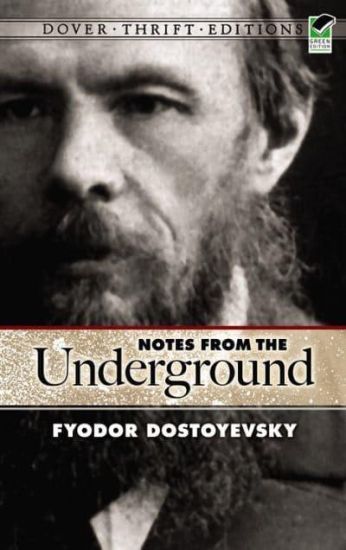
Notes from the Underground

Notes from the Underground

Fyodor Dostoyevsky

Dover Publications Inc.
2000
nidottu

Halvin toimitettuna 9,90 €

Darkly fascinating short novel depicts the struggles of a doubting, supremely alienated protagonist in a world of relative values. Seminal work introduced moral, religious, political and social themes that dominated Dostoyevsky's later masterworks. Constance Garnett's authoritative translation is reprinted here, with a new introduction.
The Double

The Double

Fyodor Dostoyevsky

Dover Publications Inc.
2000
nidottu
Most significant of the Russian novelist's early stories (1846) offers a straight-faced treatment of a hallucinatory theme. Golyadkin senior is a powerless target of persecution by Golyadkin junior, his double in almost every respect. Familiar Dostoyevskan themes of helplessness, victimization, scandal — beautifully handled in this small masterpiece.
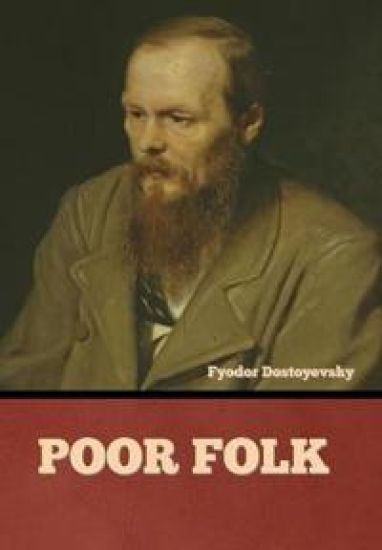
Poor Folk

Poor Folk

Fyodor Dostoyevsky

Indoeuropeanpublishing.com
1999
sidottu
Poor Folk sometimes translated as Poor People, is the first novel by Fyodor Dostoevsky, written over the span of nine months between 1844 and 1845. Dostoevsky was in financial difficulty because of his extravagant lifestyle and his developing gambling addiction; although he had produced some translations of foreign novels, they had little success, and he decided to write a novel of his own to try to raise funds. Inspired by the works of Gogol, Pushkin and Karamzin, as well as English and French authors, Poor Folk is written in the form of letters between the two main characters, Makar Devushkin and Varvara Dobroselova, who are poor third cousins twice removed. The novel showcases the life of poor people, their relationship with rich people, and poverty in general, all common themes of literary naturalism. A deep but odd friendship develops between them until Dobroselova loses her interest in literature, and later in communicating with Devushkin after a rich widower Mr. Bykov proposes to her. Devushkin, a prototype of the clerk found in many works of naturalistic literature at that time, retains his sentimental characteristics; Dobroselova abandons art, while Devushkin cannot live without literature. Contemporary critics lauded Poor Folk for its humanitarian themes. While Vissarion Belinsky dubbed the novel Russia's first "social novel" and Alexander Herzen called it a major socialist work, other critics detected parody and satire. The novel uses a complicated polyphony of voices from different perspectives and narrators. Initially offered by Dostoyevsky to the liberal-leaning magazine Fatherland Notes, the novel was published in the almanac, St. Petersburg Collection, on January 15, 1846. It became a huge success nationwide. Parts of it were translated into German by Wilhelm Wolfsohn and published in an 1846/1847 magazine. The first English translation was provided by Lena Milman in 1894, with an introduction by George Moore, cover art design by Aubrey Beardsley and publication by London's Mathews and Lane. (wikipedia.org)

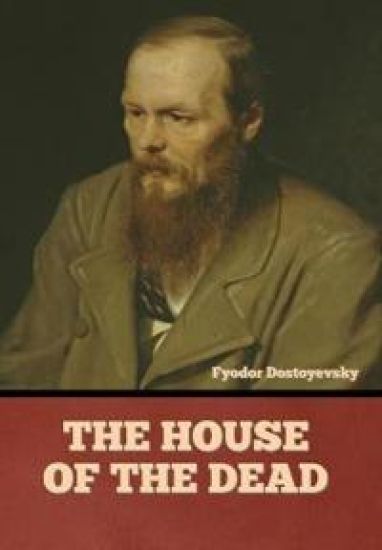
The House of the Dead

The House of the Dead

Fyodor Dostoyevsky

Indoeuropeanpublishing.com
1999
sidottu
The House of the Dead is a semi-autobiographical novel published in 1860-2 in the journal Vremya by Russian author Fyodor Dostoevsky, which portrays the life of convicts in a Siberian prison camp. The novel has also been published under the titles Memoirs from the House of The Dead, Notes from the Dead House (or Notes from a Dead House), and Notes from the House of the Dead. The book is, essentially, a disguised memoir; a loosely-knit collection of facts, events and philosophical discussion organised by "theme" rather than as a continuous story. Dostoevsky himself spent four years in exile in such a prison following his conviction for involvement in the Petrashevsky Circle. This experience allowed him to describe with great authenticity the conditions of prison life and the characters of the convicts. (wikipedia.org)
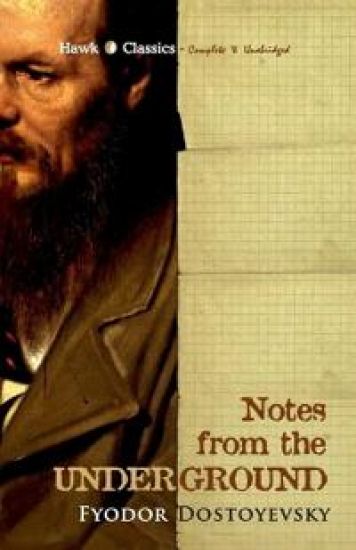
Notes from the Underground

Notes from the Underground

Fyodor Dostoyevsky

Hawk Press
1998
pokkari
Bitter and unpleasant, the Underground Man lives alone in St. Petersburg. After working in the civil service for many years, he decides to write an account of his opinions on society as they have been shaped by his ordinary life. Although he is insightful and educated, the Underground Man's ability and cunning have left him with an intense loathing of mankind, which he sets out to preserve in his manuscript. In this two part novella, author Fyodor Dostoyevsky presents an opinion of man as an irrational and impossible being, always seeking satisfaction in the institutions of society yet without any hope for success. Notes from the Underground is considered by many to be the first example of existential fiction in which philosophy is presented from an individualized and highly humanized perspective.
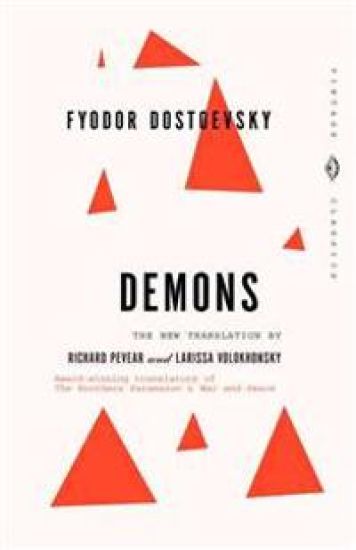
Demons

Demons

Fyodor Dostoyevsky

VINTAGE
1995
nidottu
Inspired by the true story of a political murder that horried Russians in 1869, Fyodor Dostoevsky conceived of Demons as a "novel-pamphlet" in which he would say everything about the plague of materialist ideology that he saw infecting his native land. What emerged was a prophetic and ferociously funny masterpiece of ideology and murder in pre-revolutionary Russia.
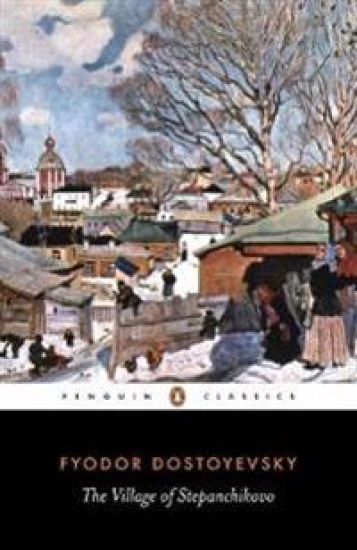
The Village of Stepanchikovo

The Village of Stepanchikovo

Fyodor Dostoyevsky; Ignat Avsey

Penguin Classics
1995
pokkari

Halvin toimitettuna 20,20 €

Summoned to the country estate of his wealthy uncle Colonel Yegor Rostanev, the young student Sergey Aleksandrovich finds himself thrown into a startling bedlam. For as he soon sees, his meek and kind-hearted uncle is wholly dominated by a pretentious and despotic pseudo-intellectual named Opiskin, a charlatan who has ingratiated himself with Yegor’s mother and now holds the entire household under his thumb. Watching the absurd theatrics of this domestic tyrant over forty-eight explosive hours, Sergey grows increasingly furious - until at last, he feels compelled to act. A compelling comic exploration of petty tyranny, The Village of Stepanchikovo reveals a delight in life’s wild absurdities that rivals even Gogol’s. It also offers a fascinating insight into the genesis of the characters and situations of many of Dostoyevsky’s great later novels, including The Idiot, Devils and The Brothers Karamazov.
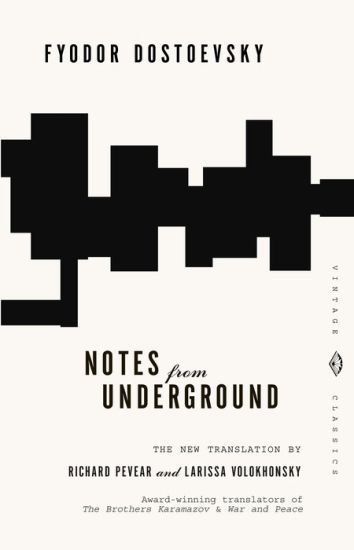
Notes from Underground

Notes from Underground

Fyodor Dostoyevsky

VINTAGE
1994
nidottu

Halvin toimitettuna 18,60 €

Award-winning translators Richard Pevear and Larissa Volokhonsky give us a brilliantly faithful rendition of this classic novel, in all its tragedy and tormented comedy. In this second edition, they have updated their translation in honor of the 200th anniversary of Dostoevsky's birth. One of the most remarkable characters in literature, the unnamed narrator of Dostoevsky's most revolutionary novel is a former official who has defiantly withdrawn into an underground existence. In full retreat from society, he scrawls a passionate, obsessive, self-contradictory narrative that serves as a devastating attack on social utopianism and an assertion of man's essentially irrational nature.