Kirjojen hintavertailu – 12 859 818 kirjaa ja 27 kauppaa
Kirjailija
G. a. Henty
Kirjat ja teokset yhdessä paikassa: 1 604 kirjaa, julkaisuja vuosilta 2001–2026, suosituimpiin kuuluu Rujub, the juggler, By G. A. Henty (World's Classics) illustrated. Vertaile teosten hintoja ja tarkista saatavuus suomalaisista kirjakaupoista.
Nimi esiintyy myös muodoissa: G a Henty, G.A. Henty, (G a. Henty, G.A Henty
(Classic Fiction for Young Adults) An exciting adventure of outlaws in the early days of the Australian gold rush, when fortunes were made and stolen, and when bush rangers and natives constituted a real and formidable danger to the settlers. "All boys will read this story with eager and unflagging interest. William Barnes Wollen (1857-1936) was an English painter mostly known for his paintings of battle and historical scenes and sporting events. Born in Leipzig on 6 October 1857, he was educated at University College School, London from 1871-73 and also at the Slade School. From 1879 until 1922, he exhibited pictures at the Royal Academy, National Watercolour Society and elsewhere. His first picture exhibited at the Royal Academy was entitled "Football" but he followed this up with his first military painting in 1881 entitled "The rescue of Private Andrews by Captain Garnet J. Wolseley, H. M. 90th L. I. at the storming of the Motee Mahail, Lucknow". He was elected a member of the Royal Institute of Painters in Water Colours in 1888........... George Alfred Henty (8 December 1832 - 16 November 1902) was a prolific English novelist and war correspondent. He is best known for his historical adventure stories that were popular in the late 19th century. His works include The Dragon & The Raven (1886), For The Temple (1888), Under Drake's Flag (1883) and In Freedom's Cause (1885). G. A. Henty was born in Trumpington, near Cambridge. He was a sickly child who had to spend long periods in bed. During his frequent illnesses he became an avid reader and developed a wide range of interests which he carried into adulthood. He attended Westminster School, London, and later Gonville and Caius College, Cambridge, where he was a keen sportsman. He left the university early without completing his degree to volunteer for the Army Hospital Commissariat when the Crimean War began. He was sent to the Crimea and while there he witnessed the appalling conditions under which the British soldier had to fight. His letters home were filled with vivid descriptions of what he saw. His father was impressed by his letters and sent them to The Morning Advertiser newspaper which printed them. This initial writing success was a factor in Henty's later decision to accept the offer to become a special correspondent, the early name for journalists now better known as war correspondents. Shortly before resigning from the army as a captain in 1859 he married Elizabeth Finucane. The couple had four children. Elizabeth died in 1865 after a long illness and shortly after her death Henty began writing articles for the Standard newspaper. In 1866 the newspaper sent him as their special correspondent to report on the Austro-Italian War where he met Giuseppe Garibaldi. He went on to cover the 1868 British punitive expedition to Abyssinia, the Franco-Prussian War, the Ashanti War, the Carlist Rebellion in Spain and the Turco-Serbian War. He also witnessed the opening of the Suez Canal and travelled to Palestine, Russia and India. Henty was a strong supporter of the British Empire all his life; according to literary critic Kathryn Castle: "Henty...exemplified the ethos of the new imperialism, and glorified in its successes". Henty's ideas about politics were influenced by writers such as Sir Charles Dilke and Thomas Carlyle. Henty once related in an interview how his storytelling skills grew out of tales told after dinner to his children. He wrote his first children's book, Out on the Pampas in 1868, naming the book's main characters after his children. The book was published by Griffith and Farran in November 1870 with a title page date of 1871. ...
Mr. Henty here gives an account of the struggle between Britain and France for supremacy in the North American continent. The fall of Quebec decided that the Anglo-Saxon race should predominate in the New World; and that English and American commerce, the English language, and English literature, should spread right round the globe. George Alfred Henty (8 December 1832 - 16 November 1902) was a prolific English novelist and war correspondent. He is best known for his historical adventure stories that were popular in the late 19th century. His works include The Dragon & The Raven (1886), For The Temple (1888), Under Drake's Flag (1883) and In Freedom's Cause (1885). G. A. Henty was born in Trumpington, near Cambridge. He was a sickly child who had to spend long periods in bed. During his frequent illnesses he became an avid reader and developed a wide range of interests which he carried into adulthood. He attended Westminster School, London, and later Gonville and Caius College, Cambridge, where he was a keen sportsman. He left the university early without completing his degree to volunteer for the Army Hospital Commissariat when the Crimean War began. He was sent to the Crimea and while there he witnessed the appalling conditions under which the British soldier had to fight. His letters home were filled with vivid descriptions of what he saw. His father was impressed by his letters and sent them to The Morning Advertiser newspaper which printed them. This initial writing success was a factor in Henty's later decision to accept the offer to become a special correspondent, the early name for journalists now better known as war correspondents. Shortly before resigning from the army as a captain in 1859 he married Elizabeth Finucane. The couple had four children. Elizabeth died in 1865 after a long illness and shortly after her death Henty began writing articles for the Standard newspaper. In 1866 the newspaper sent him as their special correspondent to report on the Austro-Italian War where he met Giuseppe Garibaldi. He went on to cover the 1868 British punitive expedition to Abyssinia, the Franco-Prussian War, the Ashanti War, the Carlist Rebellion in Spain and the Turco-Serbian War. ................
Determined to improve his struggling family's financial situation, sixteen-year-old Tom Wade leaves England in 1860 and sets out for the untamed wilderness of the American Far West. George Alfred Henty (8 December 1832 - 16 November 1902) was a prolific English novelist and war correspondent. He is best known for his historical adventure stories that were popular in the late 19th century. His works include The Dragon & The Raven (1886), For The Temple (1888), Under Drake's Flag (1883) and In Freedom's Cause (1885). Biography--G. A. Henty was born in Trumpington, near Cambridge. He was a sickly child who had to spend long periods in bed. During his frequent illnesses he became an avid reader and developed a wide range of interests which he carried into adulthood. He attended Westminster School, London, and later Gonville and Caius College, Cambridge, where he was a keen sportsman. He left the university early without completing his degree to volunteer for the Army Hospital Commissariat when the Crimean War began. He was sent to the Crimea and while there he witnessed the appalling conditions under which the British soldier had to fight. His letters home were filled with vivid descriptions of what he saw. His father was impressed by his letters and sent them to The Morning Advertiser newspaper which printed them. This initial writing success was a factor in Henty's later decision to accept the offer to become a special correspondent, the early name for journalists now better known as war correspondents. Shortly before resigning from the army as a captain in 1859 he married Elizabeth Finucane. The couple had four children. Elizabeth died in 1865 after a long illness and shortly after her death Henty began writing articles for the Standard newspaper. In 1866 the newspaper sent him as their special correspondent to report on the Austro-Italian War where he met Giuseppe Garibaldi. He went on to cover the 1868 British punitive expedition to Abyssinia, the Franco-Prussian War, the Ashanti War, the Carlist Rebellion in Spain and the Turco-Serbian War. He also witnessed the opening of the Suez Canal and travelled to Palestine, Russia and India. Henty was a strong supporter of the British Empire all his life; according to literary critic Kathryn Castle: "Henty...exemplified the ethos of the new imperialism, and glorified in its successes". Henty's ideas about politics were influenced by writers such as Sir Charles Dilke and Thomas Carlyle. Henty once related in an interview how his storytelling skills grew out of tales told after dinner to his children. He wrote his first children's book, Out on the Pampas in 1868, naming the book's main characters after his children. The book was published by Griffith and Farran in November 1870 with a title page date of 1871. While most of the 122 books he wrote were for children, he also wrote adult novels, non-fiction such as The March to Magdala and Those Other Animals, short stories for the likes of The Boy's Own Paper and edited the Union Jack, a weekly boy's magazine.
True to the Old Flag: A Tale of the American War of Independence; by G. A. Henty tells the story of the The American Revolution form the perspective of a young British loyalist, Harold Wilson. George Alfred Henty (8 December 1832 - 16 November 1902) was a prolific English novelist and war correspondent. He is best known for his historical adventure stories that were popular in the late 19th century. His works include The Dragon & The Raven (1886), For The Temple (1888), Under Drake's Flag (1883) and In Freedom's Cause (1885). G. A. Henty was born in Trumpington, near Cambridge. He was a sickly child who had to spend long periods in bed. During his frequent illnesses he became an avid reader and developed a wide range of interests which he carried into adulthood. He attended Westminster School, London, and later Gonville and Caius College, Cambridge, where he was a keen sportsman. He left the university early without completing his degree to volunteer for the Army Hospital Commissariat when the Crimean War began. He was sent to the Crimea and while there he witnessed the appalling conditions under which the British soldier had to fight. His letters home were filled with vivid descriptions of what he saw. His father was impressed by his letters and sent them to The Morning Advertiser newspaper which printed them. This initial writing success was a factor in Henty's later decision to accept the offer to become a special correspondent, the early name for journalists now better known as war correspondents. Shortly before resigning from the army as a captain in 1859 he married Elizabeth Finucane. The couple had four children. Elizabeth died in 1865 after a long illness and shortly after her death Henty began writing articles for the Standard newspaper. In 1866 the newspaper sent him as their special correspondent to report on the Austro-Italian War where he met Giuseppe Garibaldi. He went on to cover the 1868 British punitive expedition to Abyssinia, the Franco-Prussian War, the Ashanti War, the Carlist Rebellion in Spain and the Turco-Serbian War. He also witnessed the opening of the Suez Canal and travelled to Palestine, Russia and India. Henty was a strong supporter of the British Empire all his life; according to literary critic Kathryn Castle: "Henty...exemplified the ethos of the new imperialism, and glorified in its successes". Henty's ideas about politics were influenced by writers such as Sir Charles Dilke and Thomas Carlyle. Henty once related in an interview how his storytelling skills grew out of tales told after dinner to his children. He wrote his first children's book, Out on the Pampas in 1868, naming the book's main characters after his children. The book was published by Griffith and Farran in November 1870 with a title page date of 1871. While most of the 122 books he wrote were for children, he also wrote adult novels, non-fiction such as The March to Magdala and Those Other Animals, short stories for the likes of The Boy's Own Paper and edited the Union Jack, a weekly boy's magazine. His children's novels typically revolved around a boy or young man living in troubled times. These ranged from the Punic War to more recent conflicts such as the Napoleonic Wars or the American Civil War. Henty's heroes - which occasionally included young ladies - are uniformly intelligent, courageous, honest and resourceful with plenty of 'pluck' yet are also modest. These virtues have made Henty's novels popular today among many Christians and homeschoolers. Henty usually researched his novels by ordering several books on the subject he was writing on from libraries, and consulting them before beginning writing. Some of his books were written about events (such as the Crimean War) that he witnessed himself.....
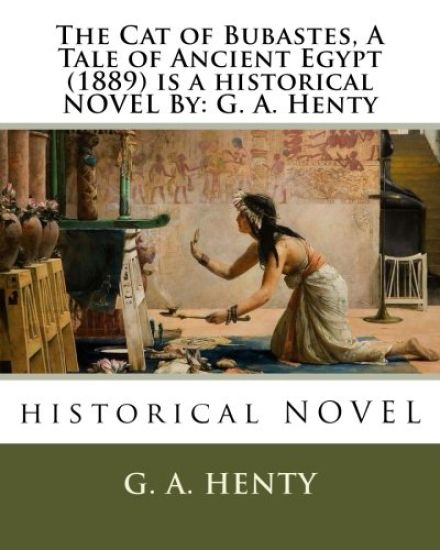
George Alfred Henty (8 December 1832 - 16 November 1902) was a prolific English novelist and war correspondent. He is best known for his historical adventure stories that were popular in the late 19th century. His works include The Dragon & The Raven (1886), For The Temple (1888), Under Drake's Flag (1883) and In Freedom's Cause (1885). Biography--G. A. Henty was born in Trumpington, near Cambridge. He was a sickly child who had to spend long periods in bed. During his frequent illnesses he became an avid reader and developed a wide range of interests which he carried into adulthood. He attended Westminster School, London, and later Gonville and Caius College, Cambridge, where he was a keen sportsman. He left the university early without completing his degree to volunteer for the Army Hospital Commissariat when the Crimean War began. He was sent to the Crimea and while there he witnessed the appalling conditions under which the British soldier had to fight. His letters home were filled with vivid descriptions of what he saw. His father was impressed by his letters and sent them to The Morning Advertiser newspaper which printed them. This initial writing success was a factor in Henty's later decision to accept the offer to become a special correspondent, the early name for journalists now better known as war correspondents. Shortly before resigning from the army as a captain in 1859 he married Elizabeth Finucane. The couple had four children. Elizabeth died in 1865 after a long illness and shortly after her death Henty began writing articles for the Standard newspaper. In 1866 the newspaper sent him as their special correspondent to report on the Austro-Italian War where he met Giuseppe Garibaldi. He went on to cover the 1868 British punitive expedition to Abyssinia, the Franco-Prussian War, the Ashanti War, the Carlist Rebellion in Spain and the Turco-Serbian War. He also witnessed the opening of the Suez Canal and travelled to Palestine, Russia and India. Henty was a strong supporter of the British Empire all his life; according to literary critic Kathryn Castle: "Henty...exemplified the ethos of the new imperialism, and glorified in its successes". Henty's ideas about politics were influenced by writers such as Sir Charles Dilke and Thomas Carlyle. Henty once related in an interview how his storytelling skills grew out of tales told after dinner to his children. He wrote his first children's book, Out on the Pampas in 1868, naming the book's main characters after his children. The book was published by Griffith and Farran in November 1870 with a title page date of 1871. While most of the 122 books he wrote were for children, he also wrote adult novels, non-fiction such as The March to Magdala and Those Other Animals, short stories for the likes of The Boy's Own Paper and edited the Union Jack, a weekly boy's magazine.... Harrison William Weir (5 May 1824 - 3 January 1906), known as "The Father of the Cat Fancy", was an English gentleman and artist. He organised the first cat show in England, at The Crystal Palace, London, in July 1871. He and his brother, John Jenner Weir, both served as judges in the show. In 1887 Harrison Weir founded the National Cat Club and was its first President and Show Manager until his resignation in 1890.
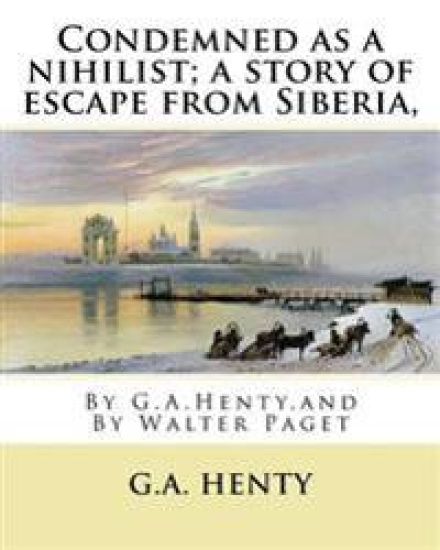
There are few difficulties that cannot be surmounted by patience, resolution, and pluck, and great as are the obstacles that nature and the Russian government oppose to an escape from the prisons of Siberia, such evasions have occasion- ally been successfully carried out, and that under far less advantageous circumstances than those under which the hero of this story undertook the venture. For the account of life in the convict establishments in Siberia I am indebted to the very valuable books by my friend the Rev. Dr. Lans- dell, who has made himself thoroughly acquainted with Siberia, traversing the country from end to end and visiting all the principal prisons.. George Alfred Henty (8 December 1832 - 16 November 1902) was a prolific English novelist and war correspondent. He is best known for his historical adventure stories that were popular in the late 19th century. His works include The Dragon & The Raven (1886), For The Temple (1888), Under Drake's Flag (1883) and In Freedom's Cause (1885). Biography--G. A. Henty was born in Trumpington, near Cambridge. He was a sickly child who had to spend long periods in bed. During his frequent illnesses he became an avid reader and developed a wide range of interests which he carried into adulthood. He attended Westminster School, London, and later Gonville and Caius College, Cambridge, where he was a keen sportsman. He left the university early without completing his degree to volunteer for the Army Hospital Commissariat when the Crimean War began. He was sent to the Crimea and while there he witnessed the appalling conditions under which the British soldier had to fight. His letters home were filled with vivid descriptions of what he saw. His father was impressed by his letters and sent them to The Morning Advertiser newspaper which printed them. This initial writing success was a factor in Henty's later decision to accept the offer to become a special correspondent, the early name for journalists now better known as war correspondents. Shortly before resigning from the army as a captain in 1859 he married Elizabeth Finucane. The couple had four children. Elizabeth died in 1865 after a long illness and shortly after her death Henty began writing articles for the Standard newspaper. In 1866 the newspaper sent him as their special correspondent to report on the Austro-Italian War where he met Giuseppe Garibaldi. He went on to cover the 1868 British punitive expedition to Abyssinia, the Franco-Prussian War, the Ashanti War, the Carlist Rebellion in Spain and the Turco-Serbian War. He also witnessed the opening of the Suez Canal and travelled to Palestine, Russia and India. Henty was a strong supporter of the British Empire all his life; according to literary critic Kathryn Castle: "Henty...exemplified the ethos of the new imperialism, and glorified in its successes". Henty's ideas about politics were influenced by writers such as Sir Charles Dilke and Thomas Carlyle. Henty once related in an interview how his storytelling skills grew out of tales told after dinner to his children. He wrote his first children's book, Out on the Pampas in 1868, naming the book's main characters after his children. The book was published by Griffith and Farran in November 1870 with a title page date of 1871. While most of the 122 books he wrote were for children, he also wrote adult novels, non-fiction such as The March to Magdala and Those Other Animals, short stories for the likes of The Boy's Own Paper and edited the Union Jack, a weekly boy's magazine. Walter Trueman Paget (7 February 1854 - 23 December 1930) was a member of the Queensland Legislative Assembly.
George Alfred Henty (8 December 1832 - 16 November 1902) was a prolific English novelist and war correspondent. He is best known for his historical adventure stories that were popular in the late 19th century. His works include The Dragon & The Raven (1886), For The Temple (1888), Under Drake's Flag (1883) and In Freedom's Cause (1885). G. A. Henty was born in Trumpington, near Cambridge. He was a sickly child who had to spend long periods in bed. During his frequent illnesses he became an avid reader and developed a wide range of interests which he carried into adulthood. He attended Westminster School, London, and later Gonville and Caius College, Cambridge, where he was a keen sportsman. He left the university early without completing his degree to volunteer for the Army Hospital Commissariat when the Crimean War began. He was sent to the Crimea and while there he witnessed the appalling conditions under which the British soldier had to fight. His letters home were filled with vivid descriptions of what he saw. His father was impressed by his letters and sent them to The Morning Advertiser newspaper which printed them. This initial writing success was a factor in Henty's later decision to accept the offer to become a special correspondent, the early name for journalists now better known as war correspondents. Shortly before resigning from the army as a captain in 1859 he married Elizabeth Finucane. The couple had four children. Elizabeth died in 1865 after a long illness and shortly after her death Henty began writing articles for the Standard newspaper. In 1866 the newspaper sent him as their special correspondent to report on the Austro-Italian War where he met Giuseppe Garibaldi. He went on to cover the 1868 British punitive expedition to Abyssinia, the Franco-Prussian War, the Ashanti War, the Carlist Rebellion in Spain and the Turco-Serbian War. He also witnessed the opening of the Suez Canal and travelled to Palestine, Russia and India. Henty was a strong supporter of the British Empire all his life; according to literary critic Kathryn Castle: "Henty...exemplified the ethos of the new imperialism, and glorified in its successes". Henty's ideas about politics were influenced by writers such as Sir Charles Dilke and Thomas Carlyle. Henty once related in an interview how his storytelling skills grew out of tales told after dinner to his children. He wrote his first children's book, Out on the Pampas in 1868, naming the book's main characters after his children. The book was published by Griffith and Farran in November 1870 with a title page date of 1871. While most of the 122 books he wrote were for children, he also wrote adult novels, non-fiction such as The March to Magdala and Those Other Animals, short stories for the likes of The Boy's Own Paper and edited the Union Jack, a weekly boy's magazine. His children's novels typically revolved around a boy or young man living in troubled times. These ranged from the Punic War to more recent conflicts such as the Napoleonic Wars or the American Civil War. Henty's heroes - which occasionally included young ladies - are uniformly intelligent, courageous, honest and resourceful with plenty of 'pluck' yet are also modest. These virtues have made Henty's novels popular today among many Christians and homeschoolers. Henty usually researched his novels by ordering several books on the subject he was writing on from libraries, and consulting them before beginning writing. Some of his books were written about events (such as the Crimean War) that he witnessed himself. Hence these books are thus written with greater detail as Henty drew upon his first-hand experiences of people, places, and events. On 16 November 1902, Henty died aboard his yacht in Weymouth Harbour, Dorset, leaving unfinished his last novel, By Conduct and Courage, which was completed by his son Captain C. G. Henty..........