Kirjojen hintavertailu – 12 903 725 kirjaa ja 27 kauppaa

Kirjailija

G. D. Sharma

Kirjat ja teokset yhdessä paikassa: 4 kirjaa, julkaisuja vuosilta 2011–2026, suosituimpiin kuuluu Rajput Polity. Vertaile teosten hintoja ja tarkista saatavuus suomalaisista kirjakaupoista.

Nimi esiintyy myös muodoissa: G.D. Sharma

4 kirjaa

Kirjojen julkaisuvuodet: 2011–2026.

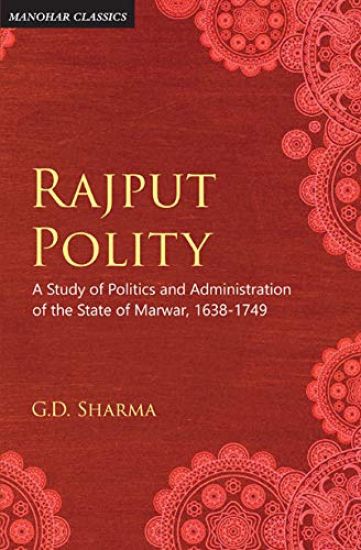
Rajput Polity

Rajput Polity

G.D. Sharma

MANOHAR PUBLISHERS AND DISTRIBUTORS
2025
sidottu
Of all the Rajput states of Rajasthan, Marwar represents the best model for understanding Rajput polity within the perspective of the rise and fall of the Mughal empire. The present study seeks to take a fresh look at the politico-administrative structure in this princely state during the Mughal period. Based on contemporary documents and records, it traces the historical evolution of this structure and the forces which helped to shape it. The various aspects of Marwar polity such as the role of the nobility, its organi­zation and composition, nature of changes in the institutional structure caused due to external and internal factors and the sources of state revenue have been critically examined. Special emphasis has been given to the economic foundation of this institutional framework, particularly the land?revenue. The author has also discussed the political activities of the Rathor rulers and their relations with the Mughal emperors vis-à-vis the rulers of the neighbouring states. These constituted a part of the milieu in which the institutional structure evolved and the changes therein took place. The author has retained the social, economic and administrative terms in their original form. Since words produce a particular image of the reality they are employed to describe, an analysis of the contemporary connotation of these terms has also been made. These terms and the dis­cussion on them further broaden our understanding of the system.
The Alaskan Shelf

The Alaskan Shelf

G.D. Sharma

Springer-Verlag New York Inc.
2011
nidottu
From a general point of view the importance of striving to minimize envir- mental disturbances on the continental shelf cannot be overemphasized. Coastal areas are sites of population centers, navigation and recreation activities, and - source development, all of which contribute to environmental stress on the shelf. Proper management of the shelf for optimum use requires a thorough understanding of shelf processes. Complex problems, such as the influence of hydrodynamics on sediment dispersal, element differentiation and migration, physiochemical changes at the sediment water interface, the relationship - tween the pollutants and sediments, and the type of substrate with regard to benthic community and/or man-made structures require a multidisciplinary approach to their solution. The present study interrelates meteorologic, hyd- graphic, sedimentologic, and geochemical parameters to derme specific envir- ments on the Alaskan Shelf. These observations are then related to geologic principles in an effort to elucidate the sedimentary processes and elemental migration on the shelf. Attempts have also been made to relate the sediment texture to the geochem- try of the sediments. Obviously the chemistry is complicated as a result of b- genic contributions and variable provenance; however, to some extent elemental differentiation accompanies textural differentiation in sediments. The distribution of elements in various phases of crustal (source) rocks is gen- ally interpreted on the basis of crystallographic concepts, especially the concept of isomorphism.

Space Security

Space Security

G. D. Sharma

VIJ Books (India) Pty Ltd
2011
sidottu
India is among the few countries with home made satellites in orbit. Indian Space programme while being impressive with arrays of achievements in peaceful use of the space has woefully lacked in dedicated military applications. Admittedly cartographic platforms in the orbit can be used by the military to meet their cartographic needs but, they fall short of the 10-15cm (4"-6") capabilities of the best military satellites today. In "Space Security from the Indian Perspective", the author examines the dimension of the space threat emanating from our adversaries and need to develop our own military capability in the space . He argues that reliance of space is not exclusive to defence alone in fact the dependence of civil sector is more critical. In defence, we need not only to develop affordable options but also take steps to safeguard our space assets to ensure their continued use. This book examines the ramification of the military space capability and the choices available to India to safeguard its space assets which would interest both the generalists and the specialists.