Kirjojen hintavertailu – 12 859 829 kirjaa ja 27 kauppaa

Kirjailija

G.E. Wickens

Kirjat ja teokset yhdessä paikassa: 7 kirjaa, julkaisuja vuosilta 1975–2010, suosituimpiin kuuluu Flora of Tropical East Africa: Melastomataceae. Vertaile teosten hintoja ja tarkista saatavuus suomalaisista kirjakaupoista.

Nimi esiintyy myös muodoissa: G. E. Wickens

7 kirjaa

Kirjojen julkaisuvuodet: 1975–2010.

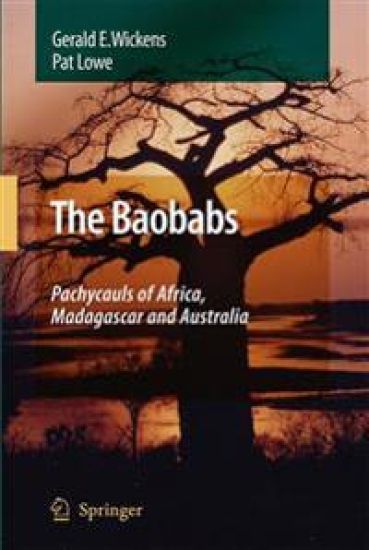
The Baobabs: Pachycauls of Africa, Madagascar and Australia
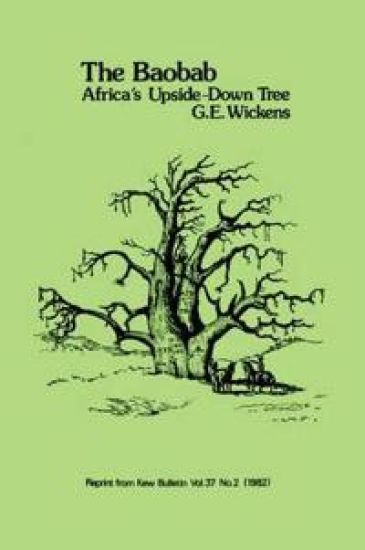
Although Alexander von Humboldt never saw a baobab, he wrote: ‘Among organic creatures, this tree [Dracaena draco (dragon tree)] is undoubtedly, together with the Adansonia or baobab of Senegal, one of the oldest inhabitants of our planet’ (Humboldt 1852). With their enormous size, distinctive and often grotesque appearance, and great age (measured perhaps in thousands of years), baobab trees attract the attention of botanists, amateurs, tourists and passers-by wherever they grow. Old specimens display highly individual, photogenic characteristics which endear them to local people, artists and photographers. European knowledge of the African baobab dates back to Renaissance times. I first became acquainted with the African baobab in 1952 while working in what was then Sokoto Province, Northern Nigeria. Later I worked in the former Rhodesias (now Zambia and Zimbabwe) and in the Sudan, and was able to further my studies. Although I have written about the African baobab, it was Pat Lowe who, in January 2000, persuaded me that we should pool our knowledge and ex- riences and write a book on all eight species of this outstanding genus. While I take full responsibility for the final text, I have taken advantage of her knowledge of baobabs in Africa, Madagascar and especially Australia, and of her constructive criticism of the text.
The Baobabs: Pachycauls of Africa, Madagascar and Australia

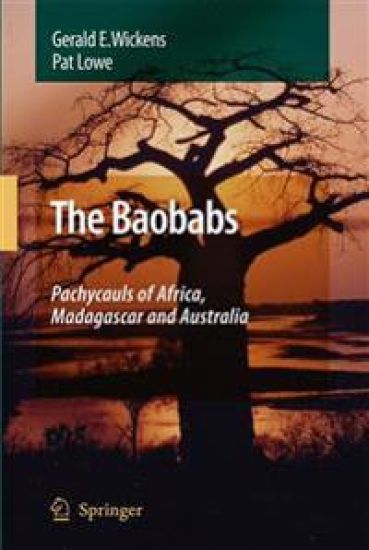
The Baobabs: Pachycauls of Africa, Madagascar and Australia

G.E. Wickens

Springer-Verlag New York Inc.
2008
sidottu
Although Alexander von Humboldt never saw a baobab, he wrote: ‘Among organic creatures, this tree [Dracaena draco (dragon tree)] is undoubtedly, together with the Adansonia or baobab of Senegal, one of the oldest inhabitants of our planet’ (Humboldt 1852). With their enormous size, distinctive and often grotesque appearance, and great age (measured perhaps in thousands of years), baobab trees attract the attention of botanists, amateurs, tourists and passers-by wherever they grow. Old specimens display highly individual, photogenic characteristics which endear them to local people, artists and photographers. European knowledge of the African baobab dates back to Renaissance times. I first became acquainted with the African baobab in 1952 while working in what was then Sokoto Province, Northern Nigeria. Later I worked in the former Rhodesias (now Zambia and Zimbabwe) and in the Sudan, and was able to further my studies. Although I have written about the African baobab, it was Pat Lowe who, in January 2000, persuaded me that we should pool our knowledge and ex- riences and write a book on all eight species of this outstanding genus. While I take full responsibility for the final text, I have taken advantage of her knowledge of baobabs in Africa, Madagascar and especially Australia, and of her constructive criticism of the text.
Checklist of the British and Irish Basidiomycota
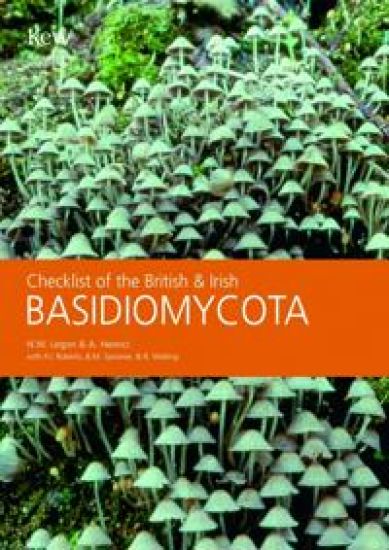
A comprehensive checklist of the Basidiomycetes (fungi) of Great Britain and Ireland, a massive phylum covering 3670 mushrooms and toadstools, bracket fungi, puffballs, earthstars and stinkhorns, club and coral fungi, tooth fungi, jelly fungi, rusts and smuts. An essential companion for amateur and professional mycologists, conservationists and wildlife recorders.
Economic Botany

Economic Botany

G.E. Wickens

Springer-Verlag New York Inc.
2004
nidottu
The strength of this book is that it is written by someone who has spent a lifetime devoted to the science of economic botany. The author has brought together his vast experience in the field in Africa with his studies of arid land plants at the Royal Botanic Gardens, Kew. The result is an informative and reliable text that covers a vast range of topics. It is also firmly based upon the author's research and interest in plant taxonomy and therefore fully acknowledges the importance of correct naming and classification in the field of science of economic botany. The coverage is of economic botany in its broadest sense. I was delighted to find such topics as ecophysiology, plant breeding, the environment and conservation are included in the text. This gives the book a much more comprehensive coverage than most other texts on the subject. I was also glad to see that the book covers the use of various organisms that are no longer considered part of the plant kingdom such as various species of fungi and algae. It is indeed a broad ranging book that will be of use to many people interested in the uses of plants and fungi. Economic botany is once again being given more prominence as a discipline because of its enormous relevance to both conservation and sustainable development. Those people involved in those topics shOUld find this a most useful resource.
Economic Botany

Economic Botany

G.E. Wickens

Springer
2001
sidottu
The strength of this book is that it is written by someone who has spent a lifetime devoted to the science of economic botany. The author has brought together his vast experience in the field in Africa with his studies of arid land plants at the Royal Botanic Gardens, Kew. The result is an informative and reliable text that covers a vast range of topics. It is also firmly based upon the author's research and interest in plant taxonomy and therefore fully acknowledges the importance of correct naming and classification in the field of science of economic botany. The coverage is of economic botany in its broadest sense. I was delighted to find such topics as ecophysiology, plant breeding, the environment and conservation are included in the text. This gives the book a much more comprehensive coverage than most other texts on the subject. I was also glad to see that the book covers the use of various organisms that are no longer considered part of the plant kingdom such as various species of fungi and algae. It is indeed a broad ranging book that will be of use to many people interested in the uses of plants and fungi. Economic botany is once again being given more prominence as a discipline because of its enormous relevance to both conservation and sustainable development. Those people involved in those topics shOUld find this a most useful resource.
Flora of Tropical East Africa: Melastomataceae
A descriptive account of the Melastomataceae native and naturalised in Kenya, Tanzania and Uganda, together with information on exotic ornamental and crop plants. At least one species per genus is illustrated, and the bibliography and synonymy are sufficiently detailed to explain the nomenclature and taxonomic circumscriptions within a broad regional context.