
Kirjailija
G H Hardy
Kirjat ja teokset yhdessä paikassa: 32 kirjaa, julkaisuja vuosilta 1987–2024, suosituimpiin kuuluu Inequalities. Vertaile teosten hintoja ja tarkista saatavuus suomalaisista kirjakaupoista.
Nimi esiintyy myös muodoissa: G. H. Hardy, G.H. Hardy
32 kirjaa
Kirjojen julkaisuvuodet: 1987–2024.
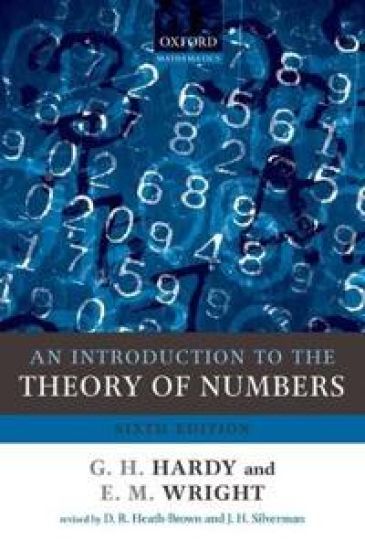
An Introduction to the Theory of Numbers
G. H. Hardy; E. M. Wright
Oxford University Press
2008
nidottu
Halvin toimitettuna 80,10 €
An Introduction to the Theory of Numbers by G. H. Hardy and E. M. Wright is found on the reading list of virtually all elementary number theory courses and is widely regarded as the primary and classic text in elementary number theory. Developed under the guidance of D. R. Heath-Brown this Sixth Edition of An Introduction to the Theory of Numbers has been extensively revised and updated to guide today's students through the key milestones and developments in number theory. Updates include a chapter by J. H. Silverman on one of the most important developments in number theory -- modular elliptic curves and their role in the proof of Fermat's Last Theorem -- a foreword by A. Wiles, and comprehensively updated end-of-chapter notes detailing the key developments in number theory. Suggestions for further reading are also included for the more avid reader The text retains the style and clarity of previous editions making it highly suitable for undergraduates in mathematics from the first year upwards as well as an essential reference for all number theorists.
G. H. Hardy (7 Feb 1877 - 1 Dec 1947) was an eccentric British mathematician who worked extensively in mathematical analysis and analytical number theory alongside J. E Littlewood. He is perhaps even better known for his adoption and mentoring of the self-taught Indian mathematical genius, Srinivasa Ramanujan. Hardy wanted his work to be referred to as pure mathematics rather than applied mathematics. In his view, mathematics was not something to be used in social destruction and to fulfill political purposes.
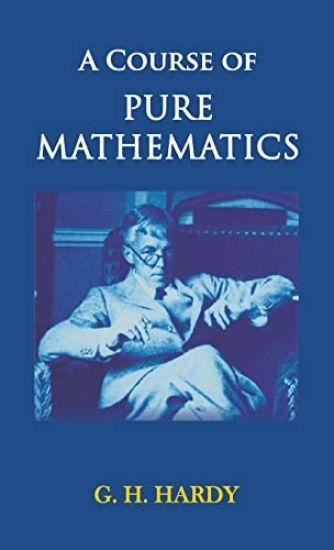
G. H. Hardy (7 Feb 1877 - 1 Dec 1947) was an eccentric British mathematician who worked extensively in mathematical analysis and analytical number theory alongside J. E Littlewood. He is perhaps even better known for his adoption and mentoring of the self-taught Indian mathematical genius, Srinivasa Ramanujan. Hardy wanted his work to be referred to as pure mathematics rather than applied mathematics. In his view, mathematics was not something to be used in social destruction and to fulfill political purposes.
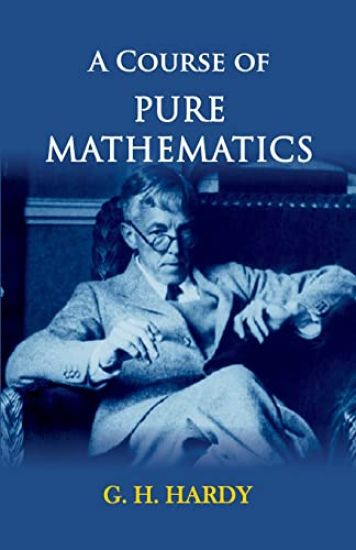
G. H. Hardy (7 Feb 1877 - 1 Dec 1947) was an eccentric British mathematician who worked extensively in mathematical analysis and analytical number theory alongside J. E Littlewood. He is perhaps even better known for his adoption and mentoring of the self-taught Indian mathematical genius, Srinivasa Ramanujan. Hardy wanted his work to be referred to as pure mathematics rather than applied mathematics. In his view, mathematics was not something to be used in social destruction and to fulfill political purposes.
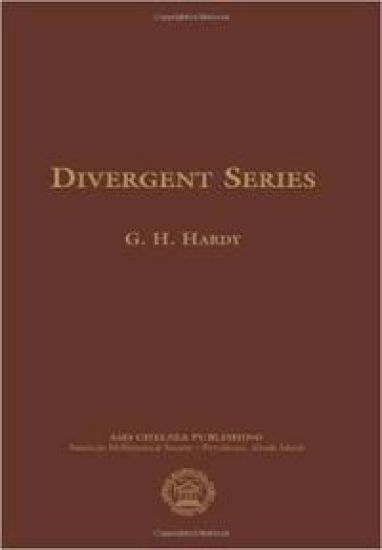
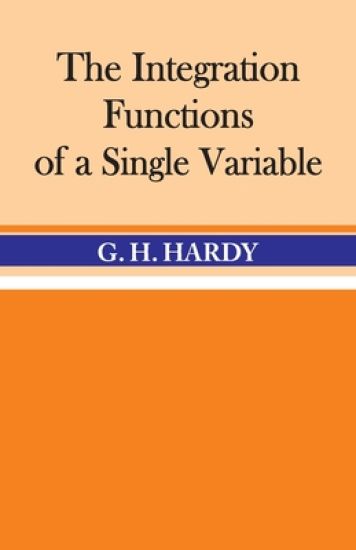
G. H. Hardy (7 Feb 1877 - 1 Dec 1947) was an eccentric British mathematician who worked extensively in mathematical analysis and analytical number theory alongside J. E Littlewood. He is perhaps even better known for his adoption and mentoring of the self-taught Indian mathematical genius, Srinivasa Ramanujan. Hardy wanted his work to be referred to as pure mathematics rather than applied mathematics. In his view, mathematics was not something to be used in social destruction and to fulfill political purposes.
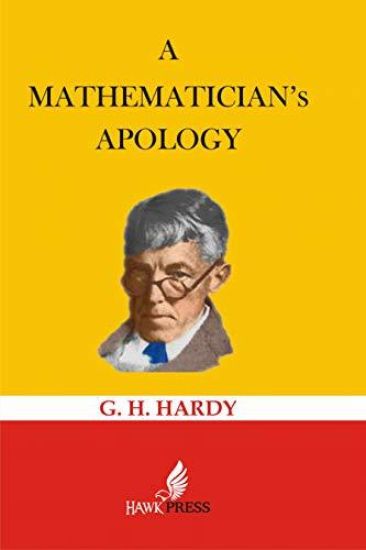
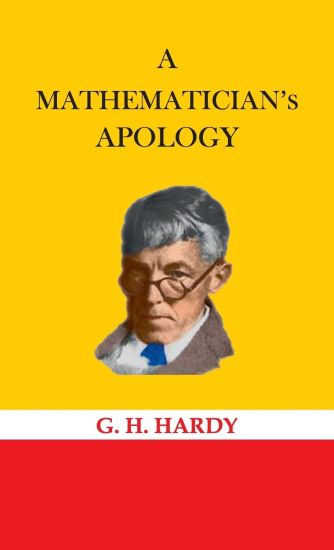
A Mathematician's Apology is the famous essay by British mathematician G. H. Hardy. It concerns the aesthetics of mathematics with some personal content and gives the layman an insight into the mind of a working mathematician. It is an attempt to justify and explain, pure mathematics. One of the main themes of the book is the beauty that mathematics possesses, which Hardy compares to painting and poetry. G. H. Hardy (7 Feb 1877 - 1 Dec 1947) was an eccentric British mathematician who worked extensively in mathematical analysis and analytical number theory alongside J. E Littlewood. He is perhaps even better known for his adoption and mentoring of the self-taught Indian mathematical genius, Srinivasa Ramanujan. Hardy wanted his work to be referred to as pure mathematics rather than applied mathematics. In his view, mathematics was not something to be used in social destruction and to fulfill political purposes.