Kirjojen hintavertailu – 12 859 829 kirjaa ja 27 kauppaa

Kirjailija

G. John Ikenberry

Kirjat ja teokset yhdessä paikassa: 17 kirjaa, julkaisuja vuosilta 2000–2026, suosituimpiin kuuluu State Power and World Markets. Vertaile teosten hintoja ja tarkista saatavuus suomalaisista kirjakaupoista.

17 kirjaa

Kirjojen julkaisuvuodet: 2000–2026.

Introduction to International Relations

Introduction to International Relations

Joseph Grieco; G. John Ikenberry; Michael Mastanduno

BLOOMSBURY PUBLISHING PLC
2026
nidottu

Halvin toimitettuna 54,90 €

Fully updated with contemporary case examples, this introductory bestselling textbook offers a wide-ranging and approachable guide to international relations. Written by three acclaimed scholars bringing together decades of experience, it introduces key concepts and theories in international relations while equipping you with the analytical frameworks and empirical evidence to examine changes in world politics and the international economy. Supported by a range of popular boxed features such as Levels of Analysis, Differing Theoretical Approaches, Making Connections and Research Insight to help you navigate the complex problems and events in our rapidly changing world. New to the fourth edition:- Updated coverage and discussion of recent developments in international affairs including the war in Ukraine, Israel-Hamas wars, the role of AI in international politics, cryptocurrencies and the rise of the Global South- Analysis of the resurgence of economic nationalism- Brand new case studies featuring contemporary examples such as the enlargement of BRICs, China's increased dominance in the world economy and the use of AI and drone technology in recent conflictsA rich companion website with study guides, instructor resources and interactive exercises has been updated for this edition and is available at no extra cost.
Introduction to International Relations

Introduction to International Relations

Joseph Grieco; G. John Ikenberry; Michael Mastanduno

BLOOMSBURY PUBLISHING PLC
2026
sidottu
Fully updated with contemporary case examples, this introductory bestselling textbook offers a wide-ranging and approachable guide to international relations. Written by three acclaimed scholars bringing together decades of experience, it introduces key concepts and theories in international relations while equipping you with the analytical frameworks and empirical evidence to examine changes in world politics and the international economy. Supported by a range of popular boxed features such as Levels of Analysis, Differing Theoretical Approaches, Making Connections and Research Insight to help you navigate the complex problems and events in our rapidly changing world. New to the fourth edition:- Updated coverage and discussion of recent developments in international affairs including the war in Ukraine, Israel-Hamas wars, the role of AI in international politics, cryptocurrencies and the rise of the Global South- Analysis of the resurgence of economic nationalism- Brand new case studies featuring contemporary examples such as the enlargement of BRICs, China's increased dominance in the world economy and the use of AI and drone technology in recent conflictsA rich companion website with study guides, instructor resources and interactive exercises has been updated for this edition and is available at no extra cost.
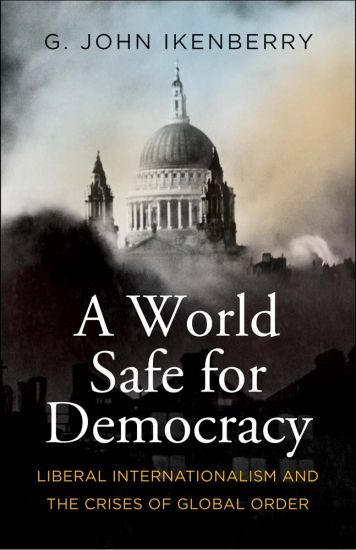
A World Safe for Democracy

A World Safe for Democracy

G. John Ikenberry

YALE UNIVERSITY PRESS
2023
pokkari
A sweeping account of the rise and evolution of liberal internationalism in the modern era, selected as a Best Book of 2021 by Foreign Affairs “A thoughtful and profound defence of liberal internationalism—both as a political philosophy and as a guide to future actions.”—Gideon Rachman, Financial Times “The crowning achievement of [Ikenberry’s] decades-long work explaining and defending the liberal international order.”—Michael Hirsch, Foreign Policy For two hundred years, the grand project of liberal internationalism has been to build a world order that is open, loosely rules-based, and oriented toward progressive ideas. Today this project is in crisis, threatened from the outside by illiberal challengers and from the inside by nationalist-populist movements. This timely book offers the first full account of liberal internationalism’s long journey from its nineteenth-century roots to today’s fractured political moment. Creating an international “space” for liberal democracy, preserving rights and protections within and between countries, and balancing conflicting values such as liberty and equality, openness and social solidarity, and sovereignty and interdependence—these are the guiding aims that have propelled liberal internationalism through the upheavals of the past two centuries. G. John Ikenberry argues that in a twenty-first century marked by rising economic and security interdependence, liberal internationalism—reformed and reimagined—remains the most viable project to protect liberal democracy.
Introduction to International Relations

Introduction to International Relations

Joseph Grieco; G. John Ikenberry; Michael Mastanduno

BLOOMSBURY PUBLISHING PLC
2022
sidottu
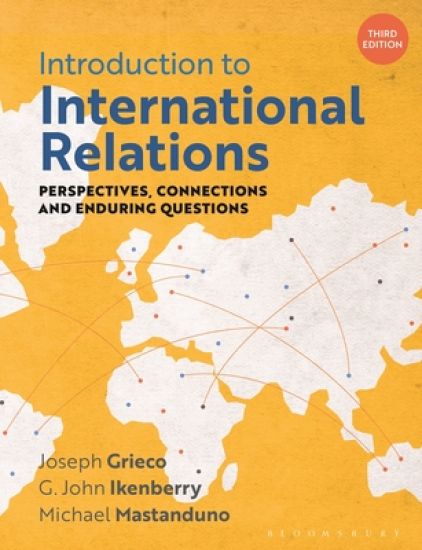
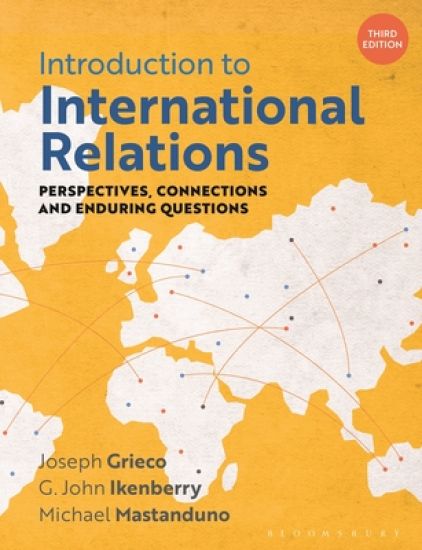
This bestselling introductory textbook provides a truly comprehensive and approachable guide to international affairs. Bringing together decades of combined experience in researching and teaching global politics from three acclaimed scholars, this book introduces you to the key concepts in international relations while equipping you with the tools to successfully analyse the rapidly changing world in which we live. Carefully and pedagogically structured, the book is driven by nuanced enduring questions to support active engagement with the subject matter. It covers everything from war and its causes to the pursuit of peace, the role of non-state actors on the world stage and transnational concerns such as climate change. Thought-provoking boxed features throughout highlight disparities between theory and practice, provide overviews of key research and make use of the influential levels-of-analysis framework. This third edition is completely updated throughout, including extensive coverage of the latest advances in international relations scholarship and supported by a wealth of contemporary case examples. The text is supported by a rich companion website with study guides, instructor resources and interactive exercises to allow you to consider complicated political decisions for yourself. Introduction to International Relations is the ultimate companion for undergraduate students of politics and international relations in need of an exciting and rigorous introduction to the subject.
Introduction to International Relations

Introduction to International Relations

Joseph Grieco; G. John Ikenberry; Michael Mastanduno

BLOOMSBURY PUBLISHING PLC
2022
nidottu
This bestselling introductory textbook provides a truly comprehensive and approachable guide to international affairs. Bringing together decades of combined experience in researching and teaching global politics from three acclaimed scholars, this book introduces you to the key concepts in international relations while equipping you with the tools to successfully analyse the rapidly changing world in which we live. Carefully and pedagogically structured, the book is driven by nuanced enduring questions to support active engagement with the subject matter. It covers everything from war and its causes to the pursuit of peace, the role of non-state actors on the world stage and transnational concerns such as climate change. Thought-provoking boxed features throughout highlight disparities between theory and practice, provide overviews of key research and make use of the influential levels-of-analysis framework. This third edition is completely updated throughout, including extensive coverage of the latest advances in international relations scholarship and supported by a wealth of contemporary case examples. The text is supported by a rich companion website with study guides, instructor resources and interactive exercises to allow you to consider complicated political decisions for yourself. Introduction to International Relations is the ultimate companion for undergraduate students of politics and international relations in need of an exciting and rigorous introduction to the subject.
New Thinking In International Relations Theory

New Thinking In International Relations Theory

Michael W Doyle; G. John Ikenberry

Routledge
2019
sidottu
This book of ten original essays provides a showcase of currently diverse theoretical agendas in the field of international relations. Contributors address the theoretical analysis that their perspective brings to the issue of change in global politics. Written for readers with a general interest in and knowledge of world affairs, New Thinking in I
After Victory

After Victory

G. John Ikenberry

Princeton University Press
2019
pokkari

Halvin toimitettuna 30,70 €

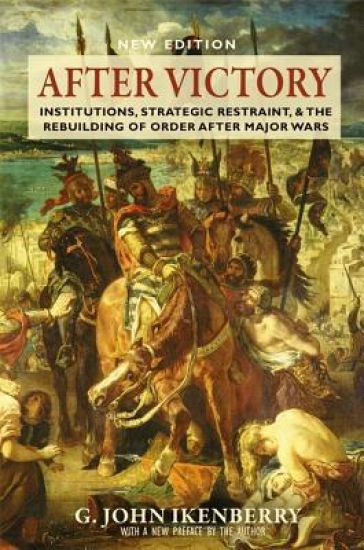
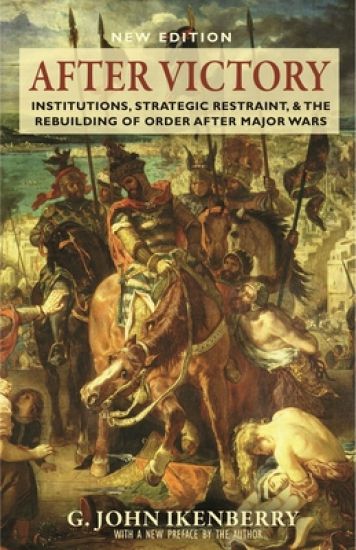
The end of the Cold War was a "big bang" reminiscent of earlier moments after major wars, such as the end of the Napoleonic Wars in 1815 and the end of the World Wars in 1919 and 1945. Here John Ikenberry asks the question, what do states that win wars do with their newfound power and how do they use it to build order? In examining the postwar settlements in modern history, he argues that powerful countries do seek to build stable and cooperative relations, but the type of order that emerges hinges on their ability to make commitments and restrain power. The author explains that only with the spread of democracy in the twentieth century and the innovative use of international institutions--both linked to the emergence of the United States as a world power--has order been created that goes beyond balance of power politics to exhibit "constitutional" characteristics. The open character of the American polity and a web of multilateral institutions allow the United States to exercise strategic restraint and establish stable relations among the industrial democracies despite rapid shifts and extreme disparities in power. This volume includes a new preface reflecting on the reverberating impact of past postwar settlements and the lessons that hold contemporary relevance. Blending comparative politics with international relations, and history with theory, After Victory will be of interest to anyone concerned with the organization of world order, the role of institutions in world politics, and the lessons of past postwar settlements for today. It also speaks to today's debate over the ability of the United States to lead in an era of unipolar power.
After Victory

After Victory

G. John Ikenberry

PRINCETON UNIVERSITY PRESS
2019
sidottu
The end of the Cold War was a "big bang" reminiscent of earlier moments after major wars, such as the end of the Napoleonic Wars in 1815 and the end of the world wars in 1919 and 1945. But what do states that win wars do with their newfound power, and how do they use it to build order? In After Victory, John Ikenberry examines postwar settlements in modern history, arguing that powerful countries do seek to build stable and cooperative relations, but the type of order that emerges hinges on their ability to make commitments and restrain power. He explains that only with the spread of democracy in the twentieth century and the innovative use of international institutions—both linked to the emergence of the United States as a world power—has order been created that goes beyond balance of power politics to exhibit "constitutional" characteristics. Blending comparative politics with international relations, and history with theory, After Victory will be of interest to anyone concerned with the organization of world order, the role of institutions in world politics, and the lessons of past postwar settlements for today.
Reasons of State

Reasons of State

G. John Ikenberry

Cornell University Press
2018
pokkari
In this lucid and theoretically sophisticated book, G. John Ikenberry focuses on the oil price shocks of 1973–74 and 1979, which placed extraordinary new burdens on governments worldwide and particularly on that of the United States. Reasons of State examines the response of the United States to these and other challenges and identifies both the capacities of the American state to deal with rapid international political and economic change and the limitations that constrain national policy.
Survival 59.4

Survival 59.4

Daniel Deudney; G. John Ikenberry

Routledge
2017
nidottu
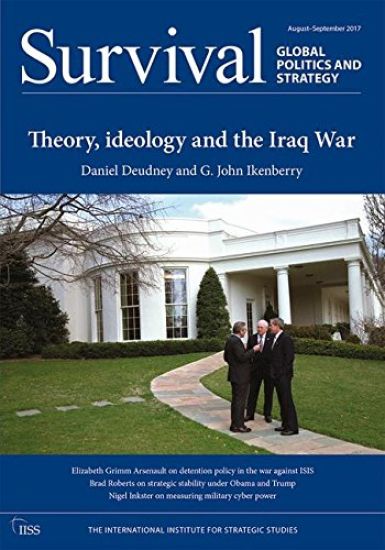
Survival, the bi-monthly publication from The International Institute for Strategic Studies, is a leading forum for analysis and debate of international and strategic affairs. With a diverse range of authors, thoughtful reviews and review essays, Survival is scholarly in depth while vivid, well-written and policy-relevant in approach. Shaped by its editors to be both timely and forward-thinking, the publication encourages writers to challenge conventional wisdom and bring fresh, often controversial, perspectives to bear on the strategic issues of the moment.
American Foreign Policy: Theoretical Essays

American Foreign Policy: Theoretical Essays

G. John Ikenberry; Peter Trubowitz

Oxford University Press
2014
nidottu
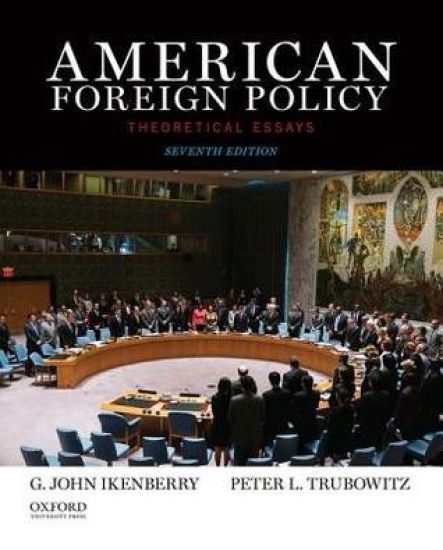
Featuring thirty classic and contemporary selections, American Foreign Policy: Theoretical Essays, Seventh Edition, offers students an overview of the forces that shape and influence U. S. foreign policy. Edited by two top scholars, this acclaimed anthology showcases the wide range of theoretical perspectives used to analyze U. S. foreign policy and guides students in comparing, evaluating, and applying these theories. The essays highlight the debates and controversies that animate the field and the challenges posed by making foreign policy in the American political, economic, and cultural context. The seventh edition adds fourteen new articles, sharpening the book's contemporary focus.
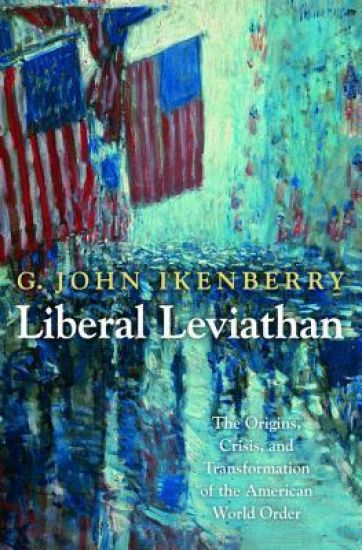
Liberal Leviathan

Liberal Leviathan

G. John Ikenberry

Princeton University Press
2012
pokkari
In the second half of the twentieth century, the United States engaged in the most ambitious and far-reaching liberal order building the world had yet seen. This liberal international order has been one of the most successful in history in providing security and prosperity to more people. But in the last decade, the American-led order has been troubled. Some argue that the Bush administration, with its war on terror, invasion of Iraq, and unilateral orientation, undermined this liberal order. Others argue that we are witnessing the end of the American era. Liberal Leviathan engages these debates. G. John Ikenberry argues that the crisis that besets the American-led order is a crisis of authority. A political struggle has been ignited over the distribution of roles, rights, and authority within the liberal international order. But the deeper logic of liberal order remains alive and well. The forces that have triggered this crisis--the rise of non-Western states such as China, contested norms of sovereignty, and the deepening of economic and security interdependence--have resulted from the successful functioning and expansion of the postwar liberal order, not its breakdown. The liberal international order has encountered crises in the past and evolved as a result. It will do so again. Ikenberry provides the most systematic statement yet about the theory and practice of the liberal international order, and a forceful message for policymakers, scholars, and general readers about why America must renegotiate its relationship with the rest of the world and pursue a more enlightened strategy--that of the liberal leviathan.
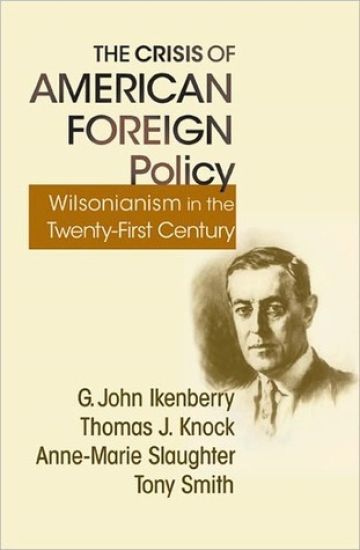
The Crisis of American Foreign Policy

The Crisis of American Foreign Policy

G. John Ikenberry; Thomas Knock; Anne-Marie Slaughter; Tony Smith

Princeton University Press
2011
pokkari
Was George W. Bush the true heir of Woodrow Wilson, the architect of liberal internationalism? Was the Iraq War a result of liberal ideas about America's right to promote democracy abroad? In this timely book, four distinguished scholars of American foreign policy discuss the relationship between the ideals of Woodrow Wilson and those of George W. Bush. The Crisis of American Foreign Policy exposes the challenges resulting from Bush's foreign policy and ponders America's place in the international arena. Led by John Ikenberry, one of today's foremost foreign policy thinkers, this provocative collection examines the traditions of liberal internationalism that have dominated American foreign policy since the end of World War II. Tony Smith argues that Bush and the neoconservatives followed Wilson in their commitment to promoting democracy abroad. Thomas Knock and Anne-Marie Slaughter disagree and contend that Wilson focused on the building of a collaborative and rule-centered world order, an idea the Bush administration actively resisted. The authors ask if the United States is still capable of leading a cooperative effort to handle the pressing issues of the new century, or if the country will have to go it alone, pursuing policies without regard to the interests of other governments. Addressing current events in the context of historical policies, this book considers America's position on the global stage and what future directions might be possible for the nation in the post-Bush era.
Liberal Order and Imperial Ambition

Liberal Order and Imperial Ambition

G. John Ikenberry

Polity Press
2006
nidottu
This book of essays by the a leading figure in the new generation of American IR theorists explores the theoretical, historical, and foreign policy implications of American power and postwar order. The first part of the book focuses on the origins and foundational logic of America’s post-war order-building project – advancing ideas about ‘liberal hegemony’ and ‘constitutional order’. The second part reflects on its evolving character and fate in the aftermath of the Cold War, the rise of unipolarity, and the post-9/11 threat of global terrorism. In this unique study of a superpower, Ikenberry argues that though the American world order is now in upheaval, in the end, the United States still has powerful incentive to sponsor and operate within a liberal rules-based system.
Liberal Order and Imperial Ambition

Liberal Order and Imperial Ambition

G. John Ikenberry

Polity Press
2006
sidottu
This book of essays by the a leading figure in the new generation of American IR theorists explores the theoretical, historical, and foreign policy implications of American power and postwar order. The first part of the book focuses on the origins and foundational logic of America’s post-war order-building project – advancing ideas about ‘liberal hegemony’ and ‘constitutional order’. The second part reflects on its evolving character and fate in the aftermath of the Cold War, the rise of unipolarity, and the post-9/11 threat of global terrorism. In this unique study of a superpower, Ikenberry argues that though the American world order is now in upheaval, in the end, the United States still has powerful incentive to sponsor and operate within a liberal rules-based system.
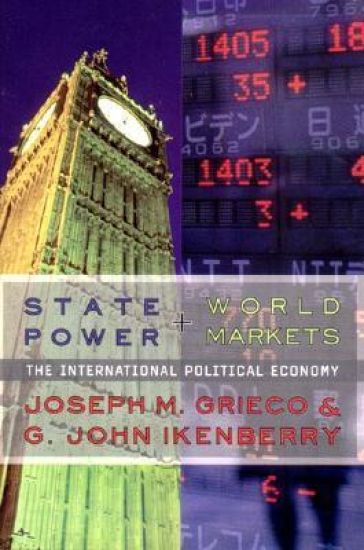
State Power and World Markets

State Power and World Markets

Joseph M. Grieco; G. John Ikenberry

WW Norton Co
2002
nidottu
Professors Grieco and Ikenberry focus on the dynamic, reciprocal relationships between states and world markets, articulating the ways in which their interactions shape the world economy today. Intellectually challenging yet perfectly pitched to the undergraduate student, written by experts in the field, and combining the best of current political and economic theory, State Power and World Markets will enrich and further focus the undergraduate study of international relations.
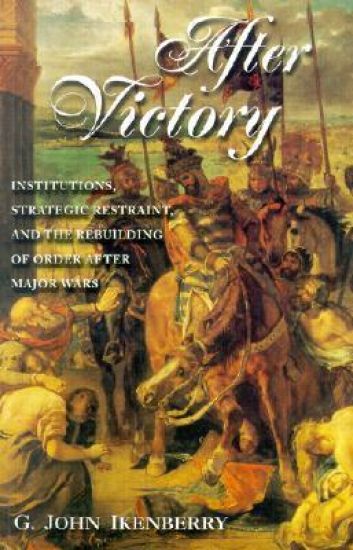
After Victory

After Victory

G. John Ikenberry

Princeton University Press
2000
nidottu
The end of the Cold War was a "big bang" reminiscent of earlier moments after major wars, such as the end of the Napoleonic Wars in 1815 and the end of the World Wars in 1919 and 1945. Here John Ikenberry asks the question, what do states that win wars do with their newfound power and how do they use it to build order? In examining the postwar settlements in modern history, he argues that powerful countries do seek to build stable and cooperative relations, but the type of order that emerges hinges on their ability to make commitments and restrain power. The author explains that only with the spread of democracy in the twentieth century and the innovative use of international institutions--both linked to the emergence of the United States as a world power--has order been created that goes beyond balance of power politics to exhibit "constitutional" characteristics. The open character of the American polity and a web of multilateral institutions allow the United States to exercise strategic restraint and establish stable relations among the industrial democracies despite rapid shifts and extreme disparities in power. Blending comparative politics with international relations, and history with theory, After Victory will be of interest to anyone concerned with the organization of world order, the role of institutions in world politics, and the lessons of past postwar settlements for today. It also speaks to today's debate over the ability of the United States to lead in an era of unipolar power.