
Kirjojen hintavertailu – 12 903 725 kirjaa ja 27 kauppaa

Kirjailija

G. K. Prashanth

Kirjat ja teokset yhdessä paikassa: 2 kirjaa, julkaisuja vuodelta 2025, suosituimpiin kuuluu New Generation of Lithium-ion Batteries for Renewable Energy Storage. Vertaile teosten hintoja ja tarkista saatavuus suomalaisista kirjakaupoista.

Nimi esiintyy myös muodoissa: G.K. Prashanth

2 kirjaa

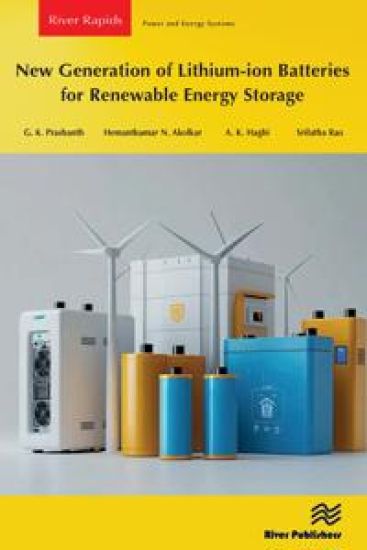
New Generation of Lithium-ion Batteries for Renewable Energy Storage

New Generation of Lithium-ion Batteries for Renewable Energy Storage

Srilatha Rao; G.K. Prashanth; Hemantkumar N. Akolkar; A. K. Haghi

River Publishers
2025
nidottu
This book is a comprehensive analysis of lithium-ion battery (LIB) technologies. LIBs are one of the most advanced rechargeable batteries available and have garnered significant interest while being the preferred mobile power source for portable electronics while also being widely used across various industries. Combining cutting-edge research with practical insights, it provides an analysis of LIB development, including cathode/anode materials, electrolytes, and separators. It covers Li-ion variants such as LCO, NMC, LFP, LMO, NCA and delves into energy density, cycle life, and safety mechanisms. By discussing topics such as solid-state batteries, silicon anodes, and advanced Li-S/Li-air systems as well as thermal management, degradation, and recycling challenges, this book is essential reading for researchers in electrochemistry, materials science, and energy storage engineering. This is a thorough overview of the development of lithium-ion technologies and the many kinds of LIBs. New advancements and technical issues about next-generation secondary battery systems are also discussed.

Seawater Desalination

Seawater Desalination

G. K. Prashanth; Hemantkumar N. Akolkar; A. K. Haghi; Srilatha Rao

Springer International Publishing AG
2025
sidottu
Desalination technologies help address the world's growing water scarcity problem. Desalination is the process of removing salt and other minerals from seawater and brackish water to make them useable for drinking, irrigation, industrial uses, etc. However, challenges associated with desalination processes persist, including high energy consumption, high costs, and environmental concerns such as brine disposal. This book provides an overview of desalination technologies, their underlying principles and their process and system design and operation. The authors explore advancements in automation, waste reduction, and other technological innovations in the field of water purification. Environmental impacts related to desalination are also discussed, including the resulting increase in seawater’s salt level, the impact of chemicals and brine discharge, and the contamination by the chemicals used in the process.