Kirjojen hintavertailu – 12 903 725 kirjaa ja 27 kauppaa

Kirjailija

G. Larry Mays

Kirjat ja teokset yhdessä paikassa: 7 kirjaa, julkaisuja vuosilta 1991–2020, suosituimpiin kuuluu Transferring Juveniles to Criminal Courts. Vertaile teosten hintoja ja tarkista saatavuus suomalaisista kirjakaupoista.

7 kirjaa

Kirjojen julkaisuvuodet: 1991–2020.

Contemporary Corrections

Contemporary Corrections

G. Larry Mays; L. Thomas Winfree Jr.

Routledge
2020
nidottu
Contemporary Corrections: A Critical Thinking Approach introduces readers to the essential elements of the US corrections system without drowning students in a sea of nonessential information. Unbiased and accessible, the text includes coverage of the history of corrections, alternatives to incarceration, probation/parole, race/ethnicity/gender issues in corrections, re-entry into the community, and more. The authors' unparalleled practical approach, reinforced by contemporary examples, illuminates the role corrections plays in our society. The authors have reinvigorated earlier work with additional content on international comparative data to increase our understanding of how prison officials in other nations have developed different types of responses to the problems that challenge every US correctional administrator, a new chapter on correctional personnel, and an integration of race and ethnicity issues throughout the book. Unrivaled in scope, this book offers undergraduates a concise but comprehensive introduction to corrections with textual materials and assignments designed to encourage students’ critical thinking skills.
Contemporary Corrections

Contemporary Corrections

G. Larry Mays; L. Thomas Winfree Jr.

Routledge
2020
sidottu
Contemporary Corrections: A Critical Thinking Approach introduces readers to the essential elements of the US corrections system without drowning students in a sea of nonessential information. Unbiased and accessible, the text includes coverage of the history of corrections, alternatives to incarceration, probation/parole, race/ethnicity/gender issues in corrections, re-entry into the community, and more. The authors' unparalleled practical approach, reinforced by contemporary examples, illuminates the role corrections plays in our society. The authors have reinvigorated earlier work with additional content on international comparative data to increase our understanding of how prison officials in other nations have developed different types of responses to the problems that challenge every US correctional administrator, a new chapter on correctional personnel, and an integration of race and ethnicity issues throughout the book. Unrivaled in scope, this book offers undergraduates a concise but comprehensive introduction to corrections with textual materials and assignments designed to encourage students’ critical thinking skills.
Making Sense of Criminal Justice: Policies and Practices

Making Sense of Criminal Justice: Policies and Practices

G. Larry Mays; Rick Ruddell

Oxford University Press
2018
nidottu
Rather than providing students with "the answers," Making Sense of Criminal Justice: Policies and Practices, Third Edition, challenges them to think critically about how the criminal justice system deals with challenging situations--like the use of force by the police--and offers a framework for lively classroom discussions and debates.
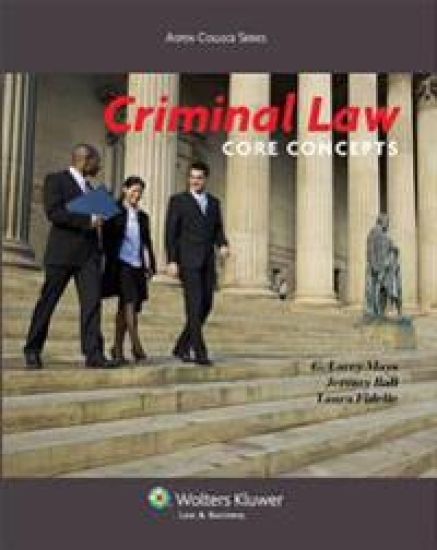
Criminal Law: Core Concepts

Criminal Law: Core Concepts

G. Larry Mays; Jeremy Ball; Laura Fidelie

Aspen Publishing
2014
nidottu
This author team had students in mind when they wrote the book on Criminal Law. Criminal Law: Core Concepts uses examples and case excerpts that are interesting and informative, along with logically organized, plain-English discussion of the Model Penal Code. This is the basis for developing a solid understanding of criminal law concepts. One look inside this book and you ll notice that every page promises unobstructed learning. You ll see an uncluttered page design, uncluttered coverage, writing uncluttered by legalese, and case excerpts uncluttered by extraneous detail Everything in this book serves a purpose. Criminal Law: Core Concepts features: A commitment to clarity, reflected in the writing style, organization, pedagogy, and design Shrewd case editing that hones in on salient themes and principles Engaging and informative examples throughout the text Plain English discussion of the Model Penal Code Timely coverage of contemporary topics, such as street crime
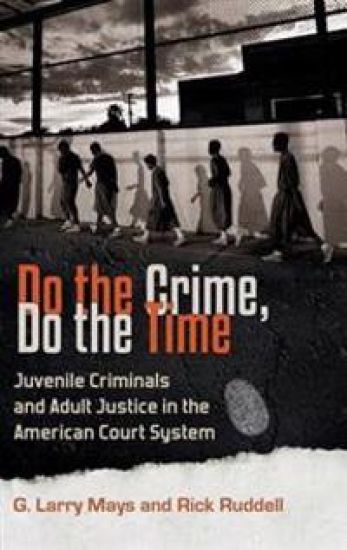
Do the Crime, Do the Time

Do the Crime, Do the Time

G. Larry Mays; Rick Ruddell

Praeger Publishers Inc
2012
sidottu
This book provides a fresh look at the way the United States is choosing to deal with some of the serious or persistent youth offenders: by transferring juvenile offenders to adult courts. For more than 20 years now, the attitude in some jurisdictions has been "if you're old enough to do the crime, you're old enough to do the time." After two decades of applying this increasingly punitive mindset to juvenile offenders, it is possible to see the actual consequences of transferring more and younger offenders to adult courts. In Do the Crime, Do the Time: Juvenile Criminals and Adult Justice in the American Court System, the authors apply their decades of experience, both in the practical world and from unique research perspectives, to shed light on the influence of public opinion and the political forces that shape juvenile justice policy in the United States. The book provides a fresh look at the way the United States is choosing to deal with some of the serious or persistent juvenile offenders, utilizing real-life examples and cases to draw connections between transfer policies and individual outcomes.
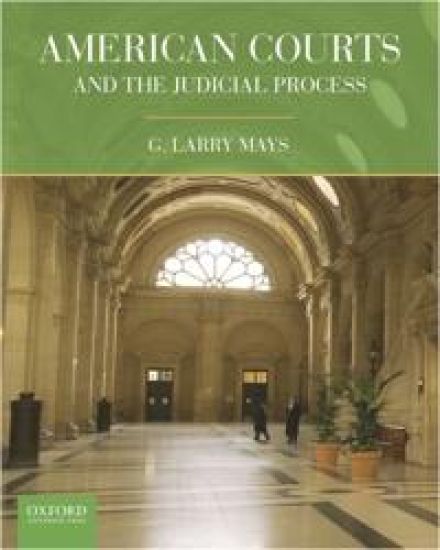
American Courts and the Judicial Process

American Courts and the Judicial Process

G. Larry Mays

Oxford University Press Inc
2011
nidottu
American Courts and the Judicial Process examines the many elements of the U. S. court system--its structure, function, and key actors. Author G. Larry Mays discusses the contrast between the law and rules as they are written and the way they play out in the real world. Concise and accessible, American Courts and the Judicial Process is ideal for undergraduate courts courses. FEATURES * Written by a seasoned author and renowned criminologist * Presents a variety of scholarship, both classic and current * Organized logically, beginning with a brief overview of court personnel (judges, lawyers, etc.) before delving into the different types of courts and procedures (pre-trial, trial, and post-trial judicial processes) * Contains distinctive pedagogy: " "In Their Own Words" boxes containing quotes from leading judges, lawyers, legal scholars, and others " "In the News" boxes discussing contemporary events " "World View" boxes covering international courts and legal systems * Discusses the major problems facing the American court system and considers potential solutions SUPPORT PACKAGE * Instructor's Resource CD containing a Test Bank, sample syllabi, chapter outlines, and PowerPoint-based lecture slides * Companion Website (www.oup.com/us/mays) featuring a downloadable Student Study Guide, a variety of self-quizzes, and brief chapter summaries
Transferring Juveniles to Criminal Courts

Transferring Juveniles to Criminal Courts

Dean John Champion; G. Larry Mays

Praeger Publishers Inc
1991
sidottu
This is the first book to provide an in-depth study of the juvenile transfer process. Criminal justice's get tough policy has led to greater use of this process which, on the surface, transfers persistent juvenile offenders to criminal court jurisdiction in order to impose more serious penalties. The implications of this growing phenomenon are increasingly important for both the juvenile and criminal court systems. Champion and Mays' analysis includes descriptions of juvenile courts, types of offenders processed by these courts, and characteristic outcomes of transfers. Examining the transfer process in detail, they explore social and legal definitions of delinquency; goals and functions of transfers; legal rights of juveniles; and the implications of possible penalties, such as the death penalty. Questions such as whether transfers necessarily result in harsher punishment are discussed at length. Transferring Juveniles to Criminal Courts is designed for students majoring in criminal justice, public administration, political science, sociology, and psychology. Examining the transfer process, Chapter One provides a thorough discussion of the social and legal definitions of delinquency. Chapter Two is an overview of juvenile options, juvenile punishments, public policy, and the theme of deterring juvenile offenders. A description of transfers in different jurisdictions, including their goals and functions, is provided in Chapter Three. Chapter Four then explores the various implications of these transfers. Public policy is examined as it relates to the prevalent get tough policy. Chapter Five describes the criminal court and some of the varied functions served by these courts. Finally, Chapter Six summarizes several important trends relating to juvenile transfers. It includes male/female juvenile comparisons, the issue of selective certification, implications of prison overcrowding, and the emergence of a unified court system. An up-to-date bibliography is provided for further research.