Kirjojen hintavertailu – 12 903 725 kirjaa ja 27 kauppaa

Kirjailija

G. R. Evans

Kirjat ja teokset yhdessä paikassa: 27 kirjaa, julkaisuja vuosilta 1988–2021, suosituimpiin kuuluu Breaking the Bounds. Vertaile teosten hintoja ja tarkista saatavuus suomalaisista kirjakaupoista.

Nimi esiintyy myös muodoissa: G.R. Evans

27 kirjaa

Kirjojen julkaisuvuodet: 1988–2021.

Alan of Lille

Alan of Lille

G. R. Evans

Cambridge University Press
2009
pokkari
Alan of Lille was a notable figure in the second half of the twelfth century as a theologian and as a poet and he has seemed as rich and individual a writer to modern scholars as he did to his own contemporaries. This study examines his work as a whole, in an attempt to set his well-known literary achievement in the context of his theological writings. He was in many ways a pioneer, an experimenter with several of the new genres of his day, an innovator both as a teacher and as an author. He was not an original thinker so much as an eclectic, drawing on a wide range of the sources available to his contemporaries. He shows us what might be done by a lively-minded scholar with the resources of the day, within the schools of late twelfth-century France, to bring theology alive and make it interesting and challenging to his readers.
The Language and Logic of the Bible

The Language and Logic of the Bible

G. R. Evans

Cambridge University Press
2009
pokkari
This is a sequel to the author's The Language and Logic of the Bible: The Earlier Middle Ages. The period of the reformation saw immense changes of approach to the study of the Bible, which in turn brought huge consequences. This book, seeking to show the direction of endeavour of such study in the last medieval centuries, examines the theory of exegesis, practical interpretation, popular Bible study and preaching, and looks especially at the areas of logic and language in which the scholars of the period had considerable expertise. The condemnation of the scholastics has tended to sink with them a proper recognition of what they achieved. In looking forward to the reformation, Dr Evans demonstrates a greater continuity of attitude than has often been allowed and describes how the enquiries of later medieval scholars opened out into the explorations of the sixteenth century made by Protestant and Roman Catholic thinkers alike.
Breaking the Bounds

Breaking the Bounds

G. R. Evans

Cambridge University Press
2004
pokkari
In this impassioned and challenging lecture, Gillian Evans addresses the interdisciplinary nature of the study of medieval texts and its inherent problems, drawing important lessons for teaching and research within the modern university. Through discussion of the practices, philosophy and constitution of the medieval community of authorship, Evans throws into relief the assumptions which surround our current practice of dividing the subject matter of study into discrete educational 'portions' by discipline and subject. While acknowledging that the task of pursuing the truth through academic study has perhaps been made more manageable by classification, Evans argues that ancient and medieval scholars would not have flourished in a world of single-subject disciplines. Instead, she calls for disciplinary bounds to be broken and for the modern university to lead in the preservation of learning for its own sake and the fostering of a culture of open-ended enquiry.
Crown, Mitre and People in the Nineteenth Century

Crown, Mitre and People in the Nineteenth Century

G. R. Evans

Cambridge University Press
2021
sidottu
Throughout the nineteenth century the relationship between the State and the Established Church of England engaged Parliament, the Church, the courts and – to an increasing degree – the people. During this period, the spectre of Disestablishment periodically loomed over these debates, in the cause – as Trollope put it – of 'the renewal of inquiry as to the connection which exists between the Crown and the Mitre'. As our own twenty-first century gathers pace, Disestablishment has still not materialised: though a very different kind of dynamic between Church and State has anyway come into being in England. Professor Evans here tells the stories of the controversies which have made such change possible – including the revival of Convocation, the Church's own parliament – as well as the many memorable characters involved. The author's lively narrative includes much valuable material about key areas of ecclesiastical law that is of relevance to the future Church of England.
The University of Oxford

The University of Oxford

G.R. Evans

Bloomsbury Academic
2021
nidottu
The University of Oxford was a medieval wonder. After its foundation in the late 12th century it made a crucial contribution to the core syllabus of all medieval universities - the study of the liberal arts law, medicine and theology - and attracted teachers of international calibre and fame. The ideas of brilliant thinkers like innovative translator of Greek Robert Grosseteste, pioneering philosopher Roger Bacon and reforming Christian humanist John Colet redirected traditional scholasticism and helped usher in the Renaissance. In her concise and much-praised new history, G R Evans reveals a powerhouse of learning and culture in scintillating detail. Evans brings Oxford's revolutionary events, as well as its remarkable intellectual journey, to vivid and sparkling life. This book traverses the centuries to delve into the history of the University of Oxford throughout the centuries, governments and political climates it has existed within.
Philosophy and Theology in the Middle Ages
In the ancient world being a philosopher was a practical alternative to being a christian. Philosophical systems offered intellectual, practical and moral codes for living. By the Middle Ages however philosophy was largely, though inconsistently, incorporated into Christian belef. From the end of the Roman Empire to the Reformation and Renaissance of the sixteenth century Christian theologians had a virtual monopoly on higher education. The complex interaction between theology and philosophy, which was the result of the efforts of Christian leaders and thinkers to assimilate the most sophisticated ideas of science and secular learning into their own system of thought, is the subject of this book. Augustine, as the most widely read author in the Middle Ages, is the starting point. Dr Evans then discusses the classical sources in general which the medieval scholar would have had access to when he wanted to study philosophy and its theological implications. Part I ends with an analysis of the problems of logic, language and rhetoric. In Part II the sequence of topics - God, cosmos, man follow the outline of the summa, or systematic encyclopedia of theology, which developed from the twelfth century as a text book framework. Does God exist? What is he like? What are human beings? Is there a purpose to their lives? These are the great questions of philosophy and religion and the issues to which the medieval theologian addressed himself. From `divine simplicity' to ethics and politics, this book is a lively introduction to the debates and ideas of the Middle Ages.
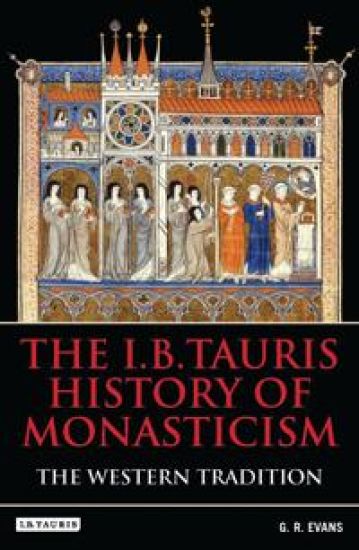
The I.B.Tauris History of Monasticism
From the earliest centuries of the church, asceticism and the contemplative life have been profoundly important aspects of western Christianity. And in assessing the glories of western civilization, perhaps the best place to start is within medieval monastic institutions, not outside of them. For while monasteries withdrew from the main currents of their societies, until the rise of universities in the 12th century they provided fertile soil and sanctuary to the liberal arts and sciences as well as those who wanted to spend their lives focused upon God. They became the driving cultural forces of Europe, nurturing education, music, manuscript illumination, art and history, agriculture, animal husbandry - all in addition to spiritual guidance. In this first general history of monasticism since 1900, Andrea Dickens explores the cloistered communities and individuals who have aspired to the ascetic ideal in their religious life, assessing the impact they have made on the wider church and its practices. She discusses some of the best known names in Christian history - including Cuthbert, Columba, Hilda of Whitby, Peter Abelard and Thomas Merton - and traces the monastic impulse from its beginnings in the Egyptian desert through the Rule of St Benedict, Cluny's foundation in 910, the austerity of the Cistercians, the legacy of women's houses, the critique of Luther and Calvin, Trappists and Catholic reform, up to the present-day ecumencial Taize community. Offering a lively and informed overview of western monasticism, the book will be essential reading for students of history and religion as well as the lay reader.
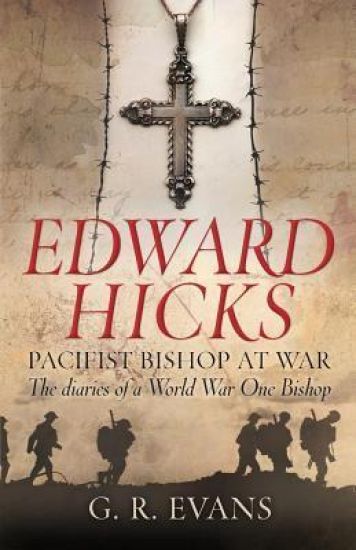
Edward Hicks: Pacifist Bishop at War
The story of outspoken pacifist bishop Edward Hicks throws new light on the problems of conscience created by World War One. Edward Hicks, Bishop of Lincoln, was already regarded as a maverick for his stance on the education of women, teetotalism, social justice, and votes for everyone. He came from a different class to that of most bishops. When war came, he was a rare dissenting voice amidst the Church's vocal support for its morality. Acclaimed author G. R. Evans draws upon Hicks's detailed diaries to reveal Edward Hicks as a man battling with his own conscience and principles, not least at seeing his sons go off to fight - one never to return. This is a fascinating glimpse into the impact the War had on an individual and those around him, who waited at home - and tried to hold onto their humanity.
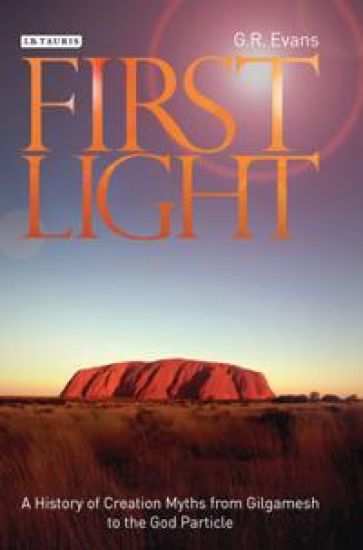
First Light

First Light

G.R. Evans

I.B. Tauris
2013
sidottu
Did the universe start with a bang, or has it existed always? Was there a supernatural being behind it all, or just mindless forces? The beginning of things has forever tested the limits of curiosity, and such questions have both challenged atheists and inspired believers. Ancient cultures resorted to myth and symbolism to tell vibrant stories about human origins. Later civilizations added philosophical and scientific explanations: but these are not definitive. The nature and meaning of existence - the 'why' as much as the 'how' questions - are in the end mysterious. In this lively and wide-ranging book, G R Evans explores the world's myriad creation stories against the background of the biggest question there is: what are we doing here? Discussing Swahili legends that resemble the Book of Genesis, Greek tales about the Titans, Native American, Inca and Mesopotamian mythologies, and Vedic creation cycles that begin with a cosmic egg or seed, the author surveys polytheist, monotheist and dualist ideas about supernatural power. Tracing the history of humanity as it has struggled, over many millennia, to make sense of itself, The Creation Myth will attract students of religion, history and philosophy and general readers alike.
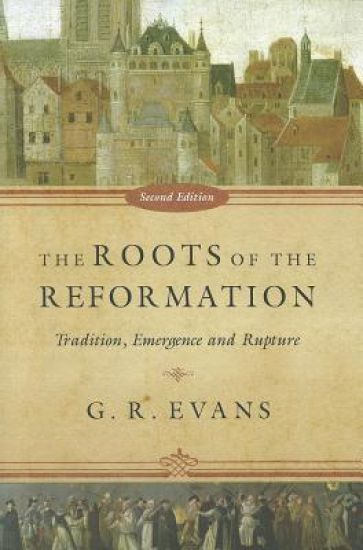
The Roots of the Reformation

The Roots of the Reformation

G. R. Evans

Inter-Varsity Press,US
2012
nidottu
Renowned historian G. R. Evans revisits the question of what happened at the Reformation. Contravening traditional paradigms of interpretation, Evans charts the controversies and challenges that roiled the era of the Reformation and argues that these are really part of a much longer history of discussion and disputation. Evans takes up several issues, such as Scripture, ecclesiology, authority, sacraments and ecclesio-political relations, and traces the shape of the charged discussions that orbited around these through the patristic, medieval and Reformation eras. In this, she demonstrates that in many ways the Reformation was in considerable continuity with the periods that preceded it, though the consequential outcome of the debates in the sixteenth century was dramatically different.
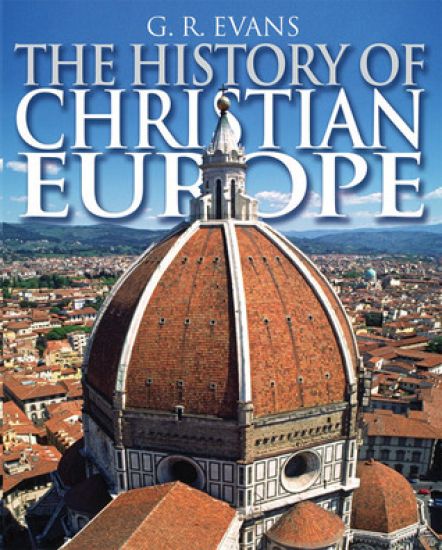
The History of Christian Europe

The History of Christian Europe

G. R. Evans

Lion Books
2009
nidottu
What was the effect of Christianity on Europe? And how did Christian Europe come to have such an extraordinary influence on the world? Professor Evans draws on her expertise in medieval theology, ecumenism and intellectual history in this in-depth study. She traces Christianity's influence across the centuries, from its earliest days, through the East/West schism, the Reformation and Counter-Reformation, to its development in the scientific age of the seventeenth and eighteenth centuries and its place in the modern world. The narrative is complemented by topic boxes and short articles, highlighting key events and concepts, such as monastic life, icons, Darwin's The Origin of Species, prophecy, the slave trade and the influence of psychology.
The Good, the Bad and the Moral Dilemma

The Good, the Bad and the Moral Dilemma

G. R. Evans

Lion Books
2007
nidottu

Halvin toimitettuna 19,60 €

Explores how our day to day dilemmas may fit into the wider context of the big moral issues. Drawing on a range of thinkers from the past, the book explores the way such practical questions of behaviour have been approached in past centuries. This provides the modern reader with a framework of reference to get their bearings and begin to develop a personal response to the task of 'doing the right thing'. The book covers questions such as What is fairness?, Should I always tell the truth?, What are the moralities of war?, What are my ecological responsibilities to the planet? and Is the good bound to win in the end?
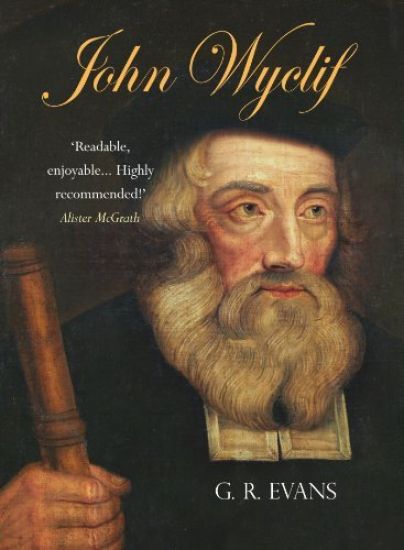
John Wyclif

John Wyclif

G. R. Evans

Lion Books
2007
pokkari
The name of John Wyclif is surrounded by mythology. The ideas associated with his name had a huge influence and their effects were felt in the sequence of events which eventually led to the Reformation. This major biography offers fresh insights into Wyclif the man, his preoccupations and his achievements. The author follows Wyclif through his childhood and university days at Oxford to his life as a writer, preacher and lecturer, and - in his later years - a campaigner against the abuse of power and privilege. She looks at what other people have said about Wyclif, his exile in his parish and the significant contributions he made towards the publication of the Bible in English and the road to Reformation.
Anselm

Anselm

G.R. Evans

Continuum International Publishing Group Ltd.
2005
nidottu
St Anselm of Canterbury (1033-1109) was one of the greatest Christian writers of medieval Europe. Although best known as the inventor of the famous 'ontological argument' for God's existence, his writings cover all the chief aspects of Christian doctrine and have been a major influence on western theology. Equal to Anselm's theology are his spiritual writings, which are alive with an understanding of the gentleness and mercy of a God who comes to meet humanity in its suffering and striving. In this exceptional and authoritative study, Dr. Evans explores the full range of Anselm's work, expertly placing both the theology and the devotional writings in context for the modern reader.
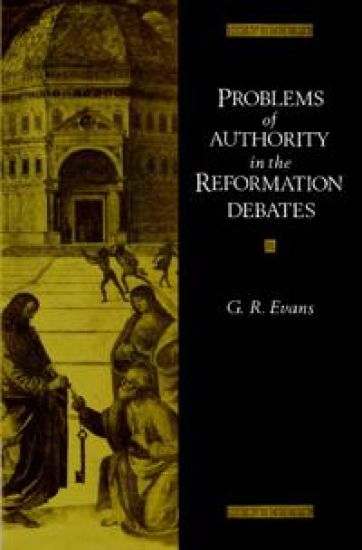
Problems of Authority in the Reformation Debates

Problems of Authority in the Reformation Debates

G. R. Evans

Cambridge University Press
2002
pokkari
Problems of Authority in the Reformation Debates shows that in the early sixteenth century much was seen to be wrong with both the doctrine and the practice of authority in the Western Church. A great deal of scholarly effort was devoted at the time to trying to understand the nature of the problem, but this, as the author points out, was largely a piecemeal endeavour. No one succeeded in providing a comprehensive account of the complex ‘authority’ questions which were being raised about absolute divine sovereignty, the centrality of Christ, the primacy of scripture, the necessity of grace, and so on. Dr Evans aims here to piece together underlying connections in the theology of the Reformation period, as a contribution to ecumenical dialogue. She shows how, as theologians struggle today about words and meanings, the detailed texture of semantic debate similarly underlies many of the Reformation controversies. While recognizing that no single study can do full justice to the slow and subtle processes by which the thought of individuals among the Reformers evolved, Dr Evans feels, nevertheless, that, at a time when ecumenical conversations are beginning to resolve apparently intractable theological differences, a work such as this can hope to show how something may be learned from the sixteenth century failure to do likewise.
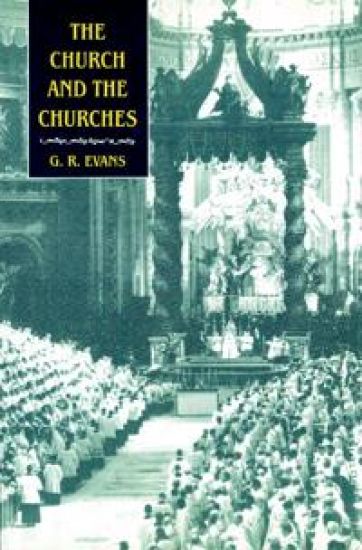
The Church and the Churches

The Church and the Churches

G. R. Evans

Cambridge University Press
2002
pokkari
Individual churches today have a lively ecumenical consciousness, but they often express anxieties about what will become of them in a future united Church. Questions are being asked about the goal of such unity. In this book, G. R. Evans asks what we mean by ‘a church’, and how different Christian bodies have understood the way ‘a church’ is related to ‘the Church’. She surveys the nature of unity and what the fullness of the communion being reached for might consist of; the place of diversity of faith and order in a united Church, or ways in which there can go on being many churches in one Church and how they might be related to it; and questions about the common structures one Church would need, and the way in which it could come to think and act as a single ‘body’ of Christ. The book concludes with a discussion of the concept of ‘communion’, which now looks very hopeful ecumenically as a guide to the way forward.
Fifty Key Medieval Thinkers

Fifty Key Medieval Thinkers

G.R. Evans

Routledge
2002
sidottu
Focussing on individuals whose ideas shaped intellectual life between 400 and 1500, Fifty Key Medieval Thinkers is an accessible introduction to those religious, philosophical and political concepts central to the medieval worldview. Including such diverse figures as Bede and Wyclif, each entry presents a biographical outline, a list of works and a summary of their main theories, alongside suggestions for further reading. Chronologically arranged, and with an introductory essay which presents important themes in context, this volume is an invaluable reference tool for all students of Medieval Europe.
Fifty Key Medieval Thinkers

Fifty Key Medieval Thinkers

G.R. Evans

Routledge
2002
nidottu
Focussing on individuals whose ideas shaped intellectual life between 400 and 1500, Fifty Key Medieval Thinkers is an accessible introduction to those religious, philosophical and political concepts central to the medieval worldview. Including such diverse figures as Bede and Wyclif, each entry presents a biographical outline, a list of works and a summary of their main theories, alongside suggestions for further reading. Chronologically arranged, and with an introductory essay which presents important themes in context, this volume is an invaluable reference tool for all students of Medieval Europe.
The Church and the Churches

The Church and the Churches

G. R. Evans

Cambridge University Press
1994
sidottu
Individual churches today have a lively ecumenical consciousness, but they often express anxieties about what will become of them in a future united Church. Questions are being asked about the goal of such unity. In this book, G. R. Evans asks what we mean by ‘a church’, and how different Christian bodies have understood the way ‘a church’ is related to ‘the Church’. She surveys the nature of unity and what the fullness of the communion being reached for might consist of; the place of diversity of faith and order in a united Church, or ways in which there can go on being many churches in one Church and how they might be related to it; and questions about the common structures one Church would need, and the way in which it could come to think and act as a single ‘body’ of Christ. The book concludes with a discussion of the concept of ‘communion’, which now looks very hopeful ecumenically as a guide to the way forward.