
Kirjailija
G. R. S. Mead
Kirjat ja teokset yhdessä paikassa: 339 kirjaa, julkaisuja vuosilta 1992–2026, suosituimpiin kuuluu Selections: Essays of G.R.S. Mead. Vertaile teosten hintoja ja tarkista saatavuus suomalaisista kirjakaupoista.
Nimi esiintyy myös muodoissa: G R S Mead, G. R. S Mead, G.R.S Mead
339 kirjaa
Kirjojen julkaisuvuodet: 1992–2026.

Select Works Of Plotinus; Translated From The Greek With An Introduction Containing The Substance Of Porphyry'S Life Of Plotinus
Thomas Taylor; G R S Mead
Alpha Edition
2020
sidottu
Select Works Of Plotinus; Translated From The Greek With An Introduction Containing The Substance Of Porphyry'S Life Of Plotinus
Thomas Taylor; G R S Mead
Alpha Edition
2020
pokkari
This book has been considered by academicians and scholars of great significance and value to literature. This forms a part of the knowledge base for future generations. So that the book is never forgotten we have represented this book in a print format as the same form as it was originally first published. Hence any marks or annotations seen are left intentionally to preserve its true nature.
The science of breath and the philosophy of the tattvas Translated From the Sanskrit, With Introductory and Explanatory Essays on Nature S Finer Forces
Rama Prasada; G R S Mead
Alpha Edition
2020
pokkari
Thrice-Greatest Hermes; Studies In Hellenistic Theosophy And Gnosis, Being A Translation Of The Extant Sermons And Fragments Of The Trismegistic Literature, With Prolegomena, Commentaries, And Notes (Volume Ii)
Trismegistus Hermes; G R S Mead
Alpha Edition
2020
pokkari
This book has been considered by academicians and scholars of great significance and value to literature. This forms a part of the knowledge base for future generations. So that the book is never forgotten we have represented this book in a print format as the same form as it was originally first published. Hence any marks or annotations seen are left intentionally to preserve its true nature.

Fragments of a faith forgotten, some short sketches among the Gnostics mainly of the first two centuries - a contribution to the study of Christian origins based on the most recently recovered materials
G R S Mead
Alpha Edition
2020
pokkari
This book has been considered by academicians and scholars of great significance and value to literature. This forms a part of the knowledge base for future generations. So that the book is never forgotten we have represented this book in a print format as the same form as it was originally first published. Hence any marks or annotations seen are left intentionally to preserve its true nature.

Fragments of a faith forgotten, some short sketches among the Gnostics mainly of the first two centuries - a contribution to the study of Christian origins based on the most recently recovered materials
G R S Mead
Alpha Edition
2020
sidottu
This book has been considered by academicians and scholars of great significance and value to literature. This forms a part of the knowledge base for future generations. So that the book is never forgotten we have represented this book in a print format as the same form as it was originally first published. Hence any marks or annotations seen are left intentionally to preserve its true nature.
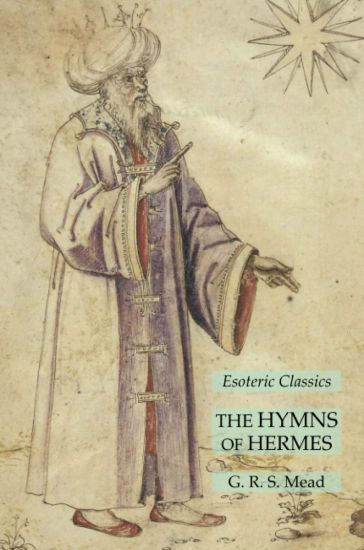
These are the remaining fragments from the otherwise lost hymns of Hermes Trismegistus. Included are the gnostic hymns: A Triple Trisagion, A Hymn to All-Father God, The Secret Hymnody, A Hymn of Grace for Gnosis and A Song of Praise to the Aeon.
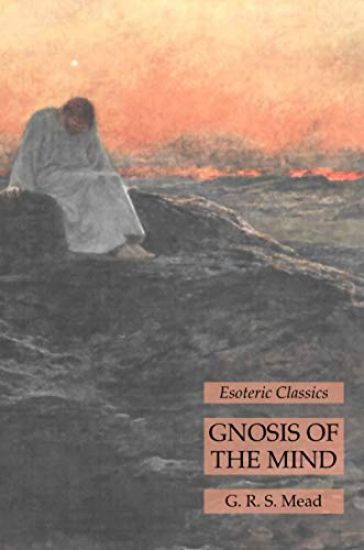
G. R. S. Mead was the premiere scholar of Gnosticism and Hermeticism, in the first half of the 20th century. In this short book, he explores gnostic ideas and texts from an entirely sympathetic point of view, which was rare at the time.
Just as many more Sayings and Doings of the Lord existed prior to and alongside of the canonical Gospels, so were there, prior to and alongside of the subsequently selected or canonical Acts, many other narratives professing to record the doings and sayings of the Apostles and Disciples of the Lord. This is one such Gnostic text, which had been lost for centuries.
Just as many more Sayings and Doings of the Lord existed prior to and alongside of the canonical Gospels, so were there, prior to and alongside of the subsequently selected or canonical Acts, many other narratives professing to record the doings and sayings of the Apostles and Disciples of the Lord. This is one such Gnostic text, which had been lost for centuries.
This book has been considered by academicians and scholars of great significance and value to literature. This forms a part of the knowledge base for future generations. So that the book is never forgotten we have represented this book in a print format as the same form as it was originally first published. Hence any marks or annotations seen are left intentionally to preserve its true nature.


The Hymn of the Robe of Glory: Echoes from the Gnosis Vol. X
G. R. S. Mead
Independently Published
2019
nidottu
The original title of this beautiful Gnostic Poem has been lost, and it is now generally referred to as The Hymn of the Soul. Preuschen, however, calls it The Song of Deliverance (Das Lied von der Erlosung); while in my Fragments (1900) I ventured to name it The Hymn of the Robe of Glory. I here, also, prefer to retain this title, as it seems the more appropriate. The original text of the Poem is in Old Syriac, in lines of twelve syllables with a casura, and so in couplets, for the most part of six syllables. The Hymn itself is a truly poetic inspiration, and deals with far higher mysteries and experiences. The hymn tells the story of a boy, "the son of the king of kings", who is sent to Egypt to retrieve a pearl from a serpent. During the quest, he is seduced by Egyptians and forgets his origin and his family. However, a letter is sent from the king of kings to remind him of his past. When the boy receives the letter, he remembers his mission, retrieves the pearl and returns. But before we can venture to suggest an interpretation, the reader must be made acquainted with the Poem itself in a version based on a minute comparison of all the existing translations. Whatever may be its precise interpretation--and the Mystic at any rate knows that in vital things there cannot possibly be one formal interpretation only--there will be few who will not admit that this ancient Poem of the Gnosis is beautiful. For ourselves, we end with the hope that, when it is better known, no few may find it inspiring and illuminating also. G. R. S. MeadECHOES FROM THE GNOSISUnder this general title is now being published a series of small volumes, drawn from, or based upon, the mystic, theosophic and gnostic writings of the ancients, so as to make more easily audible for the ever-widening circle of those who love such things, some echoes of the mystic experiences and initiatory lore of their spiritual ancestry. There are many who love the life of the spirit, and who long for the light of gnostic illumination, but who are not sufficiently equipped to study the writings of the ancients at first hand, or to follow un aided the labours of scholars. These little volumes are therefore intended to serve as introduction to the study of the more difficult literature of the subject; and it is hoped that at the same time they may become for some, who have as yet not even heard of the Gnosis, stepping-stones to higher things. G. R. S. M.
George Robert Stowe Mead (04/22/1863 - 09/28/1933), commonly known as G. R. S. Mead, was an English historian, writer, editor, translator, and an influential member of the Theosophical Society, as well as the founder of the Quest Society. His scholarly works dealt mainly with the Hermetic and Gnostic religions of Late Antiquity, and were exhaustive for the time period. Simon the Sorcerer or Simon the Magician, in Latin Simon Magus, was a Samaritan magus or religious figure and a convert to Christianity, baptised by Philip, whose later confrontation with Peter is recorded in Acts 8:9-24. The sin of simony, or paying for position and influence in the church, is named for Simon. Surviving traditions about Simon appear in anti-heretical texts, such as those of Irenaeus, Justin Martyr, Hippolytus, and Epiphanius, where he is often regarded as the source of all heresies. Justin wrote that nearly all the Samaritans in his time were adherents of a certain Simon of Gitta, a village not far from Flavia Neapolis. Irenaeus held him as being one of the founders of Gnosticism and the sect of the Simonians.
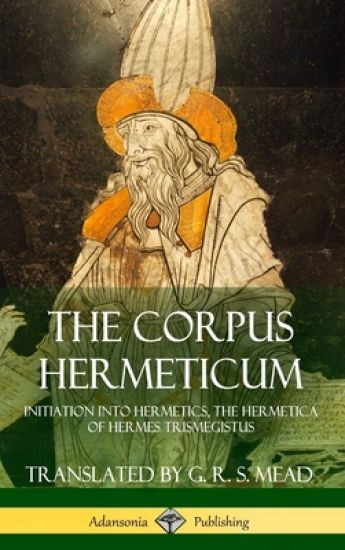
This complete edition of the Corpus Hermeticum, which introduces in eighteen chapters the religious and philosophical principles of Hermetics, was translated by G. R. S. Mead. Hermetics is a religious, philosophical, and esoteric practice based around the beliefs and writings of the pagan priest Hermes Trismegistus. Influential for its distinct beliefs and characteristics, Hermeticism carried a profound influence over the Renaissance in Europe. Many Christian believers paid it heed, with much art depicting the Hermetic belief system appearing between the 14th and 17th centuries in particular. Notably, Hermetics claims to be a descended version of the prisca theologia - a principle which affirms there is but one, true theology in the world. This essence of the divine is present in all religions, and was according to legend given to mankind in distant antiquity. This belief, discussed by Hermes Trismegistus, has led many scholars of philosophy and religion to examine Hermetics in detail.
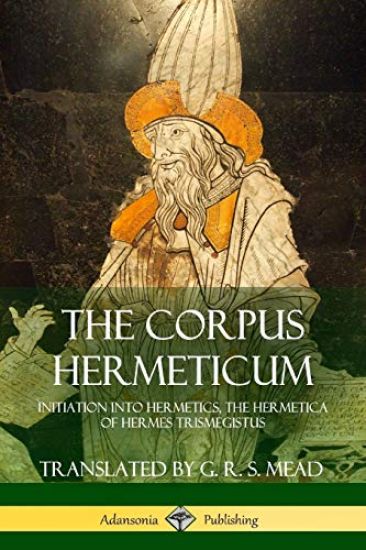
This complete edition of the Corpus Hermeticum, which introduces in eighteen chapters the religious and philosophical principles of Hermetics, was translated by G. R. S. Mead. Hermetics is a religious, philosophical, and esoteric practice based around the beliefs and writings of the pagan priest Hermes Trismegistus. Influential for its distinct beliefs and characteristics, Hermeticism carried a profound influence over the Renaissance in Europe. Many Christian believers paid it heed, with much art depicting the Hermetic belief system appearing between the 14th and 17th centuries in particular. Notably, Hermetics claims to be a descended version of the prisca theologia - a principle which affirms there is but one, true theology in the world. This essence of the divine is present in all religions, and was according to legend given to mankind in distant antiquity. This belief, discussed by Hermes Trismegistus, has led many scholars of philosophy and religion to examine Hermetics in detail.