Kirjailija
Gabriel R. Ricci
Kirjat ja teokset yhdessä paikassa: 20 kirjaa, julkaisuja vuosilta 2002–2018, suosituimpiin kuuluu The Tempo of Modernity. Vertaile teosten hintoja ja tarkista saatavuus suomalaisista kirjakaupoista.
Nimi esiintyy myös muodoissa: Gabriel R Ricci
20 kirjaa
Kirjojen julkaisuvuodet: 2002–2018.
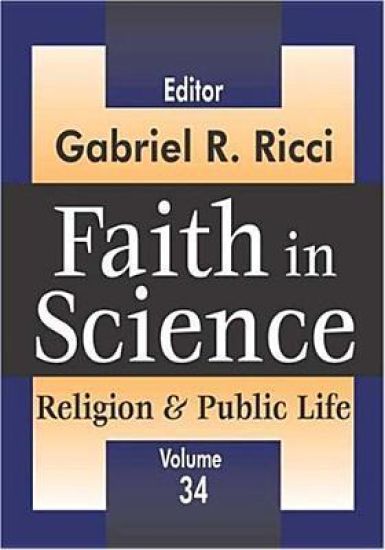
There is growing academic interest in addressing the relationship of religion and science. There are also very generous funding sources that encourage scientists to demonstrate the reality of purpose in the world. Still, there are organizations offering support to community groups dedicated to discussing religion and science. Contributors explore this development in Faith in Science. The intellectual initiatives analyzed here seem far removed from the deep religious and cultural divisions that dominate the contemporary geopolitical landscape. This emerging industry, however, originates in a cultural debate that set the evolutionary view of Nature against revelation's conception of Nature as the fulfillment of God's creation. The two worldviews are hopelessly mismatched, although scientific creationism purports to have uncovered scriptural evidence that invites another look. Along the way, the imposition of theological themes onto the geological record became a tendency for many naturalists. Peter Medawar's scathing review of Teilhard de Chardin's The Phenomenon of Man in 1961 remains as a warning for those who mix Darwinian orthodoxy and theological parlance. The challenge, Medawar would have us believe, is not to abandon the exacting methods and logic of science in favor of a poetic dream of how consciousness is a manifestation of energy. But does this mean that science and religion are only methodologically demarcated? Must we insist on the traditional boundaries instituted by scientific conventions and religious beliefs? From various historical, religious, and scientific vantage points, contributors to this volume, who include Guy Consolmagno, Donald Kraybill, David Ray Griffin, Gerald L. Schroeder, Robert Pollack, Robert Pennock, Carol Wayne Wright, Bill Durbin, Kathleen Duffy, and Anthony Matteo, take up these challenges.
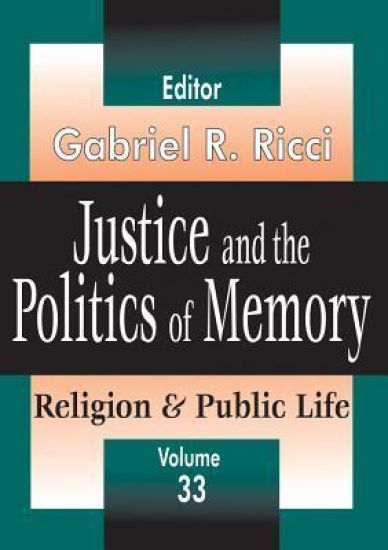
Memory is not a mere repository for past events. This was Henri Bergson's fundamental claim about consciousness. In distinguishing our psychic constitution by its sense of the past, Bergson differentiates our perception of time from a process in which one instant merely replaces another. While Bergson cast his ideas in terms of the biological sciences, his analysis did not neglect the moral impulse that accompanies the condensation of history with which we continuously live. Classifying human existence in this way bears on ethical and political questions. How such questions can plague the memory of a people and the entire human community is addressed in Justice and the Politics of Memory. The contributors explore the manner in which cultural and psychic violation undermine collective identity, and destroy traditions. They raise troubling questions on how recompense and reconciliation is possible after abominable wrongs have been systematically perpetrated against a community. Faced with the burden of memory, those committed to the righting of wrongs are faced with pursuing an elusive justice that sometimes includes levying reparations and memorializing horrific historical episodes. Guided by the muse of forgiveness, restoration and a more harmonious future are likely to be rooted in the sources of spirituality that had been previously eclipsed by the conquering and homogenizing historical processes. This volume includes Heribert Adam's "Collective Reckoning with a Criminal Regime," Jeffrey Olick's "Lessons from and for Germany," James Hatley's "Levinas, Witness and Politics," James E. Young's "Germany's Holocaust Memorial Problem--and Mine," Tim Giago's "Killing the Indian to Save the Child: The Near Death of Spirituality," Jordan B. Peterson's and Maja Djikic's "Running Ahead: You Can Neither Remember Nor Forget What You Do Not Understand," Derick Wilson's "Where Religion Confuses yet Faith Gives Hope: Conflict Resolution in Northern Ireland," and Leonard Kaplan's "Justice Perfected: Cinematic Exemplifications," and an introduction, "Morality and Memory," by the editor.
The latest volume of Culture and Civilization gathers contemporary exponents of critical theory, specifically those based in the Frankfurt School of social thinking. Collectively, this volume demonstrates the continuing intellectual viability of critical theory, which challenges the limits of positivism and materialism. We may question how the theoretical framework of Marxism fails to coordinate with the conditions that defined labor forces, as did Max Horkheimer and Theodor Adorno, or deliberate on the conditions that justify the claims we make through public discourse, as did Jurgen Habermas. Or, like Axel Honneth, we may reflect on recognition theory as a means of addressing social problems. Whatever our objective, the focus of critical theory continues to be the consciousness of established "positive" interests that, without debate, may sustain injustices or conditions which the public may not have chosen to impose. Throughout the hardship of punitive dismissal and exile in the 1930s and 40s, and the shock of the New Left in the 1960s and 70s, and finally the later linguistic and pragmatic turn, the Frankfurt School has sustained the idea that people escape disaffection and alienation when their knowledge of the social and political world is dialectically mediated through creative interaction. This new volume in the Culture and Civilization series continues the tradition of critical thought.
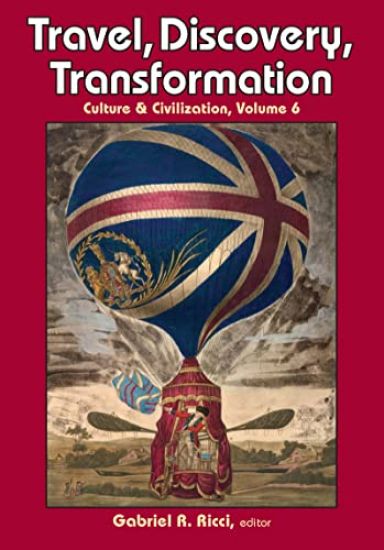
This latest volume in the Culture & Civilization series gathers interdisciplinary voices to present a collection of essays on travel and travel narratives. The essays span a range of topics from iconic ancient travel stories to modern tourism. They discuss travel in the ancient world, modern heroic travels, the literary culture of missionary travel, the intersection of fiction and travel narratives, modern literary traditions and visions of Greece, personal identity, and expatriation. Essays also address travel memoirs, the re-imagining of worlds through travel, transformed landscapes and animals in travel narratives, diplomacy, English women travel writers, and pilgrimage and health in the medieval world. The history of travel writing takes in multiple pursuits: exploration and conquest, religious pilgrimage and missionary work, educational tourism and diplomacy, scientific and personal discovery, and natural history and oral history. As a literary genre, it has enhanced a wide range of disciplines, including geography, ethnography, anthropology, and linguistics. Moreover, twenty-first-century interests in travel and travel writing have produced a global framework that promises to expand travel's theoretical reach into the depths of the Internet, thus challenging our conventional concept of what it means to travel. The fact that travel and travel writing have a prehistory that is embedded in foundational religious texts and ancient narratives of journey, like the Odyssey and the Epic of Gilgamesh, makes both travel and travel writing fundamental and essential expressions of humanity. Travel encourages writing, particularly as epistolary and poetic chronicling. This is clearly a history and tradition that began with human communication and which has kept pace with our collective development.
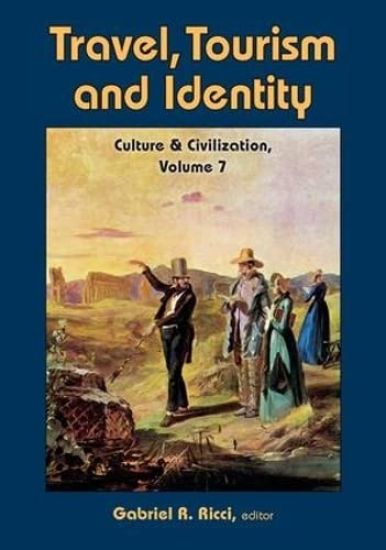
Travel, Tourism and Identity addresses the psychological and social adjustments that occur when people make contact with others outside their social, cultural, or linguistic groups. Whether such contact is the result of tourism, seeking exile, or relocating abroad, the volume's contributors demonstrate how one's identity, cultural assumptions, and worldview can be brought into question. In some cases, the traveller finds that bridging the social and cultural gap between himself and the new society is fairly easy. In other cases, the traveller discovers that reorienting himself requires absorbing a new cultural history and traditions. The contributors argue that making these adjustments will surely enhance the traveller's or tourist's experience; otherwise the traveller or tourist will be at risk of becoming a marginalized figure, one disconnected from the society that surrounds him. This latest volume in the Culture & Civilization series features a collection of essays on travel and tourism. The essays cover a range of topics from historical travels to modern social identities. They discuss ancient travels, contemporary travels in Europe, Africa and sustainable eco-tourism, and the politics of tourism. Essays also address experiences of Grenada's "Spice Island" identity, and the effects of globalization and migrations on personal identity.
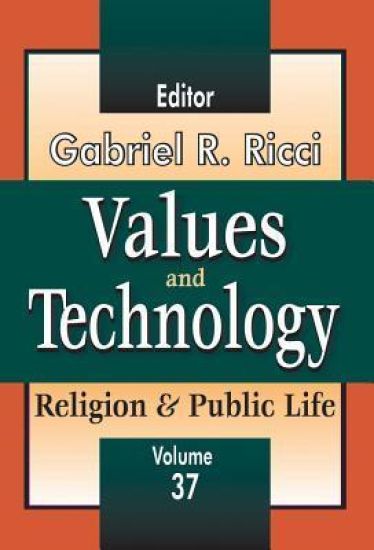
In 1749 Jean-Jacques Rousseau's Discourse on the Arts and Sciences, surprised leading Enlightenment thinkers who had enthusiastically upheld the positive benefits of humanity's technological advance. Voltaire, who celebrated the ends of civilization, mocked Rousseau's praise for an original creative state of nature in which man enjoyed an optimum level of freedom. Given the unprecedented intrusion of technology into our lives, the question raised by Rousseau's critique may be even more pertinent. In this volume of Religion and Public Life contributors address some of the challenges to conventional morality brought on by the technological augmentation of the social structure. John Barker's essay explores how Luciano Floridi's philosophy of technology has complicated the conventional way of determining what ought to receive moral consideration. Fani Zlatarova provides a practical guide for incorporating ethical components into teaching computer technology. Grant Havers explores the controversies surrounding the biogenetic explosion through an examination of the competing philosophical perspectives and Christopher Vassilopolos examines the science-based justification for taking life. Gabriel R. Ricci looks at recent political history in the United States in order to highlight the sometimes uneasy relationship between science and social policy. Volume 37 is a welcome addition to the acclaimed Religion and Public Life series.
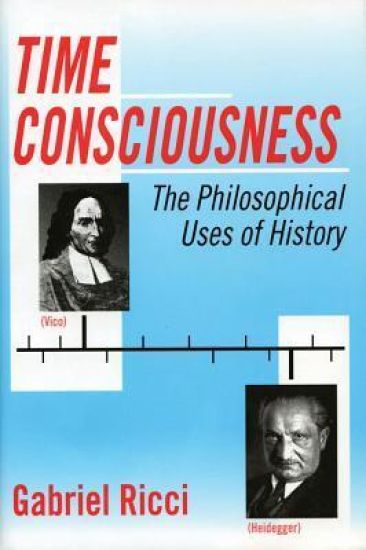
Traditional metaphysics is hostile to the world of the senses. From Plato to Kant, philosophers have demanded that the sensuous and corporeal aspects of existence be circumscribed by rational conditions and properties. Without these, the sensuous is unintelligible. This elevation of the ability to reason as quintessentially human has obscured efforts to acknowledge the pivotal role the historical imagination has in grounding experience. In The Philosophical Uses of History, Gabriel Ricci explores the opposite tendency, from Vico to Heidegger, to emphasize temporal and historical foundations of human consciousness. Ricci's goal is to demonstrate the reciprocity of history and philosophy. He challenges the epistemological construction of the subject-object relationship and the facile dualism originating from Descartes. Arguing that consciousness must be defined in time and space, he shows how Vico's philosophy of humanity, with its historical epistemology, resurrects the practical implications of ancient philosophy's demand that knowledge and truth derive from a productive process. Ricci analyzes Heidegger's philosophy as the modern embodiment of the temporality of consciousness, and he demonstrates the origins of his particular interpretation of human existence in Rickert's and Windelband's delineation of the historical and natural sciences. Ricci links their influence to Heidegger's dissent over Ranke's objectivist methodology, which ended with Heiddegger's emphasis of the historical character of human existence. Finally, the author argues for the compatibility of Heidegger's early existential analytic and his later investigation of poetry and his critique of the technological idiom which had colonized philosophy. In doing so, Ricci highlights the metaphoric and figurative predisposition of mind as synthetic functions of historical consciousness. In offering a thoroughly temporal interpretation of mind, Ricci illuminates the relationship between philosophy and history, poetry, the cognitive sciences, and the natural sciences. This work will be of interest to philosophers, literary scholars, and cultural historians.
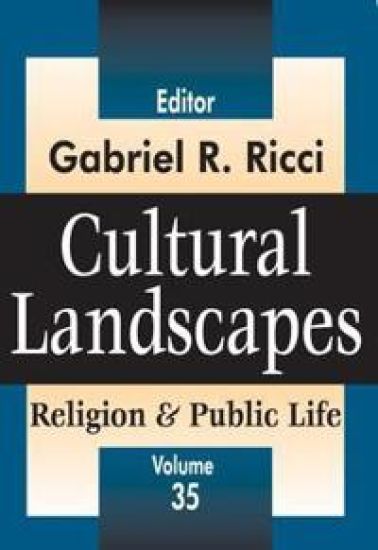
Adualism between man and nature has been a persistent feature of Western thought and spirituality from ancient times to the present. The opposition of mind and body, consciousness and world has tended to obscure the ways in which humans are ecologically part of interconnected systems, some of which are obvious while others operate in hidden but life-sustaining ways. Cultural Landscapes explores the physical ways in which we are intimately linked to the land and the intellectual and aesthetic connections human consciousness has with the landscape. Following the editor's introductory essay, the lead article by Jame Schaeffer, "Quest for the Common Good: A Collaborative Public Theology for a Life-Sustaining Climate," assesses the lightning rod issue of global warming in the context of a public and ecumenical theology and sets the tone for this normative assessment of our relationship with nature. Likewise, David Kenley's essay, "Three Gorges be Dammed: The Philosophical Roots of Environmentalism in China," reveals the traditional philosophical and cultural values that can sustain a vital environmentalism in the East. David Brown's historical insights into the use of the American landscape to define historical writing complement Patricia Likos-Ricci's historical treatment of nineteenth-century landscape painting and the first call to preserve wilderness in the United States. Matt Willen, "An Feochszn," and David Martinez, "What Worlds are Made of: The Lakota Sense of Place," both demonstrate how space is transformed into place through song and mythic tales. On a metaphysical note, Andreas Philippopoulos-Mihalopolos' essay "On the Line of the Horizon, Anxiety in de Chirico's Metaphysical Spaces," provides the reader with psychological and existential insights into the disorienting paintings of de Chirico, and Gabriel Ricci's concluding essay tours the landscape that underpins Heidegger's ontological speculations. The contributions to this volume are posited on the belief that culture, society, and human history are ultimately rooted in the natural world. This integration may explain why humanity has always looked to nature for moral and ethical guidelines. Gabriel R. Ricci is associate professor of humanities and the chair of the Department of History at Elizabethtown College in Pennsylvania. He is the author of Time Consciousness: The Philosophical Uses of History, published by Transaction.
The present work is a study in the history of an enduring idea that defines the inner life of the mind and also supplied a substratum for the twentieth-century literary imagination and substance for philosophical thinking, producing a unique alliance between philosophy and literature. This special union was forged by a new holistic conception of time which supplemented, and even supplanted, the conventional sense of chronological time. This temporal turn animated the existential insights of Husserl, Heidegger, and Bergson, but it was grounded in nineteenth-century advances in the biological sciences, the hegemony of Hegelianism, and even stretched back to Augustine's early meditation on time in Book XI of his Confessions. In linking together a set of thinkers who addressed this form of temporal consciousness, Gabriel R. Ricci illuminates a common intellectual preoccupation from the vantage point of a concept. The authors do not together assemble the thought; it is the thought that produced a collective voice. This voice appears in the episodes outlined in each chapter, and they are framed by an introduction, which explores Joseph Frank's insights into the new spatial forms in literature, and an epilogue, which resurrects J. W. Dunne's peculiar dream experiments and theory of precognition. Ricci employs Frank's seminal essay to draw comparisons between literature's adaptation of the new time sense and philosophy's expression of the new compatibility between space and time. Dunne's theory serves to demonstrate the continuity between literary form and philosophical speculation.
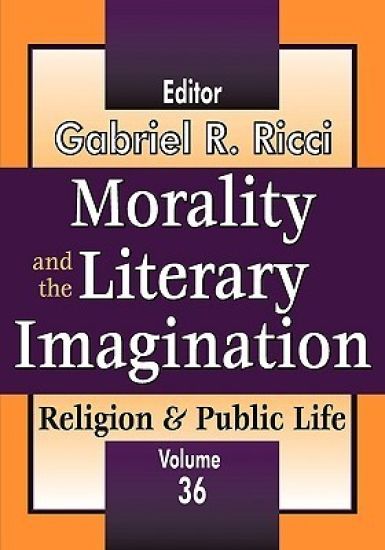
In a letter to Boccaccio, Petrarch extolled the virtue of poetry and letters for promoting an understanding of both human nature and morals. The letter was designed to console him after hearing a prediction that he was soon to die and that he ought to renounce poetry. The prophecy came from an elder renowned for his piety, but Petrarch admonished that too often dishonesty and fraud are couched in religious sentiments. Nothing, not even death, according to Petrarch, ought to divert us from literature. For Petrarch, Virgil was the source for understanding how literary studies not only promote eloquence, but enhance morals. If anything, literature dispels the fear of death. The claims of this volume is that it may be the case that the virtuous life can be achieved by those ignorant of letters but a more direct and certain route is guaranteed by a devotion to literature. The collected works in this new volume of the Transaction series Religion and Public Life heeds Petrarch's advice that literature not only orients us to life's developmental stages, it can provide us with a more complete understanding of the human character while artfully advancing morals. To this end, Michelle Darnell's opening chapter entitled "A New Age of Reason" explains how existentialism is an argument for how literature can take on philosophical form, not as formal argument, but as persuasive narrative. Over the objections of even those who study Sartre, Darnell uses Sartre's The Age of Reason as a model and shows how his literary output was a legitimate philosophical inquiry. In addition to the Darnell piece, the volume boasts a series of outstanding and innovative works by scholars in the field. Taken together as a whole, these authors not only illustrate the moral consequences of an original choice, but oblige the reader to explore the ramifications of such a choice in one's own life.
The latest volume of Culture and Civilization gathers contemporary exponents of critical theory, specifically those based in the Frankfurt School of social thinking. Collectively, this volume demonstrates the continuing intellectual viability of critical theory, which challenges the limits of positivism and materialism. We may question how the theoretical framework of Marxism fails to coordinate with the conditions that defined labor forces, as did Max Horkheimer and Theodor Adorno, or deliberate on the conditions that justify the claims we make through public discourse, as did Jurgen Habermas. Or, like Axel Honneth, we may reflect on recognition theory as a means of addressing social problems. Whatever our objective, the focus of critical theory continues to be the consciousness of established "positive" interests that, without debate, may sustain injustices or conditions which the public may not have chosen to impose. Throughout the hardship of punitive dismissal and exile in the 1930s and 40s, and the shock of the New Left in the 1960s and 70s, and finally the later linguistic and pragmatic turn, the Frankfurt School has sustained the idea that people escape disaffection and alienation when their knowledge of the social and political world is dialectically mediated through creative interaction. This new volume in the Culture and Civilization series continues the tradition of critical thought.
Travel, Tourism and Identity addresses the psychological and social adjustments that occur when people make contact with others outside their social, cultural, or linguistic groups. Whether such contact is the result of tourism, seeking exile, or relocating abroad, the volume's contributors demonstrate how one's identity, cultural assumptions, and worldview can be brought into question. In some cases, the traveller finds that bridging the social and cultural gap between himself and the new society is fairly easy. In other cases, the traveller discovers that reorienting himself requires absorbing a new cultural history and traditions. The contributors argue that making these adjustments will surely enhance the traveller's or tourist's experience; otherwise the traveller or tourist will be at risk of becoming a marginalized figure, one disconnected from the society that surrounds him. This latest volume in the Culture & Civilization series features a collection of essays on travel and tourism. The essays cover a range of topics from historical travels to modern social identities. They discuss ancient travels, contemporary travels in Europe, Africa and sustainable eco-tourism, and the politics of tourism. Essays also address experiences of Grenada's "Spice Island" identity, and the effects of globalization and migrations on personal identity.
This latest volume in the Culture & Civilization series gathers interdisciplinary voices to present a collection of essays on travel and travel narratives. The essays span a range of topics from iconic ancient travel stories to modern tourism. They discuss travel in the ancient world, modern heroic travels, the literary culture of missionary travel, the intersection of fiction and travel narratives, modern literary traditions and visions of Greece, personal identity, and expatriation. Essays also address travel memoirs, the re-imagining of worlds through travel, transformed landscapes and animals in travel narratives, diplomacy, English women travel writers, and pilgrimage and health in the medieval world. The history of travel writing takes in multiple pursuits: exploration and conquest, religious pilgrimage and missionary work, educational tourism and diplomacy, scientific and personal discovery, and natural history and oral history. As a literary genre, it has enhanced a wide range of disciplines, including geography, ethnography, anthropology, and linguistics. Moreover, twenty-first-century interests in travel and travel writing have produced a global framework that promises to expand travel's theoretical reach into the depths of the Internet, thus challenging our conventional concept of what it means to travel. The fact that travel and travel writing have a prehistory that is embedded in foundational religious texts and ancient narratives of journey, like the Odyssey and the Epic of Gilgamesh, makes both travel and travel writing fundamental and essential expressions of humanity. Travel encourages writing, particularly as epistolary and poetic chronicling. This is clearly a history and tradition that began with human communication and which has kept pace with our collective development.
The present work is a study in the history of an enduring idea that defines the inner life of the mind and also supplied a substratum for the twentieth-century literary imagination and substance for philosophical thinking, producing a unique alliance between philosophy and literature. This special union was forged by a new holistic conception of time which supplemented, and even supplanted, the conventional sense of chronological time. This temporal turn animated the existential insights of Husserl, Heidegger, and Bergson, but it was grounded in nineteenth-century advances in the biological sciences, the hegemony of Hegelianism, and even stretched back to Augustine's early meditation on time in Book XI of his Confessions. In linking together a set of thinkers who addressed this form of temporal consciousness, Gabriel R. Ricci illuminates a common intellectual preoccupation from the vantage point of a concept. The authors do not together assemble the thought; it is the thought that produced a collective voice. This voice appears in the episodes outlined in each chapter, and they are framed by an introduction, which explores Joseph Frank's insights into the new spatial forms in literature, and an epilogue, which resurrects J. W. Dunne's peculiar dream experiments and theory of precognition. Ricci employs Frank's seminal essay to draw comparisons between literature's adaptation of the new time sense and philosophy's expression of the new compatibility between space and time. Dunne's theory serves to demonstrate the continuity between literary form and philosophical speculation.
In 1749 Jean-Jacques Rousseau's Discourse on the Arts and Sciences, surprised leading Enlightenment thinkers who had enthusiastically upheld the positive benefits of humanity's technological advance. Voltaire, who celebrated the ends of civilization, mocked Rousseau's praise for an original creative state of nature in which man enjoyed an optimum level of freedom. Given the unprecedented intrusion of technology into our lives, the question raised by Rousseau's critique may be even more pertinent. In this volume of Religion and Public Life contributors address some of the challenges to conventional morality brought on by the technological augmentation of the social structure. John Barker's essay explores how Luciano Floridi's philosophy of technology has complicated the conventional way of determining what ought to receive moral consideration. Fani Zlatarova provides a practical guide for incorporating ethical components into teaching computer technology. Grant Havers explores the controversies surrounding the biogenetic explosion through an examination of the competing philosophical perspectives and Christopher Vassilopolos examines the science-based justification for taking life. Gabriel R. Ricci looks at recent political history in the United States in order to highlight the sometimes uneasy relationship between science and social policy. Volume 37 is a welcome addition to the acclaimed Religion and Public Life series.
In a letter to Boccaccio, Petrarch extolled the virtue of poetry and letters for promoting an understanding of both human nature and morals. The letter was designed to console him after hearing a prediction that he was soon to die and that he ought to renounce poetry. The prophecy came from an elder renowned for his piety, but Petrarch admonished that too often dishonesty and fraud are couched in religious sentiments. Nothing, not even death, according to Petrarch, ought to divert us from literature. For Petrarch, Virgil was the source for understanding how literary studies not only promote eloquence, but enhance morals. If anything, literature dispels the fear of death. The claims of this volume is that it may be the case that the virtuous life can be achieved by those ignorant of letters but a more direct and certain route is guaranteed by a devotion to literature. The collected works in this new volume of the Transaction series Religion and Public Life heeds Petrarch's advice that literature not only orients us to life's developmental stages, it can provide us with a more complete understanding of the human character while artfully advancing morals. To this end, Michelle Darnell's opening chapter entitled "A New Age of Reason" explains how existentialism is an argument for how literature can take on philosophical form, not as formal argument, but as persuasive narrative. Over the objections of even those who study Sartre, Darnell uses Sartre's The Age of Reason as a model and shows how his literary output was a legitimate philosophical inquiry. In addition to the Darnell piece, the volume boasts a series of outstanding and innovative works by scholars in the field. Taken together as a whole, these authors not only illustrate the moral consequences of an original choice, but oblige the reader to explore the ramifications of such a choice in one's own life.
A dualism between man and nature has been a persistentfeature of Western thought and spirituality from ancient times to the present. The opposition of mind and body, consciousness and world has tended to obscure the ways in which humans are ecologically part of interconnected systems, some of which are obvious while others operate in hidden but life-sustaining ways. CulturalLandscapes explores the physical ways in which we are intimately linked to the land and the intellectual and aesthetic connections human consciousness has with the landscape.
There is growing academic interest in addressing the relationship of religion and science. There are also very generous funding sources that encourage scientists to demonstrate the reality of purpose in the world. Still, there are organizations offering support to community groups dedicated to discussing religion and science. Contributors explore this development in Faith in Science. The intellectual initiatives analyzed here seem far removed from the deep religious and cultural divisions that dominate the contemporary geopolitical landscape. This emerging industry, however, originates in a cultural debate that set the evolutionary view of Nature against revelation's conception of Nature as the fulfillment of God's creation. The two worldviews are hopelessly mismatched, although scientific creationism purports to have uncovered scriptural evidence that invites another look. Along the way, the imposition of theological themes onto the geological record became a tendency for many naturalists. Peter Medawar's scathing review of Teilhard de Chardin's The Phenomenon of Man in 1961 remains as a warning for those who mix Darwinian orthodoxy and theological parlance. The challenge, Medawar would have us believe, is not to abandon the exacting methods and logic of science in favor of a poetic dream of how consciousness is a manifestation of energy. But does this mean that science and religion are only methodologically demarcated? Must we insist on the traditional boundaries instituted by scientific conventions and religious beliefs? From various historical, religious, and scientific vantage points, contributors to this volume, who include Guy Consolmagno, Donald Kraybill, David Ray Griffin, Gerald L. Schroeder, Robert Pollack, Robert Pennock, Carol Wayne Wright, Bill Durbin, Kathleen Duffy, and Anthony Matteo, take up these challenges.
Memory is not a mere repository for past events. This was Henri Bergson's fundamental claim about consciousness. In distinguishing our psychic constitution by its sense of the past, Bergson differentiates our perception of time from a process in which one instant merely replaces another. While Bergson cast his ideas in terms of the biological sciences, his analysis did not neglect the moral impulse that accompanies the condensation of history with which we continuously live. Classifying human existence in this way bears on ethical and political questions. How such questions can plague the memory of a people and the entire human community is addressed in Justice and the Politics of Memory. The contributors explore the manner in which cultural and psychic violation undermine collective identity, and destroy traditions. They raise troubling questions on how recompense and reconciliation is possible after abominable wrongs have been systematically perpetrated against a community. Faced with the burden of memory, those committed to the righting of wrongs are faced with pursuing an elusive justice that sometimes includes levying reparations and memorializing horrific historical episodes. Guided by the muse of forgiveness, restoration and a more harmonious future are likely to be rooted in the sources of spirituality that had been previously eclipsed by the conquering and homogenizing historical processes. This volume includes Heribert Adam's "Collective Reckoning with a Criminal Regime," Jeffrey Olick's "Lessons from and for Germany," James Hatley's "Levinas, Witness and Politics," James E. Young's "Germany's Holocaust Memorial Problem--and Mine," Tim Giago's "Killing the Indian to Save the Child: The Near Death of Spirituality," Jordan B. Peterson's and Maja Djikic's "Running Ahead: You Can Neither Remember Nor Forget What You Do Not Understand," Derick Wilson's "Where Religion Confuses yet Faith Gives Hope: Conflict Resolution in Northern Ireland," and Leonard Kaplan's "Justice Perfected: Cinematic Exemplifications," and an introduction, "Morality and Memory," by the editor.
Traditional metaphysics is hostile to the world of the senses. From Plato to Kant, philosophers have demanded that the sensuous and corporeal aspects of existence be circumscribed by rational conditions and properties. Without these, the sensuous is unintelligible. This elevation of the ability to reason as quintessentially human has obscured efforts to acknowledge the pivotal role the historical imagination has in grounding experience. In The Philosophical Uses of History, Gabriel Ricci explores the opposite tendency, from Vico to Heidegger, to emphasize temporal and historical foundations of human consciousness. Ricci's goal is to demonstrate the reciprocity of history and philosophy. He challenges the epistemological construction of the subject-object relationship and the facile dualism originating from Descartes. Arguing that consciousness must be defined in time and space, he shows how Vico's philosophy of humanity, with its historical epistemology, resurrects the practical implications of ancient philosophy's demand that knowledge and truth derive from a productive process. Ricci analyzes Heidegger's philosophy as the modern embodiment of the temporality of consciousness, and he demonstrates the origins of his particular interpretation of human existence in Rickert's and Windelband's delineation of the historical and natural sciences. Ricci links their influence to Heidegger's dissent over Ranke's objectivist methodology, which ended with Heiddegger's emphasis of the historical character of human existence. Finally, the author argues for the compatibility of Heidegger's early existential analytic and his later investigation of poetry and his critique of the technological idiom which had colonized philosophy. In doing so, Ricci highlights the metaphoric and figurative predisposition of mind as synthetic functions of historical consciousness. In offering a thoroughly temporal interpretation of mind, Ricci illuminates the relationship between philosophy and history, poetry, the cognitive sciences, and the natural sciences. This work will be of interest to philosophers, literary scholars, and cultural historians.