
Kirjailija
Gabriel Rosenstock
Kirjat ja teokset yhdessä paikassa: 52 kirjaa, julkaisuja vuosilta 2007–2026, suosituimpiin kuuluu I Met a Woman Near Ballycanew. Vertaile teosten hintoja ja tarkista saatavuus suomalaisista kirjakaupoista.
52 kirjaa
Kirjojen julkaisuvuodet: 2007–2026.
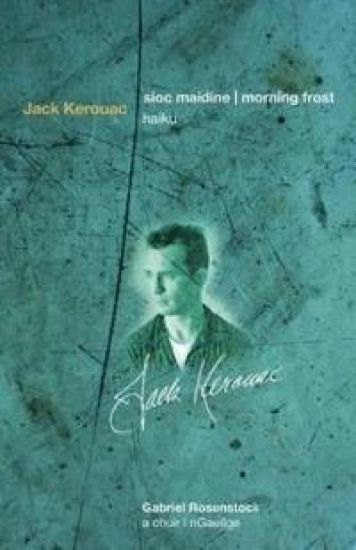
For Jack Kerouac the heart of the haiku was ""the objective beautiful sad ungraspable world as it is."" Translated for the first time into Irish, Kerouac's poems are presented in a facing-page English- and Irish-language edition.
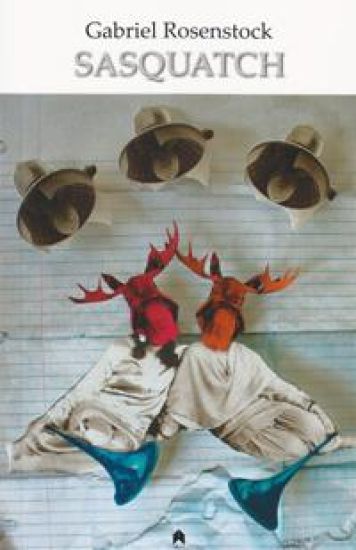
A legendary animal, the Sasquatch is hunted by many but seen by very few. These philosophical reflections about the disappearance of species, both real and imagined, can also be read as a dirge for a species, culture, or language in irreversible decline.
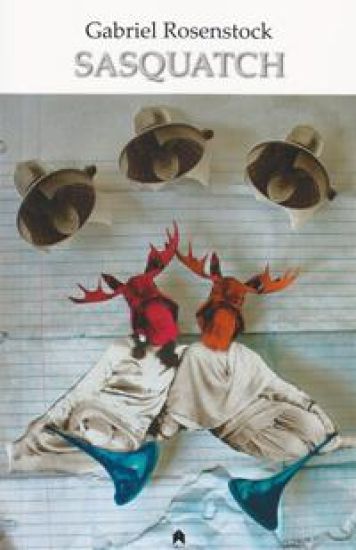
A legendary animal, the Sasquatch is hunted by many but seen by very few. These philosophical reflections about the disappearance of species, both real and imagined, can also be read as a dirge for a species, culture, or language in irreversible decline.
As with its European neighbours, Ireland is home to a number of festivals which celebrate the art of travel writing, the annual Lismore Festival of Travel Writing in County Waterford for example. The modern genre of travel writing as practiced by Irish writers is very different to much of what passed for travel writing in Ireland, until very recently. In the colonial context that defined Irish history and culture prior to the last century, travel writing was frequently viewed an adjunct to the all-knowing imperial gaze. It was an element in that tradition which sought to know, to define and to categorise peoples and their places. It was part of the ordering process that was the colonial project. It was a celebration of knowing which we now realise was frequently a charade. In many cases, as with the travel accounts produced by members of the colonial class in Eastern Europe or Asia, these descriptions of other peoples and cultures were produced in accordance with an inherited and (sometimes-exoticised) tradition or episteme as littered with cliché and stereotype. In many cases the writers or hobbyists in question knew next to nothing about the people they were describing; they frequently had only the vaguest knowledge concerning the cultures or languages that they were classifying . This book usurps this tradition. While the vast majority of Irish travelogues as written in the past two centuries were written in English, this travelogue was written (and published originally) in Irish before later being translated and re-shaped in English .
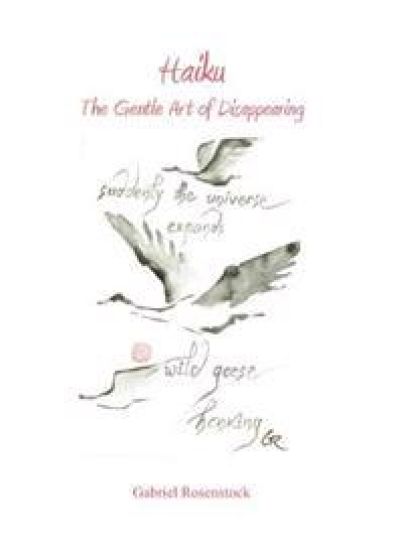
In Haiku, the Gentle Art of Disappearing, a renowned Irish poet shows us how haiku may be used as a powerful tool for spiritual interpenetration. This implies that we divest ourselves of the ever-chattering mind, shed the voracious ego and enjoy momentary glimpses of unity with natural phenomena. In the companion volume, Haiku Enlightenment, he further explores these thoroughly delightful experiences and invites us to disappear! Haiku is dynamically focussed on the present, from season to season, from day to day, from hour to hour, from second to second. But how illusory, how fleeting is that present moment? How caught up is it with the past, with the future? Can we stop its flow? Are there more ways than one of experiencing its essence? If we experience a moment intensely enough, might we disappear? Surprises await those readers who may have considered haiku to be nothing more than an innocuous three-line poem. A renowned poet shares his experience of haiku and its potential to surprise us again and again into a sudden awakening and thus to a deeper sense of what it is to be truly alive. His remarkably refreshing insights have delighted confreres around the world.

Gabriel Rosenstock schreibt auf irisch, einer Sprache, die als ländlich und altmodisch galt, und gewann dieser Sprache eine Poesie ab, die selbst deren Sprecher erstaunte. Aber noch verwunderlicher sind seine Themen, seine Interessen, die oft über das Örtliche hinaus bis zu den Traditionen des Orients reichen, zu Rumi, zu den Adaptionen Ezra Pounds aus dem Chinesischen, zu der reichen Mystik Indiens. Aus diesen diversen Einflüssen formt Rosenstock seine unerwartete und oft berührende Lyrik.