Kirjojen hintavertailu – 12 903 724 kirjaa ja 27 kauppaa

Kirjailija

Gabrielle Appleby

Kirjat ja teokset yhdessä paikassa: 5 kirjaa, julkaisuja vuosilta 2016–2026, suosituimpiin kuuluu The Rule of Law in Australia. Vertaile teosten hintoja ja tarkista saatavuus suomalaisista kirjakaupoista.

5 kirjaa

Kirjojen julkaisuvuodet: 2016–2026.

The Rule of Law in Australia

The Rule of Law in Australia

Gabrielle Appleby; Megan Davis

BLOOMSBURY PUBLISHING PLC
2026
sidottu
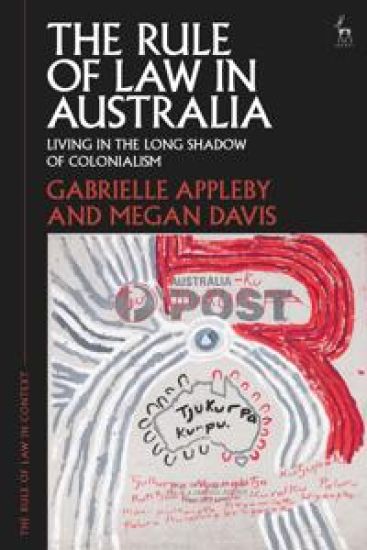
This book investigates core legal-political cultural myths of the Australian nation by canvassing, challenging and recasting some of the well-understood debates around, and invocations of, ‘the rule of law’ in Australia. It foregrounds one of the most enduring and prominent manifestations of these debates: claims to state sovereignty and rule of law in a system that has an incoherent legal foundation in its intentional ignorance of, and arbitrary violence perpetrated against, First Nations, their people, their sovereignty and their law. It examines the claims and celebrations of colonial rule of law achievements; constitutional rule of law protections; and the rule of law as tool to delineate and circumscribe the role of judges in the State. It presents a survey of the constitutional and legal principles and institutions and explores the socio-political aspects of rule of law in the country and how rule of law is experienced. With a focus on the legacy of the treatment of First Nations people, the book looks at how the Australia’s rule of law institutions and machinery continue to exclude and fail vulnerable, marginalised and publicly reviled groups. Exploring these arguments through historical and contemporary case studies, including native title negotiations, anti-terrorism regimes, the government’s response to the COVID-19 pandemic, the push for constitutional enshrinement of a First Nations Voice, and the Royal Commission into the government’s ‘Robodebt’ inquiry, this book shows the inescapable messiness of rule of law in Australia as a legal and political concept, instrumentalised and weaponised across its history.

The Failure of the Voice Referendum and the Future of Australian Democracy
Australia, and Australians, stood at a crossroads in October 2023. Before them lay a new and more accommodating way to practice democracy, a future in which First Nations people were given a representative voice in political decisions in this country. After months of a referendum campaign, struggling over foundational ideals and questions of national identity, misinformation, disinformation and racism, the proposal was overwhelmingly rejected in every Australian state and nationally. The referendum campaign was Australia’s first since the failed attempt at a republic in 1999. The political and media environment in which the referendum campaign would unfold was fundamentally changed. These changes included the growth of social media, growing distrust of major political parties, and the rise of fake news and populist politics. This book brings together a diverse set of perspectives to explore the many and complex political, social and historical factors that influenced the conduct of the campaign and led to the loss. It includes contributions from lawyers, political scientists, historians, human rights experts, health policy experts, land rights campaigners and Indigenous affairs policy experts. The contributors in this book include First Nations and non-Indigenous authors, often writing collaboratively. The majority of the views offered, based in expertise and experience, are those of First Nations. Their writings place the referendum loss in the context of political failure and attempts at structural reform, and Australia’s terrible record at amending the Constitution through referendums. The book traces the legal and political development of the draft constitutional provision, and the influence of legal risk on the campaign. A major focus of the book is the impact of misinformation and disinformation, which was rife during the campaign, and media reporting of it. The role that civil society and corporate Australia played in the campaign is considered. The Voice campaign will be placed in the context of Aboriginal and Torres Strait Islander politics and previous attempts at representation. The book will also place the call for Voice in the context of its ongoing relevance and imperative in Aboriginal and Torres Strait Islander affairs, explaining the power of representation, the Voice as an expression of sovereignty, and the need for Voice to pursue other structural reforms such as treaty and to realise the promise of land rights. The book concludes by reflecting on the role that history played in the campaign and the implications of the campaign for the practice of Australian history. The book holds lessons for future constitutional change, Indigenous recognition, structural reform and Australia’s democracy. It also looks, with constructive pragmatism, at the future direction of First Nations structural reform in Australia and the practice of democracy.
The Role of the Solicitor-General

The Role of the Solicitor-General

Gabrielle Appleby

Hart Publishing
2018
nidottu
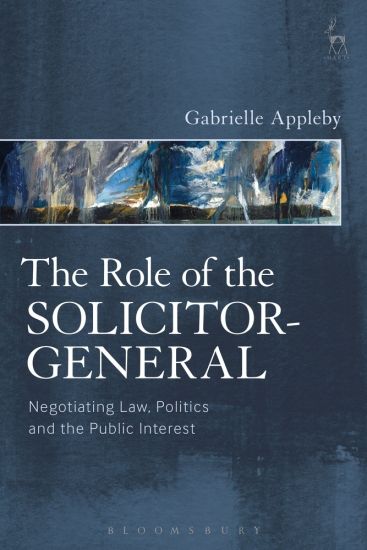
Behind every government there is an impressive team of hard-working lawyers. In Australia, the Solicitor-General leads that team. A former Attorney-General once said, ‘The Solicitor-General is next to the High Court and God.’ And yet the role of government lawyers in Australia, and specifically the Solicitor-General as the most senior of government lawyers, is under-theorised and under-studied. The Role of the Solicitor-General: Negotiating Law, Politics and the Public Interest goes behind the scenes of government – drawing from interviews with over 45 government and judicial officials – to uncover the history, theory and practice of the Australian Solicitor-General. The analysis reveals a role that is of fundamental constitutional importance to ensuring both the legality and the integrity of government action, thus contributing to the achievement of rule-of-law ideals. The Solicitor-General also works to defend government action and prosecute government policies in the court, and thus performs an important role as messenger between the political and judicial branches of government. But the Solicitor-General’s position, as both an internal integrity check on government and an external warrior for government, gives rise to competing pressures: between the law, politics and the public interest. The office of the Solicitor-General in Australia has evolved many characteristics across the almost two centuries of its history in an attempt to navigate these tensions. These pressures are not unique to the Australian context. The understanding of the Australian position provided by this book is informed by, and will inform, comparative analysis of the role of government lawyers across the world.
The Tim Carmody Affair

The Tim Carmody Affair

Rebecca Ananian-Welsh; Gabrielle Appleby; Andrew Lynch

NewSouth Publishing
2016
nidottu
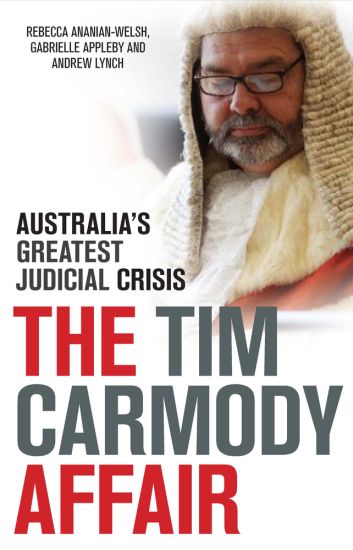
In 2014 when Tim Carmody, a former police officer, was sworn in as Chief Justice of Queensland, he had been Chief Magistrate for only nine months and had never served on the Supreme Court. It was one of the most controversial judicial appointments in Australia’s history. Chaos ensued. Appointed by then-premier Campbell Newman, Carmody lacked the experience and nous to hold Queensland’s judicial system together. How could someone with a limited judicial background be appointed to such a powerful position? The Tim Carmody Affair explores his damaging and divisive tenure and the judicial rebellion that followed. It proposes ways Australia can improve the process of judicial appointments to avoid this kind of controversy again.
The Role of the Solicitor-General

The Role of the Solicitor-General

Gabrielle Appleby

Hart Publishing
2016
sidottu
Behind every government there is an impressive team of hard-working lawyers. In Australia, the Solicitor-General leads that team. A former Attorney-General once said, ‘The Solicitor-General is next to the High Court and God.’ And yet the role of government lawyers in Australia, and specifically the Solicitor-General as the most senior of government lawyers, is under-theorised and under-studied. The Role of the Solicitor-General: Negotiating Law, Politics and the Public Interest goes behind the scenes of government – drawing from interviews with over 45 government and judicial officials – to uncover the history, theory and practice of the Australian Solicitor-General. The analysis reveals a role that is of fundamental constitutional importance to ensuring both the legality and the integrity of government action, thus contributing to the achievement of rule-of-law ideals. The Solicitor-General also works to defend government action and prosecute government policies in the court, and thus performs an important role as messenger between the political and judicial branches of government. But the Solicitor-General’s position, as both an internal integrity check on government and an external warrior for government, gives rise to competing pressures: between the law, politics and the public interest. The office of the Solicitor-General in Australia has evolved many characteristics across the almost two centuries of its history in an attempt to navigate these tensions. These pressures are not unique to the Australian context. The understanding of the Australian position provided by this book is informed by, and will inform, comparative analysis of the role of government lawyers across the world.