Kirjojen hintavertailu – 12 859 819 kirjaa ja 27 kauppaa

Kirjailija

Gadi Wolfsfeld

Kirjat ja teokset yhdessä paikassa: 11 kirjaa, julkaisuja vuosilta 1994–2022, suosituimpiin kuuluu Making Sense of Media and Politics. Vertaile teosten hintoja ja tarkista saatavuus suomalaisista kirjakaupoista.

11 kirjaa

Kirjojen julkaisuvuodet: 1994–2022.

Building Theory in Political Communication

Building Theory in Political Communication

Gadi Wolfsfeld; Tamir Sheafer; Scott Althaus

OXFORD UNIVERSITY PRESS INC
2022
nidottu
In Building Theory in Political Communication, Gadi Wolfsfeld, Tamir Sheafer, and Scott Althaus present the first generalizable conceptual framework for political communication that is also falsifiable, explaining how media performance contributes to successful political performance across nations, regime types, and information systems. The book identifies three tensions in the current literature that have thus far prevented a general theory of political communication. The first is a vague understanding of what it means for media to exercise independence from politics. The second is a focus on media in wealthy, Western, and democratic countries. The third is a tendency to build interpretive frameworks that pose as theories, but that cannot be tested. To address these three tensions, this book adapts, refines, and extends the Politics-Media-Politics (PMP) principle, which states that variations in political ecosystems have a major impact on media systems, values, practices, and resources, which can then have dependent, independent, and conditional effects on political processes. With an emphasis on international comparative studies encompassing diverse political systems, the authors move beyond the field's Western focus to show that PMP is useful in a wide range of contexts and subfields. A sophisticated and timely intervention in the field of political communication, this volume presents the PMP principle to help political communication researchers adopt a broader perspective when attempting to ascertain the roles that communication plays in political processes.
Building Theory in Political Communication

Building Theory in Political Communication

Gadi Wolfsfeld; Tamir Sheafer; Scott Althaus

OXFORD UNIVERSITY PRESS INC
2022
sidottu
In Building Theory in Political Communication, Gadi Wolfsfeld, Tamir Sheafer, and Scott Althaus present the first generalizable conceptual framework for political communication that is also falsifiable, explaining how media performance contributes to successful political performance across nations, regime types, and information systems. The book identifies three tensions in the current literature that have thus far prevented a general theory of political communication. The first is a vague understanding of what it means for media to exercise independence from politics. The second is a focus on media in wealthy, Western, and democratic countries. The third is a tendency to build interpretive frameworks that pose as theories, but that cannot be tested. To address these three tensions, this book adapts, refines, and extends the Politics-Media-Politics (PMP) principle, which states that variations in political ecosystems have a major impact on media systems, values, practices, and resources, which can then have dependent, independent, and conditional effects on political processes. With an emphasis on international comparative studies encompassing diverse political systems, the authors move beyond the field's Western focus to show that PMP is useful in a wide range of contexts and subfields. A sophisticated and timely intervention in the field of political communication, this volume presents the PMP principle to help political communication researchers adopt a broader perspective when attempting to ascertain the roles that communication plays in political processes.
Making Sense of Media and Politics

Making Sense of Media and Politics

Gadi Wolfsfeld

TAYLOR FRANCIS LTD
2022
sidottu
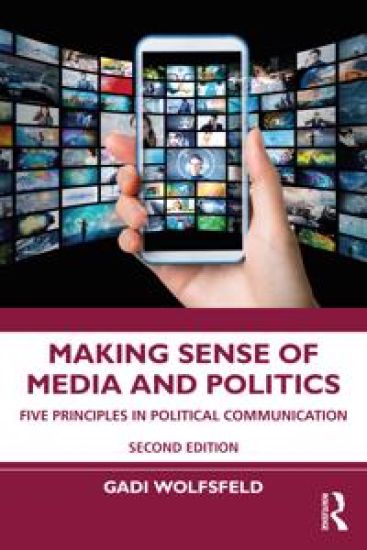
In Making Sense of Media and Politics, Gadi Wolfsfeld introduces readers to the most important concepts for examining the interrelationship of media and politics. Five major principles are used to summarize the major arguments: Political power can usually be translated into power over all forms of media. When the powerful lose control over the political environment, they also lose control over all forms of media. Every political story that appears in every form of media is biased. All forms of media are primarily dedicated to telling good stories, which can have a major impact on political processes. Many of the most important effects of the various forms of media on citizens tend to be unintentional and unnoticed. By identifying these five key principles of political communication, Wolfsfeld examines those who package and send political messages, those who transform political messages into stories, and the effects this can have on citizens, and how the more active members of the public ("users") can initiate their own stories. The result is a brief, engaging guide to help make sense of the wider world of media and politics and an essential companion to more in-depths studies of the field. New to the Second Edition Up-to-date coverage of major political events in the last decade, including the landmark US elections of 2016 and 2020. Devotes more attention to the "hybrid media system" that has developed over the last decade, providing a greater balance between traditional "news" and social media in particular. Includes more cross-national research, especially in non-Western and non-democratic countries. Refines the five principles of political communication to better reflect contemporary media trends. Covers key emerging topics including misinformation and threats to democratic institutions, new forms of political engagement, and the economic base of the various forms of media.
Making Sense of Media and Politics

Making Sense of Media and Politics

Gadi Wolfsfeld

TAYLOR FRANCIS LTD
2022
nidottu
In Making Sense of Media and Politics, Gadi Wolfsfeld introduces readers to the most important concepts for examining the interrelationship of media and politics. Five major principles are used to summarize the major arguments: Political power can usually be translated into power over all forms of media. When the powerful lose control over the political environment, they also lose control over all forms of media. Every political story that appears in every form of media is biased. All forms of media are primarily dedicated to telling good stories, which can have a major impact on political processes. Many of the most important effects of the various forms of media on citizens tend to be unintentional and unnoticed. By identifying these five key principles of political communication, Wolfsfeld examines those who package and send political messages, those who transform political messages into stories, and the effects this can have on citizens, and how the more active members of the public ("users") can initiate their own stories. The result is a brief, engaging guide to help make sense of the wider world of media and politics and an essential companion to more in-depths studies of the field. New to the Second Edition Up-to-date coverage of major political events in the last decade, including the landmark US elections of 2016 and 2020. Devotes more attention to the "hybrid media system" that has developed over the last decade, providing a greater balance between traditional "news" and social media in particular. Includes more cross-national research, especially in non-Western and non-democratic countries. Refines the five principles of political communication to better reflect contemporary media trends. Covers key emerging topics including misinformation and threats to democratic institutions, new forms of political engagement, and the economic base of the various forms of media.
Media and the Path to Peace

Media and the Path to Peace

Gadi Wolfsfeld

Cambridge University Press
2004
sidottu
This is the first book to examine in detail the roles that the news media can play in an ongoing peace process. Gadi Wolfsfeld explains how the press's role in such processes varies over time and political circumstance. He examines three major cases: the Oslo peace process between Israel and the Palestinians; the peace process between Israel and Jordan; and the process surrounding the Good Friday Agreement in Northern Ireland. Wolfsfeld's central argument is that there is a fundamental contradiction between news values and the nature of a peace process. This often leads the media to play a destructive role in attempts to make peace, but variations in the political and media environment affect significantly exactly how the media behave. Wolfsfeld shows how the media played a mainly destructive role in the Oslo peace process, but were more constructive during the Israel-Jordan process and in Northern Ireland.
Media and the Path to Peace

Media and the Path to Peace

Gadi Wolfsfeld

Cambridge University Press
2004
pokkari
This is the first book to examine in detail the roles that the news media can play in an ongoing peace process. Gadi Wolfsfeld explains how the press’s role in such processes varies over time and political circumstance. He examines three major cases: the Oslo peace process between Israel and the Palestinians; the peace process between Israel and Jordan; and the process surrounding the Good Friday Agreement in Northern Ireland. Wolfsfeld’s central argument is that there is a fundamental contradiction between news values and the nature of a peace process. This often leads the media to play a destructive role in attempts to make peace, but variations in the political and media environment affect significantly exactly how the media behave. Wolfsfeld shows how the media played a mainly destructive role in the Oslo peace process, but were more constructive during the Israel-Jordan process and in Northern Ireland.
Behind Media Marginality

Behind Media Marginality

Eli Avraham; Gadi Wolfsfeld

Lexington Books
2003
sidottu
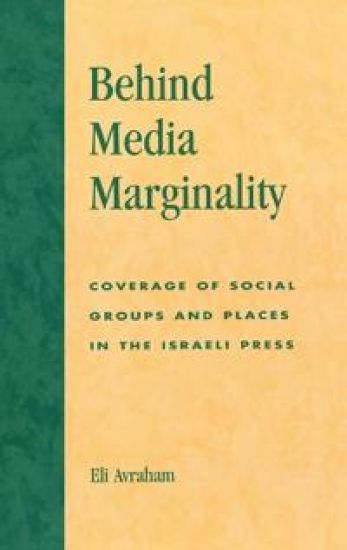
Behind Media Marginality examines the considerations and decisions that have resulted in the distorted and negative media coverage of minority groups in the Israeli media. Author Eli Avraham looks closely at media portrayals of those living in the geographic margins of Israeli kibbutzim, Jewish settlements in the West Bank, development cities, and the Israeli-Arab community from the 1960s through the 1990s. Through quantitative and qualitative analysis of newspaper articles; interviews with reporters, editors, and government spokespeople; and statistical and demographic data, Avraham isolates and explores five factors that influence the way the media covers these social groups: the group's characteristics and location, their proximity to foci of power, their social-political environment, the media's policy toward covering the group, and the group's public relations strategies in response to coverage. An analysis both of media operations and of Israeli society, this book provides important insights into the role of the media in the formation of national identity.
Media and Political Conflict

Media and Political Conflict

Gadi Wolfsfeld

Cambridge University Press
1997
pokkari
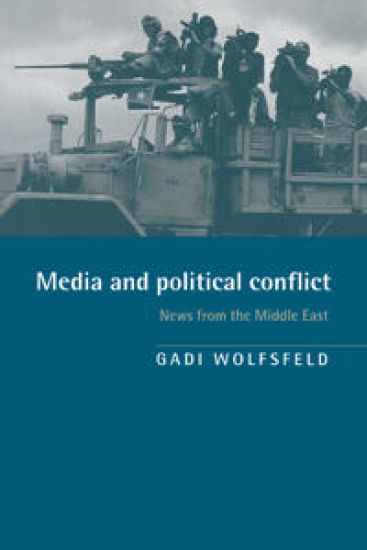
The news media have become the central arena for political conflicts today. It is, therefore, not surprising that the role of the news media in political conflicts has received a good deal of public attention in recent years. Media and Political Conflict provides readers with an understanding of the ways in which news media do and do not become active participants in these conflicts. The author’s ‘political contest’ model provides a new approach to this important issue. The best way to understand the role of the news media in politics, he argues, is to view the competition over the news media as part of a larger and more significant contest for political control. The book is divided into two parts. While the first is devoted to developing the theoretical model, the second employs this approach to analyse the role of the news media in three conflicts: the Gulf war, the Palestinian intifada, and the attempt by the Israeli right wing to derail the Israeli-Palestinian peace accord.
Media and Political Conflict

Media and Political Conflict

Gadi Wolfsfeld

Cambridge University Press
1997
sidottu
The news media have become the central arena for political conflicts today. It is, therefore, not surprising that the role of the news media in political conflicts has received a good deal of public attention in recent years. Media and Political Conflict provides readers with an understanding of the ways in which news media do and do not become active participants in these conflicts. The author's 'political contest' model provides an alternative approach to this important issue. The best way to understand the role of the news media in politics, he argues, is to view the competition over the news media as part of a larger and more significant contest for political control. The book is divided into two parts. While the first is devoted to developing the theoretical model, the second employs this approach to analyse the role of the news media in three conflicts: the Gulf war, the Palestinian intifada, and the attempt by the Israeli right wing to derail the Israeli-Palestinian peace accord.
Framing the Intifada

Framing the Intifada

Akiba A. Cohen; Gadi Wolfsfeld

Praeger Publishers Inc
1994
nidottu
The intifada, which began in December 1987, has become one of the longest running confrontations within the broad context of the Israeli-Arab conflict. This volume is not concerned with why the intifada phenomenon began, how it developed, or possible scenarios for the future. Rather, it is about communication and the intifada: what people have been saying, thinking, and writing about the conflict and about the messages being produced by the mass media. The book is a collection of studies conducted mostly in Israel and some other Western countries.
Framing the Intifada

Framing the Intifada

Akiba A. Cohen; Gadi Wolfsfeld

Praeger Publishers Inc
1994
sidottu
The intifada, which began in December 1987, has become one of the longest running confrontations within the broad context of the Israeli-Arab conflict. This volume is not concerned with why the intifada phenomenon began, how it developed, or possible scenarios for the future. Rather, it is about communication and the intifada: what people have been saying, thinking, and writing about the conflict and about the messages being produced by the mass media. The book is a collection of studies conducted mostly in Israel and some other Western countries.