

Kirjailija
Gaia Vince
Kirjat ja teokset yhdessä paikassa: 8 kirjaa, julkaisuja vuosilta 2016–2025, suosituimpiin kuuluu Das nomadische Jahrhundert. Vertaile teosten hintoja ja tarkista saatavuus suomalaisista kirjakaupoista.
8 kirjaa
Kirjojen julkaisuvuodet: 2016–2025.

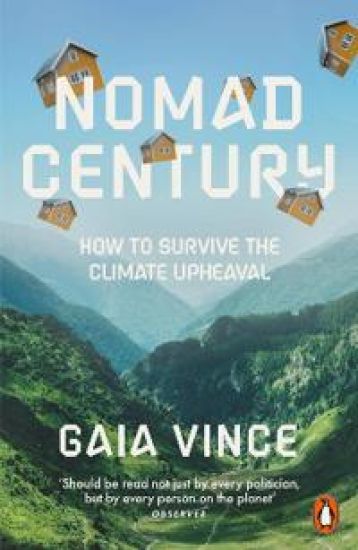
Highly Commended for the Wainwright Prize 2023, and shortlisted for the Zócalo Book Prize and the Christopher Moore Prize For Human Rights Writing 'Gaia Vince's new book should be read not just by every politician, but by every person on the planet' ObserverAn urgent investigation of the most underreported, seismic consequence of climate change: how it will force us to change where - and how - we liveWe are facing a species emergency. With every degree of temperature rise, a billion people will be displaced from the zone in which humans have lived for thousands of years. While we must do everything we can to mitigate the impact of climate change, the brutal truth is that huge swathes of the world are becoming uninhabitable. From Bangladesh to Sudan to the western United States, and in cities from Cardiff to New Orleans to Shanghai, the quadruple threat of drought, heat, wildfires and flooding will utterly reshape Earth's human geography in the coming decades. In this rousing call to arms, Royal Society Science Book Prize-winning author Gaia Vince describes how we can plan for and manage this unavoidable climate migration while we restore the planet to a fully habitable state. The vital message of this book is that migration is not the problem - it's the solution. Drawing on a wealth of eye-opening data and original reporting, Vince shows how migration brings benefits not only to migrants themselves, but to host countries, many of which face demographic crises and labour shortages. As Vince describes, we will need to move northwards as a species, into the habitable fringes of Europe, Asia and Canada and the greening Arctic circle. While the climate catastrophe is finally getting the attention it deserves, the inevitability of mass migration has been largely ignored. In Nomad Century, Vince provides, for the first time, an examination of the most pressing question facing humanity.

From an award-winning science journalist comes Nomad Century, an urgent investigation of environmental migration--the most underreported, seismic consequence of our climate crisis that will force us to change where--and how--we live. "The MOST IMPORTANT BOOK I imagine I'll ever read."--Mary Roach "An IMPORTANT and PROVOCATIVE start to a crucial conversation." --Bill McKibben "We are facing a species emergency. We can survive, but to do so will require a planned and deliberate migration of a kind humanity has never before undertaken. This is the biggest human crisis you've never heard of." Drought-hit regions bleeding those for whom a rural life has become untenable. Coastlines diminishing year on year. Wildfires and hurricanes leaving widening swaths of destruction. The culprit, most of us accept, is climate change, but not enough of us are confronting one of its biggest, and most present, consequences: a total reshaping of the earth's human geography. As Gaia Vince points out early in Nomad Century, global migration has doubled in the past decade, on track to see literal billions displaced in the coming decades. What exactly is happening, Vince asks? And how will this new great migration reshape us all? In this deeply-reported clarion call, Vince draws on a career of environmental reporting and over two years of travel to the front lines of climate migration across the globe, to tell us how the changes already in play will transform our food, our cities, our politics, and much more. Her findings are answers we all need, now more than ever.
"The MOST IMPORTANT BOOK I imagine I'll ever read."--Mary Roach FROM AN AWARD-WINNING SCIENCE JOURNALIST comes an urgent investigation of environmental migration--the most underreported, seismic consequence of our climate crisis that will force us to change where--and how--we live. "An IMPORTANT and PROVOCATIVE start to a crucial conversation." --Bill McKibben "We are facing a species emergency. We can survive, but to do so will require a planned and deliberate migration of a kind humanity has never before undertaken. This is the biggest human crisis you've never heard of." Drought-hit regions bleeding those for whom a rural life has become untenable. Coastlines diminishing year on year. Wildfires and hurricanes leaving widening swaths of destruction. The culprit, most of us accept, is climate change, but not enough of us are confronting one of its biggest, and most present, consequences: a total reshaping of the earth's human geography. As Gaia Vince points out early in Nomad Century, global migration has doubled in the past decade, on track to see literal billions displaced in the coming decades. What exactly is happening, Vince asks? And how will this new great migration reshape us all? In this deeply-reported clarion call, Vince draws on a career of environmental reporting and over two years of travel to the front lines of climate migration across the globe, to tell us how the changes already in play will transform our food, our cities, our politics, and much more. Her findings are answers we all need, now more than ever.
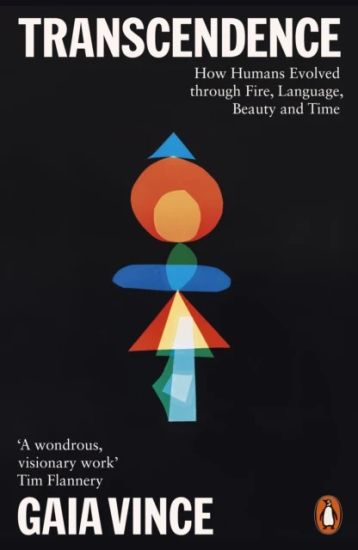
* A TIMES BEST SCIENCE BOOK OF THE YEAR *From the prize-winning author of Adventures in the Anthropocene, the astonishing story of how culture enabled us to become the most successful species on Earth'A wondrous, visionary work' Tim Flannery, author of The Weather MakersHumans are a planet-altering force. Gaia Vince argues that our unique ability - compared with other species - to determine the course of our own destiny rests on a special relationship between our genes, environment and culture going back into deep time. It is our collective culture, rather than our individual intelligence, that makes humans unique. Vince shows how four evolutionary drivers - Fire, Language, Beauty and Time - are further transforming our species into a transcendent superorganism: a hyper-cooperative mass of humanity that she calls Homo omnis. Drawing on leading-edge advances in population genetics, archaeology, palaeontology and neuroscience, Transcendence compels us to reimagine ourselves, showing us to be on the brink of something grander - and potentially more destructive. 'Richly informed by the latest research, Gaia Vince's colourful survey fizzes like a zip-wire as it tours our species' story from the Big Bang to the coming age of hypercooperation' Richard Wrangham, author of The Goodness Paradox'Wonderful ... enlightening' Robin Ince, The Infinite Monkey Cage
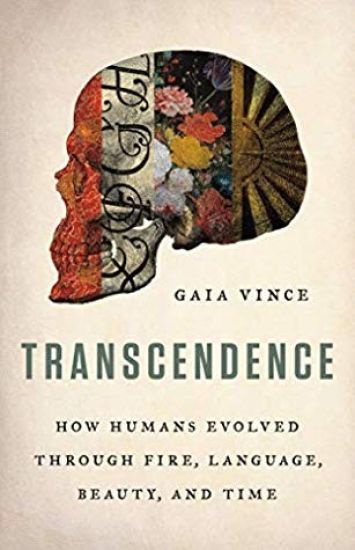
Transcendence: How Humans Evolved Through Fire, Language, Beauty, and Time
Gaia Vince
BASIC BOOKS
2020
sidottu
In the tradition of Guns, Germs, and Steel and Sapiens, a winner of the Royal Society Prize for Science Books shows how four tools enabled has us humans to control the destiny of our species "A wondrous, visionary work." --Tim Flannery, scientist and author of the bestselling The Weather Makers What enabled us to go from simple stone tools to smartphones? How did bands of hunter-gatherers evolve into multinational empires? Readers of Sapiens will say a cognitive revolution -- a dramatic evolutionary change that altered our brains, turning primitive humans into modern ones -- caused a cultural explosion. In Transcendence, Gaia Vince argues instead that modern humans are the product of a nuanced coevolution of our genes, environment, and culture that goes back into deep time. She explains how, through four key elements -- fire, language, beauty, and time -- our species diverged from the evolutionary path of all other animals, unleashing a compounding process that launched us into the Space Age and beyond. Provocative and poetic, Transcendence shows how a primate took dominion over nature and turned itself into something marvelous.
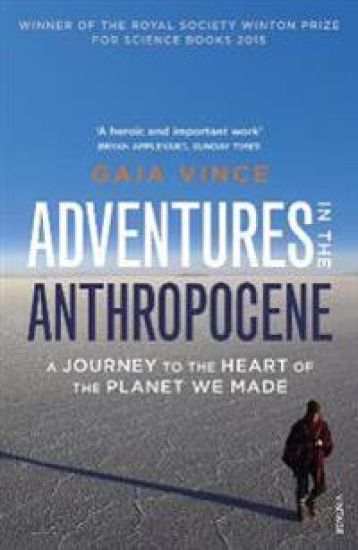
Adventures in the Anthropocene
Gaia Vince
Vintage Publishing
2016
pokkari
Halvin toimitettuna 18,70 €
From artificial glaciers in the Himalayas to painted mountains in Peru, electrified reefs in the Maldives to garbage islands in the Caribbean, the author found people doing the most extraordinary things to solve the problems that we ourselves have created.