Kirjojen hintavertailu – 12 903 725 kirjaa ja 27 kauppaa

Kirjailija

Gareth Sears

Kirjat ja teokset yhdessä paikassa: 4 kirjaa, julkaisuja vuosilta 2007–2011, suosituimpiin kuuluu Late Roman African Urbanism: Continuity and Transformation in the City. Vertaile teosten hintoja ja tarkista saatavuus suomalaisista kirjakaupoista.

4 kirjaa

Kirjojen julkaisuvuodet: 2007–2011.

The City in the Roman West, c.250 BC–c.AD 250

The City in the Roman West, c.250 BC–c.AD 250

Ray Laurence; Simon Esmonde Cleary; Gareth Sears

Cambridge University Press
2011
pokkari
The city is widely regarded as the most characteristic expression of the social, cultural and economic formations of the Roman Empire. This was especially true in the Latin-speaking West, where urbanism was much less deeply ingrained than in the Greek-speaking East but where networks of cities grew up during the centuries following conquest and occupation. This well-illustrated synthesis provides students and specialists with an overview of the development of the city in Italy, Gaul, Britain, Germany, Spain and North Africa, whether their interests lie in ancient history, Roman archaeology or the wider history of urbanism. It accounts not only for the city's geographical and temporal spread and its associated monuments (such as amphitheatres and baths), but also for its importance to the rulers of the Empire as well as the provincials and locals.
The City in the Roman West, c.250 BC–c.AD 250

The City in the Roman West, c.250 BC–c.AD 250

Ray Laurence; Simon Esmonde Cleary; Gareth Sears

Cambridge University Press
2011
sidottu
The city is widely regarded as the most characteristic expression of the social, cultural and economic formations of the Roman Empire. This was especially true in the Latin-speaking West, where urbanism was much less deeply ingrained than in the Greek-speaking East but where networks of cities grew up during the centuries following conquest and occupation. This well-illustrated synthesis provides students and specialists with an overview of the development of the city in Italy, Gaul, Britain, Germany, Spain and North Africa, whether their interests lie in ancient history, Roman archaeology or the wider history of urbanism. It accounts not only for the city's geographical and temporal spread and its associated monuments (such as amphitheatres and baths), but also for its importance to the rulers of the Empire as well as the provincials and locals.
The Cities of Roman Africa

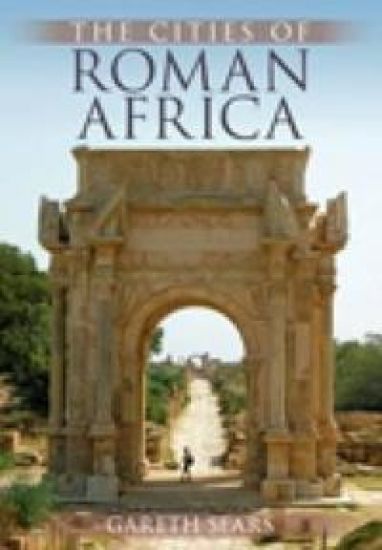
The Cities of Roman Africa

Gareth Sears

The History Press Ltd
2011
nidottu
The Roman province of Africa was one of richest in the Empire and as a result has some of the most spectacular remains. The Cities of Roman Africa examines the development of urban space and cultural life in this province from the beginnings of Roman rule in the second century BC to the fall of the province of Africa to the Vandals in AD 439. In this engaging and strikingly illustrated new book, Gareth Sears considers the incorporation of Roman culture into Africa, and its use by African populations and, in particular, their elites. The author also explores the persistence of pre-Roman cultures, and how these factors affected the evolution of the cities, intellectual life and even entertainment under the Republic and Empire.
Late Roman African Urbanism: Continuity and Transformation in the City
Oxbow says: Based on archaeological, literary and epigraphic sources, this study focuses on processes of continuity and change in Late Roman North Africa, from the late 3rd to the early 5th century AD. Sears uses a series of case studies - the cities of Carthage, Ammaedara, Thuburbo, Theveste, Sufetula, Cuicul, Thamugadi, Sitifis, Tipasa, Lepcis Magna and Sabratha - to examine continuity in aspects of urban life, including judicial, religious, defensive and entertainment spheres. In particular, he looks in detail at the construction of churches, tensions between the Donatist and Catholic churches and between Christian and pagan, and examines their impact on North African cities in general. Evidence from his case studies are drawn together in the final chapter to produce a model for North African urban life in the Late Roman period.