

Kirjailija
Gareth Williams
Kirjat ja teokset yhdessä paikassa: 56 kirjaa, julkaisuja vuosilta 1979–2027, suosituimpiin kuuluu Great Times, Great Beer. Vertaile teosten hintoja ja tarkista saatavuus suomalaisista kirjakaupoista.
56 kirjaa
Kirjojen julkaisuvuodet: 1979–2027.
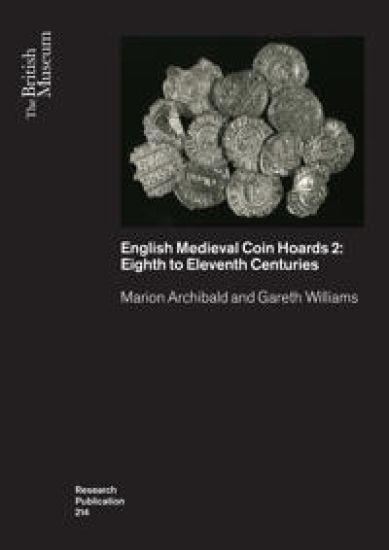
This volume presents details, images and discussion of the contents of twenty English coin hoards, ranging in date from the 730s to the 1090s. Found between the 1960s and 1990s, all were studied by the late Marion Archibald at the British Museum but have never been published in full before now. Each hoard is the subject of its own chapter, with discussion of the discovery, and of the historical context in which the hoard was buried, before a catalogue of the relevant coins. The volume also contains an introductory chapter, providing an overview of developments in the use of coinage in England in the seventh to eleventh centuries, as well as a discussion of hoarding in this period. This provides context for the more detailed presentation of the individual hoards in this volume, but also draws on other major hoards of the period, both published and unpublished.

The remarkable story of the forgotten British scientists who enabled the Manhattan Project to create the atomic bomb Atomic weaponry is widely understood as a story of American scientific achievement—but scientists working in Britain played a vital role in its development. Including Nobel Prize winners and Jewish refugees from Nazi Germany, these scientists have long since been forgotten. But without their expertise, Robert Oppenheimer’s research at Los Alamos would never have succeeded. Gareth Williams unearths the true story of the top-secret British atomic programme, codenamed “Tube Alloys,” established in 1940. These pioneering scientists struggled to convince sceptics in Britain and the USA that an atomic “super-bomb” capable of destroying entire cities was feasible, and could be built in time to influence the outcome of the Second World War. Williams shows how the British atomic programme, despite the often disruptive involvement of political leaders such as Winston Churchill, was vital to the success of the Manhattan Project. The Impossible Bomb sheds new light on how humanity’s deadliest weapons came to exist—and the massive destruction they wrought.
Winner of a Fringe First Award 2024What use is paper? To speak. To imagine. To remember. It starts when she puts a note through his letterbox.'Hello Number 4, this is Number 6. Please could you SHUT THE **** UP? Ta.' Not a promising beginning, but... they meet, they fall in love, they get married. Then one day a letter arrives that will change them, and the world, forever... Oliver Emanuel and Gareth Williams's A History of Paper is a musical love story about a man and a woman and the little bits of paper that make up a life. This edition was published to coincide with the world premiere Dundee Rep and Traverse Theatre co-production at Edinburgh's Traverse Theatre in August 2024.
Knowledge is power, as they say. Power is energy deployed over time. And this book endeavours to rebalance that power back towards you, the individual. Your energy. Your time. This is the book I wish I had read when I was young - one that seeks to fill a gap in the presentation of a philosophy of economics that has been too long overlooked. The Austrian School of Economics provides a framework for thinking about the world that makes basic, common sense. A perspective that recognises the uniqueness of the individual - their thoughts, perspectives, values and deeds - and how that bonds our communities. Economics, in truth, is about far more than production and consumption. It is the story of human interaction. Human Action. In seeking to encapsulate the core Austrian principles, this book covers everything from anthropology, history, biology, physics, astronomy, mythology, philosophy, sociology, politics, finance, war, peace and more The Austrian School of Economics does away with the over-mathematised "physics envy" of traditional economics. Herein, I set out this alternative view of economics, one that is intuitively true and has been suspiciously underrepresented in the mainstream. If you believe that actions speak louder than words and that it is our deeds that define us, then you might agree that "Good Money' is the most honest, actualized form of communication between human beings. Maybe it is little wonder that the Austrian School's clear diagnosis of our monetary system as corrupt is not taught in schools. Let us reclaim our individual sovereignty, our power. Our Precious Time.


‘Rescuing Richard’ is a breathless quest that sweeps the reader from the blood-soaked battlefields of Zululand to the corridors of power in Regency London. Richard is astonished when Shaka appoints him to his inner council, where he vies for influence with his friend, Napoleon Bonaparte. Drawn to a feisty, intelligent young Zulu woman, Richard wrestles with his conscience while confronting betrayal and colonial adventurers exploiting the land he is sworn to protect. Having helped equip the Zulu army with artillery, he is sent as ambassador to the court of King George, where he defends Zulu interests while trying to help an old acquaintance escape an abusive relationship.
Ovid’s Metamorphoses has entranced audiences for two thousand years, from Rome under Augustus to humanities classrooms today. Borrowing liberally from Greek and Roman mythology, the poem tells hundreds of stories that share one essential theme: each tale depicts a transformation from one physical form into another. Drawing on many years of teaching the Metamorphoses, Gareth Williams offers a brisk and lively reading of the poem that emphasizes why it speaks in compelling ways to a twenty-first-century audience. He shows how the Metamorphoses is not just a colorful collection of stories about change but an exploration of change itself. Ovid challenges us to recognize flux as fundamental to human experience: circumstances shift, fortunes ebb and flow, and our very identities ceaselessly evolve across from one life stage to another. Capturing the energy and excitement that Ovid’s poem generates among readers, Williams also sheds new light on its modern provocations. His fresh interpretations of the Metamorphoses reveal its power to enrich and inform our daily existence amid the uncertainties of life today.
Ovid’s Metamorphoses has entranced audiences for two thousand years, from Rome under Augustus to humanities classrooms today. Borrowing liberally from Greek and Roman mythology, the poem tells hundreds of stories that share one essential theme: each tale depicts a transformation from one physical form into another. Drawing on many years of teaching the Metamorphoses, Gareth Williams offers a brisk and lively reading of the poem that emphasizes why it speaks in compelling ways to a twenty-first-century audience. He shows how the Metamorphoses is not just a colorful collection of stories about change but an exploration of change itself. Ovid challenges us to recognize flux as fundamental to human experience: circumstances shift, fortunes ebb and flow, and our very identities ceaselessly evolve across from one life stage to another. Capturing the energy and excitement that Ovid’s poem generates among readers, Williams also sheds new light on its modern provocations. His fresh interpretations of the Metamorphoses reveal its power to enrich and inform our daily existence amid the uncertainties of life today.

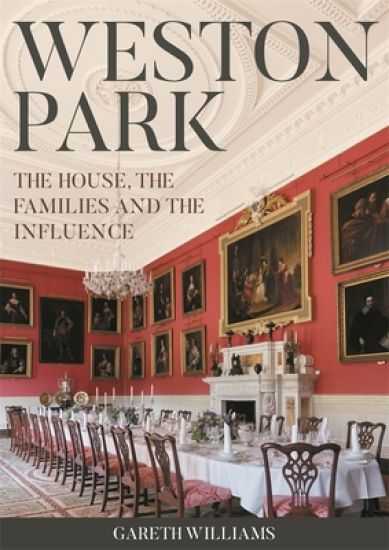
Considering its territorial and social influence and the superlative nature of its furnishings and collections, Weston Park is not as well known as one might expect. The house and contents, with its thousand acre landscape park, was gifted to the nation in 1986 by Richard, 7th Earl of Bradford. Until then, the house had always passed by descent, often through the female line, and it had stood at the centre of an estate with a wide geographical spread, linking it with neighbouring counties and with the urban centres of Walsall, Bolton and Wigan. Weston Park's owners and staff had a pivotal role in the development of these places, whilst the family were involved in national affairs, in politics, the legal profession, and the military. Their seat at Weston Park provided not only a fitting home, visited by royalty and politicians, but also became a repository of important patronage and of collections. These included, in 1735, the highly significant late seventeenth and early eighteenth century collection of paintings that had been assembled by Francis Newport, 1st Earl of Bradford and his younger son, Thomas. Meticulously researched and beautifully illustrated, this book seeks to tell the story of the house, its setting, extraordinary collections, and the influence that it has had on wider communities through the history of those who have owned and cared for it.
‘Serving Shaka’ is a dramatic evocation of Zulu nation-building, immersing the reader in vivid battle scenes, poignant relationships and tense political machinations. Having masterminded Napoleon Bonaparte’s escape from St Helena with his friend Emile Béraud in Needing Napoleon, history teacher Richard Davey now finds himself stranded on the African coast. Richard and Emile encounter Shaka Zulu, a leader even more ruthless and ambitious than the former French emperor. Richard’s secret, that he is from the future, is revealed; Bonaparte seeks to outmanoeuvre Shaka; and Emile joins the nascent Zulu army. Buffeted by the birth pangs of nation-building, Richard tries to exert his influence and retain his sense of self, relying on half-remembered lectures from two hundred years in the future.
'Needing Napoleon' is a remarkably original feat of imagination: an irresistible adventure that spirits the reader from present-day Paris to the battle of Waterloo and beyond. Can you change what has already happened? As a history teacher, Richard Davey knows the answer. At least, he thinks he does. On holiday in Paris, he stumbles across a curious antiques shop. The eccentric owner reveals a secret Richard dares not believe. Richard's conviction that Napoleon Bonaparte should have won the Battle of Waterloo could be put to the test. Accurate historical detail collides with the paradox of time travel as an ordinary twenty-first-century man is plunged into the death throes of the French empire.

Fans of cars, trains, and construction vehicles will love this bedtime board book about a little bulldozer who won't go to sleep. All kinds of vehicles take breaks, naps, and snoozes--but not bulldozers! Dozers don't need to go to bed, at least that's what the bulldozer who narrates this humorous book thinks. The self-assured dozer brags that it doesn't need sleep, but gets sleepier and sleepier as it lists all the other vehicles that do need rest: race cars make pit stops, trains stop in their tracks, tractors hit the hay, and more. The conclusion to Dozers Don't Doze, in which the dozer ultimately dozes, will entertain little ones and please parents; the illustrations of sleepy machines may even lull children to sleep despite their own efforts to resist dozing.
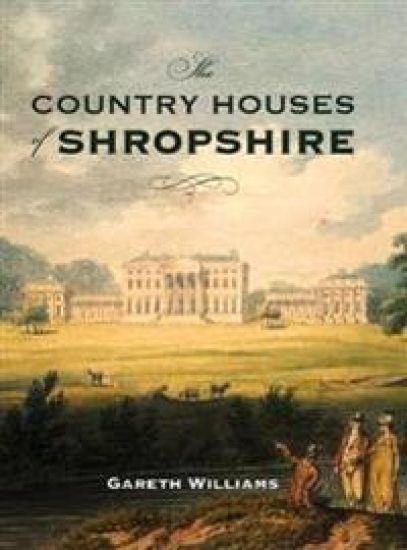
A gazetteer of the many fine Shropshire country houses, which covers the architecture, the owners' family history, and the social and economic circumstances that affected them. Shropshire is the largest English inland county, and has a wide variety of important landed country houses, with owners from diverse social groups, with links to trade in Liverpool, Manchester and London as well as the local gentry. This book is not simply about the houses they built, but also about the people who lived in them and the context in which the houses are set. The architecture is of course fully covered. What is distinctive about the author's approach is that he treats the histories of the families, their artistic tastes and their estates, as an integral part of the character of each house. Country houses can serve as a barometer of national tastes and of the social and economic times in which they were built. The work includes reference to the important sporting associations, fine and decorative art collections, and to important guests and social networks. Unlike most architectural guides, this aims at a wider readership, and will be an important resource for social historians, genealogists and local historians. The Country Houses of Shropshire considers the history of 347 identified houses of varying importance; those with a significant or influential history are given a main entry of up to 6000 words whilst lesser houses are treated with an entry of less than 1000 words. All houses have footnoted entries, enabling the reader to refer directly to source and to undertake further research themselves.
La literatura del tercer espacio y la noci n misma de tercer espacio remiten a una regi n de experiencia no mim tica, no identitaria, rebelde a la ontoteolog a tan metida en la m dula de la producci n de pensamiento en espa ol. Preocupaciones posteriores a la primera publicaci n de Tercer espacio. Literatura y duelo en Am rica Latina (1999), de infrapol tica a marranismo, del desencanto universitario al goce desnarrativizante, de la cr tica de las formas de la pol tica realmente existente a la afirmaci n existencial, del republicanismo democr tico a una cierta imposibilidad de arte complementan su configuraci n. Este libro se ofrece como testimonio de una vida parcialmente dedicada a la observaci n y estudio de lo que permanece salvaje y subversivo en la misma tradici n can nica y de una pr ctica te rica no controlable ni aceptable en los cada vez m s exhaustos salones de clase y salas de seminario universitarias.