Kirjojen hintavertailu – 12 903 724 kirjaa ja 27 kauppaa

Kirjailija

Garima Kaushik

Kirjat ja teokset yhdessä paikassa: 11 kirjaa, julkaisuja vuosilta 2016–2025, suosituimpiin kuuluu Finitura e lucidatura dei materiali da restauro. Vertaile teosten hintoja ja tarkista saatavuus suomalaisista kirjakaupoista.

11 kirjaa

Kirjojen julkaisuvuodet: 2016–2025.

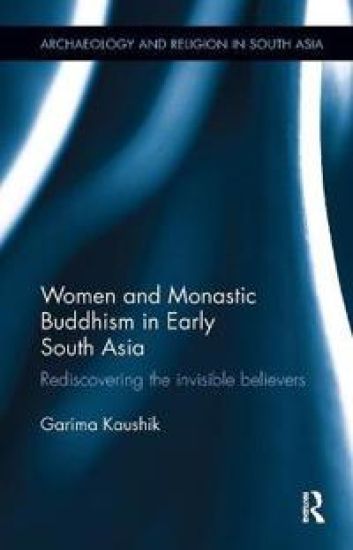
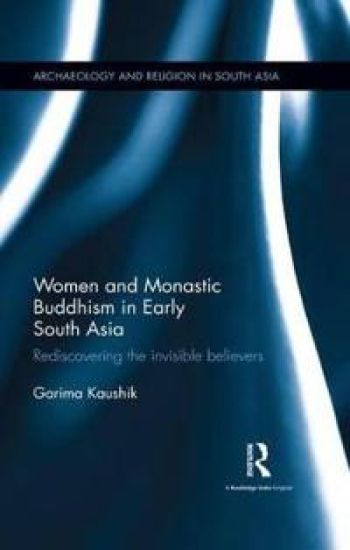
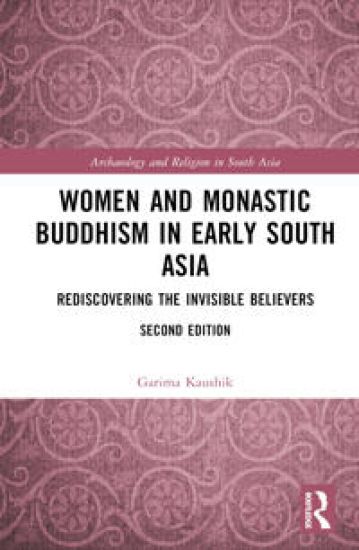
Women and Monastic Buddhism in Early South Asia

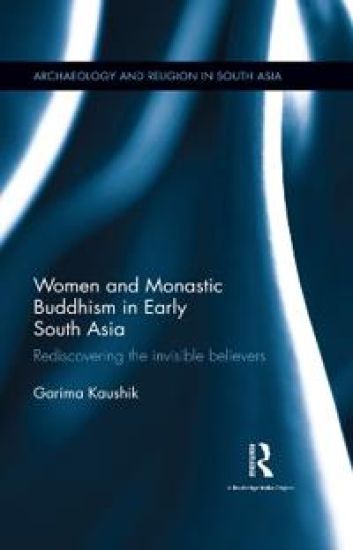
Women and Monastic Buddhism in Early South Asia

Garima Kaushik

TAYLOR FRANCIS LTD
2025
sidottu
This book presents gender as a framework to offer unique insights into the sociocultural foundations of Buddhism. Moving away from dominant discourses that discuss women as a single monolithic, homogenous category – thus rendering them invisible within the broader religious discourse – this monograph examines their sustained role in the larger context of South Asian Buddhism and reaffirms their agency. It highlights the multiple roles played by women as patrons, practitioners, lay and monastic members and the like within Buddhism. The volume also investigates the individual experiences of the members, and their equations and relationships at different levels – with the Samgha at large with their own respective Bhiksu or Bhiksuni Samgha, with the laity, and with members of the same gender (both lay and monastic). It rereads, reconfigures, and reassesses historical data in order to arrive at a new understanding of Buddhism and the social matrix within which it developed and flourished. This new edition draws on recent archaeological data from ancient Buddhist sites in Sri Lanka and recently compiled ethnographic data from convents in Spiti valley in Himachal Pradesh, India. It assesses if the working model formulated for the identification of gendered structures at sites in India holds good for sites across South Asia and highlights the presence of women within the monastic circles in varied roles. Bringing together archaeological, epigraphic, art historical, literary as well as ethnographic data, this volume will be of interest to researchers and scholars of Buddhism, gender studies, ancient Indian history, religion, and South Asian studies.

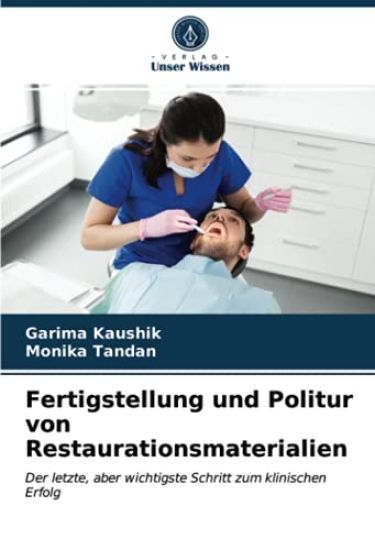
Finishing and Polishing of Restorative Materials

Finishing and Polishing of Restorative Materials

Garima Kaushik; Monika Tandan

LAP Lambert Academic Publishing
2021
pokkari
The well-finished and polished restorations are not only esthetically pleasing but are also conducive to the oral environment. Finishing and polishing of both the occlusal and proximal areas is important, since the proper marginal adaptability of the restoration, by and large, saves an individual from periodontal problems thereby achieving better clinical success of the treatment. Finishing and polishing techniques are important in preparing clinically successful restorations. Untoward surface irregularities resulting from poor finishing and polishing may lead to the accumulation of plaque, recurrent decay, chronic gingival inflammation, and staining by chromagenic foods and beverages- all of which shorten the efficacy and durability of even the most meticulously placed restoration. Hence, it is important for a dental clinician to have appropriate knowledge regarding finishing and polishing procedures for restorations. The process of abrasion is affected by properties of the abrasive and the material being abraded. Finishing and polishing begin with coarse abrasives and end with fine abrasives. Clinically it is easier to control the rate of abrasion by speed rather than the pressure.
Women and Monastic Buddhism in Early South Asia
This book uses gender as a framework to offer unique insights into the socio-cultural foundations of Buddhism. Moving away from dominant discourses that discuss women as a single monolithic, homogenous category—thus rendering them invisible within the broader religious discourse—this monograph examines their sustained role in the larger context of South Asian Buddhism and reaffirms their agency. It highlights the multiple roles played by women as patrons, practitioners, lay and monastic members, etc. within Buddhism. The volume also investigates the individual experiences of the members, and their equations and relationships at different levels—with the Samgha at large, with their own respective Bhiksu or Bhiksuni Sangha, with the laity, and with members of the same gender (both lay and monastic). It rereads, reconfigures and reassesses historical data in order to arrive at a new understanding of Buddhism and the social matrix within which it developed and flourished. Bringing together archaeological, epigraphic, art historical, literary as well as ethnographic data, this volume will be of interest to researchers and scholars of Buddhism, gender studies, ancient Indian history, religion, and South Asian studies.

Women and Monastic Buddhism in Early South Asia
This book uses gender as a framework to offer unique insights into the socio-cultural foundations of Buddhism. Moving away from dominant discourses that discuss women as a single monolithic, homogenous category—thus rendering them invisible within the broader religious discourse—this monograph examines their sustained role in the larger context of South Asian Buddhism and reaffirms their agency. It highlights the multiple roles played by women as patrons, practitioners, lay and monastic members, etc. within Buddhism. The volume also investigates the individual experiences of the members, and their equations and relationships at different levels—with the Samgha at large, with their own respective Bhiksu or Bhiksuni Sangha, with the laity, and with members of the same gender (both lay and monastic). It rereads, reconfigures and reassesses historical data in order to arrive at a new understanding of Buddhism and the social matrix within which it developed and flourished. Bringing together archaeological, epigraphic, art historical, literary as well as ethnographic data, this volume will be of interest to researchers and scholars of Buddhism, gender studies, ancient Indian history, religion, and South Asian studies.