Kirjojen hintavertailu – 12 903 742 kirjaa ja 27 kauppaa

Kirjailija

Gary Cox

Kirjat ja teokset yhdessä paikassa: 25 kirjaa, julkaisuja vuosilta 2006–2024, suosituimpiin kuuluu How To Be A Philosopher. Vertaile teosten hintoja ja tarkista saatavuus suomalaisista kirjakaupoista.

25 kirjaa

Kirjojen julkaisuvuodet: 2006–2024.

Cultivating Champions of CI

Cultivating Champions of CI

Gary Cox

Tellwell Talent
2024
sidottu
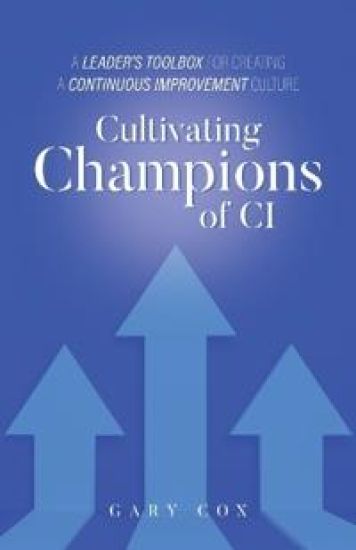
Leaders must create a culture of continuous improvement (CI) in their organizations to survive and thrive. This book was inspired by W. Edwards Deming's insight, "It is not enough to do your best; you must know what to do, and then do your best." Through the journey of Sherry, a general manager navigating her team through a server-downtime crisis, readers are shown what to do in fostering a growth and improvement mindset among their teams. It stands as an interactive guide, and an essential toolbox promising to empower leaders to unlock their team's full potential and nurture a CI culture. Combining motivational insights, leadership acumen and team dynamics, this book distinguishes itself with interactive questions at the end of each chapter. These are designed to prompt self-discovery and provide actionable strategies for immediate implementation and impact, drawn from the author's two decades of leading CI. Enhanced by original Cox-Box cartoons, this narrative is not only engaging but packed with invaluable lessons.
Cultivating Champions of CI

Cultivating Champions of CI

Gary Cox

Tellwell Talent
2024
pokkari
Leaders must create a culture of continuous improvement (CI) in their organizations to survive and thrive. This book was inspired by W. Edwards Deming's insight, "It is not enough to do your best; you must know what to do, and then do your best." Through the journey of Sherry, a general manager navigating her team through a server-downtime crisis, readers are shown what to do in fostering a growth and improvement mindset among their teams. It stands as an interactive guide, and an essential toolbox promising to empower leaders to unlock their team's full potential and nurture a CI culture. Combining motivational insights, leadership acumen and team dynamics, this book distinguishes itself with interactive questions at the end of each chapter. These are designed to prompt self-discovery and provide actionable strategies for immediate implementation and impact, drawn from the author's two decades of leading CI. Enhanced by original Cox-Box cartoons, this narrative is not only engaging but packed with invaluable lessons.
The Reality of Others

The Reality of Others

Gary Cox

ROWMAN LITTLEFIELD
2024
sidottu
‘Hell is other people!’ So said the great French existentialist philosopher, novelist and playwright Jean-Paul Sartre. The Reality of Others explores Sartre’s infamous maxim in detail—when, where and why he said it, what he really meant by it, and what it means for us today. In comprehensively answering that crucial question, author Gary Cox provides an in-depth account of what Sartre and other philosophers and psychologists have said about the human condition, the nature of the self, and the intricate ways in which that nature shapes the interpersonal dynamics of our relationships with others. A genuine guide to lowering the temperature of our interactions with others, the book offers invaluable philosophical advice on how to establish more amicable, constructive and productive human relations, both with the people we know intimately and with the strangers we have to deal with each day. Ultimately, the key to not seeing hell in others lies in being calm, rational, moderate and authentic in our own person, while always treating others with consideration and respect—especially when they are making it most difficult for us to do so.
The Reality of Others

The Reality of Others

Gary Cox

BLOOMSBURY PUBLISHING PLC
2024
nidottu
‘Hell is other people!’ So said the great French existentialist philosopher, novelist and playwright Jean-Paul Sartre. The Reality of Others explores Sartre’s infamous maxim in detail—when, where and why he said it, what he really meant by it, and what it means for us today. In comprehensively answering that crucial question, author Gary Cox provides an in-depth account of what Sartre and other philosophers and psychologists have said about the human condition, the nature of the self, and the intricate ways in which that nature shapes the interpersonal dynamics of our relationships with others. A genuine guide to lowering the temperature of our interactions with others, the book offers invaluable philosophical advice on how to establish more amicable, constructive and productive human relations, both with the people we know intimately and with the strangers we have to deal with each day. Ultimately, the key to not seeing hell in others lies in being calm, rational, moderate and authentic in our own person, while always treating others with consideration and respect—especially when they are making it most difficult for us to do so.
The Politics Of Divided Government

The Politics Of Divided Government

Gary Cox; Samuel Kernell

Routledge
2021
nidottu
Partisan conflict between the White House and Congress is now a dominant feature of national politics in the United States. What the Constitution sought to institute—a system of checks and balances—divided government has taken to extremes: institutional divisions so deep that national challenges like balancing the federal budget or effectively regulating the nation's savings and loans have become insurmountable. In original essays written especially for this volume, eight of the leading scholars in American government address the causes and consequences of divided party control. Their essays, written with a student audience in mind, take up such timely questions as: Why do voters consistently elect Republican presidents and Democratic congresses? How does divided control shape national policy on crucial issues such as the declaration of war? How have presidents adapted their leadership strategies to the circumstance of divided government? And, how has Congress responded in the way it writes laws and oversees departmental performance? These issues and a host of others are addressed in this compact yet comprehensive volume. The distinguished lineup of contributors promises to make this book "must" reading for both novice and serious students of elections, Congress, and the presidency.
Deep Thought

Deep Thought

Gary Cox

Bloomsbury Academic
2020
nidottu
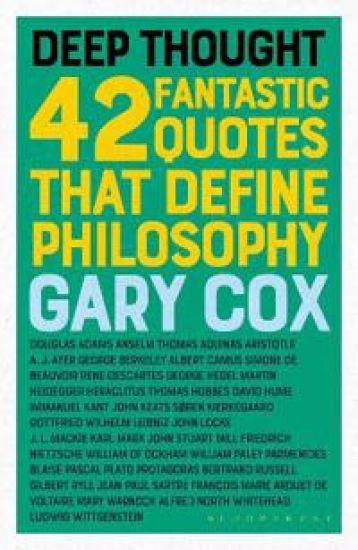
Gary Cox guides us through 42 of the most misunderstood, misquoted, provocative and significant quotes in the history of philosophy providing a witty and compelling commentary along the way. This entertaining and illuminating collection of quotes doesn’t merely list who said what and when, it explores who each philosopher is and what he or she really meant when they said what they said. Viewing each quote as a philosophical thesis in itself, Cox probes the writings of everyone from Douglas Adams to A. J. Ayer and Thomas Aquinas to Karl Marx. This is a philosophical journey through history, culture and writing to bring us to a deeper understanding of why we think the way we do. As Douglas Adams points out, if there is no final answer to the question, 'What is the meaning of life?', '42' is as good or bad an answer as any other. Here Cox shows that 42 quotes might be even better!
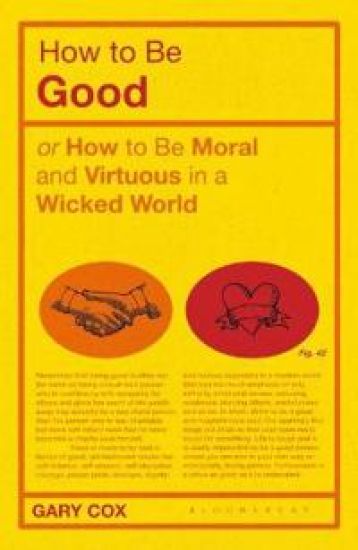
How to be Good

How to be Good

Gary Cox

Bloomsbury Academic
2020
nidottu
What is goodness? Is goodness achievable, and if so, how? If being a good person is a matter of doing the right thing, then what is the right thing to do? Is it acting rationally, promoting happiness, exercising moderation in all things or respecting the freedom of others, or is it somehow a concoction of all these abilities, wisely adjusted to suit circumstances? In this instructive, entertaining and often humorous book, Gary Cox, best-selling author of How to Be an Existentialist and How to Be a Philosopher, investigates the phenomenon of goodness and what, if anything, it is to be a good person and a paragon of virtue. Part easygoing exploration of the age-old subject of moral philosophy, part personal development and improvement manual, How to Be Good carefully leads you on a fascinating journey through the often strange and surprising world of ethics, with ideas from Aristotle, Kant, Nietzsche and a host of other moral philosophers.
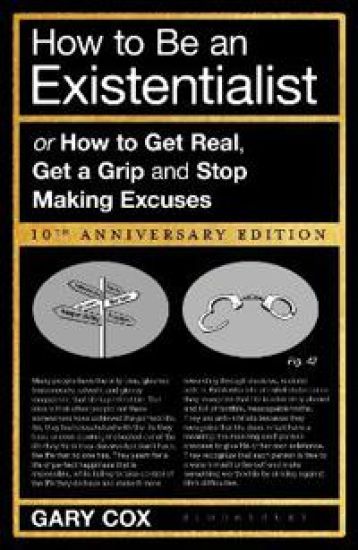
How to Be an Existentialist

How to Be an Existentialist

Gary Cox

Bloomsbury Academic
2019
nidottu

Halvin toimitettuna 19,50 €

The 10th anniversary edition of a witty classic about the philosophy of existentialism. It is also a genuine self-help book offering clear advice on how to live according to the principles of existentialism formulated by Nietzsche, Sartre, Camus, and the other great existentialist philosophers. An attack on contemporary excuse culture, the book urges us to face the hard existential truths of the human condition. By revealing that we are all inescapably free and responsible - 'condemned to be free,' as Sartre says - the book aims to empower the reader with a sharp sense that we are each the master of our own destiny. Cox makes fun of the reputation existentialism has for being gloomy and pessimistic, exposing it for what it really is - an honest, uplifting, and potentially life changing philosophy! This striking 10th anniversary edition with a substantial new preface includes more pointers on how to be a true existentialist, including how to be an existentialist at a time when environmental issues are becoming ever more pressing and our 'post-truth' world increasingly subjects us to the politically polarising power of simplistic social media.
The Politics Of Divided Government

The Politics Of Divided Government

Gary Cox; Samuel Kernell

Routledge
2019
sidottu
Partisan conflict between the White House and Congress is now a dominant feature of national politics in the United States. What the Constitution sought to institute—a system of checks and balances—divided government has taken to extremes: institutional divisions so deep that national challenges like balancing the federal budget or effectively regulating the nation's savings and loans have become insurmountable. In original essays written especially for this volume, eight of the leading scholars in American government address the causes and consequences of divided party control. Their essays, written with a student audience in mind, take up such timely questions as: Why do voters consistently elect Republican presidents and Democratic congresses? How does divided control shape national policy on crucial issues such as the declaration of war? How have presidents adapted their leadership strategies to the circumstance of divided government? And, how has Congress responded in the way it writes laws and oversees departmental performance? These issues and a host of others are addressed in this compact yet comprehensive volume. The distinguished lineup of contributors promises to make this book "must" reading for both novice and serious students of elections, Congress, and the presidency.
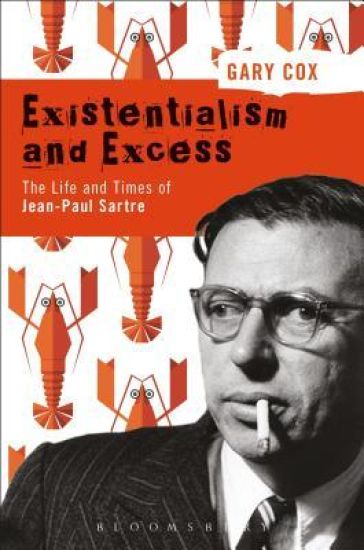
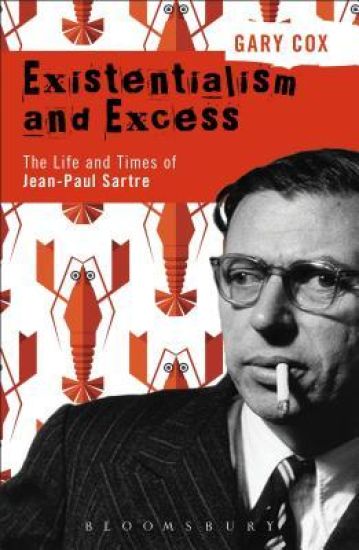
Existentialism and Excess: The Life and Times of Jean-Paul Sartre
Jean-Paul Sartre is an undisputed giant of twentieth-century philosophy. His intellectual writings popularizing existentialism combined with his creative and artistic flair have made him a legend of French thought. His tumultuous personal life - so inextricably bound up with his philosophical thinking - is a fascinating tale of love and lust, drug abuse, high profile fallings-out and political and cultural rebellion. This substantial and meticulously researched biography is accessible, fast-paced, often amusing and at times deeply moving. Existentialism and Excess covers all the main events of Sartre's remarkable seventy-five-year life from his early years as a precocious brat devouring his grandfather's library, through his time as a brilliant student in Paris, his wilderness years as a provincial teacher-writer experimenting with mescaline, his World War II adventures as a POW and member of the resistance, his post-war politicization, his immense amphetamine fueled feats of writing productivity, his harem of women, his many travels and his final decline into blindness and old age. Along the way there are countless intriguing anecdotes, some amusing, some tragic, some controversial: his loathing of crustaceans and his belief that he was being pursued by a giant lobster, his escape from a POW camp, the bombing of his apartment, his influence on the May 1968 uprising and his many love affairs. Cox deftly moves from these episodes to discussing his intellectual development, his famous feuds with Aron, Camus, and Merleau-Ponty, his encounters with other giant figures of his day: Roosevelt, Hemingway, Heidegger, John Huston, Mao, Castro, Che Guevara, Khrushchev and Tito, and, above all, his long, complex and creative relationship with Simone de Beauvoir. Existentialism and Excess also gives serious consideration to Sartre’s ideas and many philosophical works, novels, stories, plays and biographies, revealing their intimate connection with his personal life. Cox has written an entertaining, thought-provoking and compulsive book, much like the man himself.

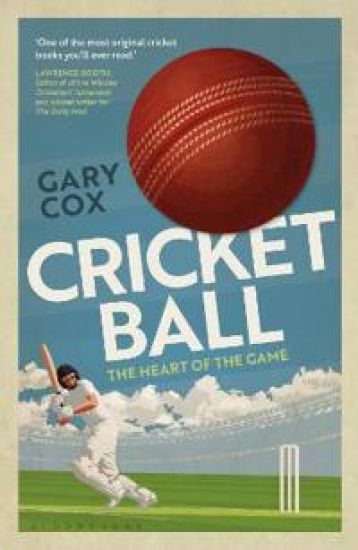
Cricket Ball

Cricket Ball

Gary Cox

Bloomsbury Academic
2018
sidottu
No object encapsulates the subtle, mysterious richness of cricket as much as its most famous character, the cricket ball: the swinging, bouncing, spinning heart of the glorious game. Gary Cox tells us the life story of the ball in its many guises: new ball, old ball, live ball, dead ball, no-ball, lost ball, swing ball and dot ball. He untangles the complexities of spin bowling (with a little help from Shane Warne), the tricks and cheats involved in ball tampering (including a look at the 2018 Australian scandal) and explores the multi-coloured future of a rapidly changing game. A kaleidoscopic look at the ball through the lenses of everything from philosophy and science to history, politics and biography and the myriad facts and figures of the vast cricket universe, Cox brings you a brimming biography of this legendary leathern orb and the heroes, fools and villains it has created along the way.
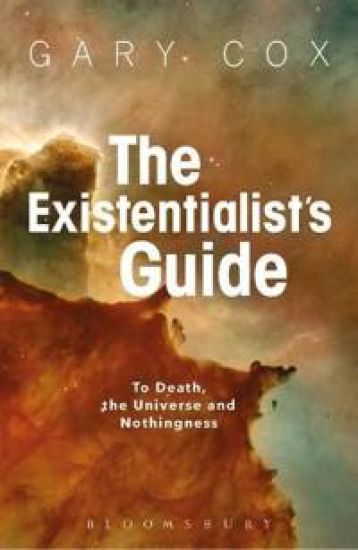
The Existentialist's Guide to Death, the Universe and Nothingness

The Existentialist's Guide to Death, the Universe and Nothingness

Gary Cox

Bloomsbury Academic
2017
nidottu

Halvin toimitettuna 23,70 €

The Existentialist's Guide to Death, the Universe and Nothingness is an entertaining philosophical guide to life, love, hate, freedom, sex, anxiety, God and death; a guide to everything and nothing. Gary Cox, bestselling author of How to Be an Existentialist and How to Be a Philosopher, takes us on an exciting journey through the central themes of existentialism, a philosophy of the human condition. The Existentialist's Guide fascinates, informs, provokes and inspires as it explores existentialism's uncompromising view of human reality. It leaves the reader with no illusions about how hard it is to live honestly and achieve authenticity. It has, however, a redeeming humour that sets the wisdom of the great existentialist philosophers alongside the wit of great musicians and comedians. A realistic self-help book for anyone interested in personal empowerment, The Existentialist's Guide offers a wealth of profound philosophical insight into life, the universe and everything.
Existentialism and Excess: The Life and Times of Jean-Paul Sartre
Jean-Paul Sartre is an undisputed giant of twentieth-century philosophy. His intellectual writings popularizing existentialism combined with his creative and artistic flair have made him a legend of French thought. His tumultuous personal life - so inextricably bound up with his philosophical thinking - is a fascinating tale of love and lust, drug abuse, high profile fallings-out and political and cultural rebellion. This substantial and meticulously researched biography is accessible, fast-paced, often amusing and at times deeply moving. Existentialism and Excess covers all the main events of Sartre's remarkable seventy-five-year life from his early years as a precocious brat devouring his grandfather's library, through his time as a brilliant student in Paris, his wilderness years as a provincial teacher-writer experimenting with mescaline, his World War II adventures as a POW and member of the resistance, his post-war politicization, his immense amphetamine fueled feats of writing productivity, his harem of women, his many travels and his final decline into blindness and old age. Along the way there are countless intriguing anecdotes, some amusing, some tragic, some controversial: his loathing of crustaceans and his belief that he was being pursued by a giant lobster, his escape from a POW camp, the bombing of his apartment, his influence on the May 1968 uprising and his many love affairs. Cox deftly moves from these episodes to discussing his intellectual development, his famous feuds with Aron, Camus, and Merleau-Ponty, his encounters with other giant figures of his day: Roosevelt, Hemingway, Heidegger, John Huston, Mao, Castro, Che Guevara, Khrushchev and Tito, and, above all, his long, complex and creative relationship with Simone de Beauvoir. Existentialism and Excess also gives serious consideration to Sartre’s ideas and many philosophical works, novels, stories, plays and biographies, revealing their intimate connection with his personal life. Cox has written an entertaining, thought-provoking and compulsive book, much like the man himself.
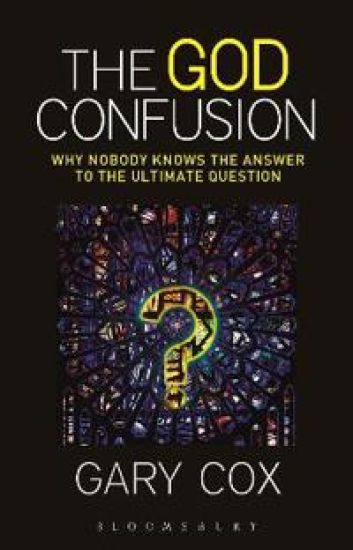
The God Confusion

The God Confusion

Gary Cox

Bloomsbury Academic USA
2015
nidottu
What is God? Does he exist? Can we know? The God Confusion offers a down-to-earth beginner's guide for anyone interested in these questions. It does not evangelize for God and religion or, indeed, for atheism, secularism and science. Instead, it explores in a witty yet objective and balanced way the idea of God and the strengths and weaknesses of the standard arguments for his existence. Gary Cox shows that the philosophical reasoning at the heart of these arguments is logically incapable of moving beyond speculation to any kind of proof. The only credible philosophical position is therefore agnosticism. The God Confusion defends science generally and the theory of evolution in particular. It argues that if religion is not to appear increasingly outdated and ridiculous in the eyes of free-thinking, educated people, it must accommodate science and accept that science has replaced the old God of the gaps as an explanation of natural phenomena. Concluding that God may or may not exist, on the grounds that science, philosophy and theology are inherently incapable of proving or disproving his existence, The God Confusion acknowledges that religious faith based on a deliberate commitment to live as though there is a moral God is a coherent notion and a worthwhile, even prudent enterprise. At the same time, it rejects the idea of inner certainty as mere wishful thinking, arguing that it is not a coherent basis for belief and is simply bad faith.
How To Be A Philosopher

How To Be A Philosopher

Gary Cox

Bloomsbury Academic
2014
nidottu
Do life's big questions perplex you? This book, now available in paperback, will give you answers to some of them while revealing that others have no answer. A humorous but informed instruction manual to questions philosophers have been asking and attempting to answer for centuries, How to Be A Philosopher will help you:• Think, talk, argue and persuade like a philosopher.• Win every agument by tying people in philosophical knots.• Ask questions and raise doubts about things most people take for granted.• Realise that almost nothing is certain.• Get the absolute final word on that question about a falling tree. A practical guide to philosophising, the book explains philosophical ideas with examples drawn from such great works as Family Guy, Monty Python's Flying Circus, The Matrix and Red Dwarf. The book also argues that learning to philosophise will help you think more clearly and honestly about your own life. The book even gives practical advice on how to make a living from philosophy!
The God Confusion

The God Confusion

Gary Cox

Bloomsbury Academic USA
2013
sidottu
What is God? Does he exist? Can we know? The God Confusion offers a down-to-earth beginner's guide for anyone interested in these questions. It does not evangelize for God and religion or, indeed, for atheism, secularism and science. Instead, it explores in a witty yet objective and balanced way the idea of God and the strengths and weaknesses of the standard arguments for his existence. Gary Cox shows that the philosophical reasoning at the heart of these arguments is logically incapable of moving beyond speculation to any kind of proof. The only credible philosophical position is therefore agnosticism. The God Confusion defends science generally and the theory of evolution in particular. It argues that if religion is not to appear increasingly outdated and ridiculous in the eyes of free-thinking, educated people, it must accommodate science and accept that science has replaced the old God of the gaps as an explanation of natural phenomena. Concluding that God may or may not exist, on the grounds that science, philosophy and theology are inherently incapable of proving or disproving his existence, The God Confusion acknowledges that religious faith based on a deliberate commitment to live as though there is a moral God is a coherent notion and a worthwhile, even prudent enterprise. At the same time, it rejects the idea of inner certainty as mere wishful thinking, arguing that it is not a coherent basis for belief and is simply bad faith.
Sartre and Fiction

Sartre and Fiction

Gary Cox

Continuum International Publishing Group Ltd.
2009
sidottu
This clear and accessible introduction offers detailed coverage of, and invaluable guidance on, Sartre's fictional writings." Sartre and Fiction" offers a clear and accessible introduction to the extensive fictional writings of Jean-Paul Sartre. Providing comprehensive coverage of his short stories, novels and plays, the book examines the close links between the ideas and themes in his fiction and those put forward in his formal philosophical works. Sartre wrote fiction as a means of developing and enriching his philosophical ideas. Gary Cox reveals the extent to which Sartre's fictional writings are truly philosophical and an integral part of his overall intellectual vision. He also explores the ways in which Sartre's fictional writings reflect the personal, historical and political context in which they were written. Aside from yielding a wealth of personal and historical detail, this fascinating book demonstrates that the only way to fully appreciate Sartre's grand philosophical project is to understand the man himself and the troubled times though which he lived and wrote. Ideal for undergraduate students encountering Sartre for the first time, this book offers the first sustained introduction to Sartre's fictional oeuvre.