Kirjojen hintavertailu – 12 903 725 kirjaa ja 27 kauppaa

Kirjailija

Gary D. Joiner

Kirjat ja teokset yhdessä paikassa: 9 kirjaa, julkaisuja vuosilta 1999–2015, suosituimpiin kuuluu Historic Haunts of Shreveport. Vertaile teosten hintoja ja tarkista saatavuus suomalaisista kirjakaupoista.

Nimi esiintyy myös muodoissa: Gary D Joiner

9 kirjaa

Kirjojen julkaisuvuodet: 1999–2015.

Shreveport's Historic Oakland Cemetery: Spirits of Pioneers and Heroes

Shreveport's Historic Oakland Cemetery: Spirits of Pioneers and Heroes

Cheryl White; Gary D. Joiner

History Press Library Editions
2015
sidottu
Nearly as old as the city itself, Oakland Cemetery is one of Shreveport's most significant historical landmarks. Notable residents were laid to rest here as early as 1842. In a mass grave lie nearly eight hundred victims of a virulent yellow fever epidemic that struck the city in 1873. Others interred include Annie McCune, the famous Shreveport madam who operated a brothel in the city's red-light district, as well as hundreds of Civil War soldiers, city founders and the first African American physician, Dr. Dickerson Alphonse Smith. Some souls are said to haunt the grounds still. Join authors Gary D. Joiner and Cheryl White and discover some of Shreveport's oldest stories.

The Red River Campaign

The Red River Campaign

Gary D. Joiner

State House Press
2014
nidottu
During the spring of 1864, when the Union efforts to the win were geared from Tennessee to Georgia and along the Eastern Board and in Virginia, one lone campaign was conducted against these directions. It was an attempt to invade Texas by traversing Louisiana from New Orleans to Shreveport and from Little Rock, Arkansas to Shreveport. On paper, the plan seemed unstoppable. It consisted of over 42,500 soldiers and sailors and at least 108 warships. The confederates could mount no more than 12,500 men in opposition. Incredibly, this effort ended in utter defeat for the Union and saved Texas and the bulk of Louisiana and southwestern Arkansas from further raves to the end of the war. This book describes what went right and terribly wrong for both sides. It also describes the aftermath of the operation and why it is so important to the region’s history.
Through the Howling Wilderness

Through the Howling Wilderness

Gary D. Joiner

University of Tennessee Press
2014
nidottu
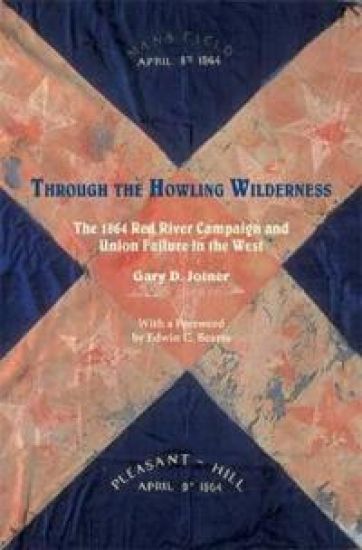
The Red River Campaign of 1864 was a bold attempt to send large Union army and navy forces deep into the interior of Louisiana, seize the Rebel capital of the state, and defeat the Confederate army guarding the region enabling uninhibited access to Texas to the west. Through the Howling Wilderness emphasizes the Confederate defensive measures and the hostile attitudes of commanders toward each other as well as toward their enemies. Gary D. Joiner contends that the campaign was important to both the Union army and navy in the course of the war and afterward, altering the political landscape in the fall presidential elections in 1864. The campaign redirected troops originally assigned to operate in Georgia during the pivotal Atlanta campaign, thus delaying the end of the war by weeks or even months, and it forced the navy to refocus its inland or “brown water” naval tactics. The Red River Campaign ushered in deep resentment toward the repatriation of the State of Louisiana after the war ended. Profound consequences included legal, political, and sociological issues that surfaced in Congressional hearings as a result of the Union defeat. The efforts of the Confederates to defend northern Louisiana have been largely ignored. Their efforts at building an army and preparations to trap the union naval forces before the campaign began have been all but lost in the literature of the Civil War. Joiner’s book will remedy this lack of historical attention. Replete with in-depth coverage on the geography of the region, the Congressional hearings after the Campaign, and the Confederate defenses in the Red River Valley, Through the Howling Wilderness will appeal to Civil War historians and buffs alike.
Wicked Shreveport

Wicked Shreveport

Bernadette J. Palombo; Gary D. Joiner; W. Chris Hale

History Press
2012
nidottu
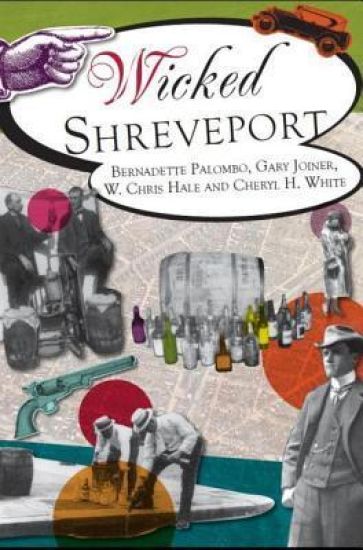
In the rough-and-tumble days of the nineteenth century, Shreveport was on the very edge of the country's western frontier. It was a city struggling to tame lawlessness, and its streets were rocked by duels, lynchings and shootouts. A new century and Prohi
Historic Haunts of Shreveport

Historic Haunts of Shreveport

Gary D. Joiner; Cheryl H. White

History Press Library Editions
2010
sidottu
What makes Shreveport's Oakland Cemetery so spooky might be the mass burial of 715 victims of the 1873 yellow fever epidemic. Another bone-chilling locale is the city's historic Municipal Auditorium, which according to local legends may have briefly served as a morgue under the watch of Dr. Willis P. Butler, perhaps the longest-serving Caddo Parish medical examiner and coroner. Years after his passing, Butler is still seen dutifully working in the courthouse and other public spaces. And over at the beautifully restored Logan Mansion, unexplained mischievous pranks are blamed on the spirits of a young girl whose life was tragically cut short. Historians Gary D. Joiner, PhD, and Cheryl H. White, PhD, recount the true stories of these and other notable landmarks framed within the intriguing twist of the paranormal.
Lost Shreveport: Vanishing Scenes from the Red River Valley

Lost Shreveport: Vanishing Scenes from the Red River Valley

Gary D. Joiner; Ernie Roberson

History Press Library Editions
2010
sidottu
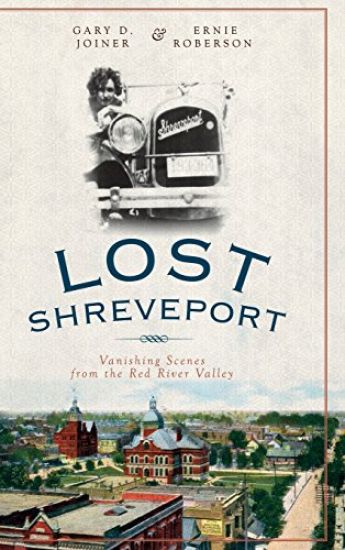
Over the course of many decades, the city of Shreveport witnessed dramatic growth and ever-changing landscapes. Mule-drawn railways gave way to electric streetcars, and what was once the Confederate capital of the state became today s vibrant commercial hub of northwest Louisiana. Drawing from their extensive image collection, authors Joiner and Roberson depict the disappearing scenes and lost stories that form the complex layers of Shreveport history. From the famous performances of Pawnee Bill s Wild West Show to the infamous red-light district, from the decline of vigilante justice to the victims who perished from yellow fever, Joiner and Roberson recover and remember lost Shreveport."
Lost Shreveport: Vanishing Scenes from the Red River Valley

Lost Shreveport: Vanishing Scenes from the Red River Valley

Gary D. Joiner; Ernie Roberson

History Press
2010
nidottu
Over the course of many decades, the city of Shreveport witnessed dramatic growth and ever-changing landscapes. Mule-drawn railways gave way to electric streetcars, and what was once the Confederate capital of the state became today's vibrant commercial hub of northwest Louisiana. Drawing from their extensive image collection, authors Joiner and Roberson depict the forgotten scenes and lost stories that form the complex layers of Shreveport history. From the famous performances of Pawnee Bill's Wild West Show to the infamous red-light district, from the decline of vigilante justice to the victims who perished from yellow fever, Joiner and Roberson recover and remember lost Shreveport.
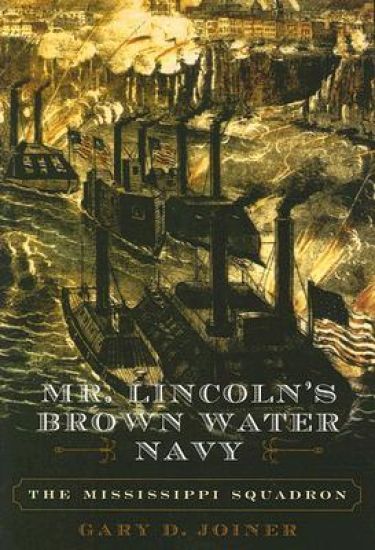
Mr. Lincoln's Brown Water Navy

Mr. Lincoln's Brown Water Navy

Gary D. Joiner

Rowman Littlefield Publishers
2007
nidottu
The Union inland navy that became the Mississippi Squadron is one of the greatest, yet least studied aspects of the Civil War. Without it, however, the war in the West may not have been won, and the war in the East might have lasted much longer and perhaps ended differently. The men who formed and commanded this large fighting force have, with few exceptions, not been as thoroughly studied as their army counterparts. The vessels they created were highly specialized craft which operated in the narrow confines of the Western rivers in places that could not otherwise receive fire support. Ironclads and gunboats protected army forces and convoyed much needed supplies to far-flung Federal forces. They patrolled thousands of miles of rivers and fought battles that were every bit as harrowing as land engagements yet inside iron monsters that created stifling heat with little ventilation. This book is about the intrepid men who fought under these conditions and the highly improvised boats in which they fought. The tactics their commanders developed were the basis for many later naval operations. Of equal importance were lessons learned about what not to do. The flag officers and admirals of the Mississippi Squadron wrote the rules for modern riverine warfare.