Kirjojen hintavertailu – 12 903 725 kirjaa ja 27 kauppaa
Kirjailija
Gary Lock
Kirjat ja teokset yhdessä paikassa: 9 kirjaa, julkaisuja vuosilta 2000–2025, suosituimpiin kuuluu Histories in the Making. Vertaile teosten hintoja ja tarkista saatavuus suomalaisista kirjakaupoista.
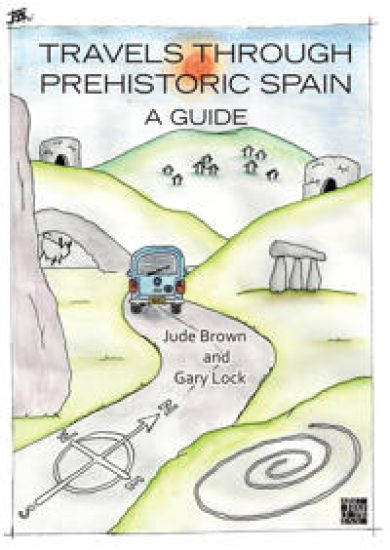
Spain is a big country with many thousands of prehistoric monuments and associated museums. This guide provides information on a small number of the best ones. It details how to access over 220 prehistoric sites, museums and interpretation centres in many of Spain’s autonomous regions. It also provides a background to the prehistoric chronology of Spain and explains the main types of prehistoric monuments which can be visited. These range from Palaeolithic cave art to Neolithic dolmen and Iron Age castros. Many of these sites will take you into areas of Spain little visited by tourists and involve walks through beautiful and sometimes remote landscapes.
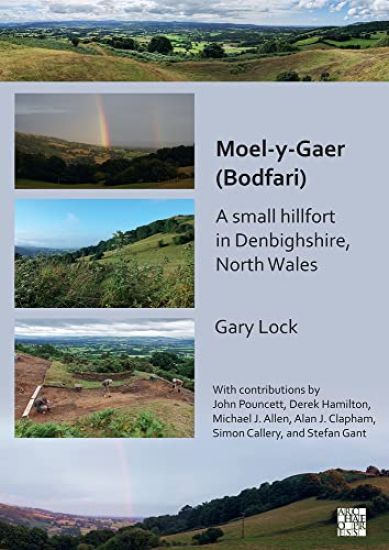
Moel-y-Gaer (Bodfari) is the northernmost of a series of hillforts atop the Clwydian hills in north-eastern Wales. Nine seasons of survey and excavation have revealed details of Moel-y-Gaer’s ramparts, entrances and interior. This small hillfort started with a single rampart, later to be enlarged on the western side with an extra rampart and ditch. The second phase rampart was constructed of dry-stone walling and increased in width at least once. It was shown to be very different in character to the earlier rampart. An early western entrance was no longer used in the later phase, which saw the construction of an inturned entrance to the north. There is little evidence for occupation within the enclosure although a single roundhouse was constructed facing the northern entrance. Radiocarbon dating establishes all the second phase activity within the Middle Iron Age with the first phase rampart being somewhat earlier. Discussion situates Moel-y-Gaer (Bodfari) within current understandings of the later prehistoric settlement record for north-eastern Wales paying particular attention to hillforts.
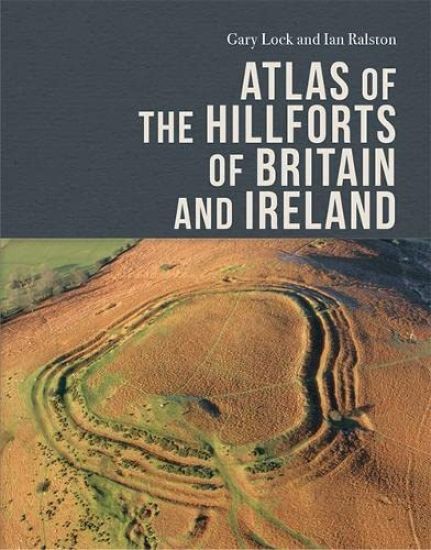
This book provides the first comprehensive series of maps of the hillforts of Britain and Ireland, with accompanying commentaries and broader overviews which interpret the survival and detection of this evidence in its later prehistoric and early historic contexts. The authors expertly assess and analyse the available evidence for over 4,000 hillforts from Shetland to Cornwall to County Clare to a single standard and present their findings in both map and descriptive form. Further detailed information is available to search online via our website.
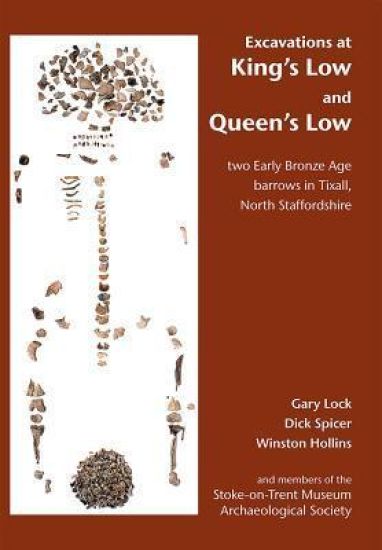
These two barrows in the parish of Tixall, north of Stafford, were excavated by the Stoke-on-Trent Museum Archaeological Society between the years 1986 and 1994. They are approximately one kilometre apart with King’s Low still extant but Queen’s Low badly damaged by ploughing. The results are important because little excavation of round barrows has been carried out in this area of North Staffordshire and these add considerably to the local corpus of knowledge concerning Early Bronze Age burial practices and various categories of material culture including Collared Urns and a single faience bead at each site.
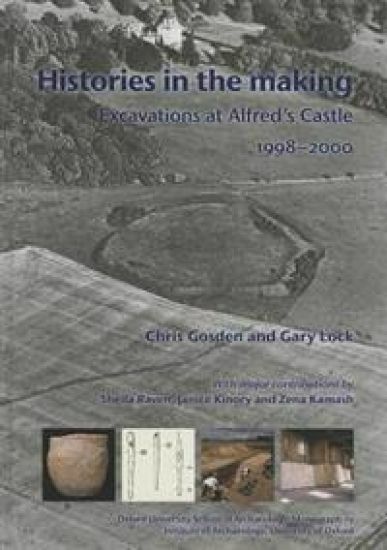
Alfred’s Castle is a small enclosed site south of the Ridgeway on the Berkshire Downs, excavated between 1998 and 2000 by a team from Oxford University. This was the third site excavated by the Hillforts of the Ridgeway project (after White Horse Hill and Segsbury). Although small, Alfred’s Castle displayed a long and complex history, starting with early Bronze Age round barrows on which later Bronze Age linear ditches were aligned, these in turn were used to form enclosures in the Iron Age. In the early Roman period a small villa house was built inside the smaller enclosure, which then shows some use in the early medieval period. The long use of the site raises questions of memory, history and continuity, leading us to wonder how earlier phases of use affected later ones. This volume contains the results of excavations at Alfred’s Castle and an account of an art project by Simon Callery. This is the third volume dedicated to our hillfort excavations on the Berkshire Downs and it ends with an account of the area more broadly, which sees complicated developments from the Bronze Age into the medieval period through the constructions of barrows, field systems, linear ditches and sites of various forms and sizes. How these combined into communities of the living and of the dead are considered using all the evidence currently available.
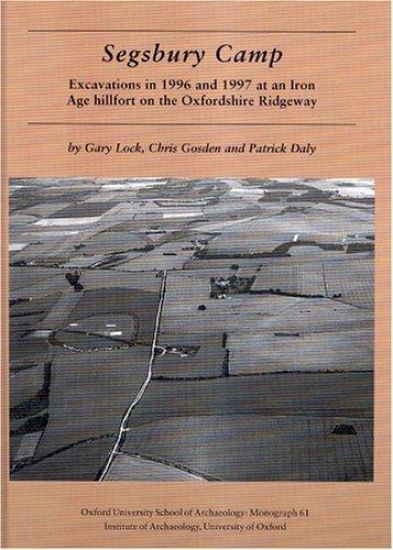
This volume describes the two seasons of excavation at Segsbury Camp which form a part of Oxford University's Hillforts of the Ridgeway Project . It contains background material and a series of interpretations of the site at different scales finishing with a discussion of the Lambourn Downs landscape in later prehistoric and Romano-British times. The evidence suggests that the large hillfort of Segsbury was used during the period 6th to 2nd century BC but was not densely and permanently occupied. It also seems that Segsbury was constructed in a new and previously unused area of the Downs. Alternative interpretations are explored within a framework of trying to understand what is meant by 'community' and how Segsbury interacted with other hillforts in the area. The detail provided by the excavation of several hillforts on the Lambourn Downs suggests that they were different forms of monument and argues against trying to understand hillforts as a single category.
Today, archaeologists are spending more and more time examining the past with the aid of computers. How does this increased dependence on technology affect the theory and practice of archaeology? Using Computers in Archaeology is a comprehensive review of computer applications in archaeology from the archaeologist's perspective. The book deals with all aspects of the discipline, from survey and excavation, to museums and education. Discussion covers the theoretical aspects of computer applications, with particular reference to GIS and the analysis of data, but technical jargon is kept to a minimum. With numerous illustrations, case-studies and examples, Using Computers in Archaeology is a timely introduction to this increasingly important area of archaeology, catering both for the student and the experienced archaeologist.
Today, archaeologists are spending more and more time examining the past with the aid of computers. How does this increased dependence on technology affect the theory and practice of archaeology? Using Computers in Archaeology is a comprehensive review of computer applications in archaeology from the archaeologist's perspective. The book deals with all aspects of the discipline, from survey and excavation, to museums and education. Discussion covers the theoretical aspects of computer applications, with particular reference to GIS and the analysis of data, but technical jargon is kept to a minimum. With numerous illustrations, case-studies and examples, Using Computers in Archaeology is a timely introduction to this increasingly important area of archaeology, catering both for the student and the experienced archaeologist.
These nine papers, based on the 4th World Archaeological Congress held in South Africa in 1999, take a critical view of computer usage in archaeology and study its impact on the discipline and especially in terms of archaeological method and theory. Contents: Introduction (Gark Lock & Kayt Brown) ; Computers and archaeological cultural change (J Huggett) ; Archaeological computing and disciplinary theory (J Gidlow) ; Mathematics and computers (H Forsyth) ; Virtual reality (G Goodrick & M Gillings) ; Archaeological archives for the 21st century (F Grew) ; Intellectual excavation (A Beck) ; English sites and monuments records (B Robinson) ; Can computers help aerial survey? (R Palmer) ; Is there such a thing as `Computer Archaeology'?