Kirjojen hintavertailu – 12 903 725 kirjaa ja 27 kauppaa

Kirjailija

Gary Wilder

Kirjat ja teokset yhdessä paikassa: 8 kirjaa, julkaisuja vuosilta 2005–2024, suosituimpiin kuuluu The French Imperial Nation-State. Vertaile teosten hintoja ja tarkista saatavuus suomalaisista kirjakaupoista.

8 kirjaa

Kirjojen julkaisuvuodet: 2005–2024.

Toussaint Louverture

Toussaint Louverture

Aime Cesaire; Gary Wilder

JOHN WILEY AND SONS LTD
2024
sidottu
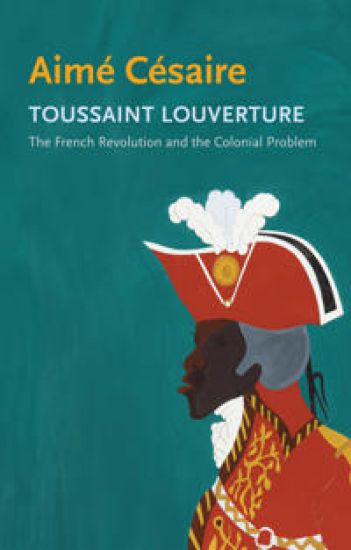
This book is the long-overdue publication in English of Aimé Césaire’s account of Toussaint Louverture, the legendary leader of the revolution in Saint-Domingue – a slave revolt against French colonial rule that led to the founding of the independent republic of Haiti. Saint-Domingue was the first country in modern times to confront the colonial question in practice and in all its complexity. When Toussaint Louverture burst onto the historical stage, various political movements already existed for political autonomy, free trade and social equality. But the French Revolution established a compelling understanding of universal liberty: the Declaration of Human Rights opened up the possibility of claims to liberty and equality by wealthy free Black men in the colony, claims which, when they could not be realized, led to the armed uprising of enslaved Blacks. A battle for the liberation of one class in colonial society resulted in a revolution to achieve equal rights for all men. And for universal emancipation to be possible, Saint-Domingue itself had to become independent. Toussaint Louverture put the Declaration into practice unreservedly, demonstrating that there could be no pariah race. He inherited bands of fighters and united them as an army, turning a peasant revolt into a full-scale revolution, a population into a people and a colony into an independent nation-state. Aimé Césaire’s historical and analytical gifts are magnificently displayed in this highly original analysis of the context and actions of the famous revolutionary leader. It will be of great interest to students and scholars of critical and cultural theory and of Latin American history as well as anyone concerned with the nature and impact of colonialism and race.
Toussaint Louverture

Toussaint Louverture

Aime Cesaire; Gary Wilder

JOHN WILEY AND SONS LTD
2024
nidottu

Halvin toimitettuna 30,80 €

This book is the long-overdue publication in English of Aimé Césaire’s account of Toussaint Louverture, the legendary leader of the revolution in Saint-Domingue – a slave revolt against French colonial rule that led to the founding of the independent republic of Haiti. Saint-Domingue was the first country in modern times to confront the colonial question in practice and in all its complexity. When Toussaint Louverture burst onto the historical stage, various political movements already existed for political autonomy, free trade and social equality. But the French Revolution established a compelling understanding of universal liberty: the Declaration of Human Rights opened up the possibility of claims to liberty and equality by wealthy free Black men in the colony, claims which, when they could not be realized, led to the armed uprising of enslaved Blacks. A battle for the liberation of one class in colonial society resulted in a revolution to achieve equal rights for all men. And for universal emancipation to be possible, Saint-Domingue itself had to become independent. Toussaint Louverture put the Declaration into practice unreservedly, demonstrating that there could be no pariah race. He inherited bands of fighters and united them as an army, turning a peasant revolt into a full-scale revolution, a population into a people and a colony into an independent nation-state. Aimé Césaire’s historical and analytical gifts are magnificently displayed in this highly original analysis of the context and actions of the famous revolutionary leader. It will be of great interest to students and scholars of critical and cultural theory and of Latin American history as well as anyone concerned with the nature and impact of colonialism and race.
Concrete Utopianism

Concrete Utopianism

Gary Wilder

FORDHAM UNIVERSITY PRESS
2022
sidottu
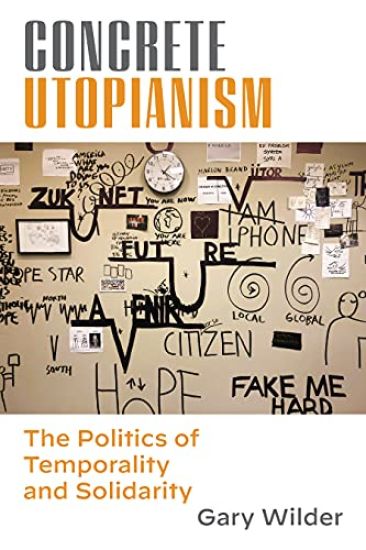
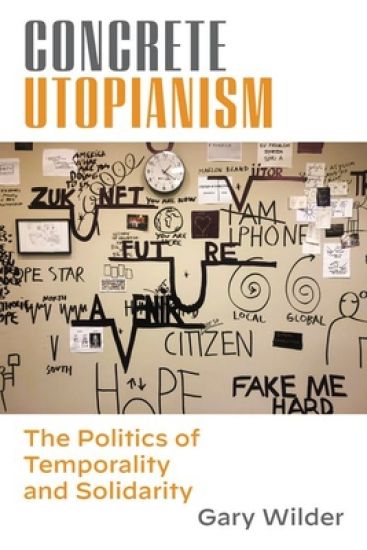
Finalist, 2022 Big Other Book Award for Nonfiction Never before has it been more important for Left thinking to champion expansive visions for societal transformation. Yet influential currents of critical theory have lost sight of this political imperative. Provincial notions of places, periods, and subjects obstruct our capacity to invent new alignments and envision a world we wish to see. Political imagination is misread as optimism. Utopianism is conflated with idealism. Revolutionary traditions of non-liberal universalism and non-bourgeois humanism are rendered illegible. Negative critique becomes an end in itself. Pessimism is mistaken for radicalism and political fatalism risks winning the day. In this book, Gary Wilder insists that we place solidarity and temporality at the center of our political thinking. He develops a critique of Left realism, Left culturalism, and Left pessimism from the standpoint of heterodox Marxism and Black radicalism. These traditions offer precious resources to relate cultural singularity and translocal solidarity, political autonomy and worldwide interdependence. They develop modes of immanent critique and forms of poetic knowledge to envision alternative futures that may already dwell within our world: traces of past ways of being, knowing, and relating that persist within an untimely present; or charged residues of unrealized possibilities that were the focus of an earlier generation's dreams and struggles; or opportunities for dialectical reversals embedded in the contradictory tendencies of the given order. Concrete Utopianism makes a bold case for embracing what Wilder calls a politics of the possible-impossible. Attentive to the non-identical character of places, periods, and subjects, insisting that axes of political alignment and contestation are neither self-evident nor unchanging, reworking Lenin's call to "transform the imperial war into a civil war," he invites Left thinkers see beyond inherited distinctions between here and there, now and then, us and them. Guided by the spirit of Marx's call for revolutionaries to draw their poetry from a future they cannot fathom yet must nevertheless invent, he calls for practices of anticipation that envision and enact, call for and call forth, seemingly impossible ways of being together. He elaborates a critical orientation that emphasizes the dialectical relations between aesthetics and politics, political imagination and transformative practice, concrete interventions and revolutionary restructuring, past dreams and possible worlds, means of struggle and its ultimate aims. This orientation requires nonrealist epistemologies that do not mistake immediate appearances with the really real. Such epistemologies would allow critics to recognize uncanny and untimely aspects of social life, whether oppressive or potentially emancipatory. They may help actors to render the world subversively uncanny and untimely. They may clear pathways for the kind of critical internationalism and concrete utopianism that Left politics cannot afford to ignore.
Concrete Utopianism

Concrete Utopianism

Gary Wilder

FORDHAM UNIVERSITY PRESS
2022
pokkari
Finalist, 2022 Big Other Book Award for Nonfiction Never before has it been more important for Left thinking to champion expansive visions for societal transformation. Yet influential currents of critical theory have lost sight of this political imperative. Provincial notions of places, periods, and subjects obstruct our capacity to invent new alignments and envision a world we wish to see. Political imagination is misread as optimism. Utopianism is conflated with idealism. Revolutionary traditions of non-liberal universalism and non-bourgeois humanism are rendered illegible. Negative critique becomes an end in itself. Pessimism is mistaken for radicalism and political fatalism risks winning the day. In this book, Gary Wilder insists that we place solidarity and temporality at the center of our political thinking. He develops a critique of Left realism, Left culturalism, and Left pessimism from the standpoint of heterodox Marxism and Black radicalism. These traditions offer precious resources to relate cultural singularity and translocal solidarity, political autonomy and worldwide interdependence. They develop modes of immanent critique and forms of poetic knowledge to envision alternative futures that may already dwell within our world: traces of past ways of being, knowing, and relating that persist within an untimely present; or charged residues of unrealized possibilities that were the focus of an earlier generation's dreams and struggles; or opportunities for dialectical reversals embedded in the contradictory tendencies of the given order. Concrete Utopianism makes a bold case for embracing what Wilder calls a politics of the possible-impossible. Attentive to the non-identical character of places, periods, and subjects, insisting that axes of political alignment and contestation are neither self-evident nor unchanging, reworking Lenin's call to "transform the imperial war into a civil war," he invites Left thinkers see beyond inherited distinctions between here and there, now and then, us and them. Guided by the spirit of Marx's call for revolutionaries to draw their poetry from a future they cannot fathom yet must nevertheless invent, he calls for practices of anticipation that envision and enact, call for and call forth, seemingly impossible ways of being together. He elaborates a critical orientation that emphasizes the dialectical relations between aesthetics and politics, political imagination and transformative practice, concrete interventions and revolutionary restructuring, past dreams and possible worlds, means of struggle and its ultimate aims. This orientation requires nonrealist epistemologies that do not mistake immediate appearances with the really real. Such epistemologies would allow critics to recognize uncanny and untimely aspects of social life, whether oppressive or potentially emancipatory. They may help actors to render the world subversively uncanny and untimely. They may clear pathways for the kind of critical internationalism and concrete utopianism that Left politics cannot afford to ignore.
Freedom Time

Freedom Time

Gary Wilder

Duke University Press
2015
sidottu
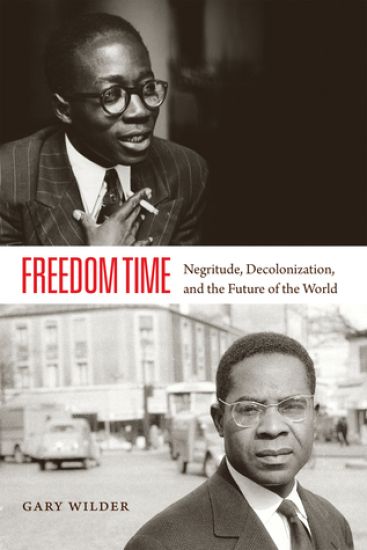
Freedom Time reconsiders decolonization from the perspectives of Aimé Césaire (Martinique) and Léopold Sédar Senghor (Senegal) who, beginning in 1945, promoted self-determination without state sovereignty. As politicians, public intellectuals, and poets they struggled to transform imperial France into a democratic federation, with former colonies as autonomous members of a transcontinental polity. In so doing, they revitalized past but unrealized political projects and anticipated impossible futures by acting as if they had already arrived. Refusing to reduce colonial emancipation to national independence, they regarded decolonization as an opportunity to remake the world, reconcile peoples, and realize humanity’s potential. Emphasizing the link between politics and aesthetics, Gary Wilder reads Césaire and Senghor as pragmatic utopians, situated humanists, and concrete cosmopolitans whose postwar insights can illuminate current debates about self-management, postnational politics, and planetary solidarity. Freedom Time invites scholars to decolonize intellectual history and globalize critical theory, to analyze the temporal dimensions of political life, and to question the territorialist assumptions of contemporary historiography.
Freedom Time

Freedom Time

Gary Wilder

Duke University Press
2015
pokkari
Freedom Time reconsiders decolonization from the perspectives of Aimé Césaire (Martinique) and Léopold Sédar Senghor (Senegal) who, beginning in 1945, promoted self-determination without state sovereignty. As politicians, public intellectuals, and poets they struggled to transform imperial France into a democratic federation, with former colonies as autonomous members of a transcontinental polity. In so doing, they revitalized past but unrealized political projects and anticipated impossible futures by acting as if they had already arrived. Refusing to reduce colonial emancipation to national independence, they regarded decolonization as an opportunity to remake the world, reconcile peoples, and realize humanity’s potential. Emphasizing the link between politics and aesthetics, Gary Wilder reads Césaire and Senghor as pragmatic utopians, situated humanists, and concrete cosmopolitans whose postwar insights can illuminate current debates about self-management, postnational politics, and planetary solidarity. Freedom Time invites scholars to decolonize intellectual history and globalize critical theory, to analyze the temporal dimensions of political life, and to question the territorialist assumptions of contemporary historiography.
The French Imperial Nation-State

The French Imperial Nation-State

Gary Wilder

University of Chicago Press
2005
sidottu
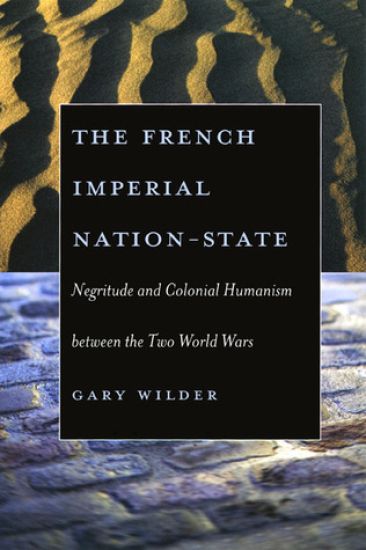
France experienced a period of crisis following World War I when the relationship between the nation and its colonies became a subject of fierce public debate. "The French Imperial Nation-State" focuses on two intersecting movements that redefined imperial politics - colonial humanism, led by administrative reformers in West Africa, and the Paris-based Negritude project, comprising African and Caribbean elites. Gary Wilder develops a sophisticated account of the contradictory character of colonial government and examines the cultural nationalism of Negritude as a multifaceted movement rooted in an alternative black public sphere. He argues that interwar France must be understood as an imperial nation-state - an integrated sociopolitical system that linked a parliamentary republic to an administrative empire. An interdisciplinary study of colonial modernity combining French history, colonial studies, and social theory, The French Imperial Nation-State will compel readers to revise conventional assumptions about the distinctions between republicanism and racism, metropolitan and colonial societies, and national and transnational processes.
The French Imperial Nation-State

The French Imperial Nation-State

Gary Wilder

University of Chicago Press
2005
nidottu
France experienced a period of crisis following World War I when the relationship between the nation and its colonies became a subject of fierce public debate. "The French Imperial Nation-State" focuses on two intersecting movements that redefined imperial politics - colonial humanism, led by administrative reformers in West Africa, and the Paris-based Negritude project, comprising African and Caribbean elites. Gary Wilder develops a sophisticated account of the contradictory character of colonial government and examines the cultural nationalism of Negritude as a multifaceted movement rooted in an alternative black public sphere. He argues that interwar France must be understood as an imperial nation-state - an integrated sociopolitical system that linked a parliamentary republic to an administrative empire. An interdisciplinary study of colonial modernity combining French history, colonial studies, and social theory, The French Imperial Nation-State will compel readers to revise conventional assumptions about the distinctions between republicanism and racism, metropolitan and colonial societies, and national and transnational processes.