Kirjojen hintavertailu – 12 859 818 kirjaa ja 27 kauppaa
Kirjailija
Gaston Bachelard
Kirjat ja teokset yhdessä paikassa: 34 kirjaa, julkaisuja vuosilta 1968–2024, suosituimpiin kuuluu Ny Jord 3-4. Vertaile teosten hintoja ja tarkista saatavuus suomalaisista kirjakaupoista.
Andreas Malm; Margaret Mead; Emil Leth Meilvang; Peter Handke; Rune Engelbreht Larsen; Christoffer Basse Eriksen; Simone Weil; Anders Dunker; Francisco Goya; Liv Sejrbo Lidegaard; Arno Schmidt; Phillip Martinussen; Walt Whitman; Emil Bønnelycke; Signe Gjessing; Daniel Flendt Dreesen; Gaston Bachelard; Jørn H. Sværen; Michael Stoltze; Lao Zi; Ursula K. Le Guin; Peter Sloterdijk; Oliver Bak; Anna Marie Ortese; Edith Södergran; August Strindberg; C.Y. Frostholm; Lea Marie Løppenthin; Max Klinger; Charles Sanders Peirce
Ny Jord – Tidsskrift for naturkritik er et multidisciplinært tidsskrift, der orienterer sig på tværs af århundreder og landegrænser og bringer videnskab, litteratur og kunst side om side i ønsket om at bidrage til en kvalificeret samtale om naturen i en tid, hvor vores forestillinger og idéer om den ændres markant.
Eldens psykoanalys (1949) är en studie av en kraft som fascinerat mänskligheten. Elden undersöks som mytisk kraft, rent vetenskapligt och som känsla. Vad är det med elden som tänder den mänskliga fantasin? Genom boken låter filosofen elden lysa upp det undermedvetna och läsaren får resa in i ett kollektivt psyke. Elden är grundläggande för människan och har format henne till den hon är idag. Boken har ett nyskrivet förord av Monika Kostera. Gaston Bachelard (1884-1962) var en fransk filosof och professor vid Sorbonne. I sitt omfattande författarskap om vetenskapsfilosofi och den historiska epistemologin var han en föregångare till senare franska filosofer som Louis Althusser, Michel Foucault och Jacques Derrida. Hans vetenskapsfilosofi koncentrerar sig kring det som kan benämnas som »epistemologiska brott«, ett identifierande av vetenskapernas diskontinuerliga framväxt. Vid sidan av detta filosofiska arbete ägnade han flera studier åt litteratur och undersökte bland annat hur de fyra elementen inverkar på människans fantasi och liv.
Jorden och drömmerier om vila (1948) är en av Bachelards studier om fantasins materia och fantasin om materien. Här analyserar han drömmarna och psykologin bakom dessa krafter, eller som han själv formulerar det: »Det är dessa det absoluta omedvetnas värden som har väglett oss i sökandet efter det underjordiska livet som för så många människor är den idealiska vilan.« Boken har ett nyskrivet efterord av Pierre Guillet de Monthoux. Gaston Bachelard (1884-1962) var en fransk filosof och professor vid Sorbonne. I sitt omfattande författarskap om vetenskapsfilosofi och den historiska epistemologin var han en föregångare till senare franska filosofer som Louis Althusser, Michel Foucault och Jacques Derrida. Hans vetenskapsfilosofi koncentrerar sig kring det som kan benämnas som »epistemologiska brott«, ett identifierade vetenskapernas diskontinuerliga framväxt. Vid sidan av detta filosofiska arbete ägnade han flera studier litteratur och särskilt åt det sätt som de fyra elementen inverkar på människans fantasi och liv.
Jorden och viljans drömmerier (1947) är en studie där Bachelard närmar sig C. G. Jung. Utifrån en rad litterära texter undersöks den mänskliga fantasins drömmerier om materien. Boken visar att Bachelard har en rad olika filosofiska metoder, och här har han inspirerats av såväl den nya som den tematiska kritiken. Resultatet blir en grundlig genomgång som tränger ner i jorden, ner i metall och sten, men också in i människans djup. Boken har ett nyskrivet efterord av Pierre Guillet de Monthoux. Gaston Bachelard (1884-1962) var en fransk filosof och professor vid Sorbonne. I sitt omfattande författarskap om vetenskapsfilosofi och den historiska epistemologin var han en föregångare till senare franska filosofer som Louis Althusser, Michel Foucault och Jacques Derrida. Hans vetenskapsfilosofi koncentrerar sig kring det som kan benämnas som »epistemologiska brott«, ett identifierade vetenskapernas diskontinuerliga framväxt. Vid sidan av detta filosofiska arbete ägnade han flera studier litteratur och särskilt åt det sätt som de fyra elementen inverkar på människans fantasi och liv.
Lågan av ett ljus (1961) är en bok om dagdrömmeri. Inför lågan förmår människan drömma, den lockar henne att fantisera och ger såväl bilder som minnen. Det blev Bachelards sista bok och i det ett slags avslut på hans tänkande som antyder att människan själv förmår att skapa sin värld och att hennes främsta egenskap inte är förnuftet utan fantasin. Boken har ett nyskrivet förord av Jenny Helin. Gaston Bachelard (1884.1962) var en fransk filosof och professor vid Sorbonne. I sitt omfattande författarskap om vetenskapsfilosofi och den historiska epistemologin var han en föregångare till senare franska filosofer som Louis Althusser, Michel Foucault och Jacques Derrida. Hans vetenskapsfilosofi koncentrerar sig kring det som kan benämnas som »epistemologiska brott«, ett identifierande av vetenskapernas diskontinuerliga framväxt. Vid sidan av detta filosofiska arbete ägnade han flera studier åt litteratur och undersökte bland annat hur de fyra elementen inverkar på människans fantasi och liv.
Vattnet och drömmarna (1942) är den första av Bachelards elementpoetologiska studier. »Det var nära vattnet som jag först förstod att dagdrömmeri är ett utflödets universum « säger han själv. Uppvuxen i det flod- och vattenrika Champagne är detta kanske Bachelards mest personliga medidation över elementen. Spänningen mellan vattnets yta och djup, dess transformativa kraft och närheten till döden undersöks filosofiskt genom poetiska exempel. Boken har ett nyskrivet förord av Daniel Pedersen. Gaston Bachelard (1884-1962) var en fransk filosof och professor vid Sorbonne. I sitt omfattande författarskap om vetenskapsfilosofi och den historiska epistemologin var han en föregångare till senare franska filosofer som Louis Althusser, Michel Foucault och Jacques Derrida. Hans vetenskapsfilosofi koncentrerar sig kring det som kan benämnas som »epistemologiska brott«, ett identifierade vetenskapernas diskontinuerliga framväxt. Vid sidan av detta filosofiska arbete ägnade han flera studier litteratur och särskilt åt det sätt som de fyra elementen inverkar på människans fantasi och liv.
Rummets poetik (1957) kan läsas som en fortsättning på Bachelards undersökningar av de fyra elementen. Här inbjuds läsaren att undersöka världen utifrån en rad litterära bilder. Hur bebor man världen genom fantasin och hur utröner man rummets poetiska spatialitet är frågor som ställs. Svaren öppnar för nya filosofiska perspektiv, både på vår omvärld och hur vi förhåller oss till den. Boken har ett nyskrivet förord av Monika Kostera. Gaston Bachelard (1884 1962) var en fransk filosof och professor vid Sorbonne. I sitt omfattande författarskap om vetenskapsfilosofi och den historiska epistemologin var han en föregångare till senare franska filosofer som Louis Althusser, Michel Foucault och Jacques Derrida. Hans vetenskapsfilosofi koncentrerar sig kring det som kan benämnas som »epistemologiska brott«, ett identifierande av vetenskapernas diskontinuerliga framväxt. Vid sidan av detta filosofiska arbete ägnade han flera studier åt litteratur och undersökte bland annat hur de fyra elementen inverkar på människans fantasi och liv.
Luften och drömmandet (1942) har undertiteln »Essä över föreställningen om rörelse«. Här fortsätter Bachelard sitt utforskande om elementens betydelse för den mänskliga fantasin. Den transparanta luften föder inte bara drömmen om att flyga, den blottar också himlen ovan och utgör en ogripbar höjd, en osynlig utsträckning. Boken har ett nyskrivet förord av Mathilda Dahl. Gaston Bachelard (1884-1962) var en fransk filosof och professor vid Sorbonne. I sitt omfattande författarskap om vetenskapsfilosofi och den historiska epistemologin var han en föregångare till senare franska filosofer som Louis Althusser, Michel Foucault och Jacques Derrida. Hans vetenskapsfilosofi koncentrerar sig kring det som kan benämnas som »epistemologiska brott«, ett identifierande av vetenskapernas diskontinuerliga framväxt. Vid sidan av detta filosofiska arbete ägnade han flera studier åt litteratur och undersökte bland annat hur de fyra elementen inverkar på människans fantasi och liv.
“Huset giver ly til dagdrømmeriet, huset beskytter drømmeren, huset gør det muligt for os at drømme i fred. Det er ikke kun tænkning og erfaring, der begrunder menneskets værdier. Der hører visse værdier til dagdrømmen, som kendetegner mennesket i dets dybde. Dagdrømmen har endda det fortrin, at den værdsætter sig selv. Den nyder sin egen væren direkte. Derfor genopstår de steder, hvor dagdrømmen er blevet levet, i et nyt dagdrømmeri. Det er, fordi minderne om gamle boliger genopleves i dagdrømme, at fortidens boliger bliver inden i os for altid. ” – Gaston BachelardDette er en bog om steder, dem, vi bebor, og de steder, der som forestillinger bor i os. Det er en bog om rum, erindring, tanke og fantasi. Rummets poetik er et fænomenologisk hovedværk om vores intime rum, oprindeligt udgivet i 1957, som hermed foreligger i dansk oversættelse.“[Bachelard] minder mig om en dygtig skakspiller, der kan tage de største brikker med små bønder.” – Michel FoucaultGaston Bachelard (1884-1962) var en fransk filosofiprofessor på Sorbonne, en fantasiens fænomenolog.
Passages from Bachelard's major works are introduced here in excerpts selected by Colette Gaudin, a professor of French literature at Dartmouth College and an authority on Bachelard.
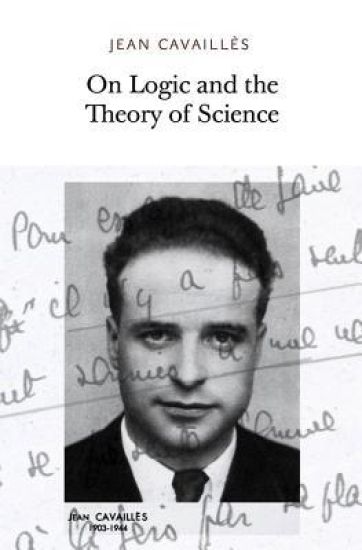
A new translation of the final work of French philosopher Jean Cavailles. In this short, dense essay, Jean Cavailles evaluates philosophical efforts to determine the origin-logical or ontological-of scientific thought, arguing that, rather than seeking to found science in original intentional acts, a priori meanings, or foundational logical relations, any adequate theory must involve a history of the concept. Cavailles insists on a historical epistemology that is conceptual rather than phenomenological, and a logic that is dialectical rather than transcendental. His famous call (cited by Foucault) to abandon "a philosophy of consciousness" for "a philosophy of the concept" was crucial in displacing the focus of philosophical enquiry from aprioristic foundations toward structural historical shifts in the conceptual fabric. This new translation of Cavailles's final work, written in 1942 during his imprisonment for Resistance activities, presents an opportunity to reencounter an original and lucid thinker. Cavailles's subtle adjudication between positivistic claims that science has no need of philosophy, and philosophers' obstinate disregard for actual scientific events, speaks to a dilemma that remains pertinent for us today. His affirmation of the authority of scientific thinking combined with his commitment to conceptual creation yields a radical defense of the freedom of thought and the possibility of the new.
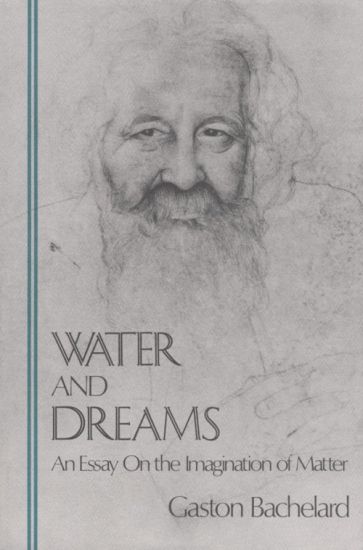
Gaston Bachelard, master dreamer of the elements, animates the waters of the soul with his stirring, fluid imagination. With the subtlety of a poet, he ranges from the surface of water with its reflective narcissism to the very depths where water flows into death. Clear waters, deep water, the Charon Complex, water in combination with other elements, maternal waters, water's morality, violent water, water's voice. The material imagination of water allows us to de-objectify objects and deform forms enabling us to dream and perceive the flow of soul in the world. THE BACHELARD TRANSLATIONS are the inspiration of Joanne H. Stroud, a Founding Fellow of the Dallas Institute, who in 1981 contracted with Jos Corti to publish in English the untranslated works of Bachelard on the imagination through the Dallas Institute of Humanities and Culture, Dallas, Texas. Gaston Bachelard is acclaimed as one of the most significant modern French thinkers. From 1929 to 1962 he authored twenty-three books addressing his dual concerns, the philosophy of science and the analysis of the imagination of matter. The influence of his thought can be felt in all disciplines of the humanities - art, architecture, literature, language, poetics, philosophy, and depth psychology. His teaching career included posts at the College de Bar-sur-Aube, the University of Dijon, and from 1940 to 1962 the chair of history and philosophy of science at the Sorbonne. One of the amphitheaters of the Sorbonne is called "L'Amphi Gaston Bachelard," an honor Bachelard shared with Descartes and Richelieu. He received the Grand Prix National Lettres in 1961-one of only three philosophers ever to have achieved this honor. The influence of his thought can be felt in all disciplines of the humanities-art, architecture, literature, poetics, psychology, philosophy, and language.
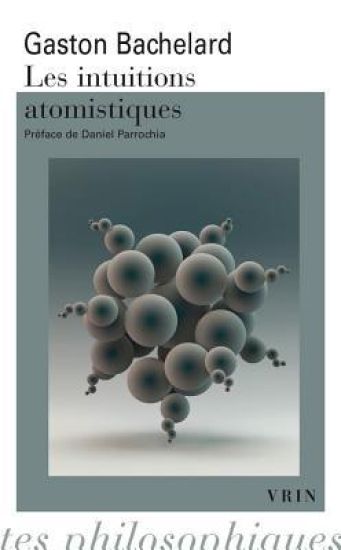
An English translation of Bachelard's sixth book, in which he seeks to develop a metaphysical context for modern atomistic science. French philosopher Gaston Bachelard (1884–1962) is best known in the English-speaking world for his work on poetics and the literary imagination, but much of his oeuvre is devoted to epistemology and the philosophy of science. Like Thomas Kuhn, whose work he anticipates by three decades, Bachelard examines the revolution taking place in scientific thought, but with particular attention to the philosophical implications of scientific practice. Atomistic Intuitions, published in 1933, considers past atomistic doctrines as a context for proposing a metaphysics for the scientific revolutions of the twentieth century. As his subtitle indicates, in this book Bachelard proposes a classification of atomistic intuitions as they are transformed over the course of history. More than a mere taxonomy, this exploration of atomistic doctrines since antiquity proves to be keenly pedagogical, leading to an enriched philosophical appreciation of modern subatomic physics and chemistry as sciences of axioms. Though focused on philosophy of science, the perspectives and intuitions Bachelard garnered through this work provide a unique and even essential key to understanding his extensive writings on the imagination. Roch C. Smith's translation and explanatory notes will help to make this aspect of Bachelard's thought accessible to a wider readership, particularly in such fields as aesthetics, literature, and history.
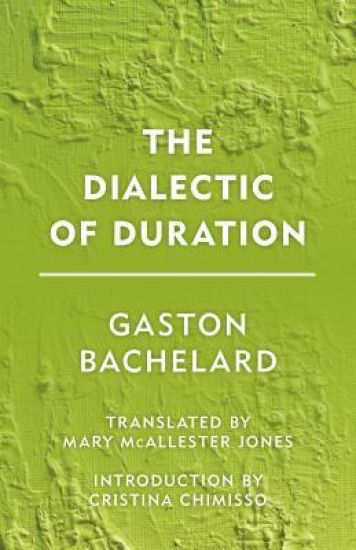
In The Dialectic of Duration Gaston Bachelard addresses the nature of time in response to the writings of his great contemporary, Henri Bergson. The work is motivated by a refutation of Bergson's notion of duration – 'lived time', experienced as continuous. For Bachelard, experienced time is irreducibly fractured and interrupted, as indeed are material events. At stake is an entire conception of the physical world, an entire approach to the philosophy of science. It was in this work that Bachelard first marshalled all the components of his visionary philosophy of science, with its steady insistence on the human context and subtle encompassing of the irrational within the rational. The Dialectic of Duration reaches far beyond local arguments over the nature of the physical world to gesture toward the building of an entirely new form of philosophy.
Sixieme livre de Gaston Bachelard, Les Intuitions atomistiques (1933), constituent une curiosite des son sous-titre: essai de classification. Loin de la methode habituelle des philosophes, familiers des monographies, l'auteur se livre ici a des comparaisons de doctrines. Une discontinuite revelant des symetries et des antisymetries, deux systemes de pensees, ramenes a leurs intuitions, sont parfois reductibles a une forme unique. L'auteur n'hesite donc pas a regrouper des mondes que tout separe: l'atomistique ancienne de Democrite et Lucrece, l'atomisme positiviste et criticiste, l'atomisme axiomatique de la physique moderne. Bachelard n'est pas un historien. C'est un classificateur.
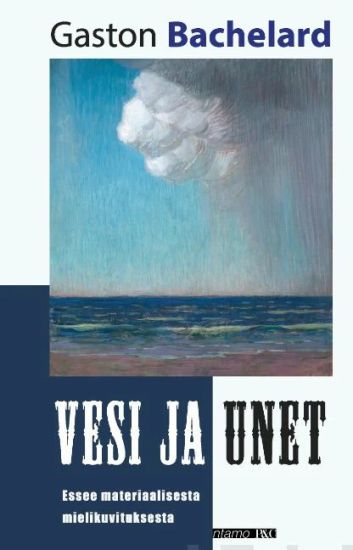
Mm. tieteenfilosofina tunnettu Gaston Bachelard antoi runoudelle erikoisaseman ajattelussaan. Antiikin filosofiaa myötäillen hän tutki sitä, miten neljä elementtiä, tuli, vesi, ilma ja maa toimivat meissä "mielikuvituksen hormoneina" ja ohjaavat mielikuviemme toimintaa. Bachelardilla oli luonnontieteellinen koulutus. Hän halusi saattaa tieteen ja runouden luovaan yhteistyöhön. Tässä teoksessa hänen aiheenaan on veden poetiikka eli miten veden elementti vaikuttaa järkiajatteluamme edeltäviin uniin ja mielikuviin. Oman huomionsa saavat "kulttuurikompleksit" kuten "Ofelia-kompleksi", veteen hukkuneen naisen teema. Kirjan esimerkit ulottuvat Shakespearesta E. A. Poehen. Teoksen on suomentanut Jan Blomstedt ja jälkisanat siihen kirjoittanut arkkitehti Juhani Pallasmaa, jonka ajatteluun Bachelard on jättänyt syvät jälkensä. Teos julkaistaan ntamo & PC -sarjassa.
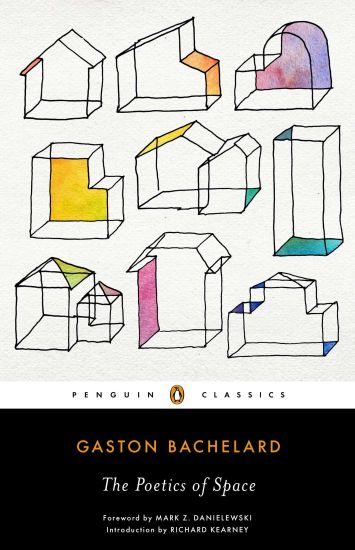
Beloved and contemplated by philosophers, architects, writers, and literary theorists alike, Bachelard's lyrical, landmark work examines the places in which we place our conscious and unconscious thoughts and guides us through a stream of cerebral meditations on poetry, art, and the blooming of consciousness itself. Houses and rooms; cellars and attics; drawers, chests and wardrobes; nests and shells; nooks and corners: no space is too vast or too small to be filled by our thoughts and our reveries. With an introduction by acclaimed philosopher Richard Kearney and a foreword by author Mark Z. Danielewski.
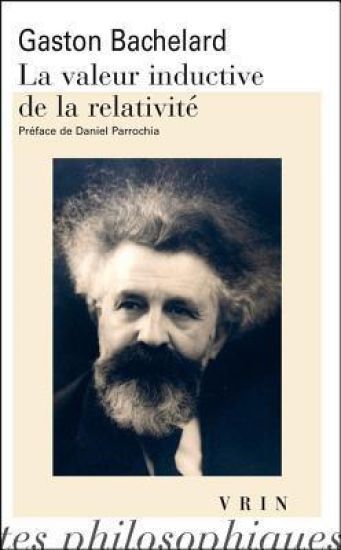
English summary: Bachelards fundamental 1929 text takes mathematics as the means for constructing and investigating physical reality, anticipating many of the great theories developed over the course of the next century. French description: Quatorze ans apres la theorie de la relativite generale (1915), Bachelard publie La Valeur inductive de la relativite (1929). Cet ouvrage qu'on reduit souvent a sa polemique avec Meyerson, auteur de La Deduction relativiste (1925), est en realite un eloge des mathematiques - et notamment du calcul tensoriel - comme mode de construction et d'investigation du reel physique. Dans ce livre non reedite, qui minimise l'experience mais qui contient aussi en germe nombre de themes ulterieurement developpes par l'auteur, Bachelard apparait retrospectivement beaucoup plus prophetique qu'il ne pouvait le penser lui-meme. Les grandes theories physiques du XXe et du XXIe siecle ne cesseront de lui donner raison.