Kirjojen hintavertailu – 12 859 829 kirjaa ja 27 kauppaa

Kirjailija

Gavin T. L. Brown

Kirjat ja teokset yhdessä paikassa: 8 kirjaa, julkaisuja vuosilta 2016–2020, suosituimpiin kuuluu Handbook of Human and Social Conditions in Assessment. Vertaile teosten hintoja ja tarkista saatavuus suomalaisista kirjakaupoista.

Nimi esiintyy myös muodoissa: Gavin T.L. Brown

8 kirjaa

Kirjojen julkaisuvuodet: 2016–2020.

Handbook of Human and Social Conditions in Assessment

Handbook of Human and Social Conditions in Assessment

Gavin T. L. Brown; Lois R. Harris

Routledge
2016
nidottu
The Handbook of Human and Social Conditions in Assessment is the first book to explore assessment issues and opportunities occurring due to the real world of human, cultural, historical, and societal influences upon assessment practices, policies, and statistical modeling. With chapters written by experts in the field, this book engages with numerous forms of assessment: from classroom-level formative assessment practices to national accountability and international comparative testing practices all of which are significantly influenced by social and cultural conditions. A unique and timely contribution to the field of Educational Psychology, the Handbook of Human and Social Conditions in Assessment is written for researchers, educators, and policy makers interested in how social and human complexity affect assessment at all levels of learning. Organized into four sections, this volume examines assessment in relation to teachers, students, classroom conditions, and cultural factors. Each section is comprised of a series of chapters, followed by a discussant chapter that synthesizes key ideas and offers directions for future research. Taken together, the chapters in this volume demonstrate that teachers, test creators, and policy makers must account for the human and social conditions that shape assessment if they are to implement successful assessment practices which accomplish their intended outcomes.
Handbook of Human and Social Conditions in Assessment

Handbook of Human and Social Conditions in Assessment

Gavin T. L. Brown; Lois R. Harris

Routledge
2016
sidottu
The Handbook of Human and Social Conditions in Assessment is the first book to explore assessment issues and opportunities occurring due to the real world of human, cultural, historical, and societal influences upon assessment practices, policies, and statistical modeling. With chapters written by experts in the field, this book engages with numerous forms of assessment: from classroom-level formative assessment practices to national accountability and international comparative testing practices all of which are significantly influenced by social and cultural conditions. A unique and timely contribution to the field of Educational Psychology, the Handbook of Human and Social Conditions in Assessment is written for researchers, educators, and policy makers interested in how social and human complexity affect assessment at all levels of learning. Organized into four sections, this volume examines assessment in relation to teachers, students, classroom conditions, and cultural factors. Each section is comprised of a series of chapters, followed by a discussant chapter that synthesizes key ideas and offers directions for future research. Taken together, the chapters in this volume demonstrate that teachers, test creators, and policy makers must account for the human and social conditions that shape assessment if they are to implement successful assessment practices which accomplish their intended outcomes.
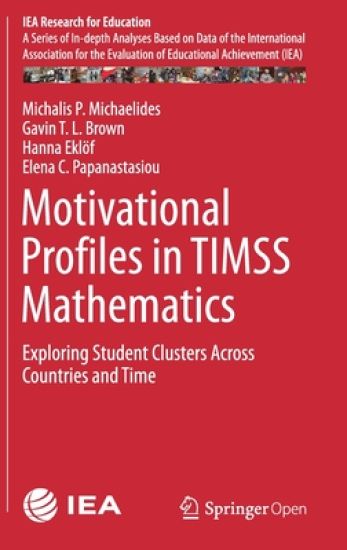
Motivational Profiles in TIMSS Mathematics

Motivational Profiles in TIMSS Mathematics

Michalis P. Michaelides; Gavin T. L. Brown; Hanna Eklöf; Elena C. Papanastasiou

Springer Nature Switzerland AG
2020
nidottu
This open access book presents a person-centered exploration of student profiles, using variables related to motivation to do school mathematics derived from the IEA’s Trends in International Mathematics and Science Study (TIMSS) data. Statistical cluster analysis is used to identify groups of students with similar motivational profiles, across grades and over time, for multiple participating countries. While motivational variables systematically relate to school outcomes, linear relationships can obscure the diverse makeup of student subgroups, each with varying combinations of motivation, emotions, and attitudes. In this book, a person-centered analysis of distinct and meaningful motivational profiles and their differences on sociodemographic variables and mathematics performance broadens understanding about the role that motivation characteristics play in learning and achievement in mathematics. Exploiting the richness of IEA’s TIMSS data from many countries, extracted clusters reveal consistent, as well as certain nuanced patterns that are systematically linked to sociodemographic and achievement measures. Student clusters with inconsistent motivational profiles were found in all countries; mathematics self-confidence then emerged as the variable more closely associated with average achievement. The findings demonstrate that teachers, researchers, and policymakers need to take into account differential student profiles, prioritizing techniques that target skill and competence in mathematics, in educational efforts to develop student motivation.
Motivational Profiles in TIMSS Mathematics

Motivational Profiles in TIMSS Mathematics

Michalis P. Michaelides; Gavin T. L. Brown; Hanna Eklöf; Elena C. Papanastasiou

Springer Nature Switzerland AG
2019
sidottu
This open access book presents a person-centered exploration of student profiles, using variables related to motivation to do school mathematics derived from the IEA’s Trends in International Mathematics and Science Study (TIMSS) data. Statistical cluster analysis is used to identify groups of students with similar motivational profiles, across grades and over time, for multiple participating countries. While motivational variables systematically relate to school outcomes, linear relationships can obscure the diverse makeup of student subgroups, each with varying combinations of motivation, emotions, and attitudes. In this book, a person-centered analysis of distinct and meaningful motivational profiles and their differences on sociodemographic variables and mathematics performance broadens understanding about the role that motivation characteristics play in learning and achievement in mathematics. Exploiting the richness of IEA’s TIMSS data from many countries, extracted clusters reveal consistent, as well as certain nuanced patterns that are systematically linked to sociodemographic and achievement measures. Student clusters with inconsistent motivational profiles were found in all countries; mathematics self-confidence then emerged as the variable more closely associated with average achievement. The findings demonstrate that teachers, researchers, and policymakers need to take into account differential student profiles, prioritizing techniques that target skill and competence in mathematics, in educational efforts to develop student motivation.
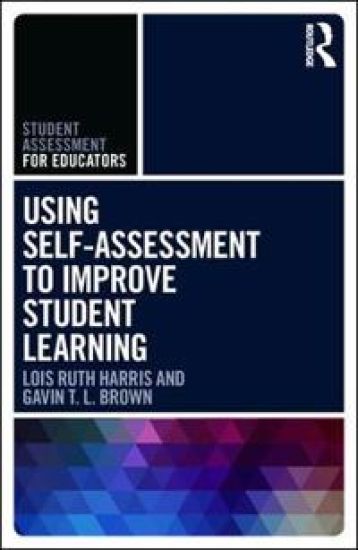
Using Self-Assessment to Improve Student Learning

Using Self-Assessment to Improve Student Learning

Lois Ruth Harris; Gavin T.L. Brown

Routledge
2018
nidottu
Using Self-Assessment to Improve Student Learning synthesizes research on self-assessment and translates it into actionable guidelines and principles for pre-service and in-service teachers and for school leaders, teacher educators, and researchers. Situated beyond the simple how-to frameworks currently available for teachers and graduate students, this volume illuminates self-assessment’s complexities and substantial promise to strategically move students toward self-regulated learning and internalized goals. Addressing theory, empirical evidence, and common implementation issues, the book’s developmental approach to quality self-assessment practices will help teachers, leaders, and scholars maximize their impact on student self-regulation and learning.
Using Self-Assessment to Improve Student Learning

Using Self-Assessment to Improve Student Learning

Lois Ruth Harris; Gavin T.L. Brown

Routledge
2018
sidottu
Using Self-Assessment to Improve Student Learning synthesizes research on self-assessment and translates it into actionable guidelines and principles for pre-service and in-service teachers and for school leaders, teacher educators, and researchers. Situated beyond the simple how-to frameworks currently available for teachers and graduate students, this volume illuminates self-assessment’s complexities and substantial promise to strategically move students toward self-regulated learning and internalized goals. Addressing theory, empirical evidence, and common implementation issues, the book’s developmental approach to quality self-assessment practices will help teachers, leaders, and scholars maximize their impact on student self-regulation and learning.
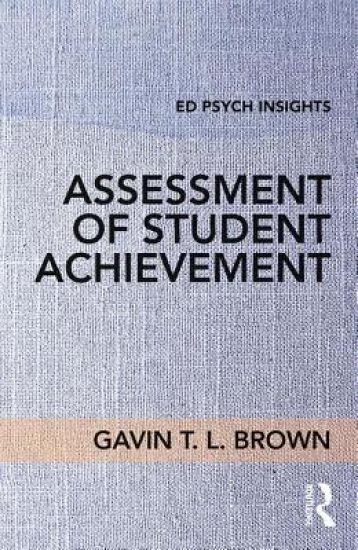
Assessment of Student Achievement

Assessment of Student Achievement

Gavin T. L. Brown

Routledge
2017
nidottu
Assessment is a concept familiar across the field of education and is inherent to the work of professors, administrators, teachers, researchers, journalists, and scholars. A multifaceted and politically charged topic, assessment ranges from informal interactions with learners in classrooms to systematic high-stakes testing and examination. Written by a leading expert on assessment, this book situates the topic within the broader context of educational psychology research and theory and brings it to a wider audience. With chapters on the fundamentals of assessment, explanations of its uses, and advice for best application, this concise volume is designed for any education course that includes assessment in the curriculum. It will be indispensable for student researchers and both pre- and in-service teachers alike.
Assessment of Student Achievement

Assessment of Student Achievement

Gavin T. L. Brown

Routledge
2017
sidottu

Halvin toimitettuna 219,90 €

Assessment is a concept familiar across the field of education and is inherent to the work of professors, administrators, teachers, researchers, journalists, and scholars. A multifaceted and politically charged topic, assessment ranges from informal interactions with learners in classrooms to systematic high-stakes testing and examination. Written by a leading expert on assessment, this book situates the topic within the broader context of educational psychology research and theory and brings it to a wider audience. With chapters on the fundamentals of assessment, explanations of its uses, and advice for best application, this concise volume is designed for any education course that includes assessment in the curriculum. It will be indispensable for student researchers and both pre- and in-service teachers alike.