Kirjojen hintavertailu – 12 903 725 kirjaa ja 27 kauppaa

Kirjailija

Gavin Wright

Kirjat ja teokset yhdessä paikassa: 5 kirjaa, julkaisuja vuosilta 1997–2018, suosituimpiin kuuluu Cycling For Dummies - UK. Vertaile teosten hintoja ja tarkista saatavuus suomalaisista kirjakaupoista.

5 kirjaa

Kirjojen julkaisuvuodet: 1997–2018.

Sharing the Prize

Sharing the Prize

Gavin Wright

The Belknap Press
2018
nidottu
Winner of the Alice Hanson Jones Prize, Economic History AssociationA Choice Outstanding Academic Title of the YearThe civil rights movement was also a struggle for economic justice, one that until now has not had its own history. Sharing the Prize demonstrates the significant material gains black southerners made—in improved job opportunities, quality of education, and health care—from the 1960s to the 1970s and beyond. Because black advances did not come at the expense of southern whites, Gavin Wright argues, the civil rights struggle was that rarest of social revolutions: one that benefits both sides.“Wright argues that government action spurred by the civil-rights movement corrected a misfiring market, generating large economic gains that private companies had been unable to seize on their own.”—The Economist“Written…with the care and imagination [Wright] displayed in his superb work on slavery and the southern economy since the Civil War, this excellent economic history offers the best empirical account to date of the effects the civil rights revolution had on southern labor markets, schools, and other important institutions…With much of the nation persuaded that a post-racial age has begun, Wright’s analytical history…takes on fresh urgency.”—Ira Katznelson, New York Review of Books
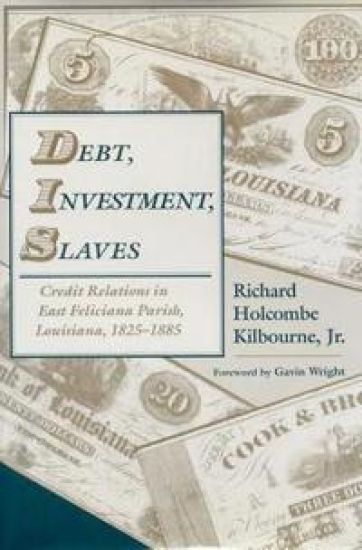
Debt, Investment, Slaves

Debt, Investment, Slaves

Richard Holcombe Kilbourne; Gavin Wright

The University of Alabama Press
2014
nidottu
A thorough survey of parish mortgage records and other manuscript collections led to the conclusion that most credit relationships, collateralized and uncollateralized, were grounded in slave property as opposed to land or other forms of wealth. Uncollateralized debt was directly dependent on the relative wealth of parish residents, and the bulk of most portfolios consisted of slaves. Emancipation and the Civil War occasioned a monumental credit implosion from which the local economy never recovered, at least for the remainder of the 19th century. Kilbourne makes an extensive examination of postwar debt distress and the evolution of sharecropping and tenancy. Even the wealthiest households were in the throes of debt distress as was evidenced by the numerous suits by wives for separations of property. A peculiar recoding requirement for crop privileges and pledges in the years from 1870 to 1880 made it possible to determine the amount of credit available in the postwar decades. Kilbourne shows that credit facilities contracted by 90 percent in the two decades following the Civil War. The decline in credit facilities parallels the decline in household wealth levels. Kilbourne disagrees with earlier scholars on the role of furnishing merchants in shaping the postbellum agricultural order. Furnishing merchants did become relatively more important in financing agriculture in the postwar decade, but they were not the successors of antebellum firms. Local merchants actually provided less credit than they had furnished before the Civil War to small cotton farmers who had made up two-thirds of the growers in the parish in 1860. Slavery made for a unique labor market, and this situation influenced the evolution of the credit system in the region. Emancipation was a revolutionary break with what had gone before. The focus of the credit system shifted from slaves to cotton. Land did form most postbellum planter portfolios, but it did not fill the void left by emancipation, and wealth levels remained substantially below antebellum ones. The credit system became highly localized in the postwar decades, and this fact was instrumental in shaping postbellum planting arrangements.
Cycling For Dummies - UK

Cycling For Dummies - UK

Gavin Wright; Ben Williams

John Wiley Sons Inc
2013
nidottu
Whether you’re looking to hit the open road, scream down the side of a mountain, or simply take the kids out for a ride, Cycling For Dummies, UK Edition, covers all your needs. Topics include choosing the right bike and accessories, staying safe — around town and on the trails — training to improve speed and endurance, making adjustments and repairs, and much more (including answering the basic questions you may be too embarrassed to ask in your local shop). Cycling For Dummies, UK Edition is the perfect place to start when you want to take up this great sport.
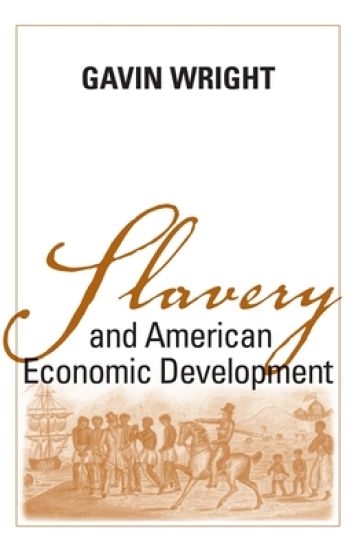
Slavery and American Economic Development

Slavery and American Economic Development

Gavin Wright

Louisiana State University Press
2013
nidottu
Through an analysis of slavery as an economic institution, Gavin Wright presents an innovative look at the economic divergence between North and South in the antebellum era. He draws a distinction between slavery as a form of work organisation, the aspect that has dominated historical debates, and slavery as a set of property rights. Slave-based commerce remained central to the eighteenth-century rise of the Atlantic economy, not because slave plantations were superior as a method of organizing production, but because slaves could be put to work on sugar plantations that could not have attracted free labor on economically viable terms.
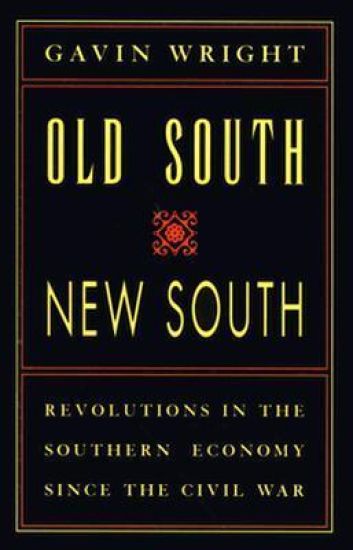
Old South, New South

Old South, New South

Gavin Wright

Louisiana State University Press
1997
nidottu
In this provocative and intricate analysis of the postbellum southern economy, Gavin Wright finds in the South's peculiar labor market the answer to the perennial question of why the region remained backward for so long. After the Civil War, Wright explains, the South continued to be a low-wage regional market embedded in a high-wage national economy. He vividly details the origins, workings, and ultimate demise of that distinct system. The post-World War II southern economy, which created today's Sunbelt, Wright shows, is not the result of the evolution of the old system, but the product of a revolution brought on by the New Deal and World War II that shattered the South's stagnant structure and created a genuinely new, thriving order.