Kirjojen hintavertailu – 12 859 818 kirjaa ja 27 kauppaa
Kirjailija
Geary Hobson
Kirjat ja teokset yhdessä paikassa: 7 kirjaa, julkaisuja vuosilta 1991–2021, suosituimpiin kuuluu Okla Hannali. Vertaile teosten hintoja ja tarkista saatavuus suomalaisista kirjakaupoista.
This is the tale of Hannali Innominee, a "Mingo" or natural lord of the 19th-century Choctaw Indian, and a fictionalized epic history of his people in the 19th-century.
This collection of opinion editorials and recent essays solidifies Midge's standing as one of the most versatile talents in Native and American writing today.-Samantha Majhor, American Indian Culture and Research JournalBury My Heart at Chuck E. Cheese’s is a powerful and compelling collection of Tiffany Midge’s musings on life, politics, and identity as a Native woman in America. Artfully blending sly humor, social commentary, and meditations on love and loss, Midge weaves short, standalone musings into a memoir that stares down colonialism while chastising hipsters for abusing pumpkin spice. She explains why she doesn’t like pussy hats, mercilessly dismantles pretendians, and confesses her own struggles with white-bread privilege. Midge ponders Standing Rock, feminism, and a tweeting president, all while exploring her own complex identity and the loss of her mother. Employing humor as an act of resistance, these slices of life and matchless takes on urban-indigenous identity disrupt the colonial narrative and provide commentary on popular culture, media, feminism, and the complications of identity, race, and politics.
A collection of poems, primarily persona poems of historical Cherokee people, about The Trail of Tears by Native American scholar and poet Geary Hobson. Cover art by Cherokee painter Janet Lamon Smith.
This collection of opinion editorials and recent essays solidifies Midge's standing as one of the most versatile talents in Native and American writing today.-Samantha Majhor, American Indian Culture and Research JournalBury My Heart at Chuck E. Cheese’s is a powerful and compelling collection of Tiffany Midge’s musings on life, politics, and identity as a Native woman in America. Artfully blending sly humor, social commentary, and meditations on love and loss, Midge weaves short, standalone musings into a memoir that stares down colonialism while chastising hipsters for abusing pumpkin spice. She explains why she doesn’t like pussy hats, mercilessly dismantles pretendians, and confesses her own struggles with white-bread privilege. Midge ponders Standing Rock, feminism, and a tweeting president, all while exploring her own complex identity and the loss of her mother. Employing humor as an act of resistance, these slices of life and matchless takes on urban-indigenous identity disrupt the colonial narrative and provide commentary on popular culture, media, feminism, and the complications of identity, race, and politics.
So what does it mean to be a Cherokee?"" asks Cherokee author Robert J. Conley at the start of this delightful collection of his writings. Throughout his prolific career, Conley used his art to explore Cherokee identity and experience. With his passing in 2014, Native American literature - and American literature in general - lost a major voice. Fortunately, this posthumous publication, edited by the author's wife, Evelyn L. Conley, offers readers the opportunity to appreciate anew the blend of humor, candor, and creativity that makes his work so exceptional. Best known as a novelist, especially for his beloved Real People series, Conley was also a masterful writer of short stories, essays, plays, and speeches. The breadth of his talents is on full display in this wide-ranging collection, which begins with his very last public address, delivered in North Carolina in 2013. Following that speech, the reader is treated to what may be Conley's most famous short story, ""Plastic Indian,"" the hilarious tale of three Cherokee youths who try to take down a giant plastic Indian located along Highway 51 between Tahlequah and Tulsa. Like many of Conley's works, ""Plastic Indian"" is set in contemporary times, but as we discover through the stories that follow, the author drew inspiration from traditional Cherokee folktales and oral storytelling. His delight in the spoken word is evident in the single play featured in this volume, based on the writings of ethnographer James Mooney and originally performed for radio. Conley is also celebrated for his accurate depictions of the Old West (it is no accident that he was the first American Indian president of the distinguished Western Writers of America association), so the collection would not be complete without two of his cowboy stories, namely ""The Execution"" and ""Nate's Revenge."" The volume concludes with four of the author's speeches. Laced with the author's typical dry humor, these personal testimonies serve as a moving coda to the author's extensive and illustrious career.
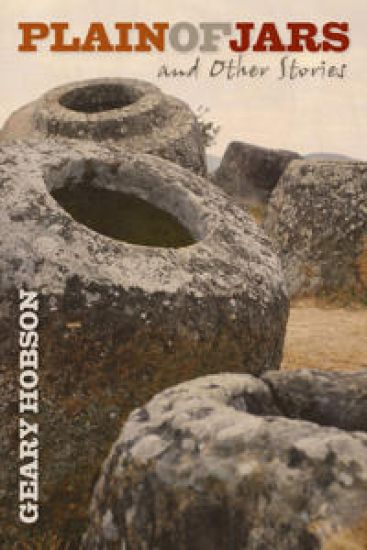
In the opening story of Geary Hobson's riveting new collection, "Plain of Jars," a young private confides to his friend that he's trying to leave the Marine Corps. "I am not doing this just because I find the Marine Corps too tough," Warren Needham says, but because violence is contradictory to his faith. The story's surprising climax, however, reveals a different side of Needham's contradictory nature. It's this acute understanding of conflict that characterizes "Plain of Jars," a book populated by bullies, men in combat, abusive spouses, and Native Americans seeking a sense of personal identity in an environment where conformity is law. The U. S. Marine Corps sets the stage for a number of these stories, whose protagonists combat racism, post-traumatic stress syndrome, and the looming reality of the Vietnam War. With pitch perfect dialogue and a sense of the unexpected, "Plain of Jars "tests the depths of complex lives.
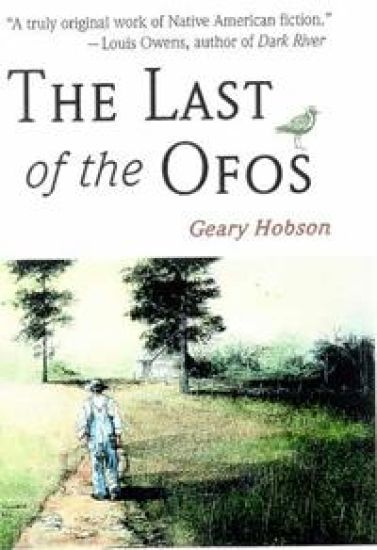
Thomas Darko is a Mohican for the twentieth century, the last surviving member of the tiny Mosopelea Tribe of the Mississippi Delta, called Ofos by outsiders. Never numbering more than a few hundred people in recorded history, his kinsmen have died away until Thomas comes to think of himself as "a nation of one." Now an old man in the waning years of the century, Thomas tells the story of his rough-and-tumble life--one which saw many of the changes that Indian people have faced in modern America--and he emerges as one of the most endearing characters in contemporary Native American literature. In this subtle but inventive novel, presented as Thomas's memoirs, Geary Hobson offers us a glimpse into a life filled with simple joys and sorrows. In relating his Louisiana childhood, Thomas recalls not just school-learning but being taught Indian ways by the small Ofo community. He tells of his life as a roustabout in the oil fields, of his courtship of the rambunctious Sally Fachette, and of his career as a bootlegger, which landed him in prison. We share Thomas's wartime stint with the Marines--where "for the first time in my life I was treated like a equal"--and his life as a farm laborer and a Hollywood extra portraying warbonneted Cheyennes. Then in his later years, when he truly has become the last of his kind, we find Thomas recruited by an anthropologist from the Smithsonian Institution to preserve his people's culture. In Washington, he is exposed to the vagaries of Indian policy and the emerging Native American movement. Throughout Thomas's story, readers are introduced to a wide-ranging cast of characters, from the outlaws Bonnie and Clyde to a fellow Marine who is wary of Indians, to an uppity anthropologist who doesn't consider Thomas "expert" enough to handle an Ofo flute. Always poor in material wealth but rich in heritage, Thomas Darko is a Native American Everyman whose identity is shaped by family and homeland. His "autobiography" paints a realistic portrait of an Indian confronting the obstacles in his life and the dilemmas of his age as his story reveals the painful legacy of being the last of one's kind.