Kirjojen hintavertailu – 12 903 725 kirjaa ja 27 kauppaa

Kirjailija

Gene A. Smith

Kirjat ja teokset yhdessä paikassa: 5 kirjaa, julkaisuja vuosilta 1998–2013, suosituimpiin kuuluu Iron and Heavy Guns: Duel Between the Monitor and the Merrimac. Vertaile teosten hintoja ja tarkista saatavuus suomalaisista kirjakaupoista.

5 kirjaa

Kirjojen julkaisuvuodet: 1998–2013.

Chinese Junks on the Pacific

Chinese Junks on the Pacific

Hans Konrad Van Tilburg; James C. Bradford; Gene A. Smith

University Press of Florida
2013
nidottu
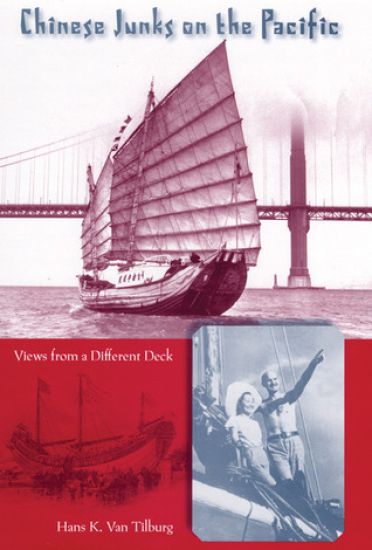
From a Western perspective, junks were among the most mysterious vessels ever to sail the open seas. Offering more than just history, Chinese Junks on the Pacific focuses on ten ships, such as the Whang Ho, Ning Po, and Amoy, that sailed to the United States in the early twentieth century. Hans Van Tilburg examines why these ships, some of the last commercial sailing junks of China, came to the West, what they represented, and why we are only now beginning to understand East Asian seafaring. Crowds gathered in San Diego, Los Angeles, San Francisco, and Portland to welcome the ships with a mixture of surprise and derision. In the era of the steamship, these were quaint, unwieldy constructions fashioned to look like sea monsters and bizarre objects of fancy. But they were also traveling cultural objects. Some served as floating museums, displaying grisly weaponry and other artifacts. The arrival of these vessels allowed Western observers a rare glimpse of a littleknown yet sophisticated maritime technology and seafaring culture. Combining history with ethnology, anthropology, maritime archaeology, and nautical technology, Van Tilburg provides a window into the lives of Chinese seafarers, their transpacific experiences, and a critical look at our own crosscultural perceptions. He draws on a wide range of newspaper sources, secondary texts, nautical treatises, archaeological site work, rare historical photos and sketches, and the personal testimony of the sailors themselves to view these junks not only as transport vehicles but as complex cultural artifacts that “speak” of a distant seafaring past and intimate cultural ties to the sea.
Uriah Levy

Uriah Levy

Ira Dye; James C. Bradford; Gene A. Smith

University Press of Florida
2006
sidottu
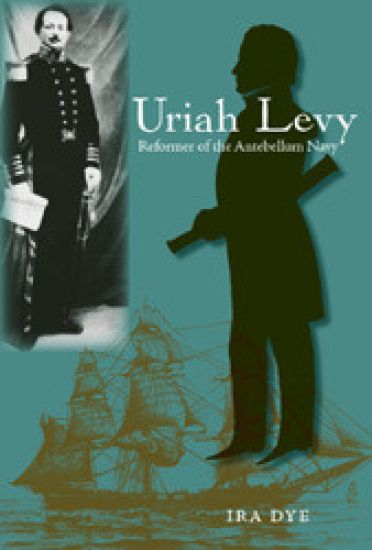
Uriah Levy's naval career spanned the age of sail to the era of steam-driven ironclads. As one of the few Jewish Americans in the U. S. Navy, Levy was the target of prejudice and was court-martialed six times for his response to perceived insults, yet he was the only Jew who reached the rank of Flag Officer. As an advocate for the enlisted soldier, he fought for and succeeded in putting an end to flogging in the Navy. As perhaps the first American historic preservationist, he bought and restored Jefferson's beloved but failing Monticello and opened it for public tours. In further tribute to his idol, he commissioned the statue of Jefferson that stands in the U. S. Capitol rotunda today. Drawing on archival and printed sources, British and American naval records, local records of Levy's residences, the records of several Jewish congregations in the United States, and rarely used naval court martial records, Ira Dye has produced a modern biography of Levy in the context of his time, focusing on his contributions as a naval officer from the War of 1812 until the Civil War as well as the personal characteristics that drove him to make those contributions. Levy served in the Mediterranean during the early antebellum period when the United States was establishing a presence in that area, later commanded the Mediterranean Squadron during the turbulent years of European unrest in the 1850s, was on board the Argus during its fatal cruise in the War of 1812, and presided over one of the few documented charges of homosexual activity in the Old Navy. Rich with details of life in the sailing navy, the story of Uriah Levy is a significant contribution to antebellum naval history.
Counterpoint to Trafalgar

Counterpoint to Trafalgar

William H. Flayhart; James C. Bradford; Gene A. Smith

University Press of Florida
2004
nidottu
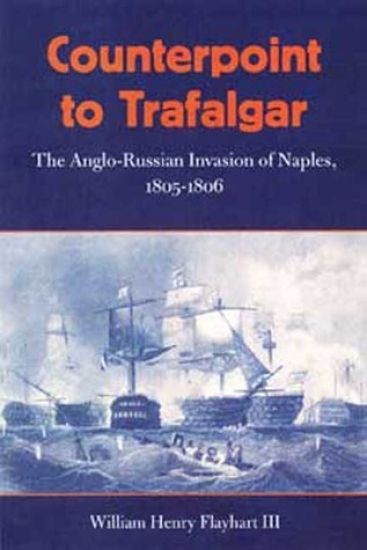
Counterpoint to Trafalgar offers the first detailed account of the important land and sea campaign in the Napoleonic wars: the Anglo-Russian invasion of Naples, which prevented Napoleon from controlling the Mediterranean during the war of the third coalition. Flayhart recounts the exciting story of the chaotic efforts of the joint British and Russian military force during the invasion of southern Italy. In 1805 Napoleonic France and Great Britain were locked in a naval duel for maritime supremacy. A British military expedition was sent to the Mediterranean to preserve the independence of Naples. Joining with a Russian Army troop nearby, the combined forces invaded southern Italy in order to place allied troops between the French in the north and Naples in the south. The two great convoys carrying more than 20,000 Russian and British troops was too great a prize for Napoleon to ignore, and the emperor ordered the French fleet to enter the Mediterranean and destroy the troopships. The ensuing battle became known as the Battle of Trafalgar.
Filibusters and Expansionists

Filibusters and Expansionists

Frank Lawrence Owsley; Gene A. Smith

The University of Alabama Press
2004
nidottu
Describing filibuster activities in both Florida and Texas, American efforts to seize Indian lands, operations against a free black fort in Florida and Andrew Jackson's adventures in Florida, this book adds to the history and historiography of antebellum foreign policy. The authors present the revolutionary activities in the Gulf South and their connection with the expansionist trends of Jefferson, Madison and Monroe.
Iron and Heavy Guns: Duel Between the Monitor and the Merrimac
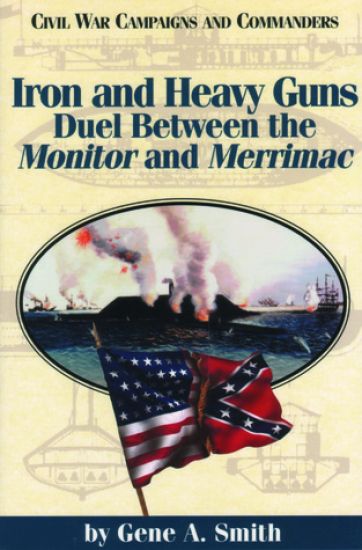
March 1862. The Union ironclad warship, Monitor, with its two eleven inch Dahlgren smoothbores in a unique revolving turret assembly, leaves New York City under tow to serve blockade duty off the coast of North Carolina. Meanwhile, the Confederate ironclad Virginia (formerly the wooden frigate Merrimac) is raising havoc with Union blockaders in Hampton Roads. The inevitable showdown takes place on March 9th. For more than four hours the two ironclads battle furiously at close range. The Merrimac finally withdraws and returns to Norfolk to protect the river approaches to Richmond, leaving the Monitor in control of the Roads and in position to protect the Union blockaders. In May, the Merrimac is destroyed by its own crew to prevent capture; in December, the Monitor sinks in a storm off Cape Hatteras while under tow from Hampton Roads to North Carolina waters. An exciting account of two ships that would change naval warfare forever. Gene A. Smith holds a Ph. D. from Auburn University and is Assistant Professor of History at Texas Christian University. He is author, with Frank L. Owsley, Jr., of "For the Purpose of Defense" The Politics of the Jeffersonian Gunboat Program.