Kirjojen hintavertailu – 12 903 725 kirjaa ja 27 kauppaa

Kirjailija

Gene E. Likens

Kirjat ja teokset yhdessä paikassa: 10 kirjaa, julkaisuja vuosilta 1994–2015, suosituimpiin kuuluu The Ecological Basis of Conservation. Vertaile teosten hintoja ja tarkista saatavuus suomalaisista kirjakaupoista.

10 kirjaa

Kirjojen julkaisuvuodet: 1994–2015.

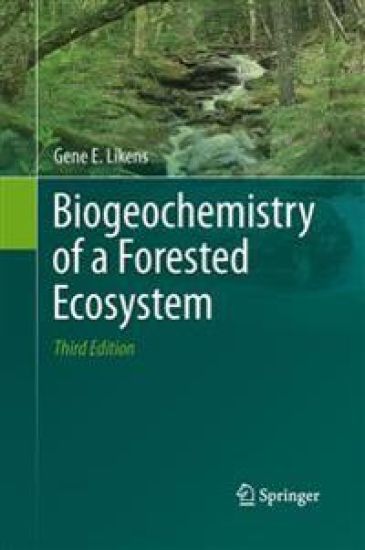
Biogeochemistry of a Forested Ecosystem

Biogeochemistry of a Forested Ecosystem

Gene E. Likens

Springer-Verlag New York Inc.
2015
nidottu
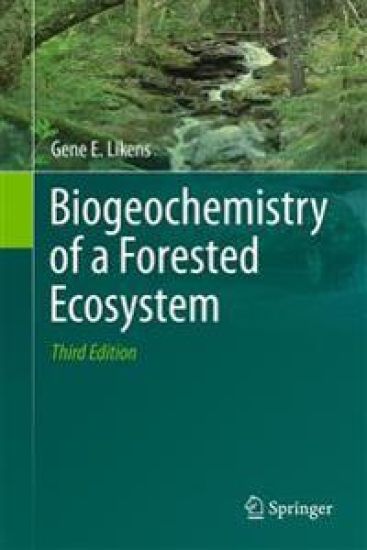
The goal of this Third Edition is to update long-term data presented in earlier editions and to generate new syntheses and conclusions about the biogeochemistry of the Hubbard Brook Valley based on these longer-term data. There have been many changes, revelations, and exciting new insights generated from the longer data records. For example, the impact of acid rain peaked during the period of the HBES and is now declining. The longer-term data also posed challenges in that very marked changes in fluxes occurred in some components, such as hydrogen ion and sulfate deposition, calcium and nitrate export in stream water and biomass accumulation, during the almost 50 years of record. Thus, presenting “mean” or “average” conditions for many components for such a long period, when change was so prominent, do not make sense. In some cases, pentads or decades of time are compared to show these changes in a more smoothed and rational way for this long period. In some cases, a single period, often during periods of rapid change, such as acidification, is used to illustrate the main point(s). And, for some elements a unique mass balance approach, allowing the calculation of the Net Ecosystem Flux (NEF), is shown on an annual basis throughout the study.
Biogeochemistry of a Forested Ecosystem

Biogeochemistry of a Forested Ecosystem

Gene E. Likens

Springer-Verlag New York Inc.
2013
sidottu
The goal of this Third Edition is to update long-term data presented in earlier editions and to generate new syntheses and conclusions about the biogeochemistry of the Hubbard Brook Valley based on these longer-term data. There have been many changes, revelations, and exciting new insights generated from the longer data records. For example, the impact of acid rain peaked during the period of the HBES and is now declining. The longer-term data also posed challenges in that very marked changes in fluxes occurred in some components, such as hydrogen ion and sulfate deposition, calcium and nitrate export in stream water and biomass accumulation, during the almost 50 years of record. Thus, presenting “mean” or “average” conditions for many components for such a long period, when change was so prominent, do not make sense. In some cases, pentads or decades of time are compared to show these changes in a more smoothed and rational way for this long period. In some cases, a single period, often during periods of rapid change, such as acidification, is used to illustrate the main point(s). And, for some elements a unique mass balance approach, allowing the calculation of the Net Ecosystem Flux (NEF), is shown on an annual basis throughout the study.
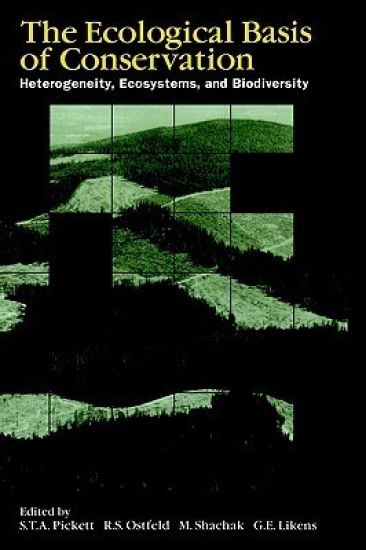
The Ecological Basis of Conservation

The Ecological Basis of Conservation

Steward Pickett; Richard S. Ostfeld; Moshe Shachak; Gene E. Likens

Springer-Verlag New York Inc.
2012
nidottu
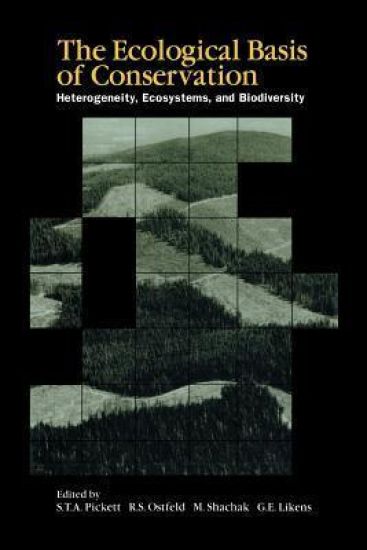
From its inception, the U. S. Department of the Interior has been charged with a conflicting mission. One set of statutes demands that the department must develop America's lands, that it get our trees, water, oil, and minerals out into the marketplace. Yet an opposing set of laws orders us to conserve these same resources, to preserve them for the long term and to consider the noncommodity values of our public landscape. That dichotomy, between rapid exploitation and long-term protection, demands what I see as the most significant policy departure of my tenure in office: the use of science-interdisciplinary science-as the primary basis for land management decisions. For more than a century, that has not been the case. Instead, we have managed this dichotomy by compartmentalizing the American landscape. Congress and my predecessors handled resource conflicts by drawing enclosures: "We'll create a national park here," they said, "and we'll put a wildlife refuge over there." Simple enough, as far as protection goes. And outside those protected areas, the message was equally simplistic: "Y'all come and get it. Have at it." The nature and the pace of the resource extraction was not at issue; if you could find it, it was yours.
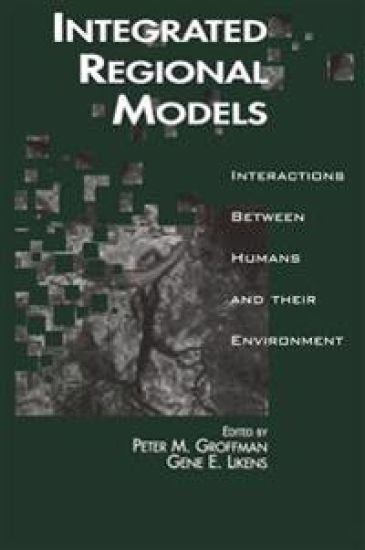
Integrated Regional Models

Integrated Regional Models

Peter Groffman; Gene E. Likens

Springer-Verlag New York Inc.
2012
nidottu
Integrated regional models are conceptual and mathematical models that describe the physical environment, biological interactions, human decision-making, and human impact on the environment. Efforts are now being made to integrate regional models from the physical, biological and social sciences in order to respond to diverse environmental problems. This volume explores the latest research developments on processes operating at a variety of scales, including regions, and how scientists can combine their efforts to develop models linking biological, physical, and human systems. Data requirements for successful integrated regional models are identified and discussed. Chapters also consider methodological questions, such as whether to integrate disciplinary approaches at the beginning or the end of the modelling process, and whether integrated regional models should focus on specific regions or specific problems. The information in this volume will enable the reader to view problems such as coastal zone management, atmospheric pollution, non-point source pollution, commodity production in forested areas, and urban expansion in a broad, conceptual context. Researchers and graduate students in ecology, biology, geography and geology will benefit from this innovative approach to contemporary environmental problems.
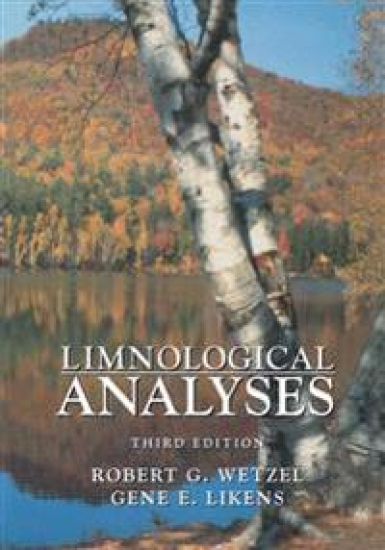
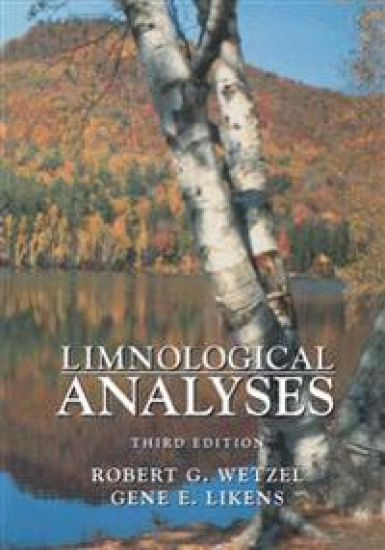
Limnological Analyses

Limnological Analyses

Robert G. Wetzel; Gene E. Likens

Springer-Verlag New York Inc.
2010
nidottu
In this thoroughly updated third edition, the authors have provided a series of carefully designed and tested field and laboratory exercises that represent the full scope of limnology. In using this text, students will gain a solid foundation in this complex, multidisciplinary field of ecology as they explore the physical, chemical, and biological characteristics of standing and running waters. Limnological Analyses, Third Edition illustrates accepted standard methods as well as modern metabolic and experimental approaches and their research applications. Each exercise is preceded by an introductory section and concludes with questions for students as well as suggestions for further reading. As a textbook, Limnological Analyses, Third Edition is a highly structured, concise presentation with a research-oriented approach that openly invites active participation by students.
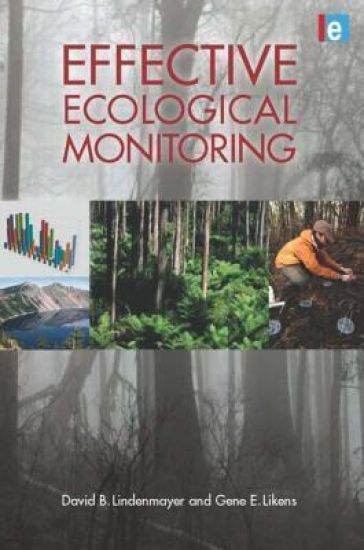
Effective Ecological Monitoring

Effective Ecological Monitoring

David Lindenmayer; Gene E. Likens

Earthscan Ltd
2010
sidottu
Ecologists and managers of natural resources readily acknowledge the importance of long-term studies and monitoring for improved understanding and management of complex environmental systems. Long-term data are crucially important for providing baselines for evaluating environmental change. They are also fundamental for detecting and evaluating changes in ecosystem structure and function, and for evaluating response to disturbances such as climate change or pollution. Countless scientific articles, books, management plans and other documents have been written about the need to conduct long-term studies and monitoring. However, although there have undoubtedly been some highly successful long-term ecological studies and monitoring programs, there is a history of poorly planned and unfocused efforts that are either ineffective or fail completely. In this book, the authors outline some of the key pitfalls and deficiencies in ecological monitoring programs and long-term studies. They then describe some the features of monitoring programs and long-term studies that are essential to make them viable, using case studies such as those of Rothamsted (UK) and the Hubbard Brook Ecosystem Study (USA). Based upon their collective experience spanning 70 years in establishing long-term studies and natural resource monitoring programs, the authors propose a new approach, which they call Adaptive Monitoring, to resolve some of these problems underlying poorly planned and unfocused monitoring programs.
Effective Ecological Monitoring

Effective Ecological Monitoring

David Lindenmayer; Gene E. Likens

Earthscan Ltd
2010
nidottu
Ecologists and managers of natural resources readily acknowledge the importance of long-term studies and monitoring for improved understanding and management of complex environmental systems. Long-term data are crucially important for providing baselines for evaluating environmental change. They are also fundamental for detecting and evaluating changes in ecosystem structure and function, and for evaluating response to disturbances such as climate change or pollution. Countless scientific articles, books, management plans and other documents have been written about the need to conduct long-term studies and monitoring. However, although there have undoubtedly been some highly successful long-term ecological studies and monitoring programs, there is a history of poorly planned and unfocused efforts that are either ineffective or fail completely. In this book, the authors outline some of the key pitfalls and deficiencies in ecological monitoring programs and long-term studies. They then describe some the features of monitoring programs and long-term studies that are essential to make them viable, using case studies such as those of Rothamsted (UK) and the Hubbard Brook Ecosystem Study (USA). Based upon their collective experience spanning 70 years in establishing long-term studies and natural resource monitoring programs, the authors propose a new approach, which they call Adaptive Monitoring, to resolve some of these problems underlying poorly planned and unfocused monitoring programs.
Limnological Analyses

Limnological Analyses

Robert G. Wetzel; Gene E. Likens

Springer-Verlag New York Inc.
2000
sidottu
In this thoroughly updated third edition, the authors have provided a series of carefully designed and tested field and laboratory exercises that represent the full scope of limnology. In using this text, students will gain a solid foundation in this complex, multidisciplinary field of ecology as they explore the physical, chemical, and biological characteristics of standing and running waters. Limnological Analyses, Third Edition illustrates accepted standard methods as well as modern metabolic and experimental approaches and their research applications. Each exercise is preceded by an introductory section and concludes with questions for students as well as suggestions for further reading. As a textbook, Limnological Analyses, Third Edition is a highly structured, concise presentation with a research-oriented approach that openly invites active participation by students.
The Ecological Basis of Conservation

The Ecological Basis of Conservation

Steward Pickett; Richard S. Ostfeld; Moshe Shachak; Gene E. Likens

Chapman and Hall
1997
sidottu
From its inception, the U. S. Department of the Interior has been charged with a conflicting mission. One set of statutes demands that the department must develop America's lands, that it get our trees, water, oil, and minerals out into the marketplace. Yet an opposing set of laws orders us to conserve these same resources, to preserve them for the long term and to consider the noncommodity values of our public landscape. That dichotomy, between rapid exploitation and long-term protection, demands what I see as the most significant policy departure of my tenure in office: the use of science-interdisciplinary science-as the primary basis for land management decisions. For more than a century, that has not been the case. Instead, we have managed this dichotomy by compartmentalizing the American landscape. Congress and my predecessors handled resource conflicts by drawing enclosures: "We'll create a national park here," they said, "and we'll put a wildlife refuge over there." Simple enough, as far as protection goes. And outside those protected areas, the message was equally simplistic: "Y'all come and get it. Have at it." The nature and the pace of the resource extraction was not at issue; if you could find it, it was yours.
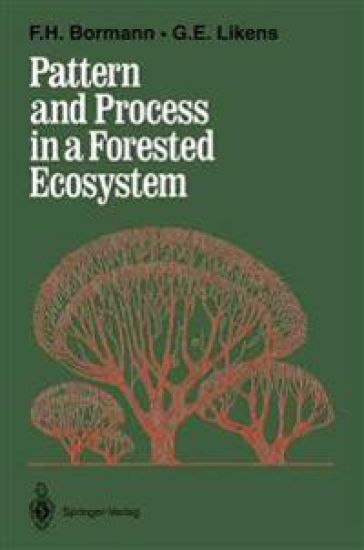
Pattern and Process in a Forested Ecosystem

Pattern and Process in a Forested Ecosystem

F.Herbert Bormann; Gene E. Likens

Springer-Verlag New York Inc.
1994
nidottu
The advent of ecosystem ecology has created great difficulties for ecologists primarily trained as biologists, since inevitably as the field grew, it absorbed components of other disciplines relatively foreign to most ecologists yet vital to the understanding of the structure and function of ecosystems. From the point of view of the biological ecologist struggling to understand the enormous complexity of the biological functions within an ecosystem, the added necessity of integrating biology with geochemis­ try, hydrology, micrometeorology, geomorphology, pedology, and applied sciences (like silviculture and land use management) often has appeared as an impossible requirement. Ecologists have frequently responded by limiting their perspective to biology with the result that the modeling of species interactions is sometimes considered as modeling ecosystems, or modeling the living fraction of the ecosystems is considered as modeling whole ecosystems. Such of course is not the case, since understanding the structure and function of ecosystems requires sound understanding of inanimate as well as animate processes and often neither can be under­ stood without the other. About 15 years ago, a view of ecology somewhat different from most then prevailing, coupled with a strong dose of naivete and a sense of exploration, lead us to believe that consideration of the inanimate side of ecosystem function rather than being just one more annoying complexity might provide exceptional advantages in the study of ecosystems. To examine this possibility, we took two steps which occurred more or less simultaneously.