Kirjojen hintavertailu – 12 859 828 kirjaa ja 27 kauppaa

Kirjailija

Gene V. Glass

Kirjat ja teokset yhdessä paikassa: 7 kirjaa, julkaisuja vuosilta 2008–2021, suosituimpiin kuuluu History of a Glass Family in America. Vertaile teosten hintoja ja tarkista saatavuus suomalaisista kirjakaupoista.

Nimi esiintyy myös muodoissa: Gene V Glass

7 kirjaa

Kirjojen julkaisuvuodet: 2008–2021.

Public and Private Education in America

Public and Private Education in America

Casey D. Cobb; Gene V. Glass

Greenwood Press
2021
sidottu
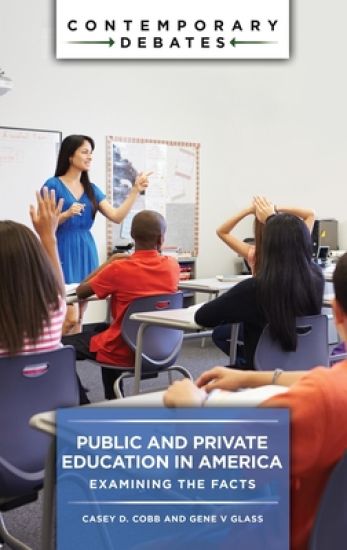
"A convenient, information-rich source for anyone interested in schooling." – Library JournalThis title gives readers a clear understanding of the true state of public and private education systems in the USA by refuting falsehoods, misunderstandings, and exaggerations – and confirming the validity of other assertions. Issues covered include categories of public and private schools and variations in academic performance and socioeconomic status therein; controversies surrounding school choice, including school vouchers and charter schools; accountability and assessment of private and public schools; debates about school environment, safety, and curricula; and teacher and administrator quality. All of these issues are examined in individualized entries, with objective responses grounded in evidence.

50 Myths & Lies That Threaten America's Public Schools

50 Myths & Lies That Threaten America's Public Schools

David C. Berliner; Gene V. Glass

Teachers' College Press
2014
nidottu
This book is guaranteed to spark lively debates and critical thinking in any classroom! Two of the most respected voices in education identify 50 myths and lies that threaten America's public schools. Berliner and Glass argue that many citizens’ conception of K–12 public education in the United States is more myth than reality. Warped opinions about our nation’s public schools include: they are inferior to private schools; they are among the worst in the world in math and science; teachers should be fired if their students don’t score at the national average, and on and on. With more than a little humour, Berliner and Glass separate fact from fiction in this comprehensive look at modern education reform. They explain how the mythical failure of public education has been created and perpetuated in large part by political and economic interests who stand to gain from its destruction. They expose a rapidly expanding variety of organisations and media that intentionally misrepresent facts. Where appropriate, they name the promoters of the hoax and point out how their interests are served by encouraging false beliefs. Their method of debunking these falsehoods is to argue against their logic, criticise the data supporting them, and present more credible contradictory data. This dynamic book features short essays on important topics to provide every teacher, administrator, school board member, and concerned parent with reliable knowledge from authoritative sources.
50 Myths and Lies That Threaten America's Public Schools

50 Myths and Lies That Threaten America's Public Schools

David C. Berliner; Gene V Glass

Teachers' College Press
2014
sidottu
Two of the most respected voices in education and a team of young education scholars identify 50 myths and lies that threaten America's public schools. With hard-hitting information and a touch of comic relief, Berliner, Glass, and their Associates separate fact from fiction in this comprehensive look at modern education reform. They explain how the mythical failure of public education has been created and perpetuated in large part by political and economic interests that stand to gain from its destruction. They also expose a rapidly expanding variety of organizations and media that intentionally misrepresent facts. Many of these organizations suggest that their goal is unbiased service in the public interest when, in fact, they represent narrow political and financial interests. Where appropriate, the authors name the promoters of these deceptions and point out how they are served by encouraging false beliefs. This provocative book features short essays on important topics to provide every elected representative, school administrator, school board member, teacher, parent, and concerned citizen with much food for thought, as well as reliable knowledge from authoritative sources.
Design and Analysis of Time-Series Experiments

Design and Analysis of Time-Series Experiments

Gene V. Glass; Victor L. Willson; John M. Gottman

Information Age Publishing
2008
nidottu
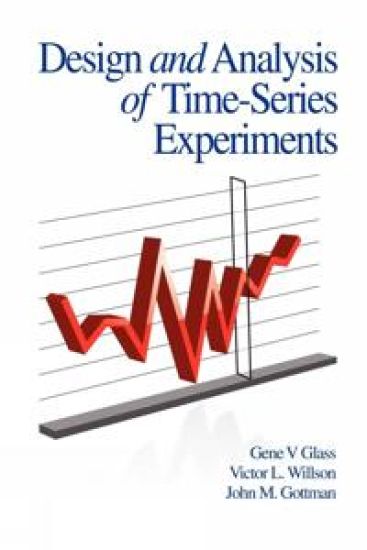
Hailed as a landmark in the development of experimental methods when it appeared in 1975, Design and Analysis of Time-Series Experiments is available again after several years of being out of print. Gene V Glass, Victor L. Willson and John M. Gottman have carried forward the design and analysis of perhaps the most powerful and useful quasi-experimental design identified by their mentors in the classic Campbell & Stanley text Experimental and Quasi-experimental Design for Research (1966). In an era when governments seek to resolve questions of experimental validity by fiat and the label 'Scientifically Based Research' is appropriated for only certain privileged experimental designs, nothing could be more appropriate than to bring back the classic text that challenges doctrinaire opinions of proper causal analysis. Glass, Willson & Gottman introduce and illustrate an armamentarium of interrupted time-series experimental designs that offer some of the most powerful tools for discovering and validating causal relationships in social and education policy analysis. Drawing on the ground-breaking statistical analytic tools of Box & Jenkins, the authors extend the comprehensive autoregressive-integrated-moving-averages (ARIMA) model to accommodate significance testing and estimation of the effects of interventions into real world time-series. Designs and full statistical analyses are richly illustrated with actual examples from education, behavioral psychology, and sociology.
Fertilizers, Pills, and Magnetic Strips

Fertilizers, Pills, and Magnetic Strips

Gene V. Glass

Information Age Publishing
2008
sidottu
"We shape our tools and then they shape us." With these words, Kenneth Boulding captured one of the great truths of the modern world. In Fertilizers, Pills, and Magnetic Strips, Gene V Glass analyzes how a few key technological inventions changed culture in America and how public education has changed as a result. Driving these changes are material self-interest and the desire for comfort and security, both of which have transformed American culture into a hyper-consuming, xenophobic society that is systematically degrading public education. Glass shows how the central education policy debates at the start of the 21st century (vouchers, charter schools, tax credits, high-stakes testing, bilingual education) are actually about two underlying issues: how can the costs of public education be cut, and how can the education of the White middle-class be "quasi-privatized" at public expense? Working from the demographic realities of the past thirty years, he projects a challenging and disturbing future for public education in America.
Fertilizers, Pills, and Magnetic Strips

Fertilizers, Pills, and Magnetic Strips

Gene V. Glass

Information Age Publishing
2008
nidottu
"We shape our tools and then they shape us." With these words, Kenneth Boulding captured one of the great truths of the modern world. In Fertilizers, Pills, and Magnetic Strips, Gene V Glass analyzes how a few key technological inventions changed culture in America and how public education has changed as a result. Driving these changes are material self-interest and the desire for comfort and security, both of which have transformed American culture into a hyper-consuming, xenophobic society that is systematically degrading public education. Glass shows how the central education policy debates at the start of the 21st century (vouchers, charter schools, tax credits, high-stakes testing, bilingual education) are actually about two underlying issues: how can the costs of public education be cut, and how can the education of the White middle-class be "quasi-privatized" at public expense? Working from the demographic realities of the past thirty years, he projects a challenging and disturbing future for public education in America.