Kirjailija
Genevieve Lloyd
Kirjat ja teokset yhdessä paikassa: 19 kirjaa, julkaisuja vuosilta 1993–2026, suosituimpiin kuuluu Land and Country. Vertaile teosten hintoja ja tarkista saatavuus suomalaisista kirjakaupoista.
19 kirjaa
Kirjojen julkaisuvuodet: 1993–2026.
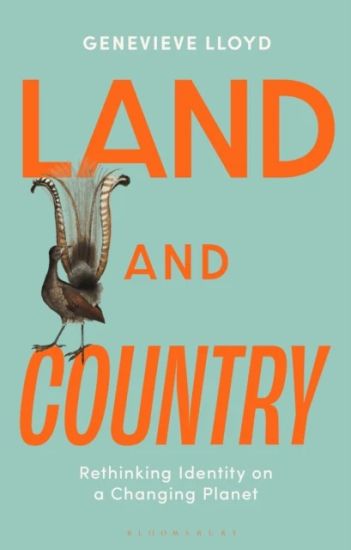
Land and Country brings philosophical thought into direct engagement with Australia’s contested debates on identity, sovereignty, and belonging. Drawing on the author’s extensive family history of convict descent, and expounding on the thorny and variegated web of relations that determine the Australian past and present, the book traces the intersection of ancestral lives with the violence of settlement: land grants on stolen Country, frontier conflict, the Appin massacre, and the shifting cultural meanings of convict shame and pride. Beneath these stories lies a deeper inquiry: what does it mean to pursue family history as an act of truth-telling in a nation still struggling to reckon with its own past? Interweaving political philosophy, feminist critique, and intellectual history, Lloyd examines the conceptual frameworks that continue to shape national debate – whiteness and multiculturalism; Enlightenment ideas of property and progress; the emotional dynamics of guilt, shame, pride, and responsibility; and the colonial mindset that persists in public discourse. She brings Locke, Kant and especially Spinoza into dialogue with Indigenous critiques of sovereignty, as well as with her earlier canonical writings, to illuminate the deep assumptions embedded in Australian self-understanding. Equally central is the book’s engagement with Indigenous thought, literature and art. Through readings of Kim Scott, Alexis Wright, Tara June Winch, and Daniel Boyd, Lloyd explores how contemporary First Nations storytelling and visual practice unsettle colonial narratives and offer new imaginative “entry points” into shared truths about Country, climate change, and coexistence. This intervention from one of Australia’s most eminent contemporary philosophers is especially germane in the wake of the rejection of the 2023 referendum on a constitutionally enshrined indigenous ‘Voice’ to government: its principal objective is to make a philosophical contribution to the path towards indigenous recognition and national reconciliation. Part memoir, part philosophy, part cultural criticism, this book offers a compelling contribution to ongoing truth-telling, and to the still-unfinished task of imagining a just future between First Nations and non-Indigenous Australians.

Central to Genevieve Lloyd's approach is a fresh look at Spinoza's critique of what he regards as Descartes' flawed way of imagining the nature and status of human thought in relation to the rest of Nature. Lloyd argues that the influence of the Cartesian model lingers in the contemporary collective imagination. She challenges a common way of reading the Ethics, which reflects and reinforces the figure of Spinoza as a 'rationalist' - committed to the superiority and dominance of Reason within human minds. By offering a more nuanced account of Spinoza's version of Reason, Lloyd brings his philosophy to bear on a range of familiar, but largely unexamined attitudes, which connect the supposed supremacy of Reason within the human mind to humanity's supposed supremacy within Nature.
Reading Spinoza in the Anthropocene
Genevieve Lloyd
EDINBURGH UNIVERSITY PRESS
2024
sidottu
Halvin toimitettuna 87,40 €
Central to Genevieve Lloyd's approach is a fresh look at Spinoza's critique of what he regards as Descartes' flawed way of imagining the nature and status of human thought in relation to the rest of Nature. Lloyd argues that the influence of the Cartesian model lingers in the contemporary collective imagination. She challenges a common way of reading the Ethics, which reflects and reinforces the figure of Spinoza as a 'rationalist' committed to the superiority and dominance of Reason within human minds. By offering a more nuanced account of Spinoza's version of Reason, Lloyd brings his philosophy to bear on a range of familiar, but largely unexamined attitudes, which connect the supposed supremacy of Reason within the human mind to humanity's supposed supremacy within Nature.
Through a curated selection of papers written over four decades by one of Australia’s leading philosophers, this collection demonstrates the impact of Continental philosophy on philosophical thought in Australia. The development of specific philosophical problems, over a period of more than forty years by a philosopher whose first training was ‘pre-continental’, shows that it is possible to achieve interaction between ‘continental’ and ‘pre-continental’ methods in philosophy, even while recognizing their distinctiveness. These essays ‘work towards’ continental philosophy in the ways they pay attention to language, to how we experience things and are experienced by others, and to the structures of language and power that frame what it is possible to say and to hear, to write and to read.
A philosophical exploration of wonder: its history, its present condition and its future potentialGenevieve Lloyd illuminates and challenges some perplexing aspects of contemporary attitudes to wonder. Central to her argument is the claim that wonder has come to be largely eclipsed by the allure of the notion of the Sublime a concept closely associated with Romantic Idealism. Lloyd offers us a renewed sense of wonder, reconnected with its philosophical history, that plays a significant role in contemporary social critique. In her path to reclaim wonder, she moves between philosophical and literary sources. She draws especially on Flaubert's responses to Romanticism and his related treatment of stupidity, which influenced the thought of Jean-Paul Sartre, Gilles Deleuze and Jacques Derrida. She also reaches into contemporary debates on refugees, secularisation and climate change.
The idea of the Enlightenment has become a touchstone for emotive and often contradictory articulations of contemporary western values. Enlightenment Shadows is a study of the place of Enlightenment thought in intellectual history and of its continued relevance. Genevieve Lloyd focuses especially on what is distinctive in ideas of intellectual character offered by key Enlightenment thinkers--on their attitudes to belief and scepticism; on their optimism about the future; and on the uncertainties and instabilities which nonetheless often lurk beneath their use of imagery of light. The book is organized around interconnected close readings of a range of texts: Montesquieu's Persian Letters; Voltaire's Philosophical Dictionary; Hume's essay The Sceptic; Adam Smith's treatment of sympathy and imagination in Theory of Moral Sentiments; d'Alembert's Preliminary Discourse to the Encyclopedia--together with Diderot's entry on Encyclopedia; Diderot's Rameau's Nephew; and Kant's essay Perpetual Peace. Throughout, the readings highlight ways in which Enlightenment thinkers enacted in their writing--and reflected on--the interplay of intellect, imagination, and emotion. Recurring themes include: the nature of judgement--its relations with imagination and with ideals of objectivity; issues of truth and relativism; the ethical significance of imagining one's self into the situations of others; cosmopolitanism; tolerance; and the idea of the secular.
This new edition of Genevieve Lloyd's classic study of the maleness of reason in philosophy contains a new introduction and bibliographical essay assessing the book's place in the explosion of writing and gender since 1984.
The idea of the Enlightenment has become a touchstone for emotive and often contradictory articulations of contemporary western values. Enlightenment Shadows is a study of the place of Enlightenment thought in intellectual history and of its continued relevance. Genevieve Lloyd focuses especially on what is distinctive in ideas of intellectual character offered by key Enlightenment thinkers--on their attitudes to belief and scepticism; on their optimism about the future; and on the uncertainties and instabilities which nonetheless often lurk beneath their use of imagery of light. The book is organized around interconnected close readings of a range of texts: Montesquieu's Persian Letters; Voltaire's Philosophical Dictionary; Hume's essay The Sceptic; Adam Smith's treatment of sympathy and imagination in Theory of Moral Sentiments; d'Alembert's Preliminary Discourse to the Encyclopedia--together with Diderot's entry on Encyclopedia; Diderot's Rameau's Nephew; and Kant's essay Perpetual Peace. Throughout, the readings highlight ways in which Enlightenment thinkers enacted in their writing--and reflected on--the interplay of intellect, imagination, and emotion. Recurring themes include: the nature of judgement--its relations with imagination and with ideals of objectivity; issues of truth and relativism; the ethical significance of imagining one's self into the situations of others; cosmopolitanism; tolerance; and the idea of the secular.
To the ancient Greeks, providence was the inherent purpose and rational structure of the world. In Christian thought, it became a benign will “providing” for human well-being. And in our own ever more secular times—is providence lost? Perhaps, but as Genevieve Lloyd makes clear in this illuminating work, providence still exerts a powerful influence on our thought and in our lives; and understanding how can help us clarify the functioning—or, increasingly, disfunctioning—of concepts of freedom and autonomy that define our modernity. Such an understanding is precisely the goal of this book, which traces a succession of transformations in the concept of providence through the history of Western philosophy. Beginning with early versions of providence in ancient Greek thought, Lloyd follows the concept through its convergence with Christian ideas, to its role in seventeenth-century philosophical accommodations of freedom and necessity. Finally, she shows how providence was subsumed into the eighteenth-century ideas of progress that eventually rendered it philosophically superfluous. Incorporating rich discussions of thinkers from Euripides to Augustine, Descartes and Spinoza to Kant and Hegel, her lucid and elegantly written work clearly and forcefully brings the history of ideas to bear on our present confusion over notions of autonomy, risk, and responsibility. Exploring the interplay among philosophy, religion, and literature, and among intellect, imagination, and emotion in philosophical thought, this book allows intellectual historians and general readers alike to grasp what it actually means that providence can be lost but not escaped.
Det manliga förnuftet - "Manligt" och "kvinnligt" i västerländsk filosofi
Genevieve Lloyd
Bokförlaget Thales
2005
nidottu
Genevieve Lloyd frilägger i nyläsningar av Platon, Aristoteles, Thomas av Aquino, Bacon, Descartes, Spinoza, Hume, Rousseau, Kant, Hegel och Sartre ”förnuftets manlighet” som en styrande metafor i västerländsk filosofi från grekisk kunskapsteori fram till idag.
Why would the work of the 17th century philosopher Benedict de Spinoza concern us today? How can Spinoza shed any light on contemporary thought? In this intriguing book, Moira Gatens and Genevieve Lloyd show us that in spite of or rather because of Spinoza's apparent strangeness, his philosophy can be a rich resource for cultural self-understanding in the present. Collective Imaginings draws on recent re-assessments of the philosophy of Spinoza to develop new ways of conceptualising issues of freedom and difference. This ground-breaking study will be invaluable reading to anyone wishing to gain a fresh perspective on Spinoza's thought.
Spinoza is a key figure in modern philosophy. Ethics is his most studied and well known work. Being both up-to-date and clear, this Guidebook is designed to lead the reader through this complex seminal text. Spinoza's Ethics introduces and assess:* Spinoza'a life, and its connection with his thought* The text of the Ethics* Spinoza's continuing relevence to contemporary philosophy
Routledge Philosophy GuideBook to Spinoza and the Ethics
Genevieve Lloyd
Routledge
1996
nidottu
Halvin toimitettuna 43,60 €
Spinoza is a key figure in modern philosophy. Ethics is his most studied and well known work. Being both up-to-date and clear, this Guidebook is designed to lead the reader through this complex seminal text. Spinoza's Ethics introduces and assess:* Spinoza'a life, and its connection with his thought* The text of the Ethics* Spinoza's continuing relevence to contemporary philosophy
Genevieve Lloyd's book is a provocative and accessible essay on the fragmentation of the self as explored in philosophy and literature. The past is irrevocable, consciousness changes as time passes: given this, can there ever be such a thing as the unity of the self? Being in Time explores the emotional aspects of the human experience of time, commonly neglected in philosophical investigation, by looking at how narrative creates and treats the experience of the self as fragmented and the past as 'lost'. It shows the continuities, and the contrasts, between modern philosophic discussions of the instability of the knowing subject, treatments of the fragmentation of the self in the modern novel and older philosophical discussions of the unity of consciousness. Being in Time combines theoretical discussion with human experience: it will be valuable to anyone interested in the relationship between philosophy and literature, as well as to a more general audience of readers who share Augustine's experience of time as making him a 'problem to himself'.
This new edition of Genevieve Lloyd's classic study of the maleness of reason in philosophy contains a new introduction and bibliographical essay assessing the book's place in the explosion of writing and gender since 1984.